• N&PD Moderators: Skorpio

ULDN - The magic weapon to reduce and keep tolerance to Opioids low

Naltrexone precursors are 100x stronger at blocking TLR4 compared to plain naltrexone according to this 2024 paper:

Exploring the Function of (+)-Naltrexone Precursors: Their Activity as TLR4 Antagonists and Potential in Treating Morphine Addiction

Disruptions in the toll-like receptor 4 (TLR4) signaling pathway are linked to chronic inflammation, neuropathic pain, and drug addiction. (+)-Naltrexone, an opioid-derived TLR4 antagonist with a (+)-isomer configuration, does not interact with classical opioid receptors and has moderate blood–brain barrier permeability. Herein, we developed a concise 10-step synthesis for (+)-naltrexone and explored its precursors, (+)-14-hydroxycodeinone (1) and (+)-14-hydroxymorphinone (3). These precursors exhibited TLR4 antagonistic activities 100 times stronger than (+)-naltrexone, particularly inhibiting the TLR4–TRIF pathway. In vivo studies showed that these precursors effectively reduced behavioral effects of morphine, like sensitization and conditioned place preference by suppressing microglial activation and TNF-α expression in the medial prefrontal cortex and ventral tegmental area. Additionally, 3 displayed a longer half-life and higher oral bioavailability than 1. Overall, this research optimized (+)-naltrexone synthesis and identified its precursors as potent TLR4 antagonists, offering potential treatments for morphine addiction.
 
Last edited:

It's looking like methadone necessities a specific harm reduction strategy as it incurrs significant harm to the user. ULDN would be an ideal candidate since it efficiently blocks TLR4 (which makes it so effective for countless other things) but for methadone TLR4 is only half the story as I've outlined below.


It seems mu agonism triggers production of TLR4 agonists:


Besides TLR4, it looks like methadone promotes MS-type conditions:


A property shared by other opioids:


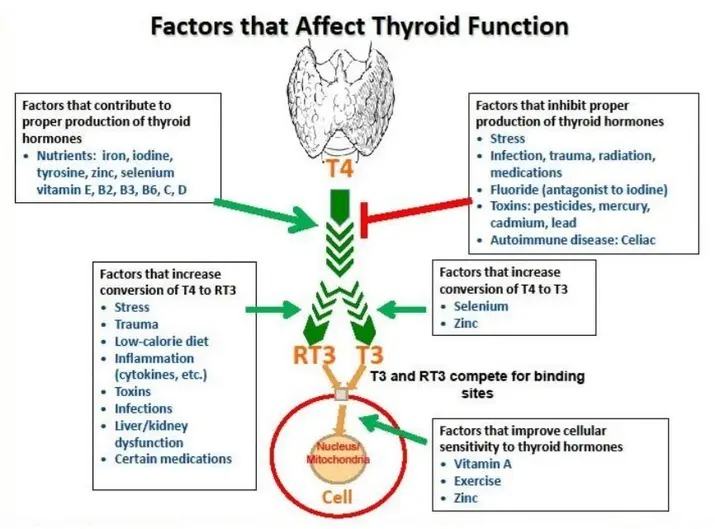
This highlights the need for pro-myelinating strategies to mitigate and reverse opioid-induced demyelination. This would be equally relevant for uncontrolled habitual self-medication as it is for those with a "formal prescription". Arguably the most efficient strategy would be to maximise endogenous production of the pro-myelinating hormone T3:

img-1-1766501558976.jpg
Possibly, you are often very quick to draw conclusions and recommend people take substances based on them. I know you aren’t recommending people go out and take T3, but I often worry that people would do such a thing based on these reccomendations.
 
I know you aren’t recommending people go out and take T3, but I often worry that people would do such a thing based on these reccomendations.
Indeed - I'll add a note of caution.

Perhaps there is a certain irony in the use of ULDN to mitigate the harmful effects of methadone.
 
Last edited:
This is certainly interesting and overlaps with some of what Allylbenzene mentioned. Even though it is in rats 🤣
What I plan to do is coadminister 3a-dhp alongside oxycodone and begin my ULDN regimen to see if any difference is noted once I gather a full spectrum of tolerance-preventing methods in line to test.

Something interesting to consider is the receptor mechanics in general, and in my case, I assume due to the higher efficiency of 7OH it might not respond as effectively as other opiates when using ULDN because internalization is much more common (many say it seems to burn out and then never come back euphoria-wise).
Pure speculation, but I would imagine the less likely an opiate is to cause internalization, the more effective ULDN is. In my opinion, I think ULDN merely enhances desensitized receptor response.

I worry about Kratom since MIT is still converted to 7OH and is known for creating stronger cross-tolerance to other opiates despite not yielding the same degree of euphoria.

TLR4 in general is an interesting, and I plan to try more direct approaches to modulating it in favor of reducing neuroinflammation and cytokine release, which I believe in part is responsible for reduced euphoria.
As I mentioned prior, I did pretty extensive testing on dynorphin-blocking kappa antagonists to absolutely no result, so this pathway is likely not responsible for the experience while using; however, it could be significant post-opiate usage.

If anyone has any ideas or speculation in regard to modulating the effects further, I would gladly test them out. I am about 4-5 months sober from opiates, and my anhedonia is still persistent despite trying a bunch of new psychiatric drugs. So I am giving into this way of life again.
In this time I tried LDN for about 3 months, and it really didn't do much besides have a crazy rebound in the middle of the night where I would feel great for about 30 minutes and then would crash the rest of the day.

Thank you Hexenstahl for responding and reflecting on my experience :)
I will update once I get proper testing and maybe even release a log if anyone would be curious. I think I am blessed with cooked opiate receptors so I might not be the best candidate but I will sure try to get something net positive from my second attempt :D

 
I am aware that men and women react differently when it comes to drugs, but it is quite interesting that the same opioid agonist is abused more by women than men.

Perhaps the following dynamics are involved?
This paper is from 2023:
Estradiol and Mu opioid-mediated reward: The role of estrogen receptors in opioid use

This review focuses on the role of ovarian hormones, and particularly estradiol, on the endogenous mu opioid receptor system. There is an abundance of data indicating that estradiol influences the activity of endogenous mu opioid peptides, the activation of mu opioid receptors, and the internalization and desensitization of mu opioid receptors. These effects have functional consequences on behaviors mediated by endogenous mu opioid receptor activity and on sensitivity to mu opioid agonists and antagonists. Recent behavioral data suggest these consequences extend to mu opioid reward, and preclinical studies report that estradiol decreases self-administration of mu opioid receptor agonists across a range of experimental conditions. Data collected in human laboratory studies suggest that estradiol may have functionally similar effects in clinical populations, and thus estrogen receptors may be a potential target in the development of novel therapeutics. This review summarizes data from cellular assays to clinical trials to explore how estradiol influences mu opioid receptor activity...
https://doi.org/10.1016/j.addicn.2023.100139
 
I would rather just offer the optimal dose of methadone to reatain clients (90-95mg) as we know that clients live longer and I suppose 90mg of methadone will blunt most things. But we also need a way to at once not place barriers in front of clients hence my frustration that the 1c derivative of R-4066 is potentially a three times per week dosing regime. Is it costly, yes, but it's also x218 more potent THAN methadone so in truth it's cheaper.
Better yet: offer L-Methadone. That is what I am taking since 3 years now, I'm on 15mg, no side effects and I couldn't be happier. The problem with racemic methadone is its dextrorotatory enantiomer. The great majority of my co-patients receive methadone and they all have a prolonged QT rate and one of them has been hospitalized recently due to torsades de pointes. Even if this issue wasn't present, methadone has really nasty, ugly side effects. I tried all of substitutes available here in Germany (morphine, DHC, bupe, methadone and L-methadone) and methadone was the only one that caused me to gain weight, sweat day and night irrespective of temperature, induced hypersomnia to the point where I developed lumbago (aside from the fact that I was basically sleeping my life away since I was asleep for 15 - 17h a day), made me lethargic an finally I even got a nice edema in my upper legs which was extremely painful. All of this subsided with Polamidon (L-methadone). To make it even better, Polamidon has a much longer half-life varying between 32h to 55h, which means that I can even skip one to one and a half days. The only disadvantage I can think of is that tapering down is an absolute bitch with Polamidon. With methadone I could go down 1 ml (10 mg) per week with no issues until I reached a daily dose of 2ml where I had to either increase the time span in between the dose reductions or reduce less per week. When it comes to Polamidon though I discovered that the body reacts much more sensitive to reductions in dosage. I wasn't able to reduce more than 0.25 ml (1.25 mg) per week or I started to feel withdrawal creeping up on me after 18h. So if the goal is to reduce and jump off, then methadone is the better choice, but if one plans to really maintain long-term I would say Pola is #1.

@Allylbenzene
I must say I'm always surprised by scientists claiming opioids weaken the immunesystem because I noticed both on my and others that dope fiends somehow never get sick (not talking about serious diseases but stuff like a cold for example). Also, lots of us look younger than we actually are. Wrinkles appear later and are fewer I noticed. Could it be that opioids slow down the apoptosis of skin cells? I'm pretty sure this is not selective perception on my part as I see this way too often. I haven't found any papers that discuss this though. I am actually interested in in how poppy alkaloids affect our system in ways other than painkilling, especially when it comes to these obscure alkaloids that are found in trace amounts in the poppy plant. I think I remember reading somewhere that Papaverine plays a role in killing cancer cells. If an opiate can do that, then it doesn't seem that far fetched to me that opiates have the potential to be turned into a quasi fountain of youth drug.

The rest of your post is very interesting. In fact, I am going to completely ignore your recommendation and put all of the drugs you mentioned into me all at once...nah just kidding ofc tehehe 🤭
 
@Hexenstahl - It was silly that for decades we KNEW that the less potent isomer of methdone was the more toxic and in so many different ways. What can I say, it is so cheap. I mean $637/Kg API cheap. That value bounces around somewhat so I suspect that no single production-line is set up to make it. A supplier sees the price rise, runs the numbers and decides if they should offer a batch (with their built-in profit margin) and only make it after it has been sold. I think you can resolve methadone so buying cheap methadone and seperating out the stronger and safer isomer is possible yet a whole new synthesis was developed (and patented).

If you can tolerate DHCs (dizzys) then a lot of clients who got down to 10mL of juice each day got clean via that pathway. I absolutely agree that extending consumption times IS a valid path in reduction but is incompatible with a client picking up every day. I've seen it done. One client came in one Christmas Eve and handed back a full 1000mL bottle of the stuff. they got clean by increasing the dose interval.

But now it's all about methadone and worse, buprenorphine. I have no issue with buprenorphine per se, only how it's now being used. The entire point was that you stalized client on however much buprenorphine they needed and after 7-14 days, just stop. Scary, but works most times and IF a client suffers AWS, then reduction should be the 'plan B'. Not a profitable way to go, I suppose. I can see some logic, but I strongly suspect the profit motive is stronger than the will to stop clients consuming other opioids; which it doesn't anyway! It just pushes them towards more hazardous gray market or black market opioids.

NOBODY is looking into to the outcomes of long-term buprenorpine consumption so we have no idea if and if so, how many fatalities involve buprenorphine, which is suspicious, or I'm just cynical, or both. Certainly there was a myth that buprenorphine would reverse an OD and it took an age to stamp out that one myth. So, so many silly myths surround these things.
 
I'm always surprised by scientists claiming opioids weaken the immunesystem

The pro-TLR4 effect of opioids is what causes hyperalgesia and appears to promote tolerance, habituation and various other negative outcomes. A sustainable opioid agonist could be one that is neutral or even blocks TLR4.

One such side effect is opioid-induced hyperalgesia (OIH), which includes a transition from opioid-induced analgesia to pain enhancement. Evidence in rodents supports the suggestion that OIH may be produced by the action of opioids at Toll-like Receptor 4 (TLR4) either on immune cells that, in turn, produce pronociceptive mediators to act on nociceptors, or by a direct action at nociceptor TLR4.
 
@atypical_brain
Hey, you are back! I really hope you put as much of your experiential information into this thread as possible and I certainly hope that some research scientist reads this because we're doing field work, especially you! Still, be careful and use common sense in whatever you do. It's probably unnecessary of me to say this as you come across to me like a reasonable and intelligent individual, but I still wanted to warn you. Report everything from dose, consumption intervals, acute to chronic effects, side effects, etc. or even better yet, write all of this in a diary sort of way and publish it here. I don't know if you have a scientific background but if not I highly suggest you watch a couple of lessons on YT on scientific writing. I think the Royal Society of London has a free video series on this topic. Whatever you do, please stay with us, you are a valuable addition to this thread :group hug:

@4DQSAR
WOW that is dirt cheap!!! They buy/manufacture it for 0.0027€ (0.0032$) per 5 mg and sell that to us for 0.21€ (0.25$). 544€/kg book value sold at a market value of 42.268,80€. That is a turnover rate of x77.7 or a ROI (return on investment) of 7.770 % !!! This is so high it should be criminal. There is nothing that justifies such a pricing structure. I have no issue with making money, heck I once wanted to found a pharmaceutical corporation myself, but this is just insane! The only reason they can pull this shit off is because they have the health insurance business in their claws.
It makes me think though. It should be pretty easy to gain a competitive advantage just by being less greedy. I mean if I was the biggest stockholder of a pharmacomp, I'd be telling the board to charge like 500% over the book value instead of freaking 7.700% and then you'd have all insurance companies buy the stuff from you...unless ofc they have some sort of an exclusivity contract that obligates insurance to buy only from them for the next god knows what time period.

I think the only solution to this problem is turning the drug market back to the way it was in the late 19th century where everything was decentralized, pharmacies had their own labs where they turned the raw materials into their final drugs and everyone competing with one another. This is what kept prices so low. Cocaine used to be so cheap in Germany in that era that it was marketed, among other things, as a hair product. Laudanum was as cheap as a bottle of beer. It's really crazy how far things have changed for the worse...

Regarding the bupe issue you mentioned: absolutely true! This stuff has a whole range of side effects that aren't even listed in the package leaflet. All of my co-patients who complain about health problems the doctor can't find a cause of happen to be on bupe. Many of them appear to experience a drastic decrease in dental health, issues with their skin (neurodermatitis) and some have a constantly runny nose.

@Allylbenzene
Reading that part about "pain enhancement" really makes my skin crawl. Someone I know who suffers from chronic pain once told me that chronic pain is like being trapped in a room with no exit while noise is being played at an unbearably loud volume and covering your ears doesn't help. Kind of like that scene in the british film "A clockwork orange" where the protagonist is in exactly that situation. I never had chronic pain, only acute pain and that was already horrible, so having pain that is chronic and gets even intensified by OIH sounds like pure hell.
 
From what I've read it seems that opioid-induced TLR4 activation plays an important role in the development of tolerance and addiction amongst other things (including OIH). This means that long-term use of an opioid like methadone for recovery/cessation could, in some ways, perpetuate certain issues (due to TLR4 agonism being a "counterproductive" quality so to speak).

Of course using methadone is preferable to H, M or F.

Since naltrexone is a very effective TLR4 antagonist this would theoretically render methadone significantly more sustainable and safer for the user. Alternatively a plain TLR4 antagonist (without opioid activity). I'm thinking of people who can't access ULDN - there are many commonly available TLR4 blockers.

Exploring the Function of (+)-Naltrexone Precursors: Their Activity as TLR4 Antagonists and Potential in Treating Morphine Addiction

Disruptions in the toll-like receptor 4 (TLR4) signaling pathway are linked to chronic inflammation, neuropathic pain, and drug addiction.

- https://doi.org/10.1021/acs.jmedchem.3c02316
 
Alhassen L, Nuseir K, Ha A, Phan W, Marmouzi I, Shah S, Civelli O. The Extract of Corydalis yanhusuo Prevents Morphine Tolerance and Dependence. Pharmaceuticals (Basel). 2021 Oct 12;14(10):1034. doi: 10.3390/ph14101034. PMID: 34681258; PMCID: PMC8540887.
 
@Hexenstahl - Xerostomia is common to all opiate agonists and partial agonists. A 2500mL bottle of methadone 1mg/mL solution costs £34.80 according to the BNF. I am given to understand that in the UK at least, pharmacists make 89p per item BUT £2.22 per item where supervised consumption is included.

I do keep hearing this - it isn't the cost of the methadone that makes it costly, it's the fact it's dispensed daily and often consumption is supervised.

The profit margin is still ridiculous, but it's still the cheapest. Only in the US do we see almost everyone seeking medical aid for OMA ending up parked on buprenorphine or methadone. There is SOME logic but many studies concluded that IF substituton therapy is used, there are optimal doses i.e. enough to blunt the euphoria of other opioids making abuse pointless BUT equally, if a person does seek to reduce, that isn't taken seriously.

Hence someone pointing out that street buprenorphine IS a thing and in places where classic opioids are not certain, people IV buprenorphine.

Insanity.
 
I'd like to share my experience in case it's useful to someone. I'm doing a self-experiment following a clinical study (Badaras et al., 2020, J Addict Med). The study used gradually increasing doses of naltrexone to avoid withdrawal when inducing the antagonist.

[Badaras R, Jovaisa T, Lapinskiene I, Ivaskevicius J. Dose Escalation of Naltrexone to Reduce Stress Responses Associated With Opioid Antagonist Induction: A Double-blind Randomized Trial. J Addict Med. 2020 May/Jun;14(3):253-260. doi: 10.1097/ADM.0000000000000560. PMID: 31609865.]

They started at 50 micrograms and went up to 12.5 mg. I've gone slower. It's taken me about a month and a half to reach my current dose, increasing very little by little. Right now I'm at 2 mg of naltrexone per day, split into three doses (around 0.7 mg every 8 hours). I'm also still on 25-30 mg of methadone per day.

The 2 mg I'm taking now would have caused me terrible precipitated withdrawal if I had taken them two months ago. But with the slow increase, I've had zero issues.

The craziest part is I have zero withdrawal symptoms. Before this, I was really constipated, but now I'm not at all anymore, it's completely fixed. I go to the bathroom every day. No waking up with cravings, no withdrawal syndrome. I sleep fine.

The study showed that with this slow increase, you can reach naltrexone doses that would normally cause withdrawal if taken all at once. So far, it's working for me.

I plan to keep increasing very slowly up to 10 mg per day of naltrexone, and then I'll figure out what to do about the methadone. The idea is that with the receptors blocked or semi-blocked by naltrexone, coming off methadone should be much smoother, or maybe even unnoticeable.

That said, this is a personal experiment. It's going fine for now, but I don't know what will happen in the future. I'm not recommending anything to anyone, just sharing my experience in case it's useful for discussion or reference. Any advice is welcome.

PS. My account is old, but this is my first post here. I've mostly just been reading about your experiences.
 
Last edited:
I suspect the problem may be that the optimal dose of antagonist varies significantly between individuals hence Pfizer made a big song and dance about TROXYCA® ER, then it failed in stage 3 trials due to the dropout rate.

It seems entirely possible to titrate the dose of naltrexone to a 'challange' dose i.e. when side-effects begin, reel it in by 25% (the generally applied increase), confirm side-effects are minimal or at least don't stop people using the mediction and off you go.

I cannot help reflect that the William S. Borroughts book 'Junky' has a character note that with opiate adition 'sometimes we can't control it, sometimes we don't want to control it'. I can quite see why. Opioids tend to strip away social connections to the point that the endless 'mission' is the ONLY rhythm in a users life. If you can't drink, socialize (nodding out is typically not tolerated) and debt so often creeps it.

Then of course, we should remember the safety paradox. IF people feel a way exists to make something safer, they adjust behaviors so the percieved risk-level remains the same. It isn't getting clean that is problematic, it's staying clean. Don't 90% of people end up back on within a year? A cure is not profitable, a revolving door of 'frequent fliers' IS profitable.

But I still maintain total belief in the fifth freedom. All well-inforormed adults should have the choice of which chemicals they choose or choose not to imbibe. I mean, the sheer death-toll around the cocaine trade. IF those South American nations could legally produce and export cocaine - the richest criminals in the world are out of business and a product is as stated and >98% pure, I suggest the death toll would go DOWN.

But by informed, I mean teenagers in schools should freely be able to discuss both the benefits and dangers around each class of drug. The Dutch do and do not be fooled by Amsterdam - as the Dutch say 'Alleen studenten en losers gebruiken drugs' i.e. it's not forbidden to experiment, but continued use will surely mess your life up.
 
I'd like to share my experience in case it's useful to someone. I'm doing a self-experiment following a clinical study (Badaras et al., 2020, J Addict Med). The study used gradually increasing doses of naltrexone to avoid withdrawal when inducing the antagonist.

[Badaras R, Jovaisa T, Lapinskiene I, Ivaskevicius J. Dose Escalation of Naltrexone to Reduce Stress Responses Associated With Opioid Antagonist Induction: A Double-blind Randomized Trial. J Addict Med. 2020 May/Jun;14(3):253-260. doi: 10.1097/ADM.0000000000000560. PMID: 31609865.]

They started at 50 micrograms and went up to 12.5 mg. I've gone slower. It's taken me about a month and a half to reach my current dose, increasing very little by little. Right now I'm at 2 mg of naltrexone per day, split into three doses (around 0.7 mg every 8 hours). I'm also still on 25-30 mg of methadone per day.

The 2 mg I'm taking now would have caused me terrible precipitated withdrawal if I had taken them two months ago. But with the slow increase, I've had zero issues.

The craziest part is I have zero withdrawal symptoms. Before this, I was really constipated, but now I'm not at all anymore, it's completely fixed. I go to the bathroom every day. No waking up with cravings, no withdrawal syndrome. I sleep fine.

The study showed that with this slow increase, you can reach naltrexone doses that would normally cause withdrawal if taken all at once. So far, it's working for me.

I plan to keep increasing very slowly up to 10 mg per day of naltrexone, and then I'll figure out what to do about the methadone. The idea is that with the receptors blocked or semi-blocked by naltrexone, coming off methadone should be much smoother, or maybe even unnoticeable.

That said, this is a personal experiment. It's going fine for now, but I don't know what will happen in the future. I'm not recommending anything to anyone, just sharing my experience in case it's useful for discussion or reference. Any advice is welcome.

PS. My account is old, but this is my first post here. I've mostly just been reading about your experiences.

UPDATE. I am currently increasing my naltrexone dose to 3 mg (1 mg every 8 hours, at 5 AM, 1 PM, and 9 PM). I’ve had some mild withdrawal symptoms, mainly at night, the 9 PM naltrexone dose was messing with my sleep a little, so I fixed it by switching my methadone to two 15 mg doses a day, one at 9 AM and one at 10 PM. It worked. Now I'm sleeping well again.
The 15 mg of methadone before bed helps me sleep well. And the 15 mg in the morning keeps me pretty stable for the rest of the day. Some days I take a 150 mg dose of pregabalin at 3 PM. That helps a lot, too.

3 mg of naltrexone a day is already a considerable amount. I'm totally in shock that this amount isn't messing dramatically with my methadone dose, and that everything is going so smoothly and calmly. The super slow, gradual increase I've been doing must have been the key.

Tomorrow I’ll probably increase the naltrexone by 0.2 mg per dose (bringing the total to 3.6 mg of naltrexone per day). I’ll keep taking the same methadone dose. Not planning to lower it for now. Maybe I will in the future, maybe I won’t, honestly, I have no idea. The naltrexone is already doing its thing, resensitizing my opioid system on its own, and I’m focused on increasing the naltrexone dose really, really slowly.
[EDIT: I ended up not going through with the dose increase after all. I'm going to stick with my current naltrexone dose for another week to let my body adjust. I'm in absolutely no rush.]

I have diazepam 10mg (limited supply) and pregabalin (almost unlimited), so I’ll use them if I need to.

So yeah, experiment continues.

PS. As a sort of confirmation bias for my current strategy (absolutely irrelevant for objective scientific purposes but very important to keep me going with the experiment), I have to say that during winter I had some really serious issues with back pain and inflammation in my sacroiliac joint, plus pain radiating down my leg. In fact, I’m currently on medical leave. By no means am I linking these issues to methadone, but the anti-inflammatory effect of VLDN is well known. Well, for the first time in months, I’ve noticed the pain has gone down in intensity, and on some days it’s almost unnoticeable. Of course, and like I said in my previous post, the constipation has totally disappeared, along with other negative side effects associated with methadone.
 
Last edited:
Hello to everyone, I have a question!
Firstly, I should apologize for not reading full thread, I ate only first few pages despite my very poor English.
This whole thread is being pure gold as I see, also I glad that it's still being alive, even same people from the beginning is alive! (Amazing! And very cool also)
I just stumble upon that mind breaking info about ULDN and surely I will try to take my chance with it soon!
But firstly I need to clarify my view.
So I should tell that I'm accomplished opiates user, and it's true for around 4-5 last years of my life, and still going. I had to use it intramuscular since my veins disappeared (probably due to low quality of product and high doses)
My current dosage is about 300mg, and still I rarely feel anything from it. For now I have only Naloxone in liquid from (0.4mg in 1ml solution). So from what I read it's plausible to get some of the effect that we talk about from it, but I'm not sure exaclty how it should be done.
THE QUESTIONS:
* As I understand, effect of Naloxone ends up much faster than of Naltrexone, so for getting chance of similar effect window between having ULDN and methadone should be much shorter? *How much exactly?
*Also I wonder if dosage 5-100 micrograms is the same for Naloxone and Naltrexone?
*I made solution from that Naloxone ampoule, added 99ml of water, so 1ml of it should have 4micrograms as I believe, should I take it oraly or intranasal? Put it under a tongue maybe?

I'm very very sorry for my poor wording and probably stupid questions! I hope you'll able to understand what I meant somehow and provide some answers!
 
Wrong drug I’m pretty sure. Try again. Read the whole thread always before assumptions and trials.
 
BTW @Hexenstahl - 1c is the same isomer as L-methadone. I think the whole ORLAAM disaster has meant researchers are cautious about things like 1c but haven't really looked at the metabolism. While ORLAAM IS the less toxic isomer, unlike methadone the N,N-desmethyl metabolite cannot form the cyclic imine N,N-desmethyl methadone does. I really cannot figure out how ORLAAM was able to get a licence when cardiotoxicity wasn't fully understood but what we knew SHOULD have made researchers cautious.

It's not that it's metabolism was unknown BUT I suggest that the death-rate among people prescribed methadone or similar meant that it was only European clinicians filling in the 'yellow cards' that alerted the makers in 2001 so that Roxane stopped production in 2003 BUT admit to no liabiity.

You really have to have been in the industry to know just how amoral the entire thing is. I knew someone whose entire career was six months at Boots Laboratories in Nottingham. The team had ZERO money to develop a new medicine and settled on trying to push sibutramine as an antidepressant (indication creep). They didn't want to hear that all of the related compounds were both neurotoxic and cardiotoxic. In that case sibutramine was entirely taken off the market for those very reasons...

The lesson was - being right is often an unpopular position to hold.

For the nerds - that cyclobutane ring doesn't alter the bond-angle so may be omitted. As far as I can work out, it was only added so a patent could be obtained. The patent covering prolintane (1955 GB 807835) would cover sibutramine otherwise. I imagine it does alter the pharmokinetics a bit, but I don't think it's substantially different 1-(4-chlorophenyl)-N,N-dimethylpentan-2-amine. But do bear in mind that nowhere are aryl-cycloalkyl amines explicitally legally controlled. I'm quite surprised that nobody has apparently noted this loophole although to be fair, what I don't know about RCs would fill a library.
 
Hello to everyone, I have a question!
Firstly, I should apologize for not reading full thread, I ate only first few pages despite my very poor English.
This whole thread is being pure gold as I see, also I glad that it's still being alive, even same people from the beginning is alive! (Amazing! And very cool also)
I just stumble upon that mind breaking info about ULDN and surely I will try to take my chance with it soon!
But firstly I need to clarify my view.
So I should tell that I'm accomplished opiates user, and it's true for around 4-5 last years of my life, and still going. I had to use it intramuscular since my veins disappeared (probably due to low quality of product and high doses)
My current dosage is about 300mg, and still I rarely feel anything from it. For now I have only Naloxone in liquid from (0.4mg in 1ml solution). So from what I read it's plausible to get some of the effect that we talk about from it, but I'm not sure exaclty how it should be done.
THE QUESTIONS:
* As I understand, effect of Naloxone ends up much faster than of Naltrexone, so for getting chance of similar effect window between having ULDN and methadone should be much shorter? *How much exactly?
*Also I wonder if dosage 5-100 micrograms is the same for Naloxone and Naltrexone?
*I made solution from that Naloxone ampoule, added 99ml of water, so 1ml of it should have 4micrograms as I believe, should I take it oraly or intranasal? Put it under a tongue maybe?

I'm very very sorry for my poor wording and probably stupid questions! I hope you'll able to understand what I meant somehow and provide some answers!


There's a lot to unpack here, but the main thing is that naloxone has basically no oral bioavailability. I guess you could try it intranasally, but I'm honestly not sure about that.
Naloxone's active metabolite (6β-naloxol) is less active than 6β-naltrexol, and the biggest difference really comes down to duration, 90 minutes versus the 12 hours you get with 6β-naltrexol (naltrexone's active metabolite).
Under lab conditions, naloxone has shown effects similar to VLDN, but honestly I don't think that translates well to real life, mostly because of its pharmacokinetics, the short half-life of naloxone is really the key issue here.

You should try to get your hands on some naltrexone tablets. That would make things a whole lot easier for you.
 
Last edited:
@nosti - naloxone is rapidly metabolized by the liver (gluconation). Being so lipophilic, it will tend to redistribute from the brain into ALL fatty tissue. I don't know much about 6β-naltrexol other than it's a metabolite of naltrexone, not naloxone. Do you mean 6β-naloxol?
 
Top