• MDMA &
    Empathogenic
    Drugs

    Welcome Guest!
  • MDMA Moderators: Esperighanto

oh no!! the magic??

Did you not read my post shiznik? I've gone on seriously long breaks and i still no longer enjoy MDMA.. it's made some very long lasting / permanent damage.. I noticed i didn't get much from a pretty high doses of aMT which someone said could be because of my past MDMA abuse.

Also to the person saying that there is no phrase like "magic" for any other drug. No other drug feels "magic" the first few times you take it. Psychedelics maybe but even then it could go both ways and i never got any magic feelings from shrooms / lsd / bromo-dragonfly / 2cx's.. With MDMA my outlook on life and the world (on and off mdma) changed in such a major and positive way that magic is the only word i could use to describe it.. Coke, amphetamine, opiates, gabaergics.. none of them feel as life changing and positive as the first few MDMA uses.. That's why nobody uses a phrase to describe the first few uses of them. Also.. the affect doesn't change as drastically with these drugs after abuse than MDMAi.

You don't enjoy it anymore does not equal "lost the magic". It just means you don't enjoy it anymore. Maybe you grew out of it, doesn't interest you as much, whatever. I'm tired of wasting my time arguing with little wizard boys like yourself who can't find their magic anymore and desperately cling to the notion that there was any in the first place. You don't like rolling anymore man, call it whatever you want, but it sure as shit isn't magic.
 
3. Serotonin uptake receptors are destroyed due to oxidization of dopamine in the cells due to serotonin depletion

That was a theory that has since been discarded. Whatever chemical is oxidized in the brain that causes neurotoxicity is currently unknown. There are only theories. Dopamine mainly contributes to neurotoxicity by raising body temperature.

Regardless, I have not seen a study suggesting that long-term ecstasy use leads to subsequent lifetime intolerance. I have however seen studies suggesting MDMA-related receptor downregulation is reversible. Permanent "magic loss" will never mean anything substantial because it isn't real. The science isn't there for the claim.
 
Last edited:
bingo!


and op bullshit 400-500? Even if you ate 10 beans a month for four years thats still pretty crazy seein as how you could be eaten almost one a day. :\

Definitely pretty easy once you get caught up in things and your tolerance sky rockets. During my abuse period, I took some where around 200 doses in nine months, and I was only doing it every other week. It's not hard to blow through a gram in a night when you do it too often.
 

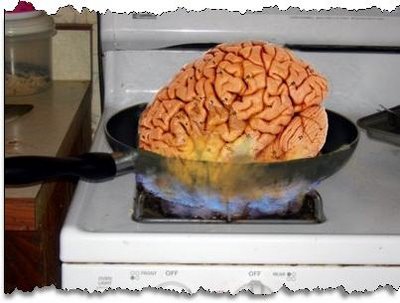
fried-brain.jpg
 
Interesting...I aint never seen no data on that...Do you have a link to reference?

Yes.
or simpler.

Discarded or not it is certainly taking a back seat to more recent findings suggesting otherwise, but that's neither here nor there when discussing "magic loss".

The only thing keeping this phenomenon alive is users reporting they have "lost their magic" and insisting it is real, rather than facing the reality of the situation. That reality being they need a long break, or simply don't enjoy the drug as much anymore because they are familiar with it. An alcoholic under the influence of alcohol experiences it much differently than an 18 year old at a house party, but they haven't "lost their magic". I can't smoke a joint and then look at my friends and laugh for no reason anymore but I haven't "lost the magic". PERSPECTIVE is everything. Your experience with the drug will evolve, and maybe people miss the naive nature of not fully understanding whats going on during a roll, but that isn't MAGIC LOSS, it is just you growing up and finding out that there really isn't magic to it, but it can still be fun.

Researchers can't discover a cause to what is reported as "magic loss". My interpretation of this is: it doesn't exist. Maybe one day I'll have to eat my words.
 
Last edited:
That was a theory that has since been discarded. Whatever chemical is oxidized in the brain that causes neurotoxicity is currently unknown. There are only theories. Dopamine mainly contributes to neurotoxicity by raising body temperature.

Sorry bro, No evidence to support such claims. Oxidization to serotonin neurons due to broken free radical dopamine is still very real.

See here bro

""After MDMA depletes serotonin, the reuptake transporters are left vacant and exposed. When this happens, dopamine enters the transporter and gets taken up into the serotonin axon, where it isn't supposed to be. Studies have shown that dopamine itself is toxic to serotonin cells. But if that weren't enough, MAO comes along and breaks it down into hydrogen peroxide, which is also toxic to the cell. (Yes, the same hydrogen peroxide they put in hair bleach!) The hydrogen peroxide then "oxidizes" certain parts of the cell which don't normally get oxidized ("oxidize," as used here, basically means to break down with oxygen). Researchers sometimes refer to this as oxidative stress, and a number of studies have looked at anti-oxidants like Vitamin-C as a possible agent to prevent MDMA's neurotoxicity""
upclose-7.gif


And then your left with this shit.

shrivel.gif


http://dancesafe.org/drug-information/ecstasy-slideshow

So yeah "
 
You don't enjoy it anymore does not equal "lost the magic". It just means you don't enjoy it anymore. Maybe you grew out of it, doesn't interest you as much, whatever. I'm tired of wasting my time arguing with little wizard boys like yourself who can't find their magic anymore and desperately cling to the notion that there was any in the first place. You don't like rolling anymore man, call it whatever you want, but it sure as shit isn't magic.

No the affects have changed.. simple. I don't care about losing the magic.. it was my own fault.. but are you really that ignorant / arrogant to admit that MDMA abuse can alter your brain long term / permanent. Go argue with the guys in ADD about it.

Of course it wasn't fuckin magic. MDMA didn't make bunnys appear out of hats but the initial phase of MDMA use has a certain something that other drugs just dont have.. you think 1000000s of people that get this affect are just lying?

gtfo u ignorant bellend.

(Sorry ED.. ignorance annoys me..)
 
Shiznik you know those links you posted are from ingestion of 125mg of MDMA.. the same link also goes on to say that high doses of MDMA causes damage to neurons through oxidative stress.. maybe you should read your links more carefully before posting them to prove your point in an argument your clearly losing.
 
From one of the sources your link uses:

MDMA does produce long-lasting changes to the serotonergic system at some doses. These long-term changes include decreases in brain concentrations of the neurotransmitter serotonin (5-HT) and its metabolite 5-hydroxyindoleacetic acid (5-HIAA). Levels of tryptophan hydroxylase (TPH), the enzyme that begins the synthesis of 5-HT within the serotonergic nerve cell are decreased. There are also decreases in the density of the serotonin reuptake transporter (SERT), the protein on the membrane of serotonergic neurons that recycles released 5-HT by pulling it back into the cell. Most studies suggest that MDMA primarily causes long-term changes in serotonergic axons that have their cell bodies in an area of the brainstem called the dorsal raphe nucleus.

Fail.

The above data consistently indicate that MDMA can cause serotonergic axons to degenerate and that this explains at least some of the MDMA-induced decrease in serotonergic markers. Further evidence of axonal degeneration comes from studies in which recovery from MDMA neurotoxicity is associated with apparent sprouting and regrowth of axons (discussed in more detail below). Why, then, has MDMA neurotoxicity been controversial? One reason is that attempts to measure MDMA-induced cell damage itself yield ambiguous results.

Fail x 2.

Because studies of axonal transport and VMAT2 changes have provided strong evidence of MDMA-induced axonal damage, it appears that serotonergic down regulation can no longer fully explain the long-term effects of MDMA. Structural changes to serotonergic axons must also be explained. Although we are not aware that this hypothesis has been advanced, one could argue that loss of axons represents a non-neurotoxic form of neuroplasticity, or benign change in the nerve cell in response to drugs. Non-neurotoxic (though not necessarily beneficial) morphological changes can occur in the CNS as the result of alterations in serotonin levels (reviewed in Azmitia 1999). It appears more likely, however, that these changes are, in fact, the result of damage, specifically damage involving oxidative stress.

Fail x 3.

And from your link:
Excessive MDMA intake triggers oxidative damage to the user's serotonergic nerve cell fine axon terminal lipids and proteins via the production of toxic free radicals. However, the threshold dose for any lasting MDMA-induced toxicity is unknown; and the identity and precise mechanism of the chemical(s) causing the oxidative stress is unclear. The issue is also controversial. Currently the three leading candidates for guilty agent are:

1] toxic metabolites of MDMA

2] toxic metabolites of dopamine

3] impaired cellular energetics

Fail all round i think..
 
Master Splinter... thats just a description of the dopamine theory quoted out of context, which is discussed further:

"...some chemical gets into the serotonin axons through the SERotonin Transporters (SERTs), tiny molecular pumps that neurons use to collect serotonin. (Visit the Ecstasy Slide Show for more information.) Once inside, this chemical is broken down by an enzyme.[7] This breakdown process creates oxidizing chemicals (like hydrogen peroxide) that can damage the neuron. We aren't sure what that first mystery chemical is. For a long time, we thought it was probably dopamine, which we knew played a role in neurotoxicity (dopamine is another neurotransmitter, like serotonin, that is released by MDMA.) However, more recent research has discovered that dopamine's main role in promoting MDMA neurotoxicity is by increasing body temperature: significant overheating is a very important factor in whether or not MDMA neurotoxicity will occur.[8] "

or

"Elevation of body temperature can seriously worsen possible MDMA-induced toxicity; and the thermogenic effect of MDMA is magnified in a hot environment like an indoor rave. Certainly, hypothermia-inducing agents are (partially) neuroprotective against Ecstasy damage; and the primary role of dopamine in MDMA-induced toxicity may actually be to elevate body temperature via its increased action on the dopamine D1 receptors rather than its uptake into the depleted serotonergic axon terminals. But consensus on the molecular mechanisms behind MDMA megadose-induced damage remains elusive."

That still means nothing toward the case of "magic loss" anyways...

And thank you ricko, this wasn't an argument as to whether or not MDMA neurotoxicity was real, but good job proving it and writing "fail" after each quote like a little kid. When did I say axonal damage does not occur? How is quoting the beginning of the article where it outlines leading theories of what chemical is oxidized an argument that "losing the magic" is real? You post nothing significant toward your claim that there is such a thing as "permanent magic loss". Nothing. I'm questioning what you were trying to prove with the quotes at this point...

Hope you find your magic back!
 
Last edited:
The only thing keeping this phenomenon alive is users reporting they have "lost their magic" and insisting it is real, rather than facing the reality of the situation. That reality being they need a long break, or simply don't enjoy the drug as much anymore because they are familiar with it. An alcoholic under the influence of alcohol experiences it much differently than an 18 year old at a house party, but they haven't "lost their magic". I can't smoke a joint and then look at my friends and laugh for no reason anymore but I haven't "lost the magic". PERSPECTIVE is everything. Your experience with the drug will evolve, and maybe people miss the naive nature of not fully understanding whats going on during a roll, but that isn't MAGIC LOSS, it is just you growing up and finding out that there really isn't magic to it, but it can still be fun.

Researchers can't discover a cause to what is reported as "magic loss". My interpretation of this is: it doesn't exist. Maybe one day I'll have to eat my words.

Tolerance (downregulation of receptors) is a much different thing than neuronal damage.. to deny that MDMA has been proven to cause neuronal damage in high / repeated doses is in the running for most ignorant belief within a drug community of this century (slight exaggeration but ye.. :p)

Edit just read ur post..

Well then how can you say that all users need to do is take a long break? Neuronal damage is a permanent thing.. or do you believe that even though a large number of your serotonin neurons are damages that the affects of serotonergic drugs will be the same..

Your right.. alot of the time all these users (most of them posting in ED) will just need a nice long break.. let their tolerance subside and all will be well again. But sometimes the user has abused it for too long and no matter how long a break they go on their brain will not fully heal.. causing MDMA to have alot less of an affect / different affect than before.. Nobody denies that taking a long break can sometimes bring back the "magic"

And yeah i'm a little kid, so what? "Stop taking things so seriously?" Better than being an ignorant beeeeeep.

Come on.. are you really that ignorant that you can admit to permanent neuronal damage but not to a lasting change of affects? Which, afterall, is all "losing the magic" is..
 
Last edited:
Did you not read my post shiznik? I've gone on seriously long breaks and i still no longer enjoy MDMA.. it's made some very long lasting / permanent damage.. I noticed i didn't get much from a pretty high doses of aMT which someone said could be because of my past MDMA abuse.

Also to the person saying that there is no phrase like "magic" for any other drug. No other drug feels "magic" the first few times you take it. Psychedelics maybe but even then it could go both ways and i never got any magic feelings from shrooms / lsd / bromo-dragonfly / 2cx's.. With MDMA my outlook on life and the world (on and off mdma) changed in such a major and positive way that magic is the only word i could use to describe it.. Coke, amphetamine, opiates, gabaergics.. none of them feel as life changing and positive as the first few MDMA uses.. That's why nobody uses a phrase to describe the first few uses of them. Also.. the affect doesn't change as drastically with these drugs after abuse than MDMA.

How do you know there is permanent damage? Has a doctor told you this? Alcohol is known to be poison for your brain and your body, and still so many people (myself included) drink large amounts on a somewhat regular basis and feel no guilt or bad feelings whatsoever, because it is very acceptable in our society. MDMA is a drug that has had a lot of bad misinformation for longer than you or I have been using it. There is little research on the effects and plenty of contradicting conclusions on how dangerous it is, but because it is an unacceptable drug in our society, so many of us feel guilty about using it, and are constantly worried about the damage it may or may not cause. How many people on here are so quick to blame the MDMA when they have used a large variety of other substances as well. It seems we just can't get that old holes in the brain bit out of the back of our heads.

There are plenty of drugs that seem magical at first. Mushrooms and acid were very "magical" experiences for me just like MDMA, and many consider them to be the most spiritual of drugs. Psychedelics have a huge effect on people's out look on life... no doubt. Different drugs effect people quite different, and I have read plenty of trip reports on drugs like heroin where people were floored by the experience. Just because MDMA is the only drug that seems magical to you, doesn't make it true.

I have abused MDMA twice during my ten year use, and I still "have the magic". Maybe it's because I don't spend too much time worrying about what damage I have done. Maybe it's because I am able to embrace the change in experience and appreciate rolling for what it is now. I am very happy that I am not that wide eyed kid in the corner who's rolling so hard I can barely speak anymore. The first few times I rolled are extremely blurry. Now I actually remember the whole night... is that a bad thing?

Seems like someone learned a new word today: ignorant. Why is it that people like to throw this out during an argument to try and make themselves feel better or something... Is it really ignorant to believe that there simply isn't enough science behind the specifics of neurotoxicity to take a position on it, but instead rely on my experience which tells me that I am just fine? One thing's for sure, usually when people start name calling it means they don't have much else to say...
 
I agree with you somewhat foxylady, but after using this magical drug for years, I dipped into a small binge for 4 months, once a weekend, 20-30 pills, nothing too extreme considering ive done hundreds in the past, and now, 5 months later I feel like my life is over, i've been conntemplating suicide for the most part of the day, lost my friends and dropped out of uni after a single bad roll, upon which I wasnt that bad before. I suspected to be much better now, but i'm very pessimistic on achieveing a full recovery.
 
I suspected to be much better now, but i'm very pessimistic on achieveing a full recovery.

I think that plays the largest roll on your recovery. When I took a break after abuse, I felt exactly like you felt and several months. It's really easy to get caught up in all these bad feelings. I'm not a spiritual person at all, but I do believe that mind over matter plays a very large roll in a persons thoughts and feelings. Think about those days when you stub your toe right out of bed or something and your day just seems to get worse from there. If you believe that you will never get better, I have a hard time imagining that you will ever really feel better. I seriously hope that is not the case and you feel like yourself again soon.
 
Shiznik you know those links you posted are from ingestion of 125mg of MDMA.. the same link also goes on to say that high doses of MDMA causes damage to neurons through oxidative stress.. maybe you should read your links more carefully before posting them to prove your point in an argument your clearly losing.

You're only kidding yourself if you think I didn't read through the entire thing. The "contradiction" your detective work found is in the next paragraph... Did you really think I didn't get that far? I didn't "post links to prove my point", I posted links where I had previously learned about what I was writing because someone asked me to.

What I wrote in response to you had two parts:
1.) Neurotoxicity does not necessarily occur the way you suggested it did (being that dopamine "destroys serotonin uptake receptors due to its oxidization") and
2.) Permanent loss of magic is not real.

You seemed to have thought that I was claiming MDMA does not cause damage to your brain, so you decided to call me ignorant (though you are the one calling your little dilemma "magic loss") several times and go on to prove that damage does in fact occur. Of course it does...

I'm actually of the opinion that MDMA is quite a bit more neurotoxic than we all give it credit for. I think it leaves a lot of us who have abused it with our fair share of problems. None of which, however, are a permanent intolerance of the drug. Like I said, I have seen studies where this axonal damage is reversible. New serotonin axons have shown to grow in place of the destroyed ones. It even suggests that in one of your quotes you took out of context in attempt to make me look stupid ("recovery from MDMA neurotoxicity is associated with apparent sprouting and regrowth of axons ").

Neuronal damage is a permanent thing..

But sometimes the user has abused it for too long and no matter how long a break they go on their brain will not fully heal..
Where are you getting that information from? I've not read that anywhere. Within each of the links I posted there are examples suggesting the opposite of what you claim.

This is an example.

This is "a large German study looking at the brains of people who had used approximately 800 tablets (on average) of 'ecstasy' over their lives"..."study findings indicate that continued regular, heavy ecstasy use lowered serotonin transporter availability, but that formerly regular, heavy ecstasy users no longer had lower serotonin transporter availability." Like I said, you'd likely be left with your fair share of problems, but nothing suggests the drug would simply stop working.

I hate to paraphrase findings of a complex study like that but you've made this a contest. I don't claim to be an expert in this field, quite the opposite in fact, but from what I have read, the conclusion that I have drawn is the exact sentiments of many others: this permanent "loss of magic" stuff is just a buzz term only thrown around in the United States that holds no scientific ground. In fact it's just stupid misinformation. The longer people talk about it on this forum, the longer new ecstasy users are going to worry about it, and when that starts to happen, it becomes a reality for them. Mind over matter.

 
Last edited:
1. I never said anything about the dopamine theory.
2. Sorry i did get the wrong end of the stick and thought you were denying that MDMA was neurotoxic..

But as for it being reversible:

http://www.maps.org/media/ricaurte-mccann.html said:
The researchers based their conclusion on reversibility on the finding on the finding that ex-MDMA users have higher densities of serotonin transporters than do heavy users. Studies in non-human primates have shown that, over time, there is regrowth of ascending serotonin axonal projections after MDMA-induced injury but that a normal innervation pattern is not restored.

Also we don't know what doses / frequency the test subjects were taking.. was it 5 pills every 2 weeks of 10+ pills every week? We knot it can cause pretty significant damage when abused.. now what if the person with the damage keeps abusing at stupid amounts? It seems pretty obvious that some long lasting / permanent damage can arise from such use. Even if axons did grow back i swear i read a study saying they grew back wrong.. small and linking wrong areas..

This, i believe, can directly translate to losing the magic. Are you denying the thousands of accounts that MDMA just isn't the same anymore? Who are you to discredit their observations? It's a tolerance issue for most, sure, but for some it's something different. The affects CHANGE.. Like i said i went on a break for over a year and then used some MDMA.. over a gramme, infact, and didn't even get nystagmus.. only got slight bruxism.. mood lift was debatable.. It's not just cos i'm used to it as to be honest i barely remember what it feels like.. it's not that i've grown out of it.. it doesn't act the same way as it used to in my brain.. even after a year without use..
 
Last edited:
^ This is absolutely correct and the source is more than reliable. I can say that it feels as though I've made a fairly complete recovery from the abuse, but it's not at 100% even after years of using it every few months (referring to everyday life -- not the magic). I still get nystagmus from MDxx, but that's it. No bruxism, no mood lift. Just eye jitters and a "fucked up" feeling.

Even if axons did grow back i swear i read a study saying they grew back wrong

I remember what source you're talking about and I can't find it at the moment, but it basically said the patterns weren't as intricate. If you had intricately branching tree / fractal, imagine it was far simpler -- like a fractal of only two branching lines, branching into four branching into eight, etc. as opposed as three branching into six, branching into twelve, etc.

As a disclaimer, it's a simple analogy and shouldn't be taken as basic function in any way. The same density simply is not there. Correct me if I'm remembering this wrong -- I have no sources on this one.
 
Are you denying the thousands of accounts that MDMA just isn't the same anymore? Who are you to discredit their observations? It's a tolerance issue for most, sure, but for some it's something different. The affects CHANGE.. Like i said i went on a break for over a year and then used some MDMA.. over a gramme, infact, and didn't even get nystagmus.. only got slight bruxism.. mood lift was debatable.. It's not just cos i'm used to it as to be honest i barely remember what it feels like.. it's not that i've grown out of it.. it doesn't act the same way as it used to in my brain.. even after a year without use..

I'm not denying that the effects change. But they do in all drugs over time. Are you denying that?
 
Top