Would Remote Mind Control Be Possible With Current Technology?

Brainwashing The Science of Thought Control

By

Kathleen Taylor​


"Taylor attended the University of Oxford where she studied physiology and philosophy.[3] She obtained a master's degree in psychology from Stirling University, and received her doctorate in computational neuroscience from the University of Oxford.[3]"


This is a really strong work that gets into the neuroscience behind "brainwashing and thought reform." Really well written and there is a really good reading available on Audible free with a membership.

I have been working on the how and the why of what im. forced to go through. Listening to this really solidified the conclusions I have come to. Just listened to a large portion of this yesterday.

I woke up this morning with a really heavy heart. This is what is and is going to be done to citizens of the free world. Its not an experiment it's a slow roll out of Humanities first extreme Techuthoritarianism.

The slow destruction of myself and the potential destruction of the freedom and political systems I cherish fill me with horror and dread. A true dystopian nightmare.

Waves are being added as one was added about six months ago from new victim reports on social media.


“First they came for the Socialists and I didn’t speak out because i wasn’t a Socialist…

The they came for the Trade Unionists and I did not speak out because i wasn’t a Trade Unionist..

Then they came for the Jews and I didn’t speak out because i wasn’t a Jew..

Then they came for me and there was no one left to speak for me”

Martin Niemollor

“we lived as usual, by ignoring. Ignoring isn’t the same as ignorance, you have to work at it. “

Margret Atwood
 
Last edited:
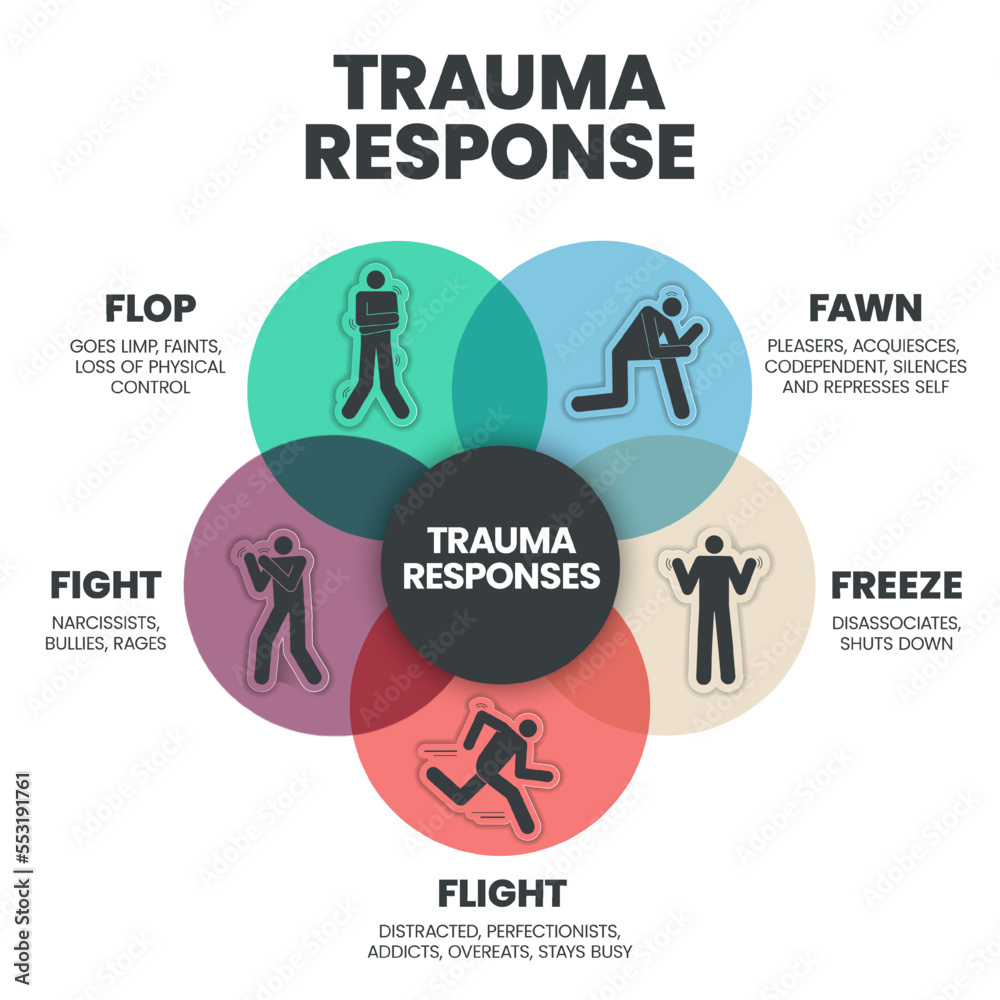
Fight, Flight, Freeze and Fawn
CCPTSD, Learned Helplessness, The Fawn Response and Coercive Control


Covert torture and trauma are are two pillars of current MK program. The programs agenda and systems goal is to establish and maintain control over a target without or despite their conscious will. Why are innocent people subjected to endless covert torture and agony? It's to enslave targets/victims, using technology designed to be covert enough to evade detection, psychological manipulations to avoid serious investigation, providing the time and freedom required for such a sustained assault that the victim is psychologically obliterated and ends up totally controlled and enslaved to their torturer.

There are four responses when we look at trauma. Fight, Fight, Freeze and Fawn. We face and endure such a severe trauma for such unbelievable time periods that posting media referring to more traditional trauma feels to me a further violation.

1000_F_553191761_DAxSSrzaOa3N97cEz849a8iHjrzGd5Zg.jpg


So the tech has been designed to deliver severe constant torture, trauma and brainwashing. It's difficult or almost impossible to run from and extremely hard to fight back against. This significantly excludes fight or flight. You can't physically shield from it so takes out the freeze. As this vile filth goes on for years waiting it out won't work either. It's designed to force the fawn effect and force control by the filth abuser over the victims. Its Totalitarian filth and it and who's behind it need to be thrown a doorless cage or obliterated from the free world. Purge America of this filth.
 
This is a great paper that looks at John Lilly and two diverging potentials surrounding principals and techniques of the current covert computerized version. They really have maintained the original focuses, goals and techniques. Using advances in technology largely to try and enhance delivery, increase subject/victim availability and increase stimuli duration and variance. With its past success it seems like developing AI tarot card technology.

Not everything is still in the pre 1960s as the BCI has provided for significant innovation, but it’s inability to evolve at levels anywhere near the modern phenomenon, may be because super secret science stagnates itself and could causes powerful delusions in its scientist as well as its victims.


Victims of this can experience a sensation near their left temple. Likely it comes from a form of transcranial stimulation that may be intended to disrupt function in the left temporal lobe. This could be to try and increase the effectiveness of the hypnotic suggestion and psychological manipulation that is delivered through the audio harassments, as the left temporal lobe is what interprets spoken language.

"In most people, the left side of the brain is the dominant one, and in most people the left temporal lobe controls memories related to facts and information, along with the ability to recognize faces and objects. It also controls your ability to create and understand language, through the use of two specific regions of the left temporal lobe. "


More on TMS and hypnosis

More on Pons, the stimulation of the tong muscles and principals behind combining stimulus with it to cause neuroplasticity and effect cognitive changes.

Here is another take on what's going on with the stimulation of that area. Some of the major goals of this system are to disrupt conscious control and prohibit internal dialogue. Sucesessfuly disrupting internal dialog severely inhibits the ability to consciously think, logically reason, and consolidate and reconsolidate memories. Induced amnesia is a long standing desire of the MK program. By removing targeted pieces of the encoding process during memory consolidation it may be possible to implant nonconsensual programming that is difficulty to recall and alter or treat. Brain washing at heart looks to obliterate the individual self or personal identity and this area is thought to be key in developing and maintaining the self.

The reason that area is so commonly stimulated among victims of this may be to disrupt function of the Left Inferior Frontal Gyrus.

"Self-Reflection and the Inner Voice: Activation of the Left Inferior Frontal Gyrus During Perceptual and Conceptual Self-Referential Thinking

Inner speech involvement in self-reflection was examined by reviewing 130 studies assessing brain activation during self-referential processing in key self-domains: agency, self-recognition, emotions, personality traits, autobiographical memory, and miscellaneous (e.g., prospection, judgments). The left inferior frontal gyrus (LIFG) has been shown to be reliably recruited during inner speech production. "

Continued here https://www.ncbi.nlm.nih.gov/pmc/articles/PMC3462327/


Inner Speech: Development, Cognitive Functions, Phenomenology, and Neurobiology

link https://www.ncbi.nlm.nih.gov/pmc/articles/PMC4538954/

diagram

https://www.stepwards.com/wp-content/uploads/2017/12/640px-Gray726_inferior_frontal_gyrus.png
 

Repetition suppression and plasticity in the human brain Marta I. Garrido,1 James M. Kilner,1 Stefan J. Kiebel,1 Klaas E. Stephan,1 Torsten Baldeweg,2 and Karl J. Friston1​

renderTimingPixel.png

This is pretty chewy, that is complex and difficult to digest. Breaking it down, in line with what we experience, shows extreme priming implanted due to the endless looped seemingly irrelevant audio stimuli to the eventual "oddball" insertion of primed programming. Repeated audio stimuli will establish and fortify neural pathways. The more repetitions of the stimuli the more developed, capable and effective the neural pathway becomes. The more powerful a neural pathway is developed the increased effects it has on cognition and behavior. Extreme repetition of forced looped verbal statements may be able to prime powerful neural pathways. These primed pathways could be linked, with targeted association, in order to influence cognition and behavior, despite conscience knowledge or will, effecting a victims thought and behavior permanently.


Repetition suppression and plasticity in the human brain
Marta I. Garrido,1 James M. Kilner,1 Stefan J. Kiebel,1 Klaas E. Stephan,1 Torsten Baldeweg,2 and Karl J. Friston1

Abstract
The suppression of neuronal responses to a repeated event is a ubiquitous phenomenon in neuroscience. However, the underlying mechanisms remain largely unexplored. The aim of this study was to examine the temporal evolution of experience-dependent changes in connectivity induced by repeated stimuli. We recorded event-related potentials (ERPs) during frequency changes of a repeating tone. Bayesian inversion of dynamic causal models (DCM) of ERPs revealed systematic repetition-dependent changes in both intrinsic and extrinsic connections, within a hierarchical cortical network. Critically, these changes occurred very quickly, over inter-stimulus intervals that implicate short-term synaptic plasticity. Furthermore, intrinsic (within-source) connections showed biphasic changes that were much faster than changes in extrinsic (between-source) connections, which decreased monotonically with repetition. This study shows that auditory perceptual learning is associated with repetition-dependent plasticity in the human brain. It is remarkable that distinct changes in intrinsic and extrinsic connections could be quantified so reliably and non-invasively using EEG.

Keywords: connectivity, DCM, EEG, network, perceptual learningGo to:
Introduction

We have previously used the roving paradigm and dynamic casual modelling (DCM) to search for optimum functional architectures underlying mismatch responses elicited by deviant and standard tones (Garrido et al., 2008). We were able to show that one can account for these responses with changes in connectivity among distributed cortical sources. In this paper, we adopt a parametric DCM to examine the form of repetition-dependent connectivity changes that mediate the emergence of these response differences. In brief, we attempt to model plasticity or changes in connectivity as a function of repetition or time. With this new approach we were able to quantify the time course of repetition-dependent changes and show that connectivity reduces, both within and between cortical areas. This causes decreases in evoked responses; i.e., repetition suppression, which manifests as a suppression of a mismatch responses, as an oddball becomes a standard. A key practical advance, afforded by this parametric DCM, is the ability to quantify the rate of experience-dependent plasticity non-invasively, using simple and established paradigms. Furthermore, because we use a physiologically informed model, one can assess plasticity separately in intrinsic and extrinsic connections. This may be useful in clinical and neuropharmacological studies.

Novel events, or oddballs, embedded in a stream of repeated events, or standards, produce a distinct response that can be recorded non-invasively with electroencephalography (EEG). For example, the mismatch negativity (MMN) is the negative component of the waveform obtained by subtracting the event-related response to a standard from the response to an oddball, or deviant event. The MMN is believed to index of automatic change detection by pre-attentive sensory memory mechanisms (Tiitinen et al., 1994). Recently, we provided evidence that the mechanisms underlying the MMN can be considered within a hierarchical inference or predictive coding framework (Garrido et al., 2007). Within this account, the MMN is interpreted as a failure to suppress prediction error, which can be explained quantitatively in terms of coupling changes among and within cortical regions. The predictive coding framework accommodates two previous hypotheses; in the sense that it predicts the adjustment of a perceptual model of the current stimulus [c.f., the model-adjustment hypothesis (Winkler et al., 1996; Näätänen and Winkler, 1999)] and entails adaptive changes in post-synaptic sensitivity during learning [c.f., the adaptation hypothesis (May et al., 1999; Jääskeläinen et al., 2004)]. The model-adjustment hypothesis postulates that the MMN reflects on-line modifications of a perceptual model that is updated when the auditory input does not match model predictions. In this context, the MMN is regarded as a marker for error detection, caused by a deviation from a learned regularity. In other words, the MMN is a response to an unexpected stimulus change and, from the point of view of predictive coding, signals prediction error:

The mechanisms underlying suppression of prediction error are closely related to repetition-suppression, in which “repeated experience with the same visual stimulus leads to both short and long-term suppression of neuronal responses in subpopulations of visual neurons” (Desimone, 1996). This is closely related to stimulus-specific adaptation (Pérez-González et 2005) in the auditory system, where “fast, highly stimulus-specific adaptation and slower plastic mechanisms work together to constantly adjust neuronal response properties to the statistics of the auditory scene” (Nelken 2004). Repetition suppression is a ubiquitous phenomenon that speaks to both predictive coding (e.g., Friston, 2005) and models of perceptual inference and learning (e.g., Desimone, 1998). Predictive coding models of perceptual inference and learning suggest that all experience-dependent effects, and in particular repetition-effects (from postsynaptic adaptation to semantic priming), are mediated by changes in synaptic efficacy; either short or long-term. These changes are driven by associative plasticity to optimise predictions of sensory input and therefore explain away prediction errors more efficiently. This enhanced ‘explaining away’ may be a useful perspective on repetition-suppression, which rests on synaptic plasticity at the cellular level or changes in ensemble coupling at the macroscopic level. Critically, hierarchical inference, or predictive coding, also rests on optimising the relative influence of bottom-up prediction error and top-down predictions. This involves optimising the efficacy of intrinsic connections within an area or source (Friston, 2008). Put simply, when an unpredictable stimulus occurs, units encoding prediction error should adapt, reducing the strength of unreliable prediction error signals. In short, hierarchical inference, using prediction error, provides a principled framework in which the model adjustment and adaptation heuristics become necessary for understanding sensory inference (see Garrido et al., 2009).

Few studies have explicitly explored the role of stimulus repetition during auditory memory-trace formation. Näätänen and Rinne (2002) found that later negative responses (>100 ms), in contrast to earlier responses, are elicited only by sound repetition. Others found that increasing the number of repetitions enhances responses to standard tones in both early (30-50 ms) and later components (60-75 ms) (Dyson et al., 2005), localised in the primary and secondary auditory areas respectively (Liegeois-Chauvel et al., 1994). Similarly, Baldeweg et al. (2004) and Haenschel et al. (2005) found that the MMN increases with the number of preceding standards and may be mediated by a repetition-dependent enhancement of a slow positive wave (50-250 ms) in the standard ERP (a repetition positivity - RP). In other words, the emergence of repetition positivity in standards underlies the mismatch negativity observed in a subsequent oddball.

Here we used a roving paradigm to test the hypothesis that repetition-dependent changes in electrophysiological responses to repeated stimuli are due to experience-dependent plasticity, or changes in connectivity. We show that stimulus repetition reduces connectivity, within and between cortical areas. This causes experience-dependent decreases in evoked responses; i.e., repetition suppression, which manifests as a suppression of MMN components, as an oddball becomes sufficiently predictable to be considered as a standard.

continued
https://www.ncbi.nlm.nih.gov/pmc/articles/PMC2821573/#:~:text=This study shows that auditory,and non-invasively using EEG.

 
How the Science of Memory Reconsolidation Advances the Effectiveness and Unification of Psychotherapy Original Paper Open access Published: 22 April 2020 Volume 48, pages 287–300, (2020)


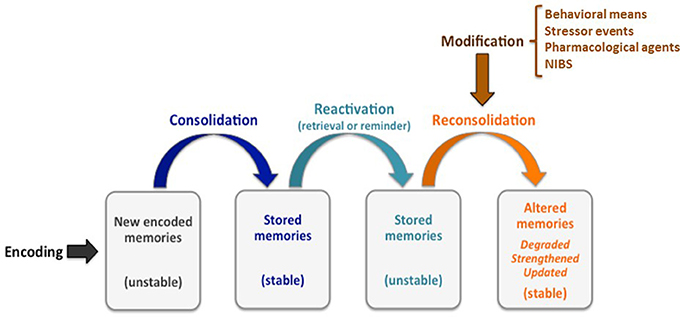
The reprogramming, due to memory manipulation during reconsolidation is a little complex at first. This is just an introduction into reconsolidation manipulation. Every time a memory is triggered it becomes unstable. This means that its recoding is vulnerable to manipulation and even its continued existence is vulnerable to reconsolidation disruption which threatens its existence and thus its continued influence on the mind of the victim.
This paper looks at this and I'm posting it specifically for the ability to change or manipulate original emotional encoding of the consolidation phase, during the retrieval and reconsolidation events. "Mind Control" narcissists have always had a hard on for emotions they mistakenly perceive as more powerful than others. Fear seems to top their lists. Considering the cowardice of these clowns I can see why.
When a memory is triggered and recalled it's vulnerable to new emotional encoding. There are many reasons we are intended to be held in a constant prolonged sympathetic nervous state and traumatic emotional recoding is certainly one.

fpsyg-09-01430-g001.jpg


Emotional recoding has the ability to effect cognitive and behavioral change despite true experience and willful intention.

How the Science of Memory Reconsolidation Advances the Effectiveness and Unification of Psychotherapy​

https://link.springer.com/article/10.1007/s10615-020-00754-z
 
snmfmy you dispense “medical“ advice that is often deeply flawed. You clearly aren’t a medical professional.. your posts are often extremely abrasive.

You post with such authority on this. Why you haven’t experienced it and don‘t know me from Adam. You regularly post with abrasive authority on subjects you have no authority over.
 
No he really is
Even if he was he seems like a pretty cool dude. Insulting him was uncalled for IMO. Simply state what you know and leave the insults out of it, at least that’s what I would do. I don’t think anyone likes being called delusional, regardless of if they are or not.
 
Even if he was he seems like a pretty cool dude. Insulting him was uncalled for IMO. Simply state what you know and leave the insults out of it, at least that’s what I would do. I don’t think anyone likes being called delusional, regardless of if they are or not.

There are a few interesting quirks around delusion. According to the DSM the diagnosis of delusion doesn't require any justifiable proof. Instead it's based off beliefs that are not in line with the beliefs of large groups of the masses. Because large groups of the masses believe in Religions they are excluded from delusional beliefs despite being based off concepts that are utterly impossible to prove.

A person is still delusional if they have true beliefs that contradict the false beliefs of the masses.

I have been enduring this for seven and a half years. Snmfmy conclusions, despite being presented in a weak abrasive manor, are logical. They aren't correct, but are conclusions many logical intelligent people decide.

At first I really wanted to warn people about this. That has proved much more difficult than I initially figured. Now I'm focused on escaping and leaving a strong trail so current and future victim have solid science based explanations and knowledge to counteract and defeat the program themselves. Trying to convince ignorant people this is going down is an act of severe futility. They can figure it out when they get lit up.

Really in the end when your tortured and abused on this level who the fuck cares what the snmfmy's of the world say. Beat the system and escape while leaving a trail for others to follow.. period.
 
Last edited:
I'm somewhat of a skeptic on this conspiracy theory, but I have often wondered if it would be possible. There are people who call themselves "targeted individuals" and claim that the government is using HAARP and/or other high tech installations to beam mind control signals into their brain. In other words to change their emotional state using electromagnetic frequencies. I find their claims rather chilling and sometimes wonder if they are on to something, as some of them honestly don't strike me as crazy but merely experiencing something that most don't. However, do their claims violate the laws of plausibility and physics? In other words, could governmental organizations beam signals into someone's brain from afar like that? Or is that impossible? Thoughts? How much energy would it take to do that? And if it wasn't directed at one individual but merely these people are more astute to it than others....... perhaps a diffuse signal of some kind is being beamed from such installations to the populace at large. That would make somewhat more sense to me given the way that I understand these things, though admittedly I still don't buy it. Perhaps, that actually is a scientifically valid hypothesis though? Though, perhaps that isn't possible either. In short, do you think it's possible that the government could come up with an installation that is capable of affecting the thoughts of the populace by using electromagnetic waves. What if they put something into the air (e.g. chemtrails) to amplify the signals? Would this be scientifically possible? Not saying it's happening. Just curious if these types of conspiracy theories are within or against the laws of physics. Not plausibility. Because while I don't believe in these theories, some people I have seen and talked to online do (in the course of my conspiracy theory/ufology research). Simply out of curiosity I wonder if these theories are plausible. Even if perhaps these people have simply gone off the deep end........ perhaps what they are saying is not 100% impossible. Or is it?
Lots of sleight of hand involved, but it's been possible with cult tactics and a little social engineering. I wrote a document explains exploiting the individuals in phases like software.

This is how adverts and companies use scarcity, familiarity, and other attributes to tug emotional triggers. Trolling is another form. Fuzz the ever loving shit out of someone's brain until you get an anomalous reaction.
 
snmfmy you dispense “medical“ advice that is often deeply flawed. You clearly aren’t a medical professional.. your posts are often extremely abrasive.

You post with such authority on this. Why you haven’t experienced it and don‘t know me from Adam. You regularly post with abrasive authority on subjects you have no authority over.
I know that many of the things you post violate the laws of physics which means if you believe they happen, you are delusional.
 
I know that many of the things you post violate the laws of physics which means if you believe they happen, you are delusional.
taking into account that this thread reflects a learning process over years of research, meaning initial determinations may be incorrect, what are some of the posts that violate the physical laws?
 
Last edited:

A book that’s really relevant to the current criminal program.
 
Top