I think I've pointed this out before but the equities boom these past four years have been teh result of an insane expansion in the M2 money supply, much of which was plowed into share buybacks -
View data of a measure of the U.S. money supply that includes all components of M1 plus several less-liquid assets.
fred.stlouisfed.org
There are all kinds of equities. S&P 500 is highly concentrated in tech right now so, of course, when tech corrects it weighs heavily on these index funds.
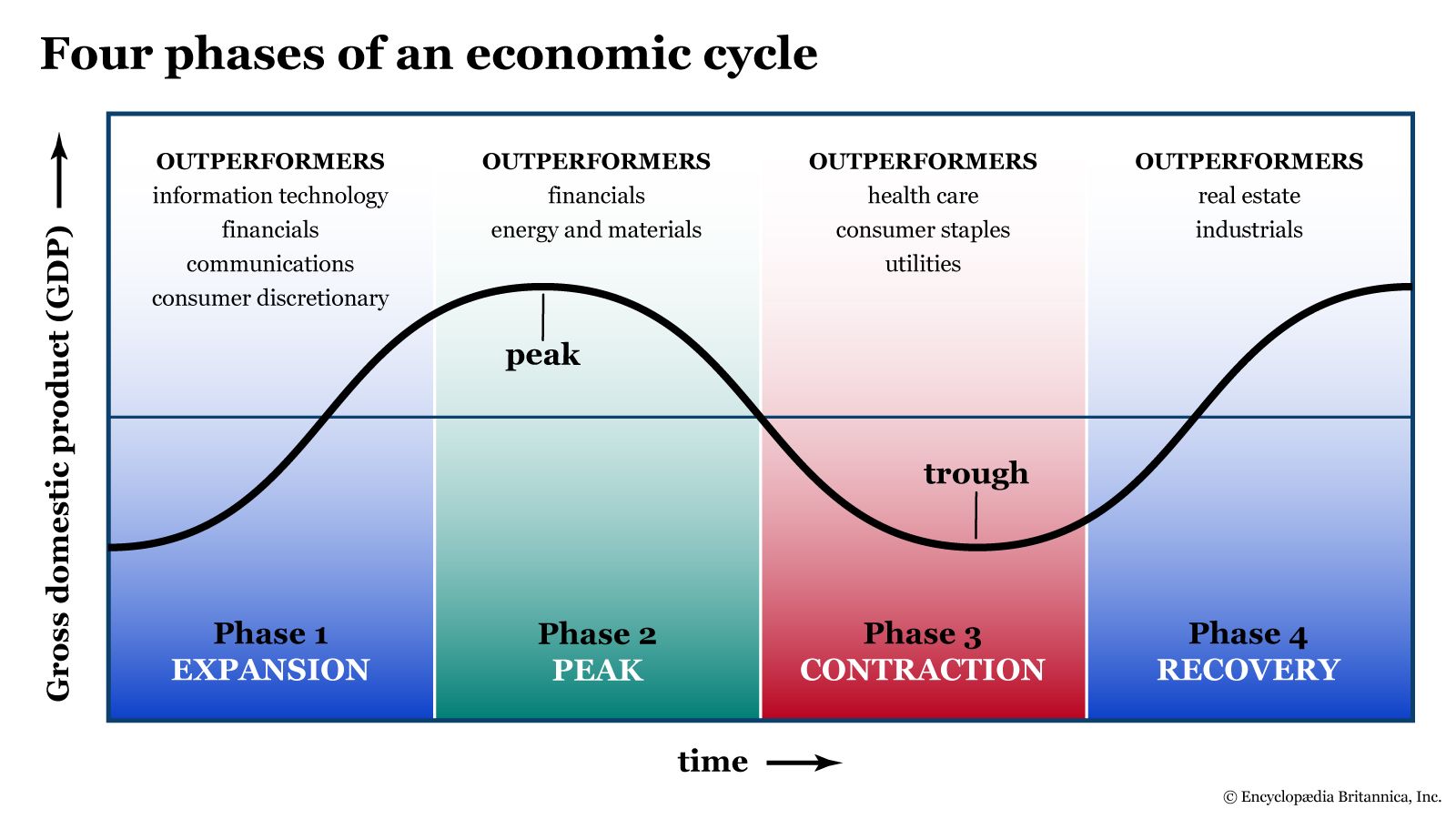
Follow the business cycle and you can make safe bets in equities as they're rising -
Healthcare and utilities have been rising, signaling a shift into phase three.
In the short term, tech may move sideways for a while as massive capex will take a year or more to really bear fruit.
Inflation compounds. Remember that every time you sell equities, which keep up with inflation. Safe investments don't. I've seen people retire poor by selling too much of their equities and they weren't left with enough to get back into the market when there was a dip.
The only amount of your portfolio that you should have in fixed income investments is the *bare minimum* that you would need to survive for a few years if there's a bear market, so that you don't have to sell equities at a loss to cover the cost of living.
Personally, I rather have that in sectors negatively correlated with growth (tech) because those rise and pay steady dividends, which have preferential tax treatment compared to something like bonds.
Thanks for all the info, the cyclical performance of the different market sectors is not something I'd heard much about previously. But it does look like something that's worth finding out more about.
I'm just following the general advice for investing in index funds. After watching numerous channels, I've found my pick of a small handful that I personally trust for giving sensible advice.
70/30 would seem to be a sensible allocation for someone of my age, who is also currently undergoing undetermined but possibly serious health scares. That 30% is for multiple options. Tax free cash withdrawal if required to cover living expenses, (my emergency fund currently only covers about 6 months living expenses, so that is rather short) or possibly dry powder for re-investing during any dips.
I had my pension 100% all in equities until a few weeks ago. Previously I'd followed the advice about 'ignore the noise, you're in it for the long term, so any short term volatility doesn't matter'.
I did that for 4 years but now I am getting spooked by nearly every finance channel agreeing that the major US index funds used in most private pensions in the UK are in an overvalued bubble.
I'm following the advice that if anything worries you, that means you need to adjust your allocation to something that you're more comfortable with.
So 70/30 will be fine for me for a while.
Especially if i manage to get all of that 30% sold while the market is still rising. Meaning large profits. I'm just selling bit by bit, as who knows how much longer things will keep going up?
The eroding effect of inflation does not unduly concern me with the 30%, its basically all free profit money anyway. Plus in the UK for every £100 you invest into a private pension the government gives you £20 tax allowance (for basic rate tax payers). So even in a safe money market fund which pays 4.9% I think, I'm already massively up. I think inflation in the UK is currently less than 4.9% or it's there or there abouts anyway. I'd basically be getting a 24.9% return on anything I put into the pension, even if I used the safest option of a money market fund. I know equities can do massively better than that, as they have done over the last 4 years. But right now I need to de-risk for my own peace of mind. It's the right move for my circumstances.
The worst thing would be for me to be 100% in equities and have the market drop by any large amount for a sustained period, and need to withdraw during the dip, and having to seal heavy losses.
That would be the biggest mistake of all, although I know prolonged dips of 10 years or so are exceptionally rare. Has there been like 3 over the last 100 years? But who knows when the next one of those will be?
I'm keeping things to a level that I understand, I'm not going to be doing things that I don't understand. Which is also another fundamental rule.
I see the whole thing as a balancing act, with many factors affecting the desired balance, but most of all is the individuals time horizon.
I currently dont know what mine is any more, until I get the results of tests and and treatments required, and if they are succesful or not.