• Psychedelic Medicine
  • Psychedelic Medicine Moderator: mr peabody

SUICIDALITY | +40 articles

imperial-college-london-entrance-uk-january-royal-school-mines-building-84562366.jpg

Imperial College London
Psychedelics associated with decreases in depression severity and suicidal ideation

Richard J. Zeifman1, Anne C. Wagner, Ros Watts, Hannes Kettner, Lea J. Mertens1, and Robin L. Carhart-Harris

Imperial College London | Frontiers In Psychiatry | 7 Aug 2020

Psychedelic therapy shows promise as a novel intervention for a wide range of mental health concerns but its therapeutic action is incompletely understood. In line with acceptance and commitment therapy’s (ACT’s) transdiagnostic model, qualitative research has suggested that reductions in experiential avoidance are an important component of therapeutic outcomes associated with psychedelics. However, limited research has quantitatively explored the association between decreases in experiential avoidance and therapeutic outcomes associated with psychedelics. Therefore, in two prospective studies, using convenience samples of individuals with plans to use a psychedelic, we explored the impact of psychedelic use on experiential avoidance, depression severity, and suicidal ideation, as well as relationships between changes in these outcomes.

Participants completed self-report questionnaires of depression severity, suicidal ideation, and experiential avoidance: 1) before using a psychedelic (in ceremonial and non-ceremonial contexts), as well as 2) 2-weeks and 3) 4-weeks after psychedelic use. Across both studies, repeated measures ANOVAs indicated significant decreases in experiential avoidance, depression severity, and suicidal ideation after psychedelic use. Furthermore, decreases in experiential avoidance were significantly associated with decreases in depression severity and suicidal ideation. These results suggest that psychedelics may lead to significant decreases in experiential avoidance, depression severity, and suicidal ideation. Additionally, these findings imply that reduced experiential avoidance may be a transdiagnostic mechanism mediating treatment success within psychedelic therapy. We conclude that integrating psychedelics with psychotherapeutic interventions that target experiential avoidance (e.g. ACT) may enhance therapeutic outcomes.

Serotonergic psychedelics, a class of pharmacological agents that act as serotonin 2A receptor (5-HT2AR) agonists, including psilocybin, LSD, and DMT; are currently receiving attention within psychiatry and mental health as novel interventions for a wide range of mental health concerns . Randomized controlled trials and open-label trials have found promising results for psychedelic therapy in the treatment of distress associated with a life-threatening illness, substance use disorders, obsessive-compulsive disorder, depression [e.g., and suicidal ideation.

Given the wide range of mental health concerns for which psychedelic therapy has shown promise, it has been suggested that this treatment approach may target underlying transdiagnostic mechanisms. Recent research has indicated that the intensity of “mystical-type” or “peak” experiences engendered by psychedelics is predictive of positive therapeutic outcomes; however, it remains unclear how (i.e., via what fundamental psychological and neurobiological mechanisms) psychedelic therapy brings about lasting therapeutic changes. Identifying such underlying mechanisms is important for a number of reasons, including that it might improve our overall understanding of psychopathology, optimize therapeutic outcomes, and choice of treatment for clients, as well as guide treatment development, refinement and delivery.

Discussion

Previous research has indicated that psychedelics hold promise for the treatment of a wide range of psychiatric concerns; however, little research has been done to assess the impact of psychedelics on depression severity or suicidal ideation among non-clinical samples. Across two separate studies, we found significant decreases in depression severity and suicidal ideation 4-weeks after psychedelic use. Importantly, we did not find significant increases in depression severity or suicidal ideation from 2-weeks to 4-weeks, suggesting that the positive effects of psychedelics were reliably sustained for at least 1-month post-psychedelic use. These results are in line with clinical studies indicating that psychedelics can lead to decreases in depression severity and suicidal ideation and that these effects are sustained over time. Importantly, in both studies, the majority of the participants exhibited subclinical levels of baseline depression severity. Therefore, our results provide additional support for the possibility that the effects of psychedelics extend along the full spectrum of depression severity, from the severe to the mild end of the spectrum. Furthermore, in light of previous research showing that first-line interventions for depression lead to minimal to no decreases in suicidal ideation, it is promising and highly relevant to observe reductions in suicidal ideation here, in relation to psychedelic use.

*From the article (including references) here :
 
Last edited:
image.jpg


Ketamine an emergency deterrent for people at risk of suicide*

by Amy Norton | 7 Jun 2022

A new clinical trial strengthens the case that ketamine -- once famous as a club drug -- can rapidly ease suicidal thoughts.

Researchers found that among 156 adults hospitalized for severe suicidal thoughts, those given two doses of ketamine often saw those disturbing ideas go away within a few days.

By day three, 63% were in full remission, compared to just under 32% of patients given a placebo in addition to standard care.

The study -- published Feb. 2 in the British Medical Journal -- is the latest to look at the mental health effects of ketamine. The drug was approved in the United States decades ago as an anesthetic, and then became popular as a party drug -- known by names like "special K" -- because of its mind-altering effects.

But researchers have long been aware of ketamine's potential, at low doses under well-controlled conditions, to treat psychiatric symptoms.

In recent years, it has emerged as something of a wonder drug for patients with severe depression that does not improve with standard treatment.

For those people, ketamine can sometimes bring rapid relief, even within a day. Experts say that is especially critical for people at high risk of harming themselves.

The new findings add to evidence that ketamine can help get those patients through the crisis, said Dr. Paul Kim, an assistant professor of psychiatry and behavioral sciences at Johns Hopkins University School of Medicine in Baltimore.

Of course, that is not the end of the story, and people need follow-up care. Kim said that might involve changing any antidepressant therapy a patient has been taking, including the dosage.

"Sometimes it's found that they're not on an effective therapeutic dose," noted Kim, who was not involved in the study.

While ketamine can work quickly, it is not simple to take. It has to be given by infusion, under careful medical supervision, largely due to its "dissociative" effects -- or what lay people call a trip.

Ketamine typically triggers altered perceptions of reality, such as hallucinations, soon after it's given. It can also cause a short-term spike in blood pressure.

Exactly how ketamine brings relief to people in deep distress is not fully clear. But researchers know the drug has brain targets that are different from standard antidepressants, and that includes boosting activity in a chemical called glutamate, which helps brain cells communicate with each other. Studies also suggest ketamine fosters the regrowth of synapses -- connections among brain cells that can be depleted in people with long-standing depression.

In the new study, researchers in France recruited patients who were voluntarily admitted to the hospital for severe suicidal thoughts. All received standard care, including antidepressants, talk therapy and meetings with family.

In addition, 73 were randomly assigned to receive two infusions of ketamine, 24 hours apart. The rest of the patients were given placebo infusions for comparison.

By day three, ketamine patients had double the rate of remission, meaning their suicidal thoughts had resolved. The difference was no longer statistically significant after six weeks, as patients in both groups were faring better: 69.5% of ketamine patients were in remission, as were 56% of placebo patients.

The trial did turn up an unexpected result: The early benefit of ketamine was seen mostly in patients with bipolar disorder, rather than major depression.

That's surprising because ketamine is generally given to people with severe depression, and not bipolar disorder, said Dr. Riccardo De Giorgi of the University of Oxford in England, who wrote an editorial published with the study.

"It may suggest that the biological and psychological mechanisms behind suicidal ideation perhaps differ between these two disorders -- an important avenue for further research," he said.

But given past evidence that ketamine can benefit people with depression and suicidal thoughts, the picture is unclear. The bottom line is that ongoing research is needed, according to De Giorgi.

Ketamine is not approved by the U.S. Food and Drug Administration for treating depression. But doctors can and do prescribe it "off label" for that reason.

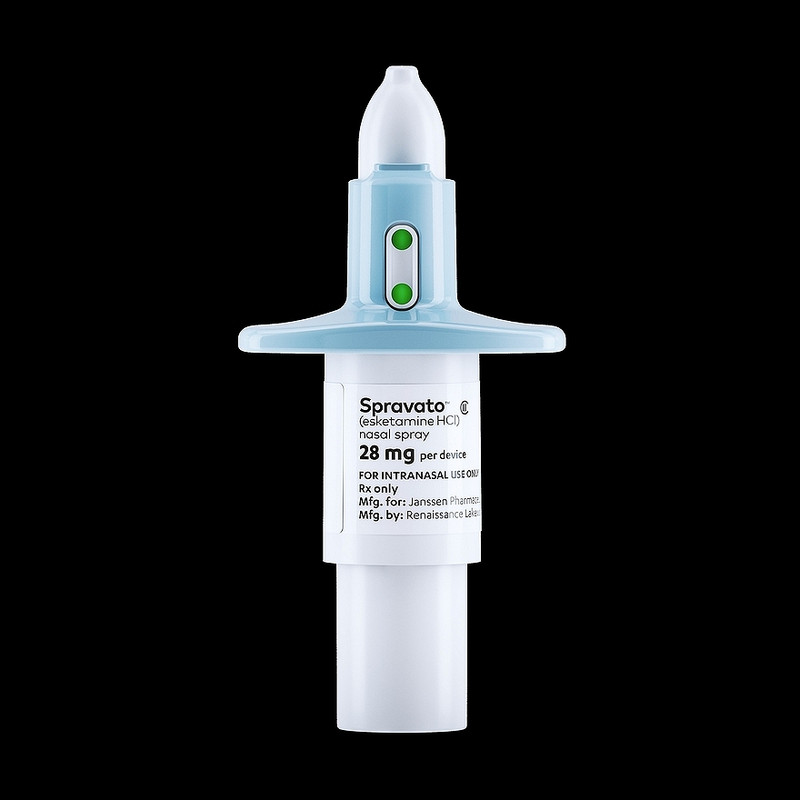
In addition, there is an FDA-approved version of ketamine called esketamine (Spravato). It was first approved in 2019 for treatment-resistant depression, and later for people with depression and acute suicidal thoughts and behaviors.

Because esketamine is FDA-approved and more likely to be covered by insurance, it may be the choice over ketamine in the real world, according to Kim.

Another difference is that esketamine is given by nasal spray.

However, Kim said, esketamine is still given under medical supervision -- not at home -- because it can have the same side effects as ketamine.

He agreed that ongoing research is necessary. Ketamine and esketamine are still new in the field of managing depression and suicidal thoughts, Kim said, and providers are trying to figure out how to best integrate them into care.

But people should know help is out there, Kim and De Giorgi said.

"Even when life seems at its darkest, help is available," De Giorgi said. "If suicidal thoughts are the issue, please do call for help."

Whether ketamine is an option, he said, will depend on the individual's circumstances, as well as the availability of the medication. There is no one-size-fits-all, and De Giorgi said people need to speak with their provider about the best treatment plan for them.

*From the article here :

 
Last edited:
ESK.jpg


First nasal spray esketamine approved for treating suicidal people*

by Cynthia Koons | Medical Xpress

Johnson & Johnson's Spravato has been approved as the first antidepressant for actively suicidal people, as doctors are becoming increasingly concerned about COVID-19's effect on the mental health of Americans.

The Food and Drug Administration approval means the quick-acting nasal spray will be available to people with suicidal thoughts and a plan to put them into action, said Michelle Kramer, vice president of J&J's U.S. neuroscience medical affairs unit. That constitutes 11% to 12% of as many as 17 million Americans who have major depressive disorder.

"Spravato has been used by about 6,000 people for treatment-resistant depression since its approval in March 2019," Kramer said. J&J's decision to study it in depressed people actively contemplating suicide bucks a trend among drugmakers who routinely exclude such patients from trials.

"Part of the thinking behind the decision was that Spravato's ability to act quickly could mean it works differently than older antidepressants that can take weeks to kick in," Kramer said. In its studies, J&J found those who got the drug had a rapid reduction in the severity of their thinking, although the results didn't differ in a statistically significant way from patients given a placebo.

"The data from studies of the drug show it may offer clinicians a new way to provide support to patients quickly in the midst of an urgent depressive episode and help set them on the path to remission," said Gerard Sanacora, director of Yale's Depression Research Program and a trial investigator.

America had been in the throes of a suicide crisis even before the pandemic, with the rate rising 30% from 1999 to 2016. COVID-19 closures limited the number of people given the spray as a depression treatment in-person at specified centers.

Ultimately, though, the numbers improved as patients and centers adapted and concerns grew within the mental health community that physical distancing and social isolation of quarantine may exacerbate people's existing problems or introduce new ones.

"Relatively rapidly within a few weeks we saw the numbers stabilize, which was pretty interesting for us and validating in the sense that clinic and patients alike were continuing to make this available," Kramer said. "We certainly see more and more sites sign on and more and more patients are treated."

Spravato is a close chemical cousin of the anesthetic ketamine, which differs from existing antidepressants because it acts on the glutamate system in the brain rather than on serotonin or norepinepherine. Scientists have been working to better understand how the drug helps patients and why it works so quickly.

The drug's approval last year marked the first major breakthrough for depression since 1987. President Donald Trump has since trumpeted the drug as having the potential to curb veteran suicides, but a Veterans Affairs medical panel only approved the drug's use on a limited basis.

*From the article here:

medicalxpress.com

Explore further :
Ketamine-based nasal spray to treat depression
 
PSYT.jpg


Combating Suicidality: A Role for Psilocybin and Ayahuasca?

Pyschedelic Science Review, October 04, 2022 - By Melinda Wang

Despite excessive fear surrounding anecdotal reports of psychedelics inducing suicidal behaviors dating back to the 1950s, the current scientific landscape suggests potential therapeutic utility.

Suicidality broadly encompasses behaviors involving thoughts, intent, or plans pertaining to suicide, a critical determinant of suicide that affects more individuals than completed suicides.1 In the United States in 2019, approximately 12 million individuals reported suicidal ideation, with 3.5 million having planned for suicides and 1.4 million making actual attempts.2 Thus, timely interventions are of increasingly high necessity. One such intervention that has shown early promise is psychedelics-assisted therapy.

With the recent advancements in research, the conventional fear about psychedelics as substances precipitating suicidality or self-harm brought about by the moral panic of the mid-1900s is slowly starting to fade. A new wave of clinical trials show that psychedelics may exhibit therapeutic properties, in contrast to historical beliefs about its adverse outcomes such as in the instances of Frank Olson in 1953 and Diane Linkletter in 1969, both of whom died under the influence of LSD.3 Although anecdotal reports of elevated suicidality still permeate to this day, mounting evidence to the contrary points to psychedelics’ potential as a promising therapy for suicidality. In particular, a survey study published in 2016 examining the immediate and enduring effects of challenging psilocybin experiences noted increased suicidality in 5/1993 (0.25%) individuals and remission of suicidality in 6/1993 (0.3%).4 Previous work by Hendricks and colleagues have shown significant reductions across all parameters of suicidality associated with lifetime psychedelic use: past-year suicidal thinking, past-year suicidal planning, and past-year attempt.

The Clinical Efficacy of Psilocybin and Ayahuasca

A recent meta-analysis by Zeifman and colleagues investigated the impact of psychedelic therapy on suicidality.6 Seven studies, consisting of both open-label and crossover designs, were included as part of the analysis. Two of the studies used ayahuasca whereas the rest involved psilocybin. The samples analyzed included indications such as recurrent major depressive disorder (MDD), treatment-resistant MDD, AIDS-associated demoralization, and terminal cancer distress. 31 subjects were analyzed during the acute period (40 to 240 minutes) following dosing for the two studies with ayahuasca, and 168 subjects administered ayahuasca or psilocybin were assessed in the post-acute period (1 day to 3-4 months) for all 6 studies.

Broadly, the results revealed that psychedelics significantly lowered suicidality in the acute period post-dosing that persisted for as long as 6 months later in the post-acute period, with the exception of the 7-8 weeks timepoint. The magnitude of the effects during the acute and post-acute periods were especially large, and at 6 months post-treatment a medium magnitude of change from baseline was reported. Of note, two subjects among the 31 (6.5%) in the ayahuasca group evaluated during the acute period had +1 increase in their suicidality score–one at 40 and the other at 140 minutes–compared to baseline, which decreased to 0 at subsequent time points of assessment. Five of the 168 subjects (3.0%) showed +1 increase in their suicidality score at the first post-acute assessment, with four of them returning to baseline by the end of treatment.

It is worthwhile to mention that the decrease in suicidality was observed across a range of psychopathologies. None of the included studies reported a suicide-related adverse event, but an updated correction to the publication reported two suicidality-related events pertaining to psilocybin administration. However, they were later deemed likely not attributable to the psychedelic therapy. Although the safety profile of psychedelics seem promising from these observations, it is crucial to proceed with caution with regards to future study designs.

The putative underlying mechanisms contributing to the reduction in suicidality with psychedelics include their modulation of inflammation, modification of the serotonergic pathways, altered connectivity, augmentation of brain-derived neurotrophic factors, neurogenesis, and neuroplasticity.6 Psychologically, the acute psychedelic trips can also serve to open up the mind and pave the way for profound insights by means of relaxing maladaptive beliefs of the past, which may include beliefs surrounding guilt or worthlessness that drive one toward suicidal thoughts and behaviors.

A few limitations of this meta-analysis warrant discussion. For one, the data were extracted from a relatively small sample size of participants, as well as a heterogeneous sample of studies that was not examining the impact of psychedelics on suicidality in particular. Furthermore, the exclusion criteria for many of these trials covered participants with a history of suicide attempts or high risks for suicide, effectively singling out the subset of individuals with milder cases for analyses. Another source of concern is the open-label design used by three of the studies–meaning that the participants are aware of the treatment given, and therefore, the potential confounding with placebo effects.

Risk minimization

In order to minimize the adverse effects of increased suicidality and improve treatment outcomes, integration of psychedelics with behavioral therapies, such as cognitive-behavioral therapy, is essential. Additionally, the judicious use of a controlled setting with expert facilitators, inclusion of a specific protocol for suicide risk management, and regular assessments of suicidality throughout the course of therapy can all can promote safety and effectiveness.7,8 Rigorous screening prior to participant enrollment in trials for high-risk indications such as psychosis-related disorders and bipolar I disorder is also warranted.9

Conclusion and future directions

The recently published meta-analysis by Zeifman and colleagues sheds light on the potential therapeutic efficacy of psychedelics-assisted psychotherapy for suicidality in commonly encountered mental health conditions such as depression and existential distress. The overwhelming majority of subjects in these trials experienced symptomatic improvement, with only a handful of exceptions that resolved by end of the dosing session or the course of treatment. Further clinical trials are warranted to elucidate the impact of individual psychedelics (e.g. psilocybin, LSD, ayahuasca), dosage, therapy modalities, and amount of psychological support. More significantly, as noted in the limitations, robust studies are needed to assess the subset of individuals with higher risks for suicidality, if such trials can be conducted safely and ethically. It is important to tease out whether the therapeutic effects of psychedelics may be stratified by the severity of the indication, or whether they may be efficacious regardless of the severity.

 
106476411-1586174867088gettyimages-139638427.jpeg

Columbia University Medical Center

Ketamine 'rapid and effective' for reducing suicidal thoughts

by Honor Whitema | Medical News Today

According to a new study by researchers from Columbia University Medical Center, Ketamine — a medication primarily used as an anesthetic — may offer a fast and effective way to reduce suicidal thoughts among individuals with depression.

Depression is by far the most common disorder underlying a suicide attempt; around 30–70 percent of those who attempt suicide have major depression or bipolar disorder.

But how can you tell if a friend or loved one with depression is having suicidal thoughts? Verbal threats of suicide or being a burden to others, an increase in the use of drugs or alcohol, and changes in mood can all be warning signs.

Of course, it is not possible to predict whether a person will attempt suicide, which highlights the need for speedy treatments that can reduce suicidal thoughts.

"There is a critical window in which depressed patients who are suicidal need rapid relief to prevent self-harm," explains study leader Dr. Michael Grunebaum, a research psychiatrist at Columbia University Medical Center.

"Currently available antidepressants can be effective in reducing suicidal thoughts in patients with depression," he adds, "but they can take weeks to have an effect."

Dr. Grunebaum explains, "Suicidal, depressed patients need treatments that are rapidly effective in reducing suicidal thoughts when they are at highest risk. Currently, there is no such treatment for rapid relief of suicidal thoughts in depressed patients."

Previous research, however, has pointed to ketamine as a potential candidate, after finding that low doses of the drug may help to reduce suicidal ideation in people with depression.

Dr. Grunebaum and colleagues set out to investigate this association further with their new study. Specifically, they investigated whether or not ketamine could reduce suicidal thoughts within 24 hours of administration.

The findings were recently published in The American Journal of Psychiatry.

Ketamine quickly halved suicidal thoughts

The research included 80 adults who had major depression. All participants had suicidal thoughts, as determined by their scores on the Scale for Suicidal Ideation (SSI).

The participants were randomized to one of two treatment groups. One group received a low-dose of ketamine, while the other group received a low-dose of midazolam, a sedative.

Using the SSI, the researchers assessed the presence of suicidal thoughts at 24 hours after each drug was administered.

While both groups saw a clinically significant reduction in suicidal thoughts, this reduction was greater for subjects who received ketamine: 55 percent of the ketamine group experienced a 50 percent or higher reduction in suicidal thoughts, compared with 30 percent of the midazolam group.

Ketamine's effects on suicidal thoughts remained for up to 6 weeks, the team reports. Furthermore, those who received ketamine experienced greater improvements in mood, depression, and fatigue, compared with those who received midazolam.

The team notes the effects of ketamine on depression accounted for around a third of the drug's effects on SSI scores, which suggests that ketamine can directly target suicidal thoughts.

The most common side effects of ketamine were dissociation and an increase in blood pressure upon administration. However, the team notes that these side effects soon subsided.

Overall, the researchers say that their findings show that "ketamine offers promise as a rapidly acting treatment for reducing suicidal thoughts in patients with depression."

"Additional research to evaluate ketamine's antidepressant and anti-suicidal effects may pave the way for the development of new antidepressant medications that are faster-acting and have the potential to help individuals who do not respond to currently available treatments."
- Dr. Michael Grunebaum

 
Top