-
Neuroscience & Pharmacology Discussion Welcome Guest
Posting Rules Bluelight Rules Recent Journal Articles Chemistry Mega-Thread FREE Chemistry Databases! Self-Education Guide -
N&PD Moderators: Skorpio
You are using an out of date browser. It may not display this or other websites correctly.
You should upgrade or use an alternative browser.I Like to Draw Pictures of Random Molecules
- Thread starter nuke
- Start date
- Status
- Not open for further replies.




aced126
Bluelighter
- Joined
- May 18, 2015
- Messages
- 1,045
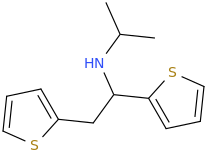
Neurotic, I'd think that desoxypipradol would follow cocaine sar, but I'm confused as to why desoxypipradol has a very lipophilic beta substituent, and when replaced with a methoxy ester group (ritalin) it retains activity at about the same level (just shorter half life), which is what is confusing me. Also confused as to at what point the molecule becomes more cocaine like in moa. 2-benzylpiperidine has amphetamine like action. I wonder if beta substituents block the molecule from entry into the neuron through the transporter.
Roi, that is actually quite an interesting molecule. Both n-isopropylamphetamine and desoxypipradol have long half lives so I wonder whether this would be super long lasting.
aced126
Bluelighter
- Joined
- May 18, 2015
- Messages
- 1,045

Would this have stimulant effects? It probably would have dissociative effects. Furthermore, if the secondary amine was a tertiary one, it would have the mu pharmacophore as well. Normorphine is a weak opioid itself and I'm guessing it's because if the hydrogen is involved in an H bond that would disrupt the ionic bond on the nitrogen which is crucial to opioid activity. Obviously the tertiary amine of this molecule would be lacking the parahydroxy group which would increase opioid activity a lot (although a metabolic byproduct could have a parahydroxy phenol group).
As far as I know, I think one of the main roles the alpha methyl group plays in amphetamine is blocking metabolism by AAADC which normally breaks down phenethylamine (I read in some paper that pea was a potent euphoriant but due to the very short half life of 30 seconds the effects are negligible). An alpha-benzyl group could block metabolism but obviously might cause steric hindrance at the receptor. However this group would give the molecule it's dissociative effects.
aced126
Bluelighter
- Joined
- May 18, 2015
- Messages
- 1,045
Would this have stimulant effects? It probably would have dissociative effects. Furthermore, if the secondary amine was a tertiary one, it would have the mu pharmacophore as well. Normorphine is a weak opioid itself and I'm guessing it's because if the hydrogen is involved in an H bond that would disrupt the ionic bond on the nitrogen which is crucial to opioid activity. Obviously the tertiary amine of this molecule would be lacking the parahydroxy group which would increase opioid activity a lot (although a metabolic byproduct could have a parahydroxy phenol group).
As far as I know, I think one of the main roles the alpha methyl group plays in amphetamine is blocking metabolism by AAADC which normally breaks down phenethylamine (I read in some paper that pea was a potent euphoriant but due to the very short half life of 30 seconds the effects are negligible). An alpha-benzyl group could block metabolism but obviously might cause steric hindrance at the receptor. However this group would give the molecule it's dissociative effects.
Here's the tertiary amine version and some derivatives and what activities I think they will have. This is purely theoretical and will probably have no activity at all but oh well it's fun. This is also assuming that an alpha benzyl group instead of an alpha methyl group retains amphetamine-like activity. I don't know very much at all about dissociative SAR at all so please correct me/make suggestions.

This is actually lefetamine. It's an opioid, and seems to lose stimulant activity completely, guessing because of 2 methyl groups on N. Dimethylamphetamine seems to lose a lot of activity, and what is retained is when one or both of the methyl groups are cleaved off by the liver. Apparently benzphetamine is rather active as a stimulant, and has a tertiary amine. Other substitutions which lead to compounds like selegine seem to have different pharmacology altogether, with selegine being an irreversible MAO-A inhibitor.
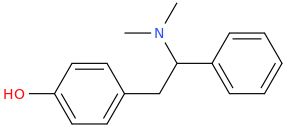
parahydroxylefetamine. It should increase opioid activity a lot if I'm correct. Will however significantly decrease stimulant activity. Not sure about how NMDA antagonism is affected. My next topic of research shall be that.

Secondary amine now, which should increase stimulant activity a lot, but reduce opioid activity significantly as well. The methoxy group could increase SERT affinity possibly?
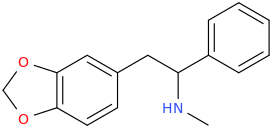
I don't expect this to have mu affinity at all, however could this be both an NMDA antagonist as well as a 5HT releasing agent?

The 3,4-methylenedioxy substitution here is going to wreck opioid activity, so my attempt to possibly bring it back was making the nitrogen tertiary as well as adding a phenethyl group to it (n-phenethylmorphine is x14 more potent than morphine, and I don't think this is due to just increased lipophilicity). Could this retain dissociative activity? Probably not...
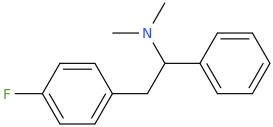
I'm not sure if a fluoro group would suffice instead of a hydroxy, but this could possibly increase SERT affinity as well, while possibly maintaining opioid and dissociative effects.

Hydrogenating the other ring should increase opioid activity but I'm guessing it might not retain dissociative activity. Expecting very little stimulant effects from this.
Will add more when I think of them. People correct me if I'm terribly wrong in my predictions on these molecules. In practical terms one effect of the 3 will probably overpower the other 2 such that when one administers enough of the compound to reach desired effects of one aspect, he will be overdosing from the other, be it say opioid induced respiratory depression or seizures.
aced126
Bluelighter
- Joined
- May 18, 2015
- Messages
- 1,045
Roi, is there anywhere where I can get data on diphenidine analogues?
Also, does anyone know where I can find data on the effect of alpha substitution on phenethylamine. When I looked on wikipedia's page of amph analogues all I saw was alpha methyl and alpha dimethyl substitutions. Does anyone know what role the alpha substituion plays other than blocking metabolism?
aced126
Bluelighter
- Joined
- May 18, 2015
- Messages
- 1,045
From a couple pages ago, people were trying to create compounds with opioid + mat activity.
Here are some structures which I thought about which could work. Making the amine tertiary as well as retaining stimulant activity seems hard.
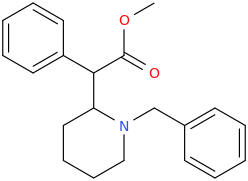
Ok so in this molecule it has a ritalin backbone but the nitrogen is tertiary so one should in theory get both stimulant and opioid activity. The beta carbomethoxy group I'm guessing could hinder opioid activity so I have added a benzyl group to the nitrogen to hopefully increase BBB penetration as well as possibly increase mu affinity as well. The fact that benzphetamine retains stimulant activity could suggest this will as well, although this molecule will probably be ritalin like in action rather than amphetamine. Nevertheless there's a tiny chance it could work.
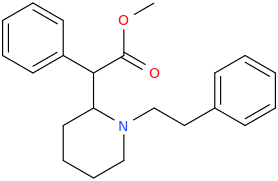
Same thing but instead a phenethyl substitution which should really increase opioid activity but probably decrease stimulant activity a bit more.
OT: could opioids (not purely high mu affinity euphoric and analgesic) be effective in treatment of depression?Last edited:
roi
Bluelighter
- Joined
- Sep 2, 2013
- Messages
- 1,545
Roi, is there anywhere where I can get data on diphenidine analogues?
Also, does anyone know where I can find data on the effect of alpha substitution on phenethylamine. When I looked on wikipedia's page of amph analogues all I saw was alpha methyl and alpha dimethyl substitutions. Does anyone know what role the alpha substituion plays other than blocking metabolism?
There's some information like metabolism, just click through the references of Diphenidine, Methoxphenidine, Ephenidine, Fluorolintane. Sadly no binding data. Potency seems to be isopropyl > ethyl > piperidine > pyrrolidine. Their inventors claim they're DRIs in addition to NMDA antagonists, but that was never confirmed.
There's a prenyl-piperazine diphenylethylamine with a 3-hydroxy group that is a opioid, called AD-1211. Maybe 3-hydroxy-ephenidine (or diphenidine etc) would cause some opioid activity (similar to 3-HO-PCP), but it was never trialed afaik.
Fluorolintane (2-fluoropyrrolidinophenidine) had the strongest SRI effects subjectively, felt somewhat similar to MXE, however potency is not that high, a full dose is 200mg+.
aced126
Bluelighter
- Joined
- May 18, 2015
- Messages
- 1,045
Just looked at some prolintane derivatives; tertiary amine while retaining stimulant activity. Not only this but an alpha-propyl retains activity. Weird.
Searched these compounds on the net but no pharmacological data. Would love to get some data for these...
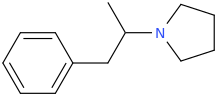
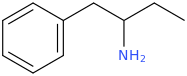
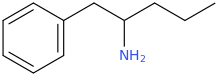
Crap just realised prolintane derivatives have absolutely no opioid activity at all. Also just realised the s isomer of lefetamine induces seizures.
aced126
Bluelighter
- Joined
- May 18, 2015
- Messages
- 1,045
Ok got some more ideas for opioid/MAR hybrid compounds, based on prolintane and lefetamine. Might have some dissociative properties as well...
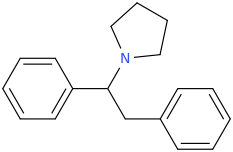
This is diphenidine but with a pyrrolidine ring instead of dimethyl. Should have opioidergic activity as well. Could possibly have stimulant activity?
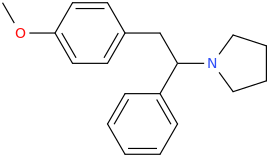
Idea here is to introduce some SERT affinity while also letting the liver unmask a more potent opioid.
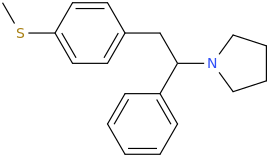
Apparently 4MTA is non-neurotoxic so might as well chuck this in.
Now I think the beta-cyclohexane derivatives of these compounds will be more potent opioids but will probably lose dissociative effects. I don't know what it'll do to stimulant activity. As we can see from prolintane derivatives alpha-propyl groups are tolerated, however the group has more degree of movement whereas a cyclohexanyl (and phenyl to be fair) group will be rigidified into its chair conformation. Example:
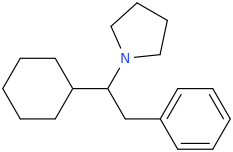
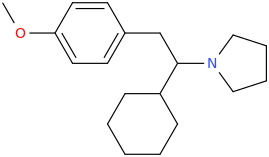
Moving away from opioids and towards serotonergic and dissociative hybrids


The former should be more dissociative.
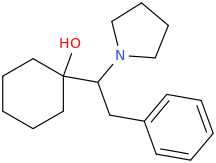
Back to increasing opioidergic activity...

 Last edited:
Dresden
Bluelighter
- Joined
- Feb 2, 2010
- Messages
- 3,211
Here's my first 2C contribution to this thread:
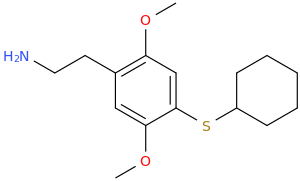
Never, to be perfectly honest, ever gotten off of any 2CX like other people do for some reason, and I've tried a small all-you-can-eat buffet's worth and sometimes in copious amounts (e.g., 50+ mg of 2CE).
Otherwise, it appears to me that we, as a whole, have far too many prospective lead compounds and not enough time and/or money to synthesize and evaluate many (any? not even one?) of them at all, which is a shame really.

^--Would have been time much better spent than was wasted on "escaline" in my estimation.
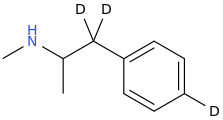
A longer lasting methamphetamine, as the C-D bonds are stronger than conventional C-H ones and are here placed strategically to minimize the 4-hydroxylation and benzylic oxidation to benzaldehyde or benzoic acid as is commonly observed in plain methamphetamine.
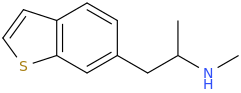
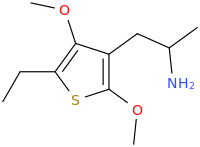
1-thia-6-MAPB (to use replacement nomenclature)
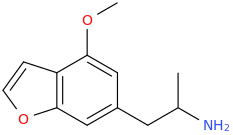
See also MMDA.
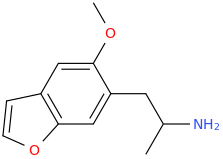
See also DOET.Last edited:
Dresden
Bluelighter
- Joined
- Feb 2, 2010
- Messages
- 3,211
Choose your favorite ONE novel, "random" chemical to bring into existence.
For me, it has to be this one:

2-amino-1-(4-oxocyclohex-2-enyl)-propane.HCl aka Testosterone Inspired Amphetamine (TIA).
* * *
If bisphenol A (BPA) in plastics can be estrogenic in humans, I see no reason this little gem couldn't possibly be an androgenic stimulant, no?
If nothing else, aromatase will likely metabolize it to (the presumably active?) 4-hydroxyamphetamine.
Ok, how about you?
Hammilton
Bluelighter
- Joined
- Sep 2, 2008
- Messages
- 3,435
Lefetamine analogues benefit from meta-OH, not para (or at least not so much). Instead of attaching the OH on the cyclohexane, you would probably see most potency by making that beta carbon quaternary and attaching the OH there. I don't see any rationale for where it's drawn.OT: could opioids (not purely high mu affinity euphoric and analgesic) be effective in treatment of depression?
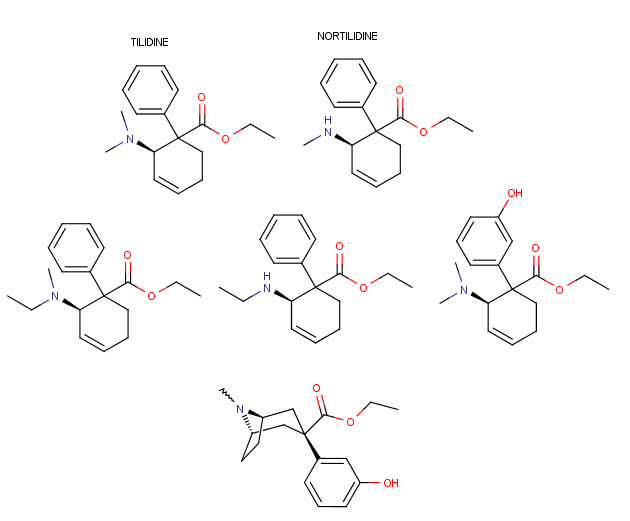
Of course, as far as I know it was proven at least with Tramadol in a couple of studies. There´s just the problem with tolerance. A really mood-enhancing, stimulating and motivating opioid is Tilidine, (at least) in the short term much more than Tramadol and in the long term you don´t get as many problems with tolerance becouse the pharma products always contain 12 or 16mg Naloxone which also helps really well against gastrointestinal side effects. The metabolite of Tilidine also has dopamine-reuptake effects as far as I know.
I wonder why they don´t bring either Nortilidine (desmethyl) or a analogue of it to the market. Maybe an ethyl compound? Could anything be done on the phenyl ring like the usual 3-hydroxy unit? Tilidine is a pro-drug but quite strong becouse it´s very fast metabolized and active in 10-20 minutes so analogues of it would be more than enough.
(the last one in the picture is a random phenyltropane, hasn´t much to do with the tilidine analogues)
- Status
- Not open for further replies.