Ok so I have some more questions.
Can you chemistry-understanding people take a look at the common route(s) of making 2C-B and determine what these bromine side compounds might be?
OR
Could it be another compound from earlier in the synth that makes its way up to the 2C-H step?
Regarding crystallization, where I am in Europe most of the 2C-B is brown powder or a pill. I assume that the chemist synths are rapid precipitation and that they're not doing anything slow at all. It all seems to come out of the Netherlands? so I assume it's being manufactured by the MDMA cartels who disdainfully do a side run of 2C-B when they're ordered to once a year. The MDMA crystal rocks are out of control perfect so obviously they know how to crystallize. They must really not give a shit about the 2c-b.
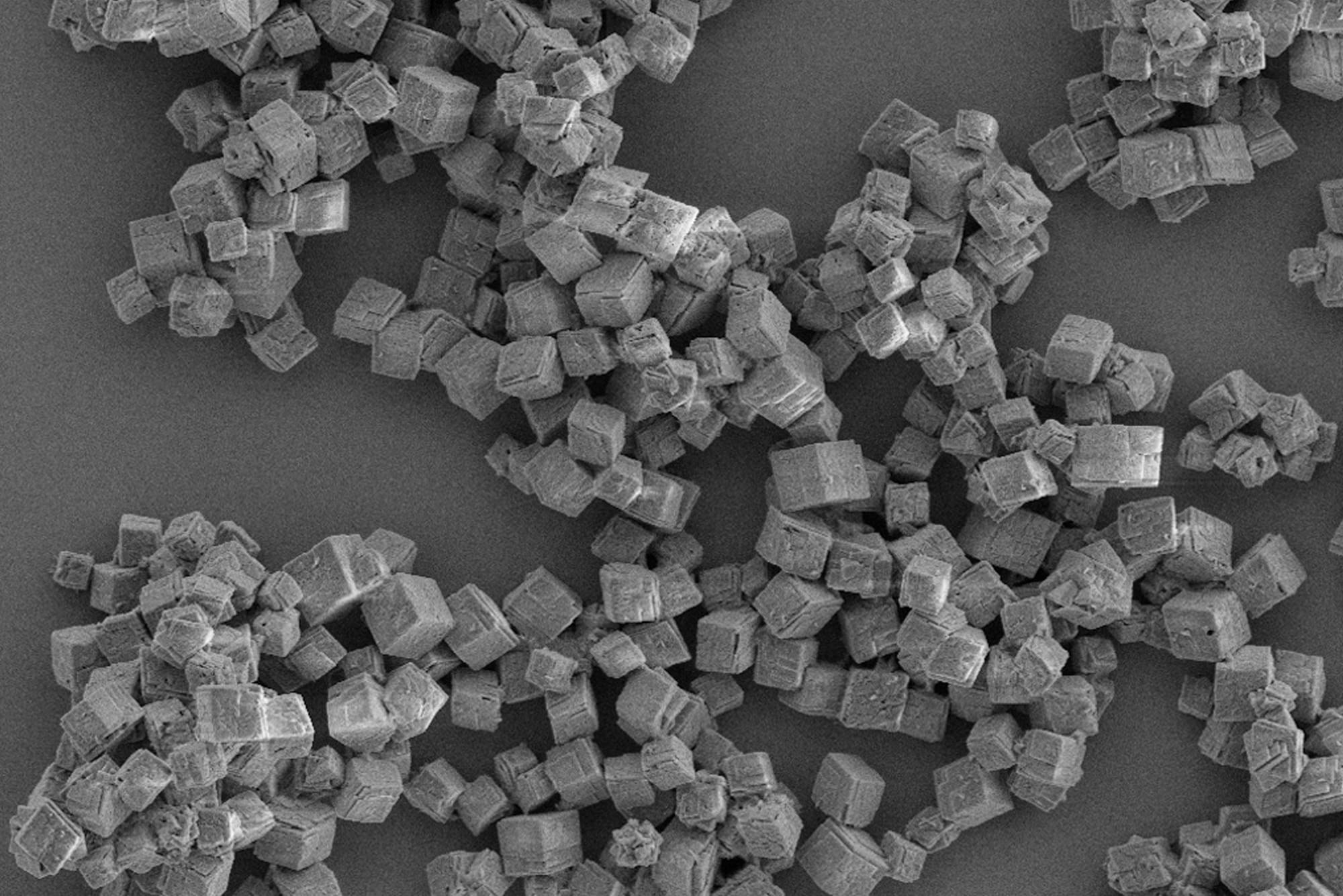
Has anyone successfully homegrown cool crystals of 2c-b? Any notes?
ima take a shot at this, from the rip there is no way to know at the quantum lattice formation level what byproducts are in there without lab equipment
However, looking at the side chains substituents, and functional groups: you could get among other things, Excess, unreacted elemental bromine or acidic bromination byproducts causing orangish tanning
During reduction stages: nitrostyrene byproducts
Oxidized freebase impurities
2-4, 2-6 brominated Aromatic locations instead of 2-5
Brominating agents can cause minor cleavage of the sensitive methoxy -OCH3 group
Residual benzaldehyde
MDMA is water loving molecule, dissolves easily in water, warm alcohols, or acetone-alcohol mixes and flexible methylenedioxy rings allow nice lattice stacking
However, 2C-B, is hydrophobic and the moment 2C-B freebase oil meets hydrochloric acid, the resulting salt desperately wants to
crash out violently and instantly as a precipitated powder. The molecules lock together so fast that they trap passing impurities and solvents inside their structure (from research papers stuff)
Highly Soluble Molecule (MDMA) + Heat ---> Dissolves Completely
---> Cools SLOWLY over days
---> Molecules line up perfectly
---> Large Macro-Crystals (Rocks)
Poorly Soluble Molecule (2C-B) + Acid ---> Instantly Hates Solvent
---> Crashes out violently in seconds
---> Traps impurities & solvent
---> Microcrystalline Tan Powder
water gets trapped in those crystals for mdma lot easier than they ever would in 2CB
and furthermore, reading: "2C-B is active in tiny doses (meaning a single small batch goes a very long way), clandestine labs want to use the fastest method possible: dissolve the 2C-H freebase in a solvent like ether or acetone, bubble HCl gas through it, and instantly filter out the brown/tan powder that floats to the top. They have no economic reason to slow down a process that is designed to be finished in minutes."
again ive not synthesized nor messed with this (never will), and this is all from papers and what bit i know of orgchem (the science all makes sense w/o even playing in a lab)
without synthesizing yet trying to explain this phenomenon:
1. Dissolving the HCl Salt in Water
Action: You take your phenylethylamine HCl salt (let's denote it as R-NH3+Cl-) and dissolve it in water.
Purpose: This is often done to get it into a medium where you can perform an acid-base extraction. The HCl salt is highly water-soluble, so it readily dissolves.
2. Basification of the Aqueous Solution
Action: You add a strong base, such as sodium hydroxide (NaOHNaOH) or potassium carbonate (K2CO3K2CO3), to the aqueous solution containing the R-NH3+Cl−. Ensuring the solution is sufficiently basic (e.g., pH 10-12).
The free base is typically less water soluble.
Depending on the specific phenylethylamine, it might:
Separate out as an immiscible oily layer on top or bottom of the aqueous solution.
Precipitate as a solid if its melting point is high enough and it's sufficiently insoluble in water.
Remain partially dissolved in the aqueous phase, but its concentration will be low compared to its solubility in organic solvents.
3. Extraction into an Organic Solvent ("Transfer to another organic solvent")
Action: You add an immiscible organic solvent to the basified aqueous solution containing the free base. Common choices include:
Diethyl ether: Low boiling point, good for heat-sensitive compounds.
Dichloromethane (DCM) / Chloroform: Denser than water, good for extracting into the bottom layer.
Toluene: Good for less polar free bases.
Mechanism: The free base (R-NH2) is typically much more soluble in the organic solvent than in water. When the two immiscible layers are mixed (in a separatory funnel), the free base preferentially migrates from the aqueous layer into the organic layer. Water-soluble impurities (like NaCl, excess NaOH) remain in the aqueous layer
Repetition: This extraction is usually performed multiple times (e.g., 2-3 times) with fresh portions of organic solvent to ensure maximum recovery of the free base.
Separation: The organic layer containing the dissolved free base is then separated from the aqueous layer.
4. Drying the Organic Solution
Action: The separated organic solution will inevitably contain some dissolved water. To prepare for crystallization of the HCl salt, this water must be removed. A drying agent (anhydrous MgSO4, Na2SO4, CaSO4, CaCl2) is added to the organic solution, stirred, and then filtered off.
Purpose: Water would react with the anhydrous HCl
HCl you're about to add, consuming it and potentially hindering salt formation or crystal growth.
5. Formation and Crystallization of the HCl Salt
Action: The dry organic solution of the free base (R-NH2) is treated with anhydrous HCl. This can be done by:
Bubbling dry HCl gas directly into the solution.
Adding a solution of HCl in a suitable anhydrous organic solvent (HCl in dry ether, HCl in isopropanol, HCl in acetone). The choice of solvent for the HCl solution should be one where the final HCl salt of the phenylethylamine is poorly soluble.
Crystallization: Since the phenylethylamine HCl salt is designed to be poorly soluble in the anhydrous organic solvent(s) used at this stage, it will precipitate out of solution as a solid.
To get well-formed crystals, the process should be slow and controlled (slow addition of HCl, gentle cooling if initially warmed, seeding if possible). Rapid addition or high concentrations can lead to amorphous precipitation (fine powder or oiling out).
Same for MDMA HCl. Look at meth off the birch reduction PSE base (another once freely avail compound one skip away from high intense energy, similar to phenylethylamine's one stop shop decarbox) that liquid ammonia once the HCl vapor from a lil sulfuric acid + salt hits that free base solution over there the compound by its nature can crystallize nicely, nevermind the -34C temp in that (lil off topic)
its a phenomenon not an exact perfected science - we know we can crash out precip stuff, sometimes we can cool crystallize stuff, sometimes it does it by its nature