Imperial College London
Richard J. Zeifman1, Anne C. Wagner, Ros Watts, Hannes Kettner, Lea J. Mertens1, and Robin L. Carhart-Harris
Imperial College London | Frontiers In Psychiatry | 7 Aug 2020
Psychedelic therapy shows promise as a novel intervention for a wide range of mental health concerns but its therapeutic action is incompletely understood. In line with acceptance and commitment therapy’s (ACT’s) transdiagnostic model, qualitative research has suggested that reductions in experiential avoidance are an important component of therapeutic outcomes associated with psychedelics. However, limited research has quantitatively explored the association between decreases in experiential avoidance and therapeutic outcomes associated with psychedelics. Therefore, in two prospective studies, using convenience samples of individuals with plans to use a psychedelic, we explored the impact of psychedelic use on experiential avoidance, depression severity, and suicidal ideation, as well as relationships between changes in these outcomes.
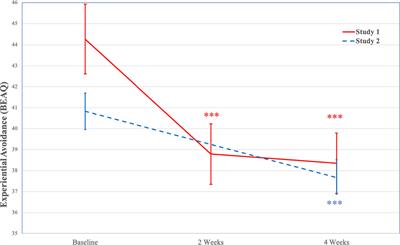
Participants completed self-report questionnaires of depression severity, suicidal ideation, and experiential avoidance: 1) before using a psychedelic (in ceremonial and non-ceremonial contexts), as well as 2) 2-weeks and 3) 4-weeks after psychedelic use. Across both studies, repeated measures ANOVAs indicated significant decreases in experiential avoidance, depression severity, and suicidal ideation after psychedelic use. Furthermore, decreases in experiential avoidance were significantly associated with decreases in depression severity and suicidal ideation. These results suggest that psychedelics may lead to significant decreases in experiential avoidance, depression severity, and suicidal ideation. Additionally, these findings imply that reduced experiential avoidance may be a transdiagnostic mechanism mediating treatment success within psychedelic therapy. We conclude that integrating psychedelics with psychotherapeutic interventions that target experiential avoidance (e.g. ACT) may enhance therapeutic outcomes.
Serotonergic psychedelics, a class of pharmacological agents that act as serotonin 2A receptor (5-HT2AR) agonists, including psilocybin, LSD, and DMT; are currently receiving attention within psychiatry and mental health as novel interventions for a wide range of mental health concerns . Randomized controlled trials and open-label trials have found promising results for psychedelic therapy in the treatment of distress associated with a life-threatening illness, substance use disorders, obsessive-compulsive disorder, depression [e.g., and suicidal ideation.
Given the wide range of mental health concerns for which psychedelic therapy has shown promise, it has been suggested that this treatment approach may target underlying transdiagnostic mechanisms. Recent research has indicated that the intensity of “mystical-type” or “peak” experiences engendered by psychedelics is predictive of positive therapeutic outcomes; however, it remains unclear how (i.e., via what fundamental psychological and neurobiological mechanisms) psychedelic therapy brings about lasting therapeutic changes. Identifying such underlying mechanisms is important for a number of reasons, including that it might improve our overall understanding of psychopathology, optimize therapeutic outcomes, and choice of treatment for clients, as well as guide treatment development, refinement and delivery.
Discussion
Previous research has indicated that psychedelics hold promise for the treatment of a wide range of psychiatric concerns; however, little research has been done to assess the impact of psychedelics on depression severity or suicidal ideation among non-clinical samples. Across two separate studies, we found significant decreases in depression severity and suicidal ideation 4-weeks after psychedelic use. Importantly, we did not find significant increases in depression severity or suicidal ideation from 2-weeks to 4-weeks, suggesting that the positive effects of psychedelics were reliably sustained for at least 1-month post-psychedelic use. These results are in line with clinical studies indicating that psychedelics can lead to decreases in depression severity and suicidal ideation and that these effects are sustained over time. Importantly, in both studies, the majority of the participants exhibited subclinical levels of baseline depression severity. Therefore, our results provide additional support for the possibility that the effects of psychedelics extend along the full spectrum of depression severity, from the severe to the mild end of the spectrum. Furthermore, in light of previous research showing that first-line interventions for depression lead to minimal to no decreases in suicidal ideation, it is promising and highly relevant to observe reductions in suicidal ideation here, in relation to psychedelic use.
*From the article (including references) here :
Post-Psychedelic Reductions in Experiential Avoidance Are Associated With Decreases in Depression Severity and Suicidal Ideation
Psychedelic therapy shows promise as a novel intervention for a wide range of mental health concerns but its therapeutic action is incompletely understood. In line with acceptance and commitment therapy’s (ACT’s) transdiagnostic model, qualitative research has suggested that reductions in...
Last edited: