pattbateman
Bluelighter
- Joined
- Sep 26, 2009
- Messages
- 81
12 monkeys is amazing








^The Holy Mountain is one of the best... I think Herzog (much as I love him) might be a little heavy on the nihilism and despair for tripping though lol
I'm obsessed with the films of Matthew Barney. Gorgeous, pristine works of art: The 5 Cremaster films (2 & 3 especially) and Drawing Restraint 9 (which goes great with ketamine - so many hidden passages, tunnels, trap-doors, liminal states, folding rooms, etc)
Unfortunately they must be downloaded in order to be seen - unless you want to pay the $100,000 dollar price tag for the full Cremaster Cycle DVD set!!!

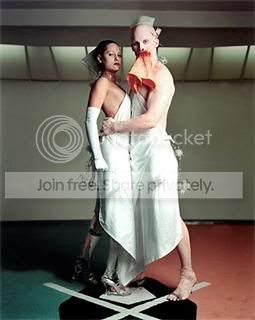

I was lucky to see Cremaster #? in NY at the Gugenheim (sp?) back in April 03'. Amazing work! I'll never forget it.

 ), http://www.cremaster.net is a good resource with somewhat explanatory synopses of each film


There is no way I would ever do that. Have you?
^
Egor: I find Gummo pretty damn bleak sober let alone trying to watch it tripping - I salute the strength of your stomach :D
That scene set me on a mission to find the "Stalker" theme 8 or 9 years ago. The music was composed by Edward Artemiev, who did a lot of Tarkovsky's music. The guy's been doing electronic music since the 60s!I highly recommend Stalker for tripping or non-tripping - it's just an amazing film. PooToob clip - that sequence alone is worth the price of admission
Still, I've got to say a lot of people will be frustrated by "Stalker". It's more poetic and contemplative than the fantastic sensory assault that's usually implied by "psychedelic". Just don't expect "Yellow Submarine" or "The Matrix.""Thanks to electronics, which enabled him 'to enter a qualitatively different acoustical world, sound colour and timbre became the field where a search for new musical laws and relationship could be undertaken. 'Sound is a palette with most subtle and lavish nuances of colours. Electronics lends some new qualities to it: peculiar acoustical sounding, unlimited duration, abundance of timbres'. It is in electronics that Artemiev finds what most appeals to his gift. For him the synthesiser is a possibility to compose" sound, timbre, to sculpt it, to lend form, "colour", energy, duration.
His findings in the sphere of colouring have expanded the limits of timbre perception. In the composition "Mosaic" (1967) "sonors" - timbres become independent means to express the motion of sounds in space."

