• N&PD Moderators: Skorpio

ULDN - The magic weapon to reduce and keep tolerance to Opioids low

Thanks to all of those who answered to my questions. I'm glad that some things becoming more clear for me. So I'll try to use naloxone intranasally while trying to get some naltrexone tablets, it shouldn't be hard with a help of some fake recipes..

I'll report back if I'll get any noticeable results
 
@nosti - naloxone is rapidly metabolized by the liver (gluconation). Being so lipophilic, it will tend to redistribute from the brain into ALL fatty tissue. I don't know much about 6β-naltrexol other than it's a metabolite of naltrexone, not naloxone. Do you mean 6β-naloxol?
I was actually just trying to help 'Dastromar' understand why naloxone isn't a great candidate for getting the same results as naltrexone at low doses. The potency and half-life of their different metabolites is the main reason, from what I've gathered. But I'm no expert at all, so I might be getting things mixed up.
 
Enzymatic leverage strategies

Re glucuronidation of naloxone:
naloxone is rapidly metabolized by the liver (glucuronidation).
Hepatic metabolism primarily occurs via glucuronidation to form naloxone-3-glucuronide, a pharmacologically inactive metabolite.​
...​
Glucuronosyltransferase (UGT) is a glycosyltransferase that catalyzes the addition of a glycosyl group from a UTP-sugar to a small hydrophobic molecule. Although the majority of UGT enzymes are expressed in the liver...​
Some UGT enzyme inhibitors:

Re sulfation of opioid drugs:
Buprenorphine, pentazocine, and naloxone are opioid drugs used for the treatment of pain and opioid dependence or overdose. Sulfation [...] is involved in the metabolism of a variety of xenobiotics including drug compounds. Sulfation of opioid drugs has not been well investigated. Collectively, these results imply that sulfation may play a role in the metabolism of buprenorphine, pentazocine, and naloxone in vivo.
Sulfotransferase (SULT) are transferase enzymes that catalyze the transfer of a sulfate group from a donor molecule to an acceptor alcohol (C-OH) or amine.​

Some SULT enzyme inhibitors:

Re glutathione conjugation of opioid drugs:
Glutathione binds not only morphine but also naloxone, methadone, and methionine enkephalin.​
Glutathione S-transferase (GST) enzymes catalyze the conjugation of reduced glutathione (GSH) (using a sulfhydryl group) to electrophilic centers on a wide variety of substrates.​

Some GST enzyme inhibitors:
P450 metabolism of morphine:
More than 90% of morphine N-demethylation could be accounted for via the action of both CYP3A4 and CYP2C8. The in vitro findings suggest that hepatic CYP3A4, and to a lesser extent CYP2C8, play an important role in the metabolism of morphine into normorphine.​

CYP3A4 inhibitors
CYP2C8 inhibitors
 
Last edited:
UPDATE. I am currently increasing my naltrexone dose to 3 mg (1 mg every 8 hours, at 5 AM, 1 PM, and 9 PM). I’ve had some mild withdrawal symptoms, mainly at night, the 9 PM naltrexone dose was messing with my sleep a little, so I fixed it by switching my methadone to two 15 mg doses a day, one at 9 AM and one at 10 PM. It worked. Now I'm sleeping well again.
The 15 mg of methadone before bed helps me sleep well. And the 15 mg in the morning keeps me pretty stable for the rest of the day. Some days I take a 150 mg dose of pregabalin at 3 PM. That helps a lot, too.

3 mg of naltrexone a day is already a considerable amount. I'm totally in shock that this amount isn't messing dramatically with my methadone dose, and that everything is going so smoothly and calmly. The super slow, gradual increase I've been doing must have been the key.

Tomorrow I’ll probably increase the naltrexone by 0.2 mg per dose (bringing the total to 3.6 mg of naltrexone per day). I’ll keep taking the same methadone dose. Not planning to lower it for now. Maybe I will in the future, maybe I won’t, honestly, I have no idea. The naltrexone is already doing its thing, resensitizing my opioid system on its own, and I’m focused on increasing the naltrexone dose really, really slowly.
[EDIT: I ended up not going through with the dose increase after all. I'm going to stick with my current naltrexone dose for another week to let my body adjust. I'm in absolutely no rush.]

I have diazepam 10mg (limited supply) and pregabalin (almost unlimited), so I’ll use them if I need to.

So yeah, experiment continues.

PS. As a sort of confirmation bias for my current strategy (absolutely irrelevant for objective scientific purposes but very important to keep me going with the experiment), I have to say that during winter I had some really serious issues with back pain and inflammation in my sacroiliac joint, plus pain radiating down my leg. In fact, I’m currently on medical leave. By no means am I linking these issues to methadone, but the anti-inflammatory effect of VLDN is well known. Well, for the first time in months, I’ve noticed the pain has gone down in intensity, and on some days it’s almost unnoticeable. Of course, and like I said in my previous post, the constipation has totally disappeared, along with other negative side effects associated with methadone.

UPDATE 2

I decided to stop the experiment. My willpower broke.

I failed again.

At least I confirmed that things like constipation and other methadone side effects can be fixed with VLDN, starting with ULDN and going up really slowly, though. I'll update if anything changes or if I decide to give it another try. It's terribly disappointing. None of my attempts to quit methadone ever work out.

Thanks to everyone who's been reading, and I hope you're all doing well
 
E-52862
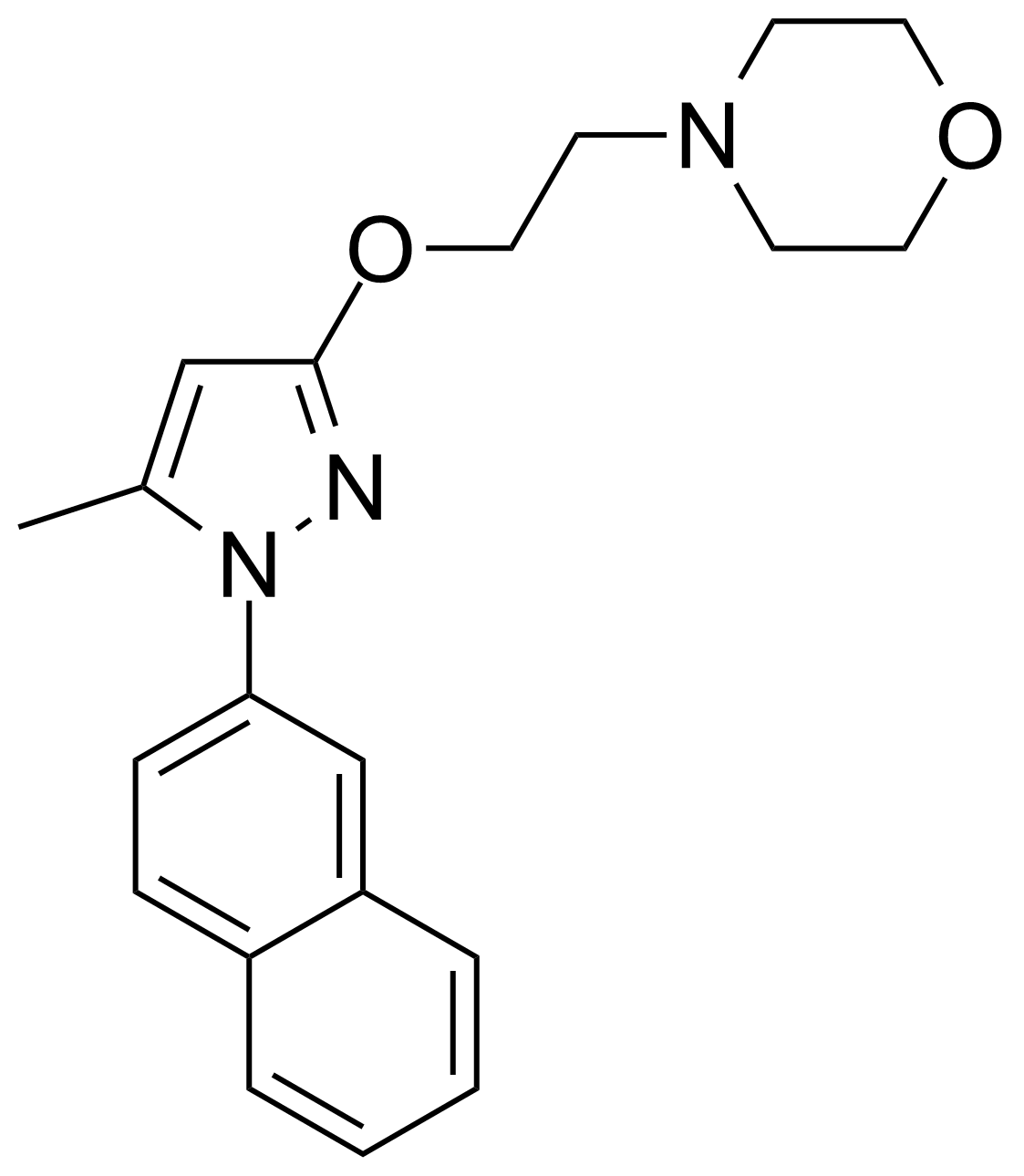
S1RA.png

S1RA is being developed by Esteve for the treatment of neuropathic pain and the potentiation of opioid analgesia and has successfully completed Phase I clinical trials showing good safety and tolerability, and a pharmacokinetic profile compatible with once a day oral administration.<a href="https://en.wikipedia.org/wiki/E-52862#cite_note-Abadias_2013-6"><span>[</span>6<span>]</span></a> Phase II clinical trials are currently underway, making S1RA the first selective sigma-1 receptor antagonist evaluated in humans for these conditions.
 
being right is often an unpopular position to hold.
I can't tell you how often life has proven to me how true this statement is. It has reached a point where I voluntarily refrain from discussions with people when I feel that those people are not at least a little bit open to other points of view. I just nod and pretend to agree with them to avoid verbal fights. Didn't Confucius say "whoever tells the truth needs a fast horse"? He was right. I don't like quoting from the bible but it got one thing right: never throw pearls before the swine...

@nosti
Your experiment was very fascinating. I was aware of the possibility of using naltrexone to avoid wd since I have done it myself using the method of the Biochemist Jonathan Ott as described in his bioassay, but I was not aware that you can get used to increasing doses and use that to obliterate wd.
 
@Hexenstahl - It isn't that people are purposefully ignoring information. It's simply the case that people feel threatened if something they believe is called into question. I read a psychology paper on how people end up joining cults or believing in various unlikely conspiracy theories. It's simply the case that they become emotionally invested in a given case to the point that alrering their position causes cognative dissonance. I mean to the point that you can lead them down a path and they argee every time and then when you demonstrate that last logical step, they irrationally refuse to accept the case in spite of agreeing the logical propositions from which the case is infered.

It's quite amazing how irrational we all are.
 
I was aware of the possibility of using naltrexone to avoid wd since I have done it myself using the method of the Biochemist Jonathan Ott as described in his bioassay, but I was not aware that you can get used to increasing doses and use that to obliterate wd.

When we consider all relevant substances [to this opioid/tlr4 scenario] that are readily available, naltrexone becomes one of several essential tools which together can accomplish much more than naltrexone alone. Interestingly, many of these items proactively ameliorate one's physiological coherence which can only be advantageous.
 
@nosti
Your experiment was very fascinating. I was aware of the possibility of using naltrexone to avoid wd since I have done it myself using the method of the Biochemist Jonathan Ott as described in his bioassay, but I was not aware that you can get used to increasing doses and use that to obliterate wd.
Actually, Jonathan Ott was one of my role models. I’ve read most of his articles and watched some of his talks and interviews on YouTube. I was really sad when he passed away last year.
 
Actually, Jonathan Ott was one of my role models. I’ve read most of his articles and watched some of his talks and interviews on YouTube. I was really sad when he passed away last year.
Me too. I even own a signed book he co-authored with the german Ethnopharmacologist Dr. Christian Rätsch (who also sadly passed away) in which they wrote extensively about Coca and Cocaine. The book is called "Koka und Kokain: Ethnobotanik, Kunst und Chemie" (Coca and Cocaine: ethnobotany, art and chemistry). It's a travelogue, drug experience report, history lesson, chemistry book, poetry and art presentation all at once. I'll never understand why this incredibly entertaining book that has such a unique writing style was never translated into english. Thankfully though, other books of Dr. Rätsch, such as his massive encyclopedia of psychoactive substances have been translated for non-german speakers to read.
Two geniuses that have died way too early. I know the world is unfair when someone like David Rockefeller becomes 101 yo, and people like Dr. Rätsch die at 65.
 
Try powdered DXM.
Meh, that's only a very short-term "solution" and on top of it unreliable too. I never heard of anyone who was able to continuously keep tolerance low with DXM. I was initially positively surprised, but a) tolerance eventually catches up for some reason and b) its results pale in comparison to Naltrexone in my experience.
 
DXM was trialled in a fixed-dose combination with morphine with the tacit brand-name MorphiDex™ which failed stage 2 trials as having 'no clinical benefit'. Since then a few small-scale human trials seem to suggest that DXM MAY reduce AWS symptoms.

I capitalized and used bold-type for the word 'may' because every paper I've seen uses that qualifier term in it's conclusions.

On a related note I witnessed a chain (franchise?) of in-patient opiate detoxification clinics called 'Detox 5' appear in the UK and which charge anywhere from £1300 to £2,300 per day. Journalists uncovered the fact that patients were heavily sedated with powerful medicines such as ketamine, pumped full of naltrexone and after five days, would be 'cured'. The relapse rate was no better than the placebo group who detoxified without help.

Not a surprise because anyone who has worked in HR knows that most clients who truly wish to stop can successfuly do so but because opioids are at least partly used (both medically and otherwise) to produce emotional detachment, former users tend to relapse when something bad happens in their lives. It's just self-medication, not a sign of weakness. Our subconscious will push us to use whatever worked best in the past.
 
Last edited:
I Use DXM Largely For The Colored CEVs (closed eye visuals) And Dissociative Properties.

But You Will Want The SALT Hydrobromide (hydrochloride ? ever) Form, Not Gel Cap Liquid.

Recrystallized Crystal DXM Might Be Even Better!
 
On a related note I witnessed a chain (franchise?) of in-patient opiate detoxification clinics called 'Detox 5' appear in the UK and which charge anywhere from £1300 to £2,300 per day. Journalists uncovered the fact that patients were heavily sedated with powerful medicines such as ketamine, pumped full of naltrexone and after five days, would be 'cured'. The relapse rate was no better than the placebo group who detoxified without help.
I have always told people that detox clinics are nothing but business enterprises. They have a vested interest in NOT curing people because this is how they make money. Even if you start as a completely naive founder of a detox clinic with the genuine intention to help people quit for good, you're gonna realize that a) revenue will quickly plummet which results in you being unable to stay current with your debt repayment schedule and b) business is just too good to actually help people. This is the problem. The system doesn't actually incentivize permanent cures, addiction or otherwise. It is based on recurring customers. Why should a detox clinic be any different than other industries. Just type in the name of any detox clinic into Dun & Bradstreet's database and you'll see they are registered as business corporations. It's a BUSINESS guys, not an eleemosynary foundation.

It's just self-medication, not a sign of weakness. Our subconscious will push us to use whatever worked best in the past.
THIS THIS THIS!!! I 100% subscribe to this! Why can't we go back to the way the drug market worked in the 19th century? People managed to have normal lives, have careers and lead a family despite their addiction. We didn't even have drug laws. Prices were low too, because the market was so incredibly decentralized back then. People just had a different attitude towards drugs. The word drug alone has been incredibly propagandized and emotionalized. According to Dr. Rätsch the word "drug" was actually used for dried plant material that was used for the manufacture of phytotherapeutics or pharmaceuticals. So people didn't even have a word for the modern concept of a "drug". It was just all medicine!

I sometimes wonder if addiction even exists. Let me explain what I mean to prevent misunderstandings: let's say there is a person named Paul and he has Type 1 Diabetes. We all know that T1D is a disease, right? We also know that these people have an endogenous lack of insulin in their body. This creates a need for insulin in Paul's body. If nobody told him directly that it is insulin he needs, he would trial & error with various substances until he has found the substance that relieves his symptoms. Thankfully, diabetes patients do not need to go on a drug odyssey to find the medicine that "fits". The health care system immediately helps them out by providing them with what they need. This means Paul can now compensate for his endogenous shortage of insulin, simply by taking exogenous insulin.

Let us now translate this example to that of an opioid "addict". Let's say there is someone called Max and unfortunately his body doesn't produce enough endorphins (endogenous morphine) due to genetic misexpression. This causes Max to have physiological and psychological symptoms (such as depression). Since the cause of his disease is biological in nature, all psychotherapeutical attempts have failed. Max starts to experiment with various substances, some legal, some illegal. He feels intuitively drawn to a specific class of drugs however, which he considers to be mere curiosity. It turns out that it is actually his body's desire to compensate his lack of endorphins. This compensation by the intake of exogenous opioids results in him feeling well. He realizes that this is exactly what he needs to function like a normal person.

The problem that I see now is this -> WHY the hell is Max' use of opioids pathologized and seen as a disease, while Paul's use of insulin is seen as legitimate medication?!?! How can we refer to Max' use of opioids as self-medication while at the same time labeling it as a disease?! It makes no sense. If my use of opioids is pathological, then it cannot be an act of medication at the same time, since medication is used to rid one of disease. We admit Paul's underlying condition but do not do so with Max. I believe the actual disease that we have is NOT the "addiction", since that is just an attempt of our body to compensate for the chronic lack of neurotransmitters, but instead the underlying condition that has TRIGGERED the self-medication. This is why I don't believe in addiction anymore and very likely also why our ancestors didn't have such a concept. It's because they had an intuitive understanding that people gravitate towards whatever they lack. Modern society however has managed to actually pathologize this type of completely natural behaviour. I think it's incredible how this is being completely ignored in the entire addiction discourse in both academia as well as outside of it. I think it would be very eye opening if scientists conducted a study in which they compared endogenous neurotransmitter levels of the non-addicted population with the addicted one. I would stake my life on it that the addict population has a pathological gene expression in regards to certain neurotransmitters and that this is the cause for their "addiction". This would be the actual disease.
 
...detox clinics are nothing but business enterprises. They have a vested interest in NOT curing people because this is how they make money.
...
The system doesn't actually incentivize permanent cures, addiction or otherwise. It is based on recurring customers.
This imo applies to modern medicine which seems to fundamentally be a corporate healthcare system. The corporate element acutely undermines the quality of care available to a patient, specifically the types & integrity of ligands being designed (and approved), but also the actual research & progress in understanding (and naming) health conditions. The shambles of ADHD, BPD, MDD, PMDD, endometriosis, PCOS/PMOS, cancer, Alzheimer’s, hypercholesterolemia and diabetes is proof of this.

The issue with limited selection of drugs & their relatively poor quality (vis-a-vis sustainability) is encountered by everyone with a prescription. For example, someone on a long-term Rx for opiates becomes damaged (and usually dependant) by merely following the prescription guidelines. We see endocrine disruption, hyperalgesia and cognitive degeneration which occurs often without the person realising, this discreetly affects their behaviour, attitude and perceptions in diverse ways. This deleterious effect applies to methadone also which has wide-spread use in modern medicine. Imo opiates are powerfully crude medications which whilst undeniably effective, lack sustainability (from a pharmacological and endocrine basis).

Thankfully, diabetes patients do not need to go on a drug odyssey to find the medicine that "fits". The health care system immediately helps them out by providing them with what they need. This means Paul can now compensate for his endogenous shortage of insulin, simply by taking exogenous insulin.
Diabetes is more than just insulin. Infact the modern (corporate) medicine "solution" for diabetes is short-sighted and inadequate, it's far from a solution as it exacerbates the issue. This is all due to various misconceptions about insulin/diabetes which have apparently become engrained and accepted as absolute truth.

I would stake my life on it that the addict population has a pathological gene expression in regards to certain neurotransmitters and that this is the cause for their "addiction".
The genetic context is attractive but it seems more reasonable to consider that people will habitually self-medicate with anything relevant, available and convenient to address unacknowledged health issues. The word "addiction" is imo misleading and has accrued connotations which makes it incompatible with recovery.

Some people on the forums have claimed that resolving this issue doesn't justify "using more drugs" which seems rather idealistic, unreasonable and impractical. One of those things which is easier said than done.
 
Last edited:
Top