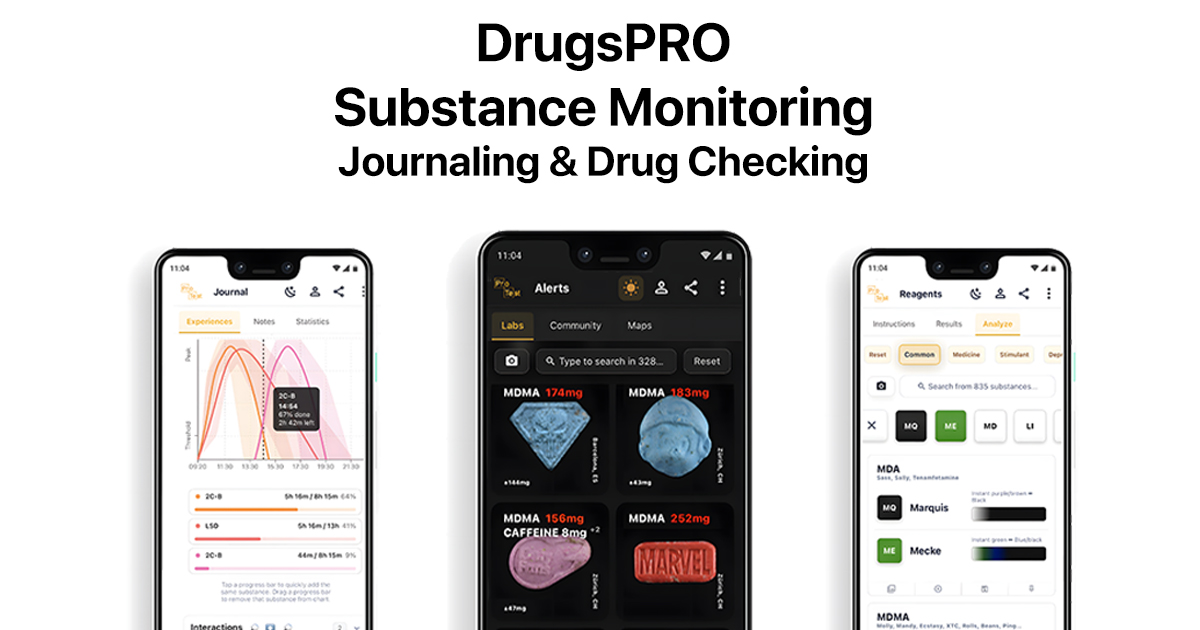
☞ TL;DR below.
This thread started over 10 years ago. If you’re still reading it and you think the whole world has not had MDMA for over a decade… I think you should consider that perhaps that doesn't line up with reality. It certainly hasn't stopped law enforcement from arresting and charging people for possession/PWID MDMA.
Here ☞ this is from the European Union Drugs Agency (EUDA)'s website, taken from the
European Drug Report 2026: Trends and Developments:
MDMA – the current situation in Europe (European Drug Report 2026)
MDMA tablets are typically available in many designs, often colourful replications of brand logos. While MDMA may sometimes appear in other forms, such as edibles, gelatines and lollipops, tablets and powders remain predominant. The MDMA content of retail-level ecstasy tablets is high by historical standards, having increased from around 84 milligrams per tablet in 2011 to 170 milligrams in 2019 and remained at elevated levels since. Ecstasy tablets containing 300 milligrams or more of MDMA remain available in Europe. The continued availability of high-strength products potentially increases the health risks related to MDMA use, as does polysubstance use, which remains common […]
Drug checking indicates low levels of adulteration but concerns about high MDMA content
While it is difficult to generalise due to limitations in national and European coverage, the available information from drug checking services suggests that MDMA products are generally less subject to adulteration than other illicit drugs that they screened in 2025. This does occur, however, as illustrated by the detection of other substances in MDMA tablets. The proportion of MDMA samples analysed by European drug checking services that were adulterated increased from 9% in 2024 to 15% in 2025, with cathinones, cocaine and ketamine being the most common other unexpected substances found. In 2024 and 2025, the majority of MDMA samples submitted to drug checking services continued to show high MDMA content (tablets) or high purity (powder), creating health risks for consumers […]
MDMA market data
- In 2024, EU Member States reported 24 000 seizures of MDMA (17 000 in 2023), amounting to 4.2 tonnes of MDMA powder (3.6 tonnes in 2023) and 10.7 million MDMA tablets (7.2 million in 2023). Türkiye seized 5.1 million MDMA tablets in 2024 (5.2 million in 2023).
- In 2024, 4 EU Member States reported dismantling 59 MDMA laboratories (36 in 2023): the Netherlands reported 47, Spain 7, Belgium 4 and Germany 1.
- Seizures of MDMA precursors totalled 23.9 tonnes in 2024 (63.1 tonnes in 2023), mainly in the form of PMK and its glycidic derivatives. At least 24 sites producing PMK from alternative chemicals were reported in 2024.
- In 2024, MDMA tablets seized in Europe contained on average between 148 and 232 milligrams of MDMA (138-158 milligrams in 2023), and the average purity of seized MDMA powders ranged from 47% to 100% (24-100% in 2023), with half the countries reporting values in the range 69-87% (67-88% in 2023). The Netherlands, a key source country for the supply of MDMA to Europe, reported an average MDMA content of ecstasy tablets of 137 milligrams and 74% purity for MDMA powders.
- In 2025, a total of 5 857 samples sold as MDMA were tested for psychoactive adulterants by 14 drug checking services in 8 EU Member States. MDMA was the sole psychoactive substance in 85% of the samples, while the remaining 15% contained at least one other psychoactive substance. In the 11 drug checking services in 7 countries that reported in 2024 and 2025, synthetic cathinones were the most frequently detected of these, representing almost 4% of samples sold as MDMA (less than 2% in 2024). Cocaine was found in 2% of MDMA samples tested in 2025, while ketamine was found in 1%.
TL;DR ☞ In summary, drug-checking data suggest that most products sold as MDMA
actually are predominantly MDMA: in 2025, 85% of 5,857 samples contained MDMA as the only detected psychoactive drug. However, adulteration increased from 9% in 2024 to 15% in 2025. Synthetic cathinones were the most common unexpected drugs (~4% of samples), followed by cocaine (2%) and ketamine (1%).





 I'm glad someone got that joke at least… Everyone seems so serious and interprets others as being serious… #smh