A full spectrum of reactions has erupted these last few days, ranging from portrayals of moral decay to normalization, like scattered sparkles swirling across the most colourful kaleidoscope of public imagination. Each reader must take personal responsibility for their own blind spots as the public imagery of cannabis keeps shifting, because once the historical anchors are laid out in objective, verifiable terms, the space for convenient misunderstandings vanishes like morning haze when clarity arises through the sheer glow of dawn...
One of the most revealing trajectories for gaining a broader view of this hyperbolic landscape is the influence exerted by Nora Volkow since the late nineties, beginning with her contribution to an addiction‑centric, prohibition‑aligned framing of "marihuana" through research conducted at the Brookhaven National Laboratory. Back then, positron‑emission tomography (PET) offered an early and visually compelling means of capturing synaptic signals in individuals exposed to psychoactive substances, a technology well suited to genuinely advance the field in savvy articles published by 'Science and Nature', yet equally capable of amplifying victorian‑age assumptions when filtered through the interpretative lens of neophyte editorials appearing in periodicals such as 'The New York Times'.
Studies she conducted (including those on the neuro‑metabolic effects of cocaïne) attracted significant attention from peers who viewed her findings through a similar dependency‑oriented conceptual posture, notably the attempts to map dopamine’s circuitry in compulsive reward and obesity, for example:
'How can drug addiction help us understand obesity?', Nora D. Volkow & Roy A. Wise, Nature Neuroscience, 2005
This high-profile perspective granted her international visibility long before she was promoted to the directorship of NIDA in 2003. At the time, her theory of seductive reinforcement logic became one major building block in a framework defined by environmental dynamics linking addiction and obesity. Given the background one can now see how science, the media, and a populist cultural sphere mutually reinforce each other's moralizing foundations; a universe centered on deviance-as-spectacle, a kind of puritan voyeurism gradually transforming into some socio-toxic obsession over pathological delinquency, ultimately justifying urgent behavioral surveillance prompted by an inability to resist temptation, all because of a suddenly threatening appetite...
Please appreciate the full institutional weight behind this narrative, initiated by NIDA's establishment through an act of Congress in May 1974, less than a year after Nixon's demise... Initially housed within the Alcohol, Drug Abuse, and Mental Health Administration (ADAMHA), later absorbed into the National Institutes of Health under the Department of Health and Human Services in October 1992. Keep in mind the United States of America cycled through four party changes and five Presidents over the last fifty years while NIDA was growing into the world’s largest funder of research on drug abuse and addiction; politicians come and go but Nora Volkow never stops being a persistent axis of influence, regardless of the prevailing agenda.
This rhetoric is a sedimentation of metastasized metaphors - like long-lasting cognitive decline or plain IQ loss, unfinished brains allegedly taking 25 years to mature, post‑rehab subjects required to earn back their legitimacy by adhering to strict abstinence, impaired driving scenarios, and reefer‑madness narratives encoded during congressional hearings, etc. Behind every punitive impulse lies yet another layer of adult panic (recurring patterns among a few: Fix‑My‑Kid, Kids for Cash, Narconon Trois‑Rivières); those are hints of a moralistic architecture resurfacing as "scientific" opinions, false dilemmas or even pure Public‑Health wisdom. Notice the subjective framing of this title:
A scientist’s view of pot myths - Delaware Online, Ruth Marcus (2014-Jun-26)
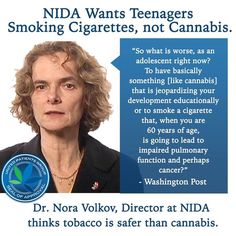
« Wait a second. ... Nicotine does not interfere with cognitive ability. So if you are an adolescent and you are smoking marijuana and going to school, it’s going to interfere with your capacity to learn. So what is worse, as an adolescent right now? To have basically something that is jeopardizing your development educationally or to smoke a cigarette that, when you are 60 years of age, is going to lead to impaired pulmonary function and perhaps cancer? ... I would argue that you do not want to mess with your cognitive capacity, that that is a very large price to pay. »
Narurally she's proud to mention never having "inhaled" marihuana even once... At this point, her prohibitionist narrative has drifted so far beyond empirical science that it inspires me a succulent zoology exercise:
Medulla‑Scavenger (Juvenis Mentis SiphoVorax)
Classification & morphology: In its mature state, the adult called Neuralis Masticus develops a hardened cranial carapace equipped with a fearsome parasitic appendage known as the Mediatic Rostrum Penetrans specialized in injection of tenacious larvae capable of metamorphosing the host’s cerebellum and eventually enabling deeper penetration into legislative tissue.
Habitat & Origin: unlike most parasitic organisms, the genesis of early Juvenis Mentis SiphoVorax specimens occurred in a clean sterile laboratory environment, quite possibly as an adaptation directly consecutive to the « War-on-Drugs ». This creature’s seed typically incubates in nutrient‑rich politician substrates best suited for accelerated cloning.
Reproductive Behaviour: the virulent strain has evolved to exploit human chemistry, using cannabinoïds as a catalytic vector which allows it to thrive in diverse situations, e.g. even hermetic christian-based communities where clandestine copulatory behaviour sustains hasty propagation most efficiently. It feeds preferentially on individuals under twenty‑five, exploiting their heightened hormonal flux.
Predation Pattern: the most lethal form of this pathogen grows best on a substrate of ambiguity, public uncertainty, and institutional inertia. It flourishes wherever rational nuance is scarce and moral panic has ripened into readily harvestable muscle.
Containment Protocol: official containment strategies failed miserably, starting with flavor neutralization. Statistical data actually reveal migrations of fresh gore sludge-slurping infectious agents of remarkable resilience (code-named eVALI)... These went unchecked and proliferated uncontrollably; well informed critics note that successive confrontational policies merely echoed the pressure of mis-placed concerns for public image. Independent analysts emphasize an urgent need for evidence‑driven guidelines to remedy broken decision‑making in the oval orifice. Meanwhile, the ban on gustatory stimuli triggered compensatory metabolic responses in Neuralis Masticus, exactly as predicted by Nobel recipients! In short, the void left by malignant federal procedurite created the ideal transmission environment where repeated Public Health guesswork mutated into administrative, epistemic and entirely preventable hazards - rather than classic phenomenons normally curable with a « T-Break » in severe cases, or a banal « couch-lock » otherwise...
A couple years later at the CSAM/SMCA 1st symposium on addiction the turn of québekers came, in my $a¢rifi¢ed province. Justin Trudeau had been in Ottawa for 1 year and the Colorado experience was supposed to "teach" us lessons - dare look where they are today then compare:
Légalisation de la marijuana: des experts américains mettent en garde le Canada (2016-Oct-26)
By then, the prohibitionist pathogen had spread its spores northward. Notice her tense combative face, while another most confrontational ally named Kevin Sabet was also present nearby. Both U.S. emissaries had been invited as int'l guests and quite probably ushered by Jean-Pierre Chiasson sitting in the 1st chair of the front row. They had come to the Marriott hoping to mesmerize our political class through dozens of addictionnists, all conveniently gathered to enjoy Halloween tourism in downtown Montréal - their favourite kind of petri dish.
Contrary to their alarmist prophecies imported from Calgary/Alberta, the real cost of skimping on honesty and respect is now paid by our local youth. This became evident at the 26th "Journées Annuelles de Santé Publique" (JASP), held at the Québec City Convention Centre on November 28, 7 years later in room 307AB:
'L’évolution des modes d’usage du cannabis chez les adolescents'
Its data came from a longitudinal survey targeting 42 secondary schools across eastern Québec and benefited from infographics provided by La Presse, which exploited the image of a premium quality ~40 $Cdn Burn Lemon Haze vape without ever caring to mention its legal status:
Le vapotage de cannabis explose chez les ados (2023-Nov-28)
« En quatre ans, la part de jeunes consommateurs ayant opté pour la vapoteuse a triplé »
Several institutional partners were involved (INSPQ, ISAM), and we can safely bet such framing sounded quite familiar to american observers like Kamala Harris, who was heard invoking the very same themes in her interviews long ago (developing brain, impaired driving, redemption through abstinence re-hab)...
The persistence of topics ain't no coïncidence, it’s structural. Biden's administration could only initiate rescheduling through the HHS; the agency completed its review, issued recommendations then its cannabis reform stayed stalled much the same since this barrier's rise.
Trump’s executive order diverts attention like a roaring engine, but anyone watching the pedals can see the transmission is on neutral. So, all that symbolic choreography has performed was to generate exhaust and noise; too bad, but until the DEA decides to engage its gears every impression of forward motion remains an illusion of progress in a health‑wise direction:
2026 will reveal whether it is Derek S. Maltz or Terrance Cole who must ultimately assume the agency’s direction.
Good day, have fun!!



















 ...
... 
