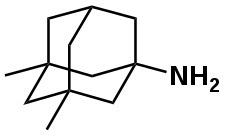
Why one NMDA antagonist, like O-PCE, can feel compulsive and another, like Memantine, can feel “neutral”
It helps to start with one key idea: “NMDA antagonist” describes a receptor target, not a full drug experience. Two compounds can both reduce NMDA signaling and still differ radically in how strongly they pull on craving, habit loops, and loss of control. In practice, compulsive use is driven less by the label on the receptor and more by the drug’s speed, duration, binding kinetics, and the way it engages reward learning.
Arylcyclohexylamine dissociatives (ketamine- and PCP-like drugs and their analogs) tend to produce a fast, unmistakable shift in state. When onset is quick and the subjective “flip” is clear, the brain can easily pair the act of dosing with immediate relief or excitement. That is the classic reinforcement recipe: a tight timing link between action and payoff. Many of these compounds also lend themselves to redosing because the effect curve often has a noticeable peak and then a come-down that can feel like something to “fix” with another dose. That peak-then-fade shape teaches the brain to chase a specific moment rather than accept a long, steady plateau.
Memantine, even at dissociative doses, usually feels pharmacokinetically and phenomenologically different. Oral onset is slower, the rise to peak is drawn out, and the elimination is long. That means there is often no sharp reward spike to lock onto, and redosing does not reliably create a fresh “hit” so much as it extends a state that may become foggy, flat, or uncomfortable. When a drug’s time course blurs the connection between taking it and getting an immediate, crisp payoff, it is harder for cue-driven craving to take root. Long duration can also function as a built-in brake: if you overshoot, you live with it for a while, which can condition avoidance rather than repetition.
At the receptor level, the details matter. Both memantine and many arylcyclohexylamines are uncompetitive NMDA channel blockers, but they differ in affinity, voltage dependence, and how quickly they disengage from the channel. Memantine is often described as a relatively low-to-moderate affinity blocker with a comparatively fast unbinding profile under physiological conditions, which can translate into a less chaotic disruption of signaling. Many arylcyclohexylamines, by contrast, can produce a more forceful and state-dependent blockade that subjectively reads as more dramatic, more “special,” and sometimes more euphoric or mind-blowing. The more a drug reliably produces a striking, distinctive state, the more it can become a high-salience reward cue in its own right.
Off-target pharmacology can widen the gap further. Different dissociatives can interact to varying degrees with systems beyond NMDA, including dopamine pathways, sigma receptors, muscarinic receptors, and others. Even subtle differences here can change whether the experience feels emotionally rewarding, anxiolytic, energizing, or merely sedating and detached. A drug that nudges reward circuitry or produces a particularly pleasurable afterglow can become more reinforcing than one that primarily produces cognitive dulling or a neutral dissociative haze.
Psychology then amplifies whatever the chemistry starts. With a fast-onset dissociative, the brain can build a strong habit chain: trigger, thought, dose, rapid shift, relief. Over time, triggers alone can generate intense wanting, even if the person no longer truly enjoys the outcome. Switching to a slower, longer-acting compound can break that chain by removing the immediate payoff and by changing the ritual. If the person also changes identity and expectations (for example, “I do not do arylcyclohexylamines anymore; this is occasional and controlled”), that cognitive reframe can further weaken craving. In other words, the pharmacology may reduce reinforcement, and the new narrative reduces cue power, and together they can feel like a reset.
None of this means memantine is automatically safe or that compulsive use is impossible, only that its kinetic and experiential profile is often less compatible with the tight reward timing and redose chasing that fuels addiction-like patterns. If someone is using any dissociative after a history of loss of control, it is wise to treat “absence of craving so far” as encouraging but not a guarantee, and to keep boundaries and harm-reduction habits in place.









 No: I did a dumb thing without feeling a craving to do so, i fully own this and i'm glad nothing bad appears to have come from it.