Using the Psychedelic Experience for Personal Growth and Healing
Trippingly | 10 Jun 2022
Note: A guided trip with a trained professional is safer than attempting self-therapy while using psychedelics. Read our article on finding guides as a starting point. We do not provide guides nor make direct referrals to guides. The information below are insights we have gained from our personal experiences. We do not believe that the use of psychedelics for personal insight is safe or useful for all people; those with a history of physical or sexual abuse, who suffer from severe anxiety or have mental illness may be particularly susceptible to bad outcomes on psychedelics.
Psychedelics are not well studied, and the long term effect of them are not well-known While we believe the prevailing view in the scientific community is that psychedelics are not inherently dangerous, there are documented risks and legal exposure to buying and using them. As always, do your own research and rely upon a variety of recognized sources of unbiased information before taking any psychedelic drug.
This guide is focused on the use of LSD, which we find to be most effective in promoting personal growth in the manner described below. However, the use of Psilocybin mushrooms may also be substituted. The techniques below are also well suited for anyone meditation or mindfulness, replacing the psychedelic trip with a deep meditation session.
----------------------------------------------------------------------
With the resurgence of interest in psychedelic drugs, driven in part by pop culture buzz around micro-dosing and the favorable press coverage created by
Michael Pollan’s How to Change Your Mind, we have begun to encounter a new phenomenon: Psychedelic disappointment. People anticipating a life-altering experience are instead experiencing a fun and entertaining experience but one devoid of creating a meaningful day-to-day positive impact.
For some people, the mere act of taking a psychedelic drug will result in profound change, almost by accident. The dots will be connected, self-acceptance achieved, or past trauma healed. But for many, personal growth requires a carefully chosen path.
Below you will find a road map to personal growth through psychedelics; a process to identify the areas on which you would like to work the most, and a simple algorithm to start you on the right path.
We believe this guide will prove helpful to all seeking change through psychedelics, regardless of objective, current lifestyle or spiritual outlook. Here, we have attempted to avoid the ambiguous language or heavy reliance on a spiritual practice, while directly addressing spiritual paths for those seeking spiritual enlightenment.
We have reviewed all scientific studies published in English on psychedelic research, but rely soley upon observed experience to determine the most effective techniques.
This is a comprehensive guide for those beginning the journey of guided trips. We suggest that everyone that is serious about using psychedelics to change their lives read it in full. However, those wanting a quicker read can focus skip the section The Science of Personal Enlightenment, and in each section after that, read only the section dedicated to the area they are choosing to focus upon (The Past, The Now, The Future or Spiritual Enlightenment).
The first section, a Note on Learning and Psychedelics, provides a brief overview on how psychedelics help with personal growth. Next there is a non-scientific overview of how the process works, and techniques that are being employed in this guide. There are many theories and techniques to improve one’s life, but here we focus on those areas where psychedelics have been observed to have the greatest impact. The techniques draw upon a rich variety of sources, and have been refined over many years of experimental work. Thoughtful, but hard to digest sources like the book
The Psychedelic Experience, by Timothy Leary, Ralph Metzner & Richard Alpert have been incorporated, as have mindfulness techniques, neuro linguistic programming technology (NLP) and non-violent communication principles
We next outline the Four Step Process to personal growth. The four steps consist of finding your area of focus for your trip, preparing for the psychedelic experience, maximizing the benefits during the trip and integrating your learning post trip.
This process starts by helping you identify the area you want to focus upon, and we suggest you pick only one area per psychedelic trip. We define the four potential areas of growth to be the past, the present, the future and spiritual growth. Please understand that if you choose to focus on your past, your current state and your future will certainly be impacted. Similarly, focusing solely on the future, will likely impact your understanding of the past as well as your present condition. And a focus on spiritual growth will likewise have a broad impact. However, as you review the descriptions of "The Past”, “The Now”, “The Future” and “Spiritual Growth” you will likely be drawn to one.
These categories have been derived primarily through observational experience, which shows that people tend to be drawn to certain way of looking at growth, and while each path will impact all aspects of life, one path may feel the most comfortable or powerful for an individual. While each path is considered in more depth in below, even a brief overview may make clear the path to which you are drawn.
The first path focuses on reflection about your past — the events that have made you who you are today, and how they are shaping your current and future self. Any fan of Freudian talk therapy will be drawn to this approach, as one seeks deeper meaning by focusing on the path that lead you to today.
The next path focuses on where you are today. While the past and the future may be relevant, on this path you are focusing on the present and what is most alive in you right now. Those wishing to change who they are without digging through the morass of past history may be drawn to this approach.
The third path looks at your goals for yourself and where you want to go with your life — your future. This approach builds on the tradition of many self-help gurus, applying traditional techniques (mainly drawn from Neural Linguistic Programming), which will be familiar to anyone who has listened to a Tony Robbins seminar or virtually any other modern learning or motivational speaker.
The final category is spiritual growth. This path is for those seeking any type of spiritual enhancement, including those on the path of a traditional religion, those seeking to improve a mindfulness practice, or anyone who seeks to better understand their connection to the greater world.
We end with an optional section: the Science of Psychedelic Enlightenment. There we discuss the science that is beginning to explain why personal growth may be accelerated with the help of psychedelics. For some, simply understanding that there is real science here will help them believe that they will achieve personal growth.
The expectation of change can be critical in allowing the growth to occur psychedelics. If understanding the brain science involved will help you trust the process, be sure to read this section, but if the science doesn’t interest you, feel free to skip it.
"In the beginner's mind there are many possibilities, but in the expert's there are few." - Shunru Suzuki
Remarkably, many people are never taught how to learn or are taught highly inefficient ways to expand their knowledge and skills. Formal education often relies upon simple repetition to teach, regardless of the limitations of this approach. The popularization of “life hacks” has begun to open people’s minds to alternative learning strategies, which often focus on approaching skill building or decision-making in novel, and counter-intuitive ways with great success.
One approach to learning that has proven highly effective when combined with psychedelics is to view every topic with a “beginner’s mind”. This is not a new concept, originating in the Zen concept of Shoshin, but many life hackers have gravitated to it due to its effectiveness.
The premise is simple: regardless of prior experience, if one approaches every learning experience with a beginner’s mind, the chance of deep learning and radical breakthroughs are maximized. One adopts an attitude of openness, eagerness, and lack of preconceptions regarding any subject, despite one’s own level of knowledge. One also assumes that every person one meets has the potential of teaching something new, even if the student is better educated, more experienced and more intelligent than the teacher.
Note,
the beginner’s mind never requires you to defer to another’s opinions or expertise. It merely requires one to approach learning with as open a mind as possible. Step one is to attempt to fully understand the material that is being taught, and step two, which only happens after you understand the perspective of the instructor, is to evaluate whether to incorporate the information into your life or behavior. With such an approach, the worst case outcome is that you now understand a different person’s perspective. The best case is that you have learned something valuable to improve your own skills and life.
The Expectancy Effect
Psychedelics display a remarkable “expectancy effect”. The expectancy effect means that the experience you anticipate having is the experience you will have. If you expect a deeplt religious experience, you are likely to have one. If you expect to have joyous fun at a music festival on psychedelics, that’s exactly what is likely to happen. And if you expect to start to change your life through personal growth, or become closer to your spiritual goals, you are very likely to do so.
Because of the expectancy effect, it is important to approach a psychedelic trip with intentionally: regardless of the type of experience you want to have, you should formulate a clear vision of your expectations and desires prior to the psychedelic experience. Doing so will maximize the chances of you having the experience you desire.
You Remain in Charge
Often people are surprised by how much control they have during a psychedelic trip. If anything at any point stops feeling good, you can change your emotional state and mental process by changing your environment and changing your focus. Be sure that everyone you are sharing your experience with has read this guide
on assisting during challenging trips.
The first step of dealing with a complex or challenging trip is to ask yourself whether you are OK with the challenges or complexities. Often great personal growth occurs during experiences that have moments of challenge. So your role in taking care of yourself is to balance growth opportunities with unnecessary or unhelpful emotional pain. Be kind to yourself, and if the trip is not heading down a fruitful path, change the course. You can always return to what you were working on a little later in the experience.
To re-focus a challenging experience, first, move to some place with more light. Natural light is best, but even a well-lit room with warm light will impact people substantially. Put on upbeat, happy music. Assuming you have companions on your journey, ask one or more to sit with you for a short time and talk about upbeat things (and respect their need for personal time as well). Do not try to explain what is going on for you, the goal is to change your focus away from whatever is feeling challenging, and the quickest way to do this is to focus on what brings you most joy. Make sure they understand that the role they are serving is not to understand your pain or challenge, but to help you move to a different emotional place. Enjoying a beautiful view, recounting a great meal you shared, or talking about something you both are looking forward to are the types of things that will help you move on. Sometimes it takes a bit of persistence, but we have never seen anyone not able to move beyond challenging emotions to a better place with a little dedication and patience.
Objectivity of Psychedelics
Ego dissolution/ego-death is a central concept in mindfulness, Jungian psychology and most forms of mysticism. On higher doses of psychedelic drugs, people often feel partial or total ego-dissolution: the “I” disappears and the person’s consciousness transcends to another place in a phenomenon that is challenging to describe, and is often described using vague wording and imperfect analogies (
here’s one of the better treatments). But in simple terms, in day-to-day life, each of us is an “I”, and we are constantly observing the world from our personal perch. During ego dissolution, the “I” is simply gone. The world remains, and the tripper is an integrated part of that world and no longer a third-party observer.
The role of ego dissolution has become a focus of scientific speculation and analysis. A groundbreaking article,
The entropic brain: a theory of conscious states informed by neuroimaging, published by in 2014 by a group of the leading psychedelic researchers active today considers a wide variety of scientific and philosophical topics related to psychedelic compounds. One theory advanced is that during partial or total ego dissolution, the brain is susceptible to change because the “I” is not there to cast judgments, which allows the brain to indulge in novel thought processes.
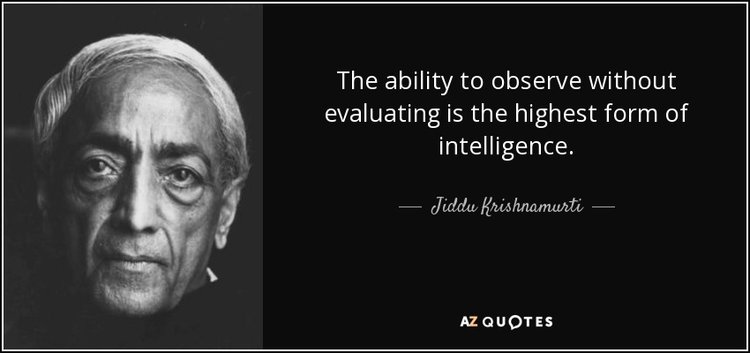
What is clear from our years of practice, is that the brain on psychedelics facilitates observation without evaluation in a powerful way. We have seen people have breakthrough moments of what life could be like with a clear differentiation between observation and judgment during psychedelics, and then through post-trip reinforcement, have integrated this novel thought process into their daily life. One frequently quoted philosophical statements is “The ability to observe without evaluation is the highest form of intelligence.” If this is true, then psychedelic drugs absolutely have the ability to enhance higher intelligence in a single trip.
How This Process Works
Some guides find it useful to shroud their techniques in mystery, with the goal of enhancing the subject’s mystical experience. We have found that explaining the techniques and why the techniques work facilitiates the process. Once the techniques and the science behind them are explained, the user can understand why this approach works, leading to an understanding and expectation that the process will work.
Each of the areas below are fertile ground for additional personal study, with or without the use of psychedelics.
Personal Narrative
We each have personal narratives about our lives. These are the stories we tell ourselves about who we are, how we became who we are today, and where we are headed. Personal narratives strongly impact feelings of well-being and are one way in which humans make sense of the experiences of their lives - through constructing narratives, we construct meaning.
Our personal narratives are often inaccurate, both subjectively (
e.g., our assessment of why we are who we are today) and objectively (
e.g., our recollection of the facts of our formative experiences). As humans, we appear to engage in a process where we gather a data point about ourselves and our lives through experience and then integrate that information into our personal narrative. But once that data point is integrated, our new version of the personal narrative impacts how we recall and interpret past events, reshaping both our subjective interpretation of the past as well as our factual recollection of past events. For example, if one win’s an important swimming event in their late teens, they are more likley to believe the were a good swimmer in their early teens and is more likely to recall having more objective successes in early life in swimming, such as recalling (incorrectly) winning earlier events.
There are three critical points for personal narratives. First, in practice, personal narratives distort objective facts to match the subjective story we tell ourselves, for better or worse. Second, personal narratives change throughout our lives, although as we become older, the refinement of our narratives tends become less impactful. And finally, psychedelics have the potential to disrupt our personal narratives, at least temporarily, by temporarily changing how our brain functions. These three facts combine to allow users of psychedelics to fundamentally change their vision of themselves (and of the world) by re-interpreting facts in a manner that advances personal growth.
Approaching a psychedelic experience with the intention of changing one’s personal narrative is one of the most effective way to rapidly change one’s lives. Years of repeating self-help mantras, talk therapy or reading books and articles may never change one’s self-perception the way a single, well guided psychedelic trip may be able to do. So starting with the intention of changing one’s narrative and having the expectation that change will occur is critical for an effective psychedelic trip.
The Importance of Language
Closely related to our internal
narative is the internal
dialogue in which we all engage. The language we use in our own heads impacts significantly how we view ourselves and our overall emotional state. Changing this internal dialogue in adults is tricky. Some adults can learn the great impact of internal dialogue and immediately start making changes using principles of self-acceptance and self-love to immediately impact their lives. Other cling to internal dialogues that serve them poorly, often because they wrongly believe the dialogues are serving them well.
For example, some believe that to be successful, one’s internal dialogue must be highly critical, always pushing one self to do better. Whether one may have greater job performance or academic performance in the short-term due to negative reinforcement is not clear, as some highly successful people do use highly critical internal language to motivate themselves. What is clear, however, is that people who have a consistent internal language of acceptance and love report greater happiness, an increased sense of connection to peers and the world at large, and an overall sense of higher achievement.
Finding a tone in one’s internal dialogue that suits what one want to accomplish in life is the ultimate goal. For most people, we believe that an internal dialogue that focuses on love and self-acceptance, but includes a realistic but kind and non-judgmental voice when we fail to live up to expectations, serves us best. Many people struggling with depression, anxiety or generally life dissatisfaction would be very well served to give their minds a vacation from self-criticism. All of us would likely benefit from leaving feels of shame at the doorstep.
The psychedelic experience provides a remarkable window to objectively observe one’s own self narrative. At even relatively low doses, one’s sense of self becomes less focus and rigid, and one’s level of acceptance increases. During this window one can begin to reform the language used with oneself, and some people have reported an absolute reset of the language they use, emerging from the psychedelic trip with an entirely new vocabulary in their internal dialogue. Post trip focused work is critical to cement these changes.
Living in the Moment. A Refined Approach
Virtually every study on happiness report that two factors have the greatest impact on happiness: (1) the amount of time living in the moment and (2) the quality of one’s social circle/support circle. Psychedelics can probably assist on both counts, but here we focus on improving happiness by an emphasis on immediacy. Overall life satisfaction requires a balancing of enjoying the here and now and making long term plans. However, in popular culture there is often a misunderstanding that immediacy and long term planning are in conflict.
We strongly advocate setting goals and making short term, medium term and long term plans. Set aside a time each week to set goals, make plans, evaluate progress and be on the path to living the life you want to live. But also try to live in the moment by enjoying each moment for what it is. For example, if one’s goals include getting a promotion at work and getting a promotion requires significant overtime, there is absolutely no conflict between achieving one’s goals and living in the moment. What is critical is that one focuses on the pleasure of doing the overtime.
The key here is that one views each moment of life as something worthy of cherishing. One need only watch a Zen monk do a daily chore to see the potential of finding peace and tranquility in washing dishes. The critical path to happiness is not what we choose to do, but how we do them. We recommend reading articles on the Zen way regardless of spiritual outlook, because they wonderfully capture the joys of living in the moment. A fine, short article on this can be
found here. But much of the Zen approach can be boiled down to proceeding in life at a deliberate pace, doing each task well, focusing solely on the task at hand, and doing every task with a gentle smile on your face.
The psychedelic experience can be effective at helping people focus on immediacy during the trip and for around 72 hours after, in part by inhibiting the default mode network in the brain, as described below. Around 72 hours after the effects of the psychedelic are no longer overtly felt, your brain returns to its normal state. During the trip and the 72 hours that follow, one can practice immediacy with the goal of burning in new behavior patterns at a time your brain is most open to change.
By viewing the psychedelic experience as a path for change, one may find a new personal narrative of their life story, a more helpful internal voice, and a focus on Being Here Now that can result in greater happiness, increase ability to achieve life’s goals, and greater life satisfaction.
Observation without Judgment
One of the most important skills one can learn in life is observing without judgment or evaluation. This concept arises repeatedly, and once you understand it you will be surprised how often people of insight and influence reference it. It is a central concept in business negotiations, a tenant in Buddhism, a tool in Non-Violent Communication (NVC or Empathetic Communication) and a core principle in experimental science. Marshall Rosenberg, the creator of NVC, describes observation without judgment in his typically folksy manner
here.
Observing without evaluation/judgment means making a factual observation without adding any interpretation or inserting facts you do not know to be true. For example, saying to one’s self “I’m not good at being punctual” is an evaluation, whereas saying “I was late three times to work last week” is an observation. You may also observe without evaluation in non-statistical terms. For example, saying “I wish I wasn’t late to work last week” is also an observation. Either you preferred to be late the same, more or less than last week, making it a factual statement. Nonetheless, you will need to have good self-awareness to ensure this is a true factual statement. Perhaps a more accurate factual statement might be, “I wish my boss hadn’t noticed I was late three times last week”. So we try to stay as close to statistical factual statements as possible when observing, and when delving into personal views and preferences, we do so with skepticism and care.
An important note is that you never know another person’s internal mental state. So the statement “my boss would prefer me not to be late” is never an observation, it’s an evaluation (or sometimes referred to as a diagnosis). The statement “My boss told me he prefers me not to be late” is an observation.
When one learns to observe without judgment, one removes their own bias from the equation. One will also likely find themselves feeling a closer connection to others in this world. Perhaps most importantly for the purposes of self-improvement, observation without judgment will likely lead to greater happiness and enhanced self-love.
Note, you do not need to abandon all judgment and evaluation in your life to make great progress. You simply need to be aware of the difference between observation and judgment/evaluation and apply each mindfully. For example, you may find yourself angry that your boss yelled at you for being late three times at work last week. One way of thinking would be “I am angry I was yelled at. Even if I was late, my boss shouldn’t have been angry and me and shouldn’t have yelled at me. And I should have stood up for myself.” This statement combines a factual observation (I am angry I was yelled at), with judgment statements (should and shouldn’t). And even the factual observation “I am angry” is likely unrefined, as anger is often an inarticulate description of a more complex underlying emotional state.
The same events could be considered in a two-step process. The first involves observation: “I was late three times last week. The third time I was late my boss said ‘Why are you always late?’. This statement was made in a louder tone of voice than typically used in everyday conversation. When this happened I felt my face become flush, and my pulse increase.” This may end the observation. But you don’t need to stop the analysis there. Next you might add some of your value system to the equation: “ I want people to rely upon me. I want people not raise their voice when speaking to me. I want to express my personal boundaries when I feel others have crossed them.” By doing this type of analysis, you have clearly identified observable fact and personal preferences, and have done so without judging yourself or judging your boss. Next, you may choose to add action items: “I plan not to be late next week. I plan to communicate to my boss that I did not live up to my personal expectations for timeliness and plan not to do so again. I plan to request my boss not raise his or her voice to me, even when displeased.”
Oddly, people are often able make great strides using observation without judgment/evaluation while dealing with third parties, while finding it almost impossible to do with themselves. Almost everyone’s personal narrative consist largely of observations and judgments. Re-defining the narrative (and the internal dialogue) to include fewer judgments may be virtually impossible for some. For many, even attempting to remove judgments from a personal narrative may feel offensive, like an attempt to strip one of self-identity. However, starting by removing blaming language and negative judgments from one’s internal story line may feel more palatable, and is a key first step in finding deeper happiness.
Many people find that observing without judgment become automatic while on psychedelics. This facilitates taking a hard look at one’s self, while maintaining self-love and respect. It also demonstrates the type of thinking, including the internal language used, when one is observing without judgment, and has the potential to facilitate this thinking in day-to-day living, Some report being shocked at finally understanding what it means to really simply observe, and return from this foreign land with insights that immediately impact their daily happiness and well-being.
We have found a four step process to be most effective in effecting change and personal growth while using psychedelics.
Step 1. Before the trip identify the specific area of growth desired.
Step 2. Conduct pre-trip in-depth reflection and analysis on the specified area of growth.
Step 3. During psychedelic experience focus work on the desired personal growth.
Step 4. After the trip, focus on integration of insights through further reflection and refinement.
Each of these steps is described below.
Step 1. Identifying the area of growth desired
For someone unsure on what areas of growth to focus upon, we have found it useful to define four areas of personal work: The Past, The Now, The Future and Spiritual Discovery.
There is overlap in each of these areas, but we have found working through these buckets, people are often drawn to one category, and choose to focus their attention accordingly.
The Past
The Past is broadly defined as any experience or condition that has lead you to where you are today. This may be your history with your family of origin (your caretakers and original social group), abuse history, history of loss or abandonment, or any other events or interactions that have helped shaped your life and your self-perception, for better or for worse.
For many, clearly understanding the past is deeply challenging. Consider the years of talk therapy people choose to engage in trying to better understand how they got to where they are. In our experience, it’s not necessary to have a perfect understanding of your past before undertaking a psychedelic experience — you just need to do enough work to broadly understand what you believe has been influential on the development of who you are today. More specifically, most people will likely want to identify what elements in the past you believe are holding you back today or that you want to come to peace with.
The Now
Focusing on The Now turns the emphasis to what’s alive in oneself today. Some will find focusing on the past to be less efficient than cutting to the chase and asking direct questions about the current state of affairs. The inquiry isn’t one of why you are the person you are today, rather the focus is simply on who you are today and what you want to refine.
The Future
Goal oriented people in particular may find focusing on where they want to be more rewarding than reflecting on the past or even the present. Understanding The Future means reflecting upon one’s values and desires to determine what life they want to live in the future. The focus on the future often looks at life achievements, such as relationships, lifestyles and other more tangible goals. In contrast, if one finds themselves feeling depressed frequently and wants to change that, we would place that in the bucket of The Now; in short, if there is something you could immediately change (in that case, the future is now!).
Spiritual Growth
While Spiritual Growth may play a significant role for anyone focusing on The Past, The Now or The Future, some find a specific focus on spiritual growth to be the most effective way to effect spiritual enlightenment, and the techniques we use in these cases are in some ways unique from those applied to the other paths.
Note, we use the term spiritual here broadly, and include any focus on the spirit or soul, as opposed to attention on the material or physical. This includes all religious paths but also encompasses most mindfulness practices. One of the most famous psychedelic experiments (
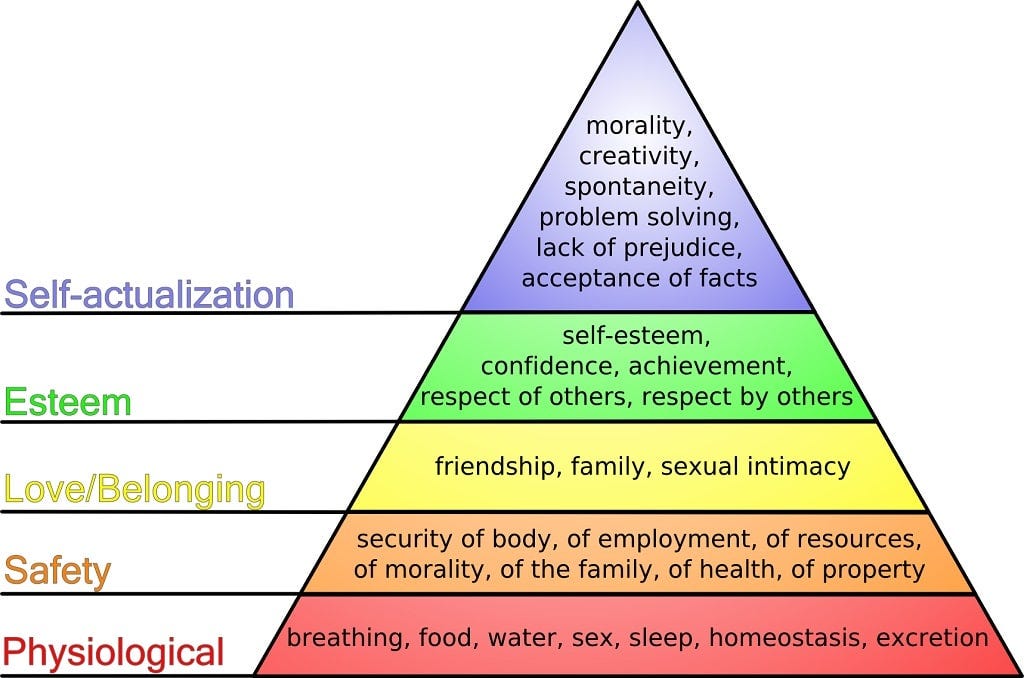
the Good Friday Experiment) showed that religious people could experience profound religious experiences facilitated by psychedelics. Similarly people seeking personal enlightenment, regardless of religious orientation have found psychedelics to be a pathway to self-actualization, a deeper connection to mankind or the universe and a deeper understanding of one’s self and one’s relationship to the ethereal.
Using this Guide After Identifying the Area of Growth
Once you have identified the area of growth you intend to focus upon, you may direct your attention to the subsection of the article that is applicable to you. For example, if you want to focus on Spiritual Growth, you can skip or quickly skim the materials on The Past, The Now and The Future.
The Past
Each of us have a narrative about our past. To make sense of who we are, we formulate stories about how we have become the people we are today. These narratives are based upon our perceptions of the past, but seldom based on objective reality. We unconsciously simplify, distort, mis-remember, over or under-emphasize events in our past to provide ourselves with a relatable story of who we have become.
Your truth is not The Truth….
Studies have shown again and again
eyewitness accounts of events are shockingly inaccurate. Not surprisingly, people are also horrible at accurately recalling their own past, making systematic errors, which together form our own narratives on how we view our lives. Your truth is not the truth. This is often hard for people to accept. If you find yourself to be a skeptic around this point, please read everything you can on
how the human memory works… you will be convinced of this point.
These errors in our personal narrative may serve us well or serve us poorly. Truth is ultimately extraordinarily hard to obtain, and endless hours of talk therapy can result in little clarity, and more importantly, little improvement in the personal condition.
We don’t suggest ignoring objective reality, we simply suggest that when recounting your internal narrative of your life, much of the “objective reality” simply isn’t accurate.
And most importantly, understanding the factual events of your past are less important than creating a narrative around your past that serves you well today.
In pre-trip reflection, your goal is not to have a deep understanding of your past, but to attempt to understand the narrative you have created for yourself around your past. Do you view yourself as a victim of others? Do you believe that you were powerless in the past? Do you believe you had power to avoid mistakes, but failed to do so? Do you believe you are on a path to greatness? Do you believe you can accomplish anything you choose?
Do your best to understand as clearly as possible your narrative about the past. Then consider which elements of that narrative serve you well today. Spend some time each day to write down a summary of your internal narrative - it may be two or three paragraphs or several pages. Just do your best.
Then circle in blue those aspects of your narrative that you believe are serving you well today. Circle in red those stories that are holding you back from being the person you want to be. Each day spend time reflecting upon your narrative, and refining your description of it. Again contemplate each statement you make about your narrative and whether it serves you well today.
By the day of your trip, you should have a clearly defined understanding of the story you are telling yourself about your past, and what it’s doing for you today.
The Now
Pre-trip work involves taking inventory and asking yourself what’s going on for you right now, and identifying what you would like to change your life. It also includes feeling gratitude for that which you’d like to retain. Taking a self-inventory can be a challenging process if you feel your life is not where you want it to be.
Proceed without self-judgment. Be factual. Don’t attempt to give reasons for where you are today (neither assign blame or credit to yourself or others), simply observe.
Specifically ask yourself whether your life is in alignment: Are the key areas in your life consistent with your fundamental values? Is your job, physical condition, eating, relationship with intimate partners, friends and family, relationship with intoxicants each consistent with your value system. Again be factual, and non-judgmental.
The answers may immediately be obvious upon first glance: one’s romantic relationships are not optimal, one’s job is going poorly, goals aren’t being achieved, one is feeling loved and connected to their support system, one is feeling blessed for finding internal strength, etc.
For people with quick answers, the key is to keep digging deeper. For example, if a romantic relationship feels unfulfilling, try to delve into what are your values about what a romantic relationship would need to look like to make you happy, why the “wants” in the relationship are not being met. Ask yourself, without judgment, why the relationship is continuing (it
is serving you in some way to remain in the relationship). Write all the answers down. Refine them. Do as much work as possible pre-trip to answer these questions, but keep an open mind to changing the answers following gaining insights during the psychedelic experience.
Some may not have a clear understanding of their current situation. Tthere may only be vague (or possibly intense) emotional feelings. Perhaps life isn’t as happy or fulfilling as desired, but the observer lacks a clear understanding of the causes discontentent. If this is where you find yourself, dedicating a psychedelic experience to understanding the root causes of the unhappiness, without trying to change anything, may be an exceptionally valuable use of time. Spend as much time as need to develop theories about what is going on, refine the theories and write them down.
Here, meditation will likley be valuable in developing theories as to why your are in your current feeling state. Before the meditation session think about the issue at hand, and then clear your mind as you meditate. When thoughts inevitably enter your mind, remember what they are, but attempt to again clear you mind. After the meditation ends, take notes on what has been entering your mind, and reflect upon whether they help shape your views on understanding what is influencing you in the way you want to change. Revise your notes. And retain an open mind going into your psychedelic experience.
Whenever possible during this process take ownership for everything in your life, good and bad. Do so without any value judgment. By doing so you are taking a critical step in achieving ultimate empowerment. Accept that which you cannot control, but be slow to cede control of anything.
The Future
The Future is focused on goal setting. Identify clearly what you want to achieve and who you want to be. Compare where you are today with where you want to be, and begin to identify the steps you will need to take to achieve your goals. Follow any of the many goal setting methods you can find online,
like this one. Review daily for the week before the trip, refining each day as needed.
Spiritual Growth
The path to spiritual growth begins by identifying your intention, whether it to be to understand your creator better, to better understand one’s own nature, to focus on losing attachment to worldly matters, or to find a spark of deeper meaning beyond the material world. Once you have begun to focus and refine your intention, establish a daily practice leading up to the trip of simply deeply focusing on your intention. If you pray or meditate, do so daily. During prayer, be simple and direct in your prayer, and focus upon that element of spiritual growth that you desire.
During meditation, follow your customary path. If you practice Koans, focus on a single one that has eluded you. If you practice concentration meditation (following your breath, counting, etc.) or if you practice Shikantaza, continue your daily practice in the same form a usual. Regardless of the form of meditation you engage in, before and after each session reflect upon what spiritual growth you seek…. do you wish to have a deeper understanding or move closer to enlightenment? Do you wish to improve your daily practice, with deeper and more challenging mediation? Do you seek a clear mind in your daily life? Or perhaps acceptance of the impermanence of all things? Regardless of the answer, your task is to simply focus each day, before and after meditation, on the specified area, and each day attempt to form a more prefect vision of what you hope to achieve.
Step 3. The Psychedelic Experience
Intentionally: Mind set and Setting
The concept of “set and setting” is a key component in directing a psychedelic experience to accomplish personal growth. Set can be viewed as your mindset. This is what you are bringing to the table… including everything from your mood the day of the trip, your intentions for the trip, your general attitudes toward personal growth and your baseline personality.
Setting refers to the physical environment of the trip. Where you do it, with whom you do, the music, temperature, aromas and all other stimuli to your senses.
Before your trip you will want to carefully curate your “set”. That is the fundamental purpose of this guide. By identifying your areas of growth, you not only focus your mind on an area of change, but you critically are preparing your mind to view the psychedelic experience as a growth opportunity.
Before ingesting psychedelics you will also want to ensure that your setting is optimized for your desired experience. You may find our guide to
Preparing for a First LSD Trip to be helpful, even if you are experienced with LSD. Critically you will want to clean and uncluttered environment. If possible you may find a safe outdoor space to be a desirable place to experience your trip. We find it ideal to use the last few hours of a psychedelic experience to reconnect with the material world and those we have shared our experience with. We often do this by reconnecting as a group and enjoying food and drinks.
Our Favorite Foods On LSD covers some of the food we most enjoy, and we often have twenty or more small servings of different foods and drinks to enjoy during any one experience.
As always you will want to make sure you have pure LSD (tested from a reliable source) or high quality mushrooms. You will want to make sure your personal safety is ensured. You will need to know and trust those with whom you are sharing this experience. And you will need to communicate to each person present your intentions and goals for the trip, and communicate any boundaries and make any requests from these people while you are entirely sober.
We choose to ingest a modest dose for the first growth-oriented experience. The ideal dose may depend on the user’s familiarity with psychedelics, but we consider 125ug the default starting point, and adjust up or adjust down depending on individual circumstances. Weight/size does not seem to have a significant impact on dosage. If you are unfamiliar with LSD doses, review
this article on LSD Trip Stages/Phases and typical dose experiences. For those unfamiliar with splitting doses, here is
an article on Volumetric Dosing.
The Past
Have your notebook handy, so you can review the statements about your history that serve you well (circled in blue) and those holding you back (circled in red). Now apply the following steps:
Recall The Past. Without reference to your notebook, begin by recalling the past from a fresh point of view, recalling the events of your past in a factual, and emotionally neutral way. While in a psychedelic state, many people find they can revisit past memories clearly, and even those that are normally painful one may be able to recall with no or greatly reduced pain. If anything begins to feel too painful, stop what you are doing and take a break, changing your location, music and area of mental focus.
Accepting The Past and Removing Its Power. Accepting that The Past has occurred, and is now in the past. Understanding that The Past does not have power to control the now. Only your choices today impact The Now.
Forgive and Let Go. If you feel pain around the past (as we likely all do in some way), the next step is to forgive those that have hurt you in the past and to forgive yourself for any shame or guilt you are feeling. This ultimate step is the most powerful way to regain control over The Now. If you hold on to anger, resentment or other similar emotions, toward others or toward yourself, your defense mechanism only hurts yourself. Remind yourself that letting go of anger does not mean that you will allow others to hurt you or that you will repeat mistakes of the past. You may forgive those that hurt you while seeking legal recourse against them. Forgiving and letting go simply means you will replace emotional pain with healthy boundaries around behaviors.
A New View of the Past. Finally, think about the past in purely positive terms, including all events that have occurred. Deeply content people usually see all events of the past as combining to make the person they are today, and accept that events that brought pain and grief contribute to today’s strength and resilience. The positive and happy moments also contribute to today, and should be welcomed with deep gratitude. This phase is about reinforcing a positive mental attitude, because
study after study has identified positive attitudes as a prime contributor to personal happiness, and the brain on psychedelics is primed to be directed toward healthy attitudes.
A note on reframing. There is a slightly different approach that can also be included in this process, typically replacing the “accepting the past…” phase. Some people have found success in psychedelic therapy employing a device called “reframing”. Reframing takes several forms, but the one with which we are most familiar involves subjects recalling painful experiences but change key elements in their recall of the event, such as their response to an physical or verbal attack, and focusing on the positive emotional feelings associated with the changed factual pattern.
Repeated practice of doing this, especially while under psychedelics may well produce a long term change in the emotional feelings associated with the event, whether or not the actual memory is actually altered. A more nuanced approach involves simply re characterizing the event emotionally in ones mind without changing the facts during recall. For example, viewing a traumatic event as a positive learning experience, or finding other positives that have resulted from the event, and associating positive emotions with the new perspective. We do not actively employ these tools, and would encourage those interested to do additional research to understand exactly how these may best be employed, and any risks associated with such techniques.
The Now
During the psychedelic experience, it is time to revisit The Now. Instead of focusing on the work you’ve been doing, start by doing an internal diagnostics… ask yourself what is going on in your life that you would life to change, or what are you feeling that is not what you want to be feeling. Start by focusing on your body and emotional state at the very moment you are doing the internal review, and then expand your field of vision to be a bit broader to the day, the week and the month, but no more.
You may find that what’s alive in you is quite different from what you anticipated while you were in a non-psychedelic stage. Reflect for a moment on whether this is an important insight: have you found a deeper root of discontentment in your life, and if so, spend the session working on it. It may be closely related to what you expected to experience and perhaps you have simply refined your understanding of the issue. Or it may be entirely unrelated, in which case you may choose to work on it, or go back to what you did you pre-trip. There is no wrong answer there - either will lead you down a productive path.
Once you have an issue you intend to focus on, ask yourself why are you in the situation you have found yourself to be in, why you are making the choices you are making or why you are feeling the feelings you are feeling. It is absolutely critical that you do this analysis without self-judgment or shame. Use your rational, objective voice to answer the question. In virtually any situation that is occurring in The Now, try to take full responsibility for what is going on. Once you view your life from a perspective of personal responsibility, you have taken the first step in effecting change.
Some may find it challenging taking responsibility for situations in which they feel powerless. And many situations can be viewed from a perspective of helplessness. For example, one may wish they were taller, and point to genetics as the primary cause of their issue with their height. But it’s unlikely that the issue in their life is how tall they are, rather it is likely their own feelings around their height (which they are capable of changing). Or perhaps they may believe that it’s other’s reactions to their height that is holding them back in life, but again, one needs to reframe the inquiry in a manner in which they do have control. Usually this means asking is there another way to achieve what they want, given an unchangeable fact or is this an area where one needs to work on acceptance access what is joyous in any situation.
When doing this analysis, in addition to taking responsibility for the area of focus, one should also ask, in an objective manner, how their behavior and attitudes are serving them well, and in which ways they are serving them poorly. For example, during a psychedelic trip, one may start the trip feeling unsatisfied with their progress at work. They may during the trip begin by asking why they haven’t achieved the career success they desire, while refusing to change jobs or take other actions to help move up the ladder. During the trip they may come to the realization that they have stayed at the same job because the work is easier, the location of the office better, or some other entirely reasonable reason to stay. The trip may reveal that the need for advancement is more present than the need to continue to enjoy these benefits. Or the trip may reveal that the choice of staying, and forgoing advancement is the better option, and the person may find peace with accepting the status quo. In either case, the revealed wisdom will serve the person’s personal happiness well.
For example, one might find themselves living in pain over something that has happened in the past. Abuse survivors sometimes find themselves living with daily anxiety triggered by past abuse; the unconscious mind may have developed obsessive mental algorithms designed to keep the person safe from future abuse.
A special note on addition.
Those struggling with addiction often find psychedelic experiences to be extraordinarily helpful. Addiction is often closely related to obsessive or recursive thinking. Psychedelics give the mind a break from traditional thought patterns and have been shown repeatedly in studies to promote new patterns of thought.
The smoker may alcoholic may suddenly view drinking in a clear light for the first time, and be able to stop with little challenge. Lifetime smokers have found great success in giving up cigarettes after a psychedelic trip, although physical addition symptoms take some time after the trip to disappear.
For those wishing to abandon an unhealthy habit, it is advisable to focus clearly both on what the addiction is costing you, and what giving up the addition will bring to your life. Again, unlike many treatment procedures which rely on shame, psychedelic therapy relies upon cost/benefit analysis. Once your brain understands in a clear, rational manner that your addiction is causing you harm, you have taken an important step in breaking the thought pattern associated with addiction and begun to replace it with a more healthy thought pattern. Your post trip work will be vital in avoiding returning to an unhealthy thought algorithm, as discussed below.
A special note for survivors of abuse
For those who are dealing with the pain of past abuse, or are currently living in an abusive situation, psychedelics may open a new path. Of all issues that may be addressed through psychedelics, abuse survivors and those subject to ongoing abuse may face the most challenging path. For this reason, one should only address such emotionally charged issues with the assistance of a trained psychedelic guide, whose is formally trained in assisting abuse victims overcome trauma or exit abusive situations.
For past abuse, often the mind’s self-protective thought patterns and hyper-vigilance interferes with the full enjoyment of one’s life. Reflecting on whether re-living the pain of the past serves one well is a useful exercise, and many will find the psychedelic experience either allows them to let go of the current damage past trauma is bringing into life, or allows the person to live more comfortably and with deeper acceptance of the defense mechanisms that have been adopted by the unconscious mind to cope with past abuse.
For those suffering a current abusive situation, taking personal responsibility for the situation may be challenging or sound offensive. However, accepting responsibility for remaining in an abusive situation is the first step in effecting change. One who is truly helpless can never change their situation, but fortunately almost everyone has the ability to empower themselves to change circumstances, but many find the path almost unimaginable prior to a psychedelic experience.
The Future
Manifesting the future you desire begins by reflecting upon the goals you set during your pre-trip work. During the psychedelic experience you will again reflect on these goals and ask yourself if these are indeed the places you wish to focus your energy upon.
You may suddenly realize that what seemed very important a short while ago, seems less important upon reflection during your trip, while other areas of growth now seem critical. If this occurs, use this time to deeply reflect upon your priorities and gather as much information as you can on who you are and who you want to be.
If your pre-trip goals remain important to you, or if you have identified new goals, spend some time asking yourself what in the past has held you back from making progress toward your goals. And reflect carefully upon how your life will be improved upon achieving your goals. Never forget, that there are rational reasons you may have not made as much progress as possible toward your goals in the past. For example, you may have enjoy other aspects of your life more than doing the work required to achieve your goals. Take a moment to accept these choices and accept the consequences of these choices. And then change your focus on forming a vision of how your choices in the future will help move you toward your goals. Be as clear as possible in envisioning yourself moving toward your goals, including clearly seeing the likely obstacles you will face and see yourself overcoming these obstacles, Focus especially on personal limitations you envision, such as lack of drive, ambition or confidence, and see clearly the path forward in which you have the appropriate level of drive/ambition and confidence to achieve your goals while maintaining the balance you desire in your life.
Psychedelics are unlikely to result in an overnight achievement of critical goals in your life, but they may give you the insights on how to motivate yourself, to clear your mind of distractions and to see limitations that have held you back in the past. But psychedelics may also show you that goals you once thought were important are non consistent with the person you wish to be. In either case, these are just food for thought, to be digested over the coming weeks, as discussed below.
Spiritual Growth
If there is one area where people report remarkable change from a single psychedelic experience, it is in the area of spiritual growth. View your trip time as precious. During the early part of your psychedelic experience, as a time to relax and open your mind and body for what is about to occur. Reflect upon your desires for spiritual growth, whatever they may be. Envision your mind and body as a medium for your spirit to connect with your creator, with the universe or with whatever spiritual power you have been drawn to in your life.
As you start to enter the peak phase of your psychedelic journey, further relax and let go of conscious thought to the extent you are able. During the peak phase do not focus too much on your spiritual journey. You may find insights during this phase, but most importantly, enjoy it’s beauty without over-thinking it. If you happen upon enlightenment while in a peak phase, consider yourself one of the fortunate few, but many find this part of the journey to be disorienting, or find themselves easily distracted from their goals. This is fine and natural, so simply enjoy the ride.
Once you are coming off of the psychedelic peak, begin to ease back into reflecting upon your spiritual path. If you find yourself distracted, take a bit more time to ride the wave of psychedelics, but after some time passes, return to your period of reflection. Attempt to connect with your spiritual path through your emotions and by way of physical sensations in your body.
Step 4. Integration of Insights Post Experience
Once you’ve completed your psychedelic trip, it is time to reflect upon what you’ve learned and choose what you would like to integrate into your life.
Step One. Reflect without Action
The most important point is to take no overt action on any perceived learning or revelations for at least 72 hours and ideally at least one week, unless your health or safety is at imminent risk. People find themselves with great revelations during a psychedelic trip, and decide to quit a job, leave a marriage, or make other important life decision and impulsively act on the revelation immediately after the trip ends. This is a profound mistake.
On LSD inhibitions are lowered, and your brain works in novel ways. The voice of reason is hushed. This is wonderful for thinking out of the box, finding new creative outlets and breaking habitual thought patterns. However, it also allows objectively bad ideas to seem reasonable. While it is important to approach a psychedelic experience with an open mind, it is critical to re-assess the insights that have occurred to you during the trip for a minimum of three days after the trip, and ideally a full week. If after the period of reflection you remain convinced the action is required, make the change.
Step Two. Write Down Your Insights and Action Items
As soon as possible after your trip has ended, or even as your trip is just winding down, take notes on what you discovered and any changes you would like to make in your life. Summarize your trip, including your emotional states throughout the trip.
Every day for at least a week revisit and refine your list. You may find yourself expanding your action items or deleting items entirely. This is a natural part of the integration process. Those who meditate may find insights continue to pop into their heads during and after deep meditative states. As usually, allow the thoughts to pass through your mind, but after meditation jot down what you remember and spend time reflecting upon these notes to see if there are additional insights there.
Step Three. Reinforce Healthy Thought Patterns
While you should take no outward action immediately after your trip (like quitting your job or ending a relationship), you should immediately start to reinforce healthy thought patterns and watch like a hawk for the return of unhealthy mental processes. For example, if you find yourself thinking in less judgmental terms post trip, reinforce this behavior consciously, and if judgmental thought processes begin to return, consciously try to nip them in the bud.
Without post trip reinforcement, you are likely to return to your pre-trip state quickly. So this is the critical time to start burning in new ways for your brain to function. People who are battling addiction often find that for a day or two post trip their addictions seem to have magically disappeared, only to be disappointed when the addictive urges return as strong as ever a few days later. For anyone battling addiction or depression, it is critical that one is mindful of obsessive thought patterns, and consciously choose to stop the pattern when it attempts to reemerge. Techniques such as learning new skills or undertaking a new active hobby can be effective in re channeling your brain’s energy into a healthy new pursuit in the days following the trip. Just be mindful not to decide to undertake a new, risky life endeavor or make any major life change during that first week post trip.
Step Four. Incorporate Your Learnings into Your Life
Once your are a week out from your trip, it’s time to start reinforcing your insights through more significant life changes. Psychedelics do one thing remarkably well…. break habitual thinking. But the challenge is to resist reforming the unwanted habits.
The two keys to breaking old habits (mental or otherwise) are in theory simple: Repeat the new, wanted behavior while avoiding the old, unwanted behavior. In practice, both of these steps are highly challenging, so you need to give yourself every advantage to succeed. The psychedelic experience will give you a magical window to jump start this process… but the window may last as little as 72 hours before you feel drawn back into old behavior. So what can you do?
First, to the extent possible, make changes to as many old habits as possible, good and bad for a few weeks. You can return to healthy habits after a few weeks, but the goal is to break as many patterns of behavior as possible during this period. If you always drink coffee in the morning, try tea or a different breakfast. If you never work out, introduce a daily walk into your life, or if you are a daily runner, try joining a gym and working with free weights and a stationary bike for a bit before re-introducing running. Don’t watch your favorite TV shows, instead go out with friends or go to a movie theater or do anything that is as different as possible from your normal routines. Don’t introduce new unhealthy habits, just find healthy and appealing alternatives to your daily routine.
The purpose of this shake up is not to change your life entirely. Your focus will remain on changing the specific items you contemplated before and during your trip. However, our brains often have unconscious associations between the unwanted mental or behavioral activities, and begin daily routines. If you want to give up smoking, for example, there are hundreds of daily associations you’ve made unconsciously with cigarettes. Your morning coffee, talking with a friend on the phone, watching a certain TV show may all bring back conscious memories or subliminal associations with smoking. By changing as many habits as possible you are using a shotgun approach to break these associations.
Second, start new associations with positive habits. Whatever you have focused on changing, replace the old habit, routine or way of thinking with a new, rewarding routine. Those who have battled addiction are prone to certain mental processes that feed addiction. In all likelihood, if you are trying to overcome an addiction, you will find yourself with a new addiction shortly. Make sure it’s a healthy one. The best replacements involve a broadly focused area of interest. Rather than replacing a smoking addiction with a running addiction, think more generally about a fitness addiction, or better yet a wellness addiction, including eating healthy, working out and meditating.
If you are battling negative thought patterns, replace the cycle of self-doubt or criticism with a cycle of gratitude and appreciation. Start each morning by thinking of one person you are grateful to, and communicate that to the person. Think about one thing you are proud of, and feel that sense of pride throughout your body. Every time you notice your thought going to a negative place, jump back to your place of gratitude and pride.
Regardless of the change you want to incorporate into your life, the algorithm to do so is the same: remove any habits that are contrary to your goals and replace them with habits that advance your agenda. Make the new healthy behavior your new norm. Make sure your internal dialogue, and your internal narrative are consistent with the new healthy behavior.
Even a casual glance at the psychedelic molecules indicates a resemblance to each other...and to Serotonin. All four are tryptamine, a type of organic compound distinguished by the presence of two lined rings, one of them with six atoms and the other with five.
Serotonin binds with a dozen or so receptors found throughout the body including the digestive tract. Depending on the type of receptor and its location, serotonin is liable to make very different things happen.... sometimes exciting a neuron to fire, other times inhibiting it. Psychedelic compounds have a strong affinity with one type of serotonin receptor, called the 5-HT2A receptor. The psychedelic compounds look sufficiently similar to serotonin to attach themselves to this receptor as to activate it to do various things.
But while we know what psychedelic compounds do, we do not know how they affect consciousness. Consciousness itself is not understood by scientists, at least in the sense that we cannot explain how the subjective quality of experience for a person is correlated to the physical structures or chemistry of the brain. Scientists are using psychedelic compounds to better understand the links between our brains and our minds.
Perhaps the most ambitious neuroscientific expedition using psychedelics to map the terrain of human consciousness is taking place in West London in the labs of David Nutt (the author of the infamous Lancet article on the relative harm of various drugs and alcohol). There volunteers are being injected with LSD and psilocybin and scanned with MRI and MEG to observe changes in their brains, giving us our first glimpses of what something like ego dissolution or hallucinations look like in the brain as it unfolds in the mind.
One working hypothesis in the study is that brains on psilocybin would exhibit increases in activity, particularly in the emotion centers, which would be observable in a fMRI scanner. But when the first results came in, the results were the opposite - a decrease in blood flow (a proxy for activity) in the brain. Psilocybin reduces brain activity, especially in one area: the default mode network (or DMN).
Psilocybin reduces brain activity, especially in one area: the default mode network (or DMN).
The Default Mode Network
The DMN was not known to brain science until 2001. The DMN forms a critical and centrally located hub of brain activity that links part of the cerebral cortex to the deeper and older structures involved in memory and emotion. This is the area that becomes active when the brain is not focused on other things; it's where the mind goes to wander, daydream, and worry. It may be through these structures that the stream of our consciousness flows. It is most active when we are engaged in higher-level "meta cognitive" processes such as self-reflection, mental time travel, mental constructions (such as the self or ego), moral reasoning and "theory of mind" - the ability to attribute mental states to others, as when we try to imagine "what it is like" to be someone else.
The brain is a hierarchical system, with the highest-level parts (developed late in evolution) typically located in the cortex. Those systems exert an inhibitory influence on the older, lower-level parts. The DMN exerts a top down influence on other parts of the brain, many of which communicate with each other through the hub. It acts as an uber-conductor to ensure the cacophony of competing signals from one system do not interfere with those from another.
The DMN is where people construct the image of themselves - linking experiences with what happens to them and with projections of our future goals. There is also a link between self-reflection and many types of unhappiness; there is a strong correlation between unhappiness and time spent in mind wandering, the principal activity of the default mode network.
In an early study, the steepest drops in DMN activity correlated with volunteers' subjective experience of ego dissolution - the loss of the sense of self that can occur in higher dose psychedelic experiences. This is the same effect recorded when experienced mediators experienced transcendence. Some believe that a central hallmark of a mystical experience is fact that the insights it sponsors are felt to be objectively true can be explained by the dissolution of self: the lack of the sense of self literally removes the sense of the subjective. The ego-self is no longer available to question the insights validity.
The mystical experience may just be what it feels like when you deactivate the brain's default mode network. This can be achieved not only by psychedelics and meditation, but perhaps also by means of breathing exercises, sensory deprivation, fasting, prayer, overwhelming experiences of awe, extreme sports, near-death experiences and so on.
***
The DMN exerts an inhibitory influence on other parts of the brain. This may explain why during a psychedelic experience repressed emotions and memories may come forth. But the DMN also helps regulate what is let into consciousness from the outside world. The brain is a prediction machine, taking as little sensory information as possible from the outside world as it needs to make an educated guess. Our perceptions of the world offer us not a literal transcription of reality but rather a seamless illusion woven from both the data of our senses and the models in our memory.
Carhart-Harris recently published an ambitious paper titled "
The Entropic Brain: A Theory of Conscious States Informed by Neuroimaging Research with Psychedelic Drugs". The question at the heart of the study is whether we pay a price for the achievement of order and self hood in the adult human mind. By promoting realism, foresight, careful reflection and an ability to recognize and overcome wishful and paranoid fantasies, the brain tends to constrain cognition and exerts a limiting or narrowing influence on consciousness. In earlier development, the human brain relied upon "magical thinking" to make order of the unknown. Later the default mode network developed, allowing for self-reflection and reason.
Carhart-Harris suggests that some psychological disorders are not the result of a lack of order in the brain but rather stem from an excess of order. When the grooves of self-reflective thinking deepen and harden, the ego becomes overbearing. This is perhaps most clearly evident in depression, when the ego turns on itself and uncontrollable introspection gradually shades out reality. He believes that excessively rigid patterns of thought can be improved by psychedelics, which disrupt stereotyped patterns of thought and behavior by disintegrating the patterns of neural activity upon which they rest.
***
In brain under the influence of psychedelics (or possibly deep meditation) the specialized neural networks, such as the default mode network and the visual processing systems, become disintegrated, while the brain as a whole becomes more integrated as new connections spring up among regions that ordinarily kept mainly to themselves or were linked only via the central hub of the DMN. The various networks of the brain become less distinct and specialized, communicating more openly.
A 2014 study produced a map of the brain's internal communications during normal waking consciousness and after an injection of psilocybin. Under psilocybin, thousands of new connections form, linking far-flung brain regions that don't normally exchange much information.
Psychedelics allow a thousand mental states to bloom, many of them bizarre and senseless, but some number of them revelatory, imaginative and at least potentially transformative. Science has not shown whether the new neural connections that psychedelics make possible endure in any way. But the long term change in thinking that some studies have shown raises the possibility that some kind of learning takes place while the brain is rewired and that it might in some way persist.
Psychedelics allow a thousand mental states to bloom, many of them bizarre and senseless, but some number of them revelatory, imaginative and at least potentially transformative.
In the days following a psychedelic experience, people are more able to identify their own state of consciousness, and the state becomes somewhat more easy to manipulate. Some find their consciousness following a psychedelic state to be in more generous or grateful state, open to feelings and people and nature, often accompanied by a diminution of ego and a falloff attention to the past or the future. There is a sense of contraction when he's obsessing about things or feeling fearful, defensive, rushed worried and regretful. The ego is more present, and thoughts about the past or future are more in the forefront.
***
A young child has an entropic brain, and baby consciousness is so different from adult consciousness as to constitute a mental country all of its own. The closest we may be able to come to visiting that foreign land may be a psychedelic journey. A video of a discussion among Carhart-Harris and Alison Gopnik, author of
The Philosophical Baby, can be seen on this YouTube video.
Gopnik draws a useful distinction between the "spotlight consciousness" of adults and the "lantern consciousness" of young children. The first mode gives adults the ability to narrowly focus attention on a goal. The child's attention is more widely diffused, allowing the child to take in information from virtually anywhere in the field of awareness, which is quite wide. Gopnik believes that the child (under 5) and the adult on psychedelics rely more on novel thinking than on applying known information to processing sensory information.
This approach may result in more errors and require more time and energy to process, but occasionally returns answers of surpassing beauty and originality. In some experiments young children are better at problem solving than adults, precisely because of the requirement for novel thinking. In one experiment, she presented children with a toy box that lights up and plays music when a certain kind of block is placed on top of it. When it's programmed to only work when two blocks are placed on it, four year olds figure it out much faster than adults; children test more "far-out" hypothesis than adults.
Both Gopnik and Carhart-Harris believe that the psychedelic experience can be helpful to who are mentally ill and those that are not. For the well, psychedelics, by introducing more noise or entropy into the brain, might shake people out of their usual patterns of thought in ways that might enhance well-bering, make us more open and boost creativity. It may help us achieve fluid thinking in a way that is second nature the children.
For the unwell, those patients suffering from mental disordered characterized by mental rigidity may be helped, including addiction, depression and obsession. Each of these are associated with a narrow, ego-based focus.
In sum, psychedelics suppresses the work of the default mode network, which allows disperse parts of the brain to directly communicate with each other. Rigid patterns of thought are broken, at least temporarily, and new ways of thinking are allowed to occur. Not all thought developed may be helpful, but insights might be gained as a result.
A step-by-step guide to using psychedelics for personal growth, healing from trauma, and spiritual enlightenment.

www.trippingly.net








 realitysandwich.com







 psychedelicpassage.medium.com









 thethirdwave.co