• N&PD Moderators: Skorpio

๐ŸŒŸ๐ŸŒŸ Social ๐ŸŒŸ๐ŸŒŸ Rectify's molecular poetry thread

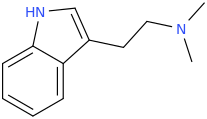
1-dimethylamino-2-(indole-3-yl)-ethane.png


THE_HOLY_SPIRIT_MOLECULE
1-dimethylamino-2-(indole-3-yl)-ethane

I went to my first Narcotics Anonymous meeting in Jonesboro, GA. The Guy At The Meeting Said, "Yeah, I Am An ETH-NEK."

Dosage 30 to 50 mg per person IM, IV, Vaped, Or Per Os (by mouth). Per Os ROA Administration Available But Works Better With DPT Than DMT And Are Both 12 Step Spiritual Programmed Enhancers. That Is, Religious Supplements. PLUR Peace Love Unity Respect.
 
Last edited:
It is very soluble in water. I dosed it as such.
Apparently:
Amantadine is metabolized to a small extent (5โ€“15%) by acetylation. It is mainly excreted (90%) unchanged in urine by kidney excretion

Some related structures

330px-Bromantane_structure.svg.png

Bromantane is a Russian atypical CNS stimulant and anxiolytic drug of the adamantane family. ...approved in Russia for the treatment of neurasthenia. Although the effects of bromantane have been determined to be dependent on the dopaminergic and possibly serotonergic neurotransmitter systems, its exact mechanism of action is unknown, and is distinct in its properties relative to typical stimulants such as amphetamine. Bromantane has sometimes been described as an actoprotector (synthetic adaptogen).

250px-Memantine_structure.svg.png

Memantine is a low-affinity voltage-dependent uncompetitive antagonist at glutamatergic NMDA receptors
...non-competitive antagonist of 5-HT3
...non-competitive antagonist of different neuronal nicotinic acetylcholine receptors
...agonist at dopamine D2high with equal or slightly higher affinity than to the NMDA receptors
...agonist at sigma ฯƒ1 receptor with low affinity (Ki = 2.6 ฮผM)
 
I was referring to the freebase as you didn't include a counterion.

I would approach all Russian drugs with extreme caution. In spite of the denise of the Soviet union, certain cultural elements remained which isn't a criticism, just a cultural difference. Two that is still firmly in place are patronage and bribary, If someone controls what new medications shoulf be given a GSL, they will EXPECT a bribe, That's how it works, Everyone pays upwards, In return, patronage moves downwards. You pay and in return you are granted favour. It's not 'evil', it's just the way it all works over there.

By all means obtain a sample and provide a trip report, but I suspect it's not great, I really don't know if any medicines developed in Russia or any former Soviet Union nation are used by other nations. It would be interesting to know,

I was only a little aware of these adamantine-based medicines but they all seem a little too promimiscuous, If the use-case is a life-limiting illness, I suppose that's acceptable. But I've seen other 'new' moieties incorporated into medicines and as far as I'm aware, once that 'newness' wore off, they tended to be ignored,

It's the class 'just because you can doesn't mean you should'.

By all means drill down and find out the who, where, when, what and why of that compound you noted, But be aware that it can get very complicated quite quickly. Be aware that Russian medicine describes disorders in a way alien to western researchers and that most certainly DID originate in the Soviet era, They have entire classes of disorder that 'treatments' for were politically motivated and took place in a command economy i.e. a politician decides what medicines SHOULD be developed. I would be surprised if that has changed much. By political, I mean treatments for behaviors that the system itself produced, They have hung on to the idea of 'sluggish schizophrania' for example - so anyone who speaks out can be sectioned,

Maybe THAT could be your specialism? Finding out about Soviet/Russian medicines? Because they have a whole selection of very unusual compounds and I daresay some work BUT obtaining a GSL for Europe and/or North America is very costly and I think it fair to say that Russian researchers simply do not have access to the resources to undertake all of those mandated tests,

BTW It's worth pulling down the TWO 1000+ page documents that lists the testing requirements for EU nations if only so you know just how depressingly complex and costly it all is, It takes an average of 13 years between patent and GSL...

 
I really don't know if any medicines developed in Russia or any former Soviet Union nation are used by other nations. It would be interesting to know,

I was only a little aware of these adamantine-based medicines but they all seem a little too promimiscuous, If the use-case is a life-limiting illness, I suppose that's acceptable. But I've seen other 'new' moieties incorporated into medicines and as far as I'm aware, once that 'newness' wore off, they tended to be ignored,

It's the class 'just because you can doesn't mean you should'.
I've played with a good variety of weird Russian drugs, and almost always, the ones that do something are super novel. I've never encountered anything like bromantane or noopept tbh, they're both the sole focus enhancers that lack stimulation, super bizarre. Acetylcholinesterase inhibitors feel vaguely similar. Phenibut is neat, but not very different from other gabapentinoids structurally. Picamilon, selank, semax, and bemethyl are also pretty interesting ones. Most of what they put out though is sub-par garbage in my experience, like their poor progress in the computing sciences back in the day.
 
. Most of what they put out though is sub-par garbage in my experience, like their poor progress in the computing sciences back in the day.

With a command economy, that's what you get. When a medicine is funded for political reasons and with the various cultural norms, it must be tough for the researchers,

But Russian Hyperlab was a decade ahead of every other site.
 
I would approach all Russian drugs with extreme caution.
Amantadine and memantine are approved for use in Europe.
Bromantane is the Russian one.

Amantadine hcl was pretty stimulating with dissasociative & subtle psychedelic qualities. It's a more interesting alternative to amphetamine.

To anyone interested in adamantanes:

Natural adamantane was first discovered in crude oil from a field near the city of Hodonin, Czechoslovakia, in 1933, and its discovery led to the emergence of a unique branch of organic and organometallic chemistry. Later, compounds containing an adamantane skeleton were isolated from bacteria, some plant species, marine invertebrates and were found in the tissues of both marine and freshwater fish belonging to the Tetraodontidae family.

The dioxa-adamantane core of tetrodotoxin from pufferfish:
330px-Tetrodotoxin.svg.png

On a different note, what do you make of this dopamine-HT2A interaction. I'm thinking of your post about MMA (3-methoxy-4-methyl-X) sold as MDMA and 2-methoxy-PEA overlap with indole N.
Besides the fact the paper is orientated around animal studies...

Activation, internalization, and recycling of the serotonin 2A receptor by dopamine​

Previous studies in Xenopus oocytes showed that dopamine, although not the cognate ligand for the 5-HT2A receptor, acts as a partial-efficacy agonist.
...
Our results suggest a previously uncharacterized role for dopamine in the direct activation and internalization of 5-HT2A receptors​
 
Last edited:
Look at this page i'm working on: https://en.wikipedia.org/wiki/6-CAT

I bought amantadine (50g) from China once in 2014. It does has a mild dopamine reuptake inhibitor property but the powder tastes foul so you might need to take it in gelcaps since you need more than a couple of dabs. I think the one you are interested in is amineptine?
 
I bought amantadine (50g) from China once in 2014. It does has a mild dopamine reuptake inhibitor property
It's more like a combination of amphetamine and ketamine. Involving dopamine release/RI, NMDA antagonism, sigma-1 agonism, alpha-7 nicotinic antagonism (cue alpha-7 upregulation).
I gather that sigma-1 agonism induces tyrosine hydroxylase which converts tyrosine to L-DOPA.
This gives some insights into sigma-1 agonists like DMT, DXM, cocaine, meth, agmatine.
 
It's more like a combination of amphetamine and ketamine. Involving dopamine release/RI, NMDA antagonism, sigma-1 agonism, alpha-7 nicotinic antagonism (cue alpha-7 upregulation).
I gather that sigma-1 agonism induces tyrosine hydroxylase which converts tyrosine to L-DOPA.
This gives some insights into sigma-1 agonists like DMT, DXM, cocaine, meth, agmatine.

As I said - too promiscuous for my liking.

I'm a little unsure if you have mixed sujective experiences with known activity within the same sentence. You absoutely DO need to know where a given candidate (and all of it's metabolites) bind which is why I always designed compounds with a labile moiety to ensure the metaboism was very simple OR design compounds that do not get metabolized and are excreted unchanged, BECAUSE I couldn't possibly undertake those two 1000+ page books,

Sure, we always ran cohort studies after some simple in vitro testing but I'm not happy about animal testing and neither are pharmacutical companies although the reasons may differ,
 
I can't view this document but based of the title it looks like a way to make MDA from isosafrole.

Reddy GS, Corey EJ. A Useful Method for the Conversion of Olefins to Nitro Olefins. Org Lett. 2021 May 7;23(9):3399-3402. doi: 10.1021/acs.orglett.1c00868. Epub 2021 Apr 13. PMID: 33847122.
 
Using TFAA in a two-phase system at -30ยฐC does not look particularly facile.

Epoxidation and onto the PMK we all used seems more logical.

Of course, MDMA and MDMA are illegal now, but the more sensible bee obtained hydroxylamine hydrochloride and performed the 1-pot reaction that yielded MDOH - legal at the time.
 
Last reference to an academic journal was for a relared compound and concludes by stating 'open studies are underway'. So not single-blinded (animals can't read) but then nothing,

Why do I keep pointing out the value of www.alltrials.net - because good, bad or indifferent, that data SHOULD be in the public domain.

So we don't KNOW what the study found, only that research appeared to stop. Therehar hundreds of thousands of such compounds. So unless you with to build a HUGE training set, hard to see the use-case. The problem is, we don't even know if it really is an antidepressant. Predicting from in vitro studies IS a terrible idea but was apparently popular in some circles at the time.

I should add that funding is a perennial issue and getting funding to develop a safer antidepraasant in the 1970s was almost certainly a golden ticket,
 
Last edited:
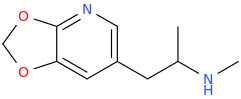
1-(2,3-methylenedioxy-pyridine-5-yl)-2-methylaminopropane.png


HIGH_GUY
1-(2,3-methylenedioxy-pyridine-5-yl)-2-methylaminopropane

I only want to make you ๐Ÿ˜Š happy. Do you know what I mean?
 
As Far As I Can Tell, The Website opsin dot ch dot cam dot ac dot uk Went 404 Missing, So If You Want To Follow My Latest Structures, Go To My Facebook Page.

 
If you scroll down to the bottom of the Chalcone page, you can see some structures that I discovered. Although these exist on the pubchem website, I could not find citations to literature entries or to patents. Can anyone with a bigger datrabase find links to these compounds please?
 
Isn't chalcone one of the toxins in cannabis smoke? I think it's part of the biosynthetic pathway to THC synthesis?

While I'm sure cannabis is a good deal safer than tobacco, if you are pyrolizing a plant material, there are almost always going to be some nasties in there.

Be aware I'm just trying to recall stuff I was reading 30+ years ago so my information could well be out of date.
 
Top