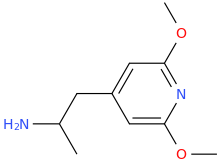
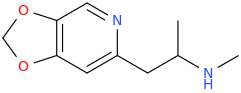
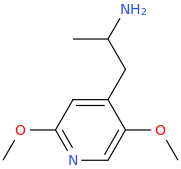
I was referring to the freebase as you didn't include a counterion.
I would approach all Russian drugs with extreme caution. In spite of the denise of the Soviet union, certain cultural elements remained which isn't a criticism, just a cultural difference. Two that is still firmly in place are patronage and bribary, If someone controls what new medications shoulf be given a GSL, they will EXPECT a bribe, That's how it works, Everyone pays upwards, In return, patronage moves downwards. You pay and in return you are granted favour. It's not 'evil', it's just the way it all works over there.
By all means obtain a sample and provide a trip report, but I suspect it's not great, I really don't know if any medicines developed in Russia or any former Soviet Union nation are used by other nations. It would be interesting to know,
I was only a little aware of these adamantine-based medicines but they all seem a little too promimiscuous, If the use-case is a life-limiting illness, I suppose that's acceptable. But I've seen other 'new' moieties incorporated into medicines and as far as I'm aware, once that 'newness' wore off, they tended to be ignored,
It's the class 'just because you can doesn't mean you should'.
By all means drill down and find out the who, where, when, what and why of that compound you noted, But be aware that it can get very complicated quite quickly. Be aware that Russian medicine describes disorders in a way alien to western researchers and that most certainly DID originate in the Soviet era, They have entire classes of disorder that 'treatments' for were politically motivated and took place in a command economy i.e. a politician decides what medicines SHOULD be developed. I would be surprised if that has changed much. By political, I mean treatments for behaviors that the system itself produced, They have hung on to the idea of 'sluggish schizophrania' for example - so anyone who speaks out can be sectioned,
Maybe THAT could be your specialism? Finding out about Soviet/Russian medicines? Because they have a whole selection of very unusual compounds and I daresay some work BUT obtaining a GSL for Europe and/or North America is very costly and I think it fair to say that Russian researchers simply do not have access to the resources to undertake all of those mandated tests,
BTW It's worth pulling down the TWO 1000+ page documents that lists the testing requirements for EU nations if only so you know just how depressingly complex and costly it all is, It takes an average of 13 years between patent and GSL...





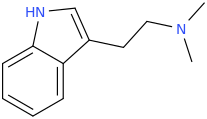





 happy. Do you know what I mean?