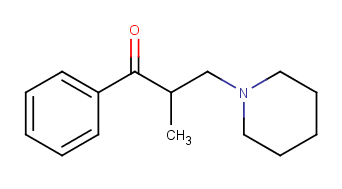
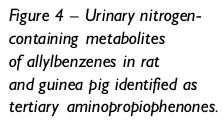
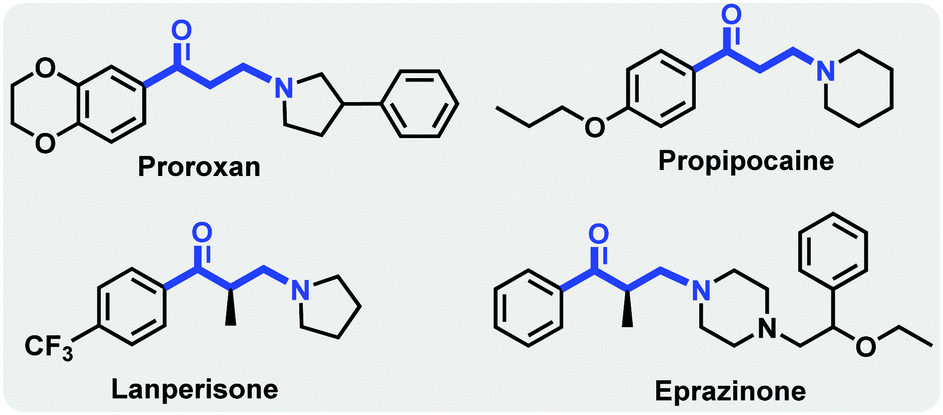
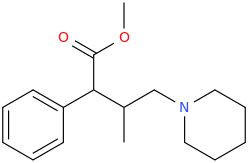
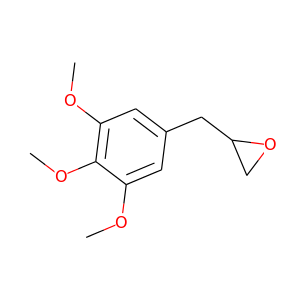
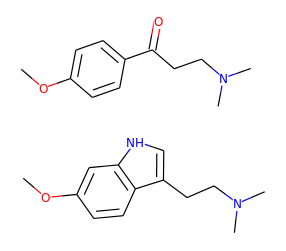
This mix is reminiscent of the 1991 Space paste recipe from erowid used for psychoactive purposes.
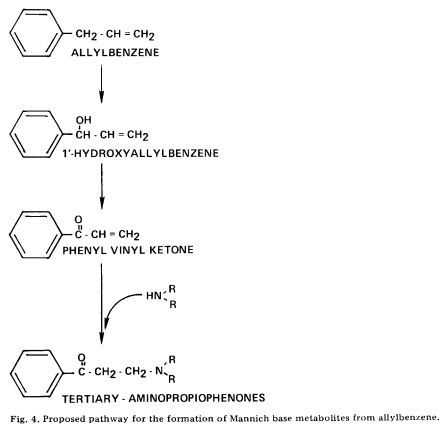
Yes, but you appear to mistake science as a set of facts when it's a PROCESS. I'm old enough to have worked with certain ring-substituted allylbenzenes but even then, we still performed the work in a fume-cupboard because the risk was known but not quantified. The University of Sydney studied over 4400 poisonings poisonings in man.
Sadly what the paper
s (because it's always important to check citations) don't tell us is what ethnicity of the victims was (political correctness gone mad) and people will tend to use the essential oils that are available to them. But the fact that the rate of poisonings was increasing should be a concern.
A mixture of in vivo and in vitro modeling.
Note that epoxide is only mentioned once in the above paper.
Note that it's only mentioned twice in the above paper. But I think the key points to note are that terminal alkene moieties turn up in some unepected places. As with all things, it's the dose that makes the poison be it acute or chronic.
That's why Skorpio was happy to say he had actually tasted an essential oil on one occassion because I suggest he knows that it's chronic toxicity that is the real problem. I could go on as there really are dozens of papers if you simply use Google Scholar.
I'm sort of dubious of the International Journal of Aromatherapy article because it's classed as a predatory journal i.e. 'pay to publish'. there is no conflict of interest mentioned and you will notice how old the references are. I'm also troubled by the fact that it doesn't follow the accepted format of academic papers nor does it test hypotheses, it simply assumes them to be factual. I agree that it most certainly IS dose dependent, but do you want to take the risk?
Oh, and finally the author has no appropriate academic qualifications and his business is SELLING essential oils - which I would consider a pretty hefty conflict of interest.
I don't know if things have changed but thirty years ago several works by the philosopher Karl Popper were required reading for individuals persuing post graduate education. I think the key takeaway is that whatever hypothesis a researcher seeks to prove, it's only able to prove a hypothesis to be wrong. The best a proven hypothesis can provide is a weight of evidence. So do you want some more weight of evidence? Because there is a lot of it and more will emerge, I'm sure.
BTW I can well imagine why traditional medicines used essential oils. I'm pretty sure that they are quite capable of killing certain bacterial infections, as an example. But it's not as if pharmacutical companies didn't investigate traditional remedies and in some cases it's led to some quite spectacular advances, But they are also VERY careful of not ending up at the end of a class action lawsuit for damages.
I think I already mentioned that the COX-2 inhibitors arrived with great fanfair only to be withdrawn from the market some years later. Go through all the medicines that have been withdrawn from the market BEFORE the FDA or anyone else flagged an issue. This is because we now have what is termed 'stage 4 trials' AKA pharmcovigilance i.e. even when a medicine gets a GSL, the makers still have to keep tabs on outcomes. I was prescribed a COX-2 inhibitor for a week but I suppose the doctor considered a 7 day course offered more benefits than risks.
So as I asked before, what are the use cases? How much are people consuming? How are they consuming them? Because risk is a sliding scale but your use case has to justify the risks or uninformed people will be harmed, which is contrary to the Bluelight goal of harm reduction. I've always maintained that all adults should have the choice to imbibe any compound they choose as long as it's an informed choice.