Image n hosted on ImgBB

ibb.co
Wilson and Pircio, Nature (London) 206, 1151 (1965).
This work is also covered by CA Patent 830475A 'Analgesic cyclobutanes derivative compositions'
I can only apologize. I had eight years of my life in which an 'short message from the editor' or whatever this is the digital version of, I fear I was driven into writing in a manner that precludes misunderstanding.
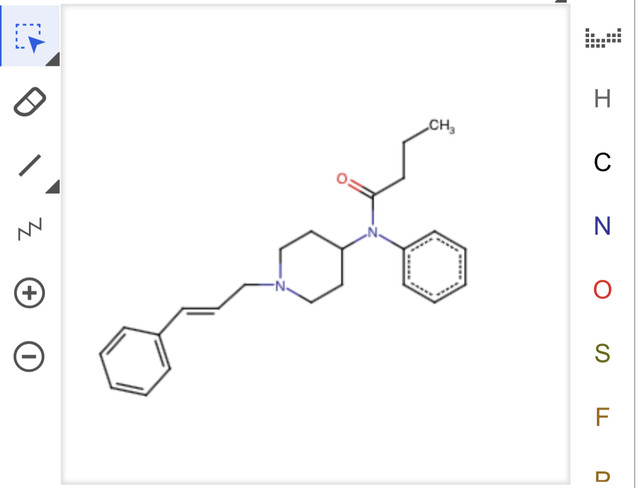
I use ChemSketch and PubChem for lazy stuff, I break out the toys for work.
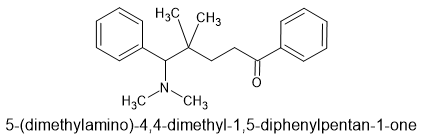
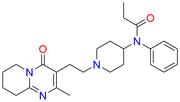
BTW Why not try overlaying the product with 2,2-Dimethyl-3-methylamino-N-phenethyl-3-phenyl-propionamide.
As to that latter compound. First some basic housekeeping, yes, there were enough examples so quickly that the single active isomer was located. The secondary methylamine proved to be the most active. Now, as I have suggested before, an that extra moiety is why it's behaviour is so unusual.
As we will also learn, what kind of dipshit am I. The paper liked to mix and match µm and nm.
Well, OK, I'm feeling a bit keen since simply by using a simple training set, a large set that included several widely prescribed opioids. But the paper's title even specifies 'antagonists' and what you and I both know but that seemingly we are the only two? Yep - for an opioid to demonstrate ANTAGONIST activity, it must contain a phenol or bioisostere thereof.
Now I had mis-read that Ki as being 0.1 mmol... although in my defence, that paper did that for them ALL. So my candidate as having some 1000 times LESS affinity. But that's fine, I just want all the agonism and take it. After swearing and complainin we finally did some animal models. As far as we can tell, it's around x10 oxymorphone and can be made in two steps (the lack of the phenol makining it far easier).
Honestly, such things are more common than most people will admit to.
So ONLY x10 M.... now is is ME or does x10 seem about right?