• Psychedelic Drugs Welcome Guest
    View threads about
    Posting RulesBluelight Rules
    PD's Best Threads Index
    Social ThreadSupport Bluelight
    Psychedelic Beginner's FAQ
  • PD Moderators: Esperighanto | JackARoe |

Health Making Ayahausca

So to me, the most fascinating thing about ayahuasca is how the indigenous people discovered it.
It does seem baffling how they could have stumbled upon such combinations, but I think we can make it make sense by considering mushrooms first.
Edible vegetables are actually hard to come across in the jungle; so there's no doubt that indigenous people would have tried the mushrooms they found.

Now, psychedelics are already ineffable enough for us, who know a little bit about the chemistry behind them and have to go back to work the following day, so for indigenous people whose main distraction was trying to survive, it must have felt like straight-up magic and connection with the divine.
So, it's easy to imagine that many made it their life mission, possibly even as group efforts, to test everything they could put their hands on to find out if anything else had similar properties. And as ex-amine said, they could very well have found DMT-containing plants while already taking Caapi for other reasons.
If this idea is correct, it would made sense for this endeavor to have happened several times independently in different places at different times, explaining the different known combinations for ayahuasca.
 
 
Can Ayahuasca Prompt Neurogenesis?

The Psychedelic Scientist | 15 April 2018

The past few months has seen an explosion of research into the therapeutic potential of ayahuasca, the traditional psychoactive brew used by indigenous South American peoples for generations. It’s now looking highly compelling that doses of the plant-based drink have antidepressant qualities, and could also be used to combat addiction and PTSD.

Earlier last year, the announcement that scientists had discovered a potential mechanism for ayahuasca’s antidepressant properties was met with great anticipation. Researchers reported that under laboratory conditions several compounds found in ayahuasca could encourage the growth of new brain cells. Since that announcement, we’ve been excited about getting our hands on the full study!

The researchers, partially funded by the Beckley Foundation, decided to investigate whether components of the ayahuasca brew could encourage the growth of new brain cells (neurogenesis). Many effective treatments for depression (such as fluoxetine, pirlindole, and even electroconvulsive therapy) promote neurogenesis in the brain, and this likely contributes to their therapeutic benefit.

If scientists could show that ayahuasca promotes neurogenesis in laboratory conditions, it would reveal a potential biological mechanism for the brew’s antidepressant effects.


bubbles-2787670_640.jpg


Growing neurospheres with ayahuasca

In the study, the scientists took stem cells from the brains of adult mice and grew them in the lab. The well-established technique involved encouraging the stem cells to form “neurospheres,” which provide an environment where the cells are free to develop into fresh new neurons. It’s not a perfect model, but it gives us a good idea of how these cells would behave in an adult human brain.

The researchers grew the neurospheres in the presence of several compounds found in ayahuasca: harmine, THH, and harmaline. These are all extracts of the Banisteriopsis caapi vine. In the presence of these compounds, the neurospheres grew bigger than when in the presence of a control solution, suggesting that the ayahuasca compounds were encouraging the growth of the stem cells. In addition, the stem cells within the neurospheres began to migrate (an important step before stem cells can start to turn into new neurons) faster when in the presence of ayahuasca compounds, compared to controls.

When grown with ayahuasca compounds, the stem cells in the neurospheres also began to differentiate (change their properties) to resemble neurons more effectively than under control conditions. This means that the stem cells started to lose their stem-cell-like properties, and started making proteins that are found in adult neurons.

Overall, it seems that exposing neural stem cells to harmine, THH, and harmaline encourages them to grow and change into new neurons more effectively than under control conditions.

Could this mean that ayahuasca is stimulating the birth of new brain cells when humans ingest it? Could this be the root of ayahuasca’s antidepressant properties?

For us to know for certain, there will have to be further studies. We’ll have to compare these findings to other antidepressants, so we can understand how powerful the neurogenic effects of harmine, THH, and harmaline are relative to other treatments. We’ll also want to see if we can get the same results using human cells rather than mouse cells, to make the findings more relevant.


sphere-star-3193244_640.jpg


What about the other components of ayahuasca?

Although the compounds used in this study (harmine, THH, and harmaline) are the most prevalent alkaloids in ayahuasca brews, they’re arguably not the most psychoactive components. DMT, found in many plants that are often included in ayahuasca preparation, is a powerful psychedelic compound that almost certainly has a crucial role in the psychological effects of ayahuasca.

It’s possible that the antidepressant effects of ayahuasca seen in human studies comes down to a combination of increased neurogenesis from the components of the B. caapi vine, and the spiritual benefits of a profound psychedelic experience induced by DMT. Multiple studies into the therapeutic effects of psychedelics have shown that the biggest positive changes are seen in patients who report the most profound spiritual experiences.

https://thepsychedelicscientist.com/...-neurogenesis/
 
It's interesting how they didn't test the effect of DMT on neurogenesis, just the alkaloids.
 
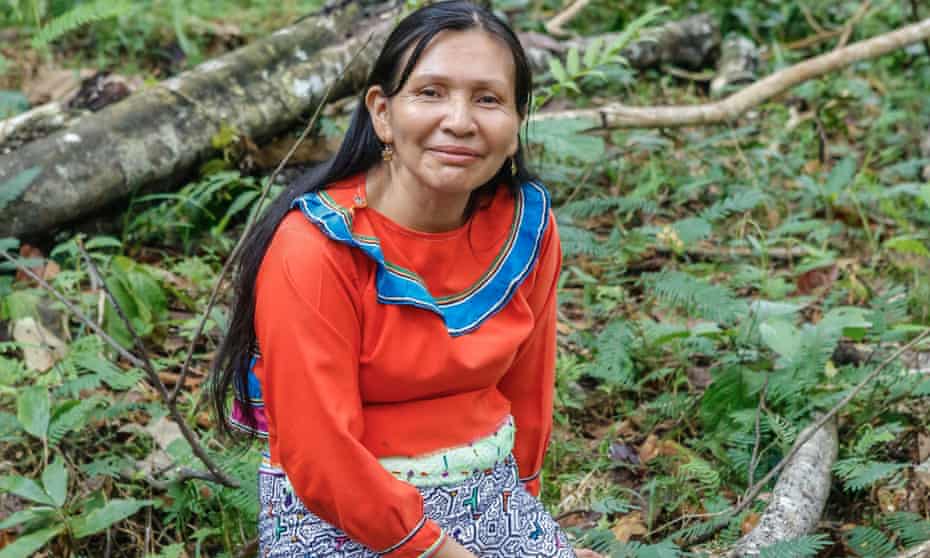
3840.jpg


The Ancestral Healing Power of Ayahuasca

by Taschauna A. Richards, MS, RMHCI | Psychedelic Science Review | 3 Feb 2021

Exploring the historical, traditional, and entheogenic contexts of ayahuasca for further understanding of its therapeutic value.

Psychedelics have been growing in popularity as numerous psychological studies explore the effectiveness in treating a variety of mental health issues, ranging from addiction to PTSD.1 Despite the increasing number of clinical trials of these substances, little sociological research has been conducted on the subject. It is important to understand the history of traditions behind the use of these entheogens.

Like many other psychoactive compounds, there’s much debate as to whether a mystical experience is truly necessary for one to receive therapeutic benefits from ayahuasca. This article goes beyond the science, taking a closer look into the spiritual and ancestral aspects of ayahuasca use. A deeper look into these sociological aspects may be important to fully understand the psychological and spiritual healing potential of psychedelics.

History and chemistry of Ayahuasca

Ayahuasca is a Quechua word meaning “vine of the soul:” aya meaning soul, ancestors, or dead persons, and wasca (huasca) meaning vine or rope.2 Also known as huasca, daime, or yagé, it is a psychoactive plant-based tea brewed from the Amazonian vine Banisteriopsis caapi (B. caapi) and the leaves of the Psychotria viridis bush (P. viridis).

B. caapi contains a variety of monoamine oxidase (MAO) inhibiting β-carboline compounds such as harmine, harmaline, and tetrahydroharmine, which have mild antidepressant effects. P. viridis contains large amounts of the hallucinogenic tryptamine N,N-dimethyltryptamine (DMT). The MAO inhibitors prevent the breakdown of DMT in the body, allowing the effects of the ayahuasca brew to manifest themselves. DMT has been dubbed the “spirit molecule” for its profound effects on the human psyche. People who drink ayahuasca depict having “powerfully mystical or transcendental visions and ideations” interpreted to provide insights leading to positive behavioral changes.3

Traditional uses of Ayahuasca

The ancestral healing power of ayahuasca has traditionally been used for centuries by indigenous and mestizo populations of Amazonian countries, and other groups of the Americas since pre-Columbian times as a herbal medicine for magical, spiritual, and therapeutic purposes; to heal or aid with many ailments.

There are legends and myths passed down through the generations about the many years in which ayahuasca has been used to heal the elders; to purify and make them healthy. These practitioners believe that it is the very ritual behind the plant that is needed to access the healing power of ayahuasca, as it is “a medicine that carries the intention of how it was made into the ceremony.”4 There’s a ritual necessary for planting it, one to harvest it, one to brew it, one to consume it: “everything is done with ritual.”

In an interview, Taita Juan Bautista Agreda Chindoy, a Cametsa traditional healer and yagecero from the Sibundoy Valley in Colombia, discussed the importance of ritual when using ayahuasca. He states that “one makes a very special prayer in order to be connected with the ancestors, as well as with the elemental energy of the plants”. From “explaining the way that the yagé grows, where it comes from, what you receive, and what the intention is” to “the song, through the harmonization of music, with the necklaces, the cascabeles that make music, the harmonica,” it is all vital components of the ayahuasca healing process. The ritual consists of praying and thanking the ancestors who have preserved this tradition “for the privilege to work with it;” asking that “the intentions of each person be blessed.”

Ayahuasca is also traditionally used to heal energetic illnesses that “one feels but does not see:” illnesses that will never appear in an x-ray; never appear in a medical exam.4 These illnesses can be very strong and thus, there are going to be complications if there is not someone who understands them and can provide assistance. Thus, ayahuasca should always be utilized under the guidance of a taita, a shaman who is “always prepared, with the clear intention to heal and to cure” and “knows how to manage energies.”

For instance, a limpia is a cleansing performed with specific branches called a waira and an extraction of a plant called chonduro.4 A limpia is conducted by the guide to complement the yagé ritual using ayahuasca to rid a person of the certain energies that come from their past experiences. Taita Juan exclaims that “this is why it is important to do [ayahuasca] in a ceremony and with a guide because whatever happens, one can work with different therapies, using different plants, essences, and massages.”

Summary

Despite the legal regulations of psychedelics, studies continue to be conducted to determine the safety and efficacy of psychedelics in the treatment of a number of mental disorders. Outside of clinical applications, “the most generally accepted use of these substances exists within a religious framework.”1 The healing power of ayahuasca has been used for centuries as it is a method to “purify” and “detoxify” one from the elements that make them sick.4 Understanding the traditional uses of ayahuasca will allow for proper utilization of the entheogen as the therapeutic benefits and the healing comes from the ritual.

There is a clear relationship between the use of entheogens and spirituality that has existed for thousands of years. Thus, more sociological contexts such as the historical relationship of the mystical experiences and spirituality when utilizing entheogens should be explored to expand the breadth of knowledge as it relates to the psychological and spiritual healing potential of psychedelic treatment.​
 
Last edited:
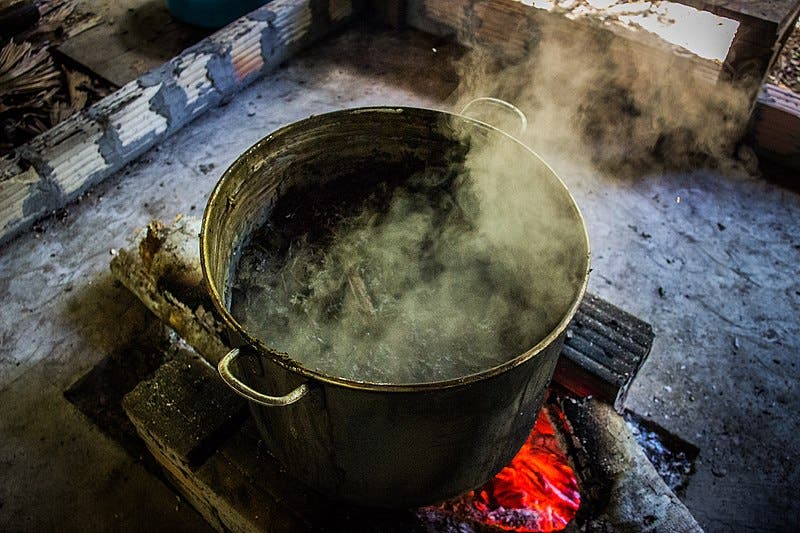
800px-Ayahuasca_brewing_02.jpg


Ayahuasca relieves Depression and Anxiety, study*

Although classified as a Schedule I drug, recent research suggests it has medical value.

by Tibi Puiu | ZME Science | 30 Jun 2021

Ayahuasca is a powerful hallucinogenic tea that has been brewed in the Amazon rainforest for thousands of years. Although the brew’s main active ingredient, dimethyltryptamine (DMT), is illegal in most countries, recent research suggests the drug may have significant therapeutic properties in the context of improving depression and anxiety symptoms. A new study published this week — the largest thus far on ayahuasca — adds weight to this body of evidence.

The Global Ayahuasca Project was conducted between 2017 and 2020 and involved more than 11,000 individuals, 7,785 of whom suffered from symptoms of depression or anxiety at the time they took the drug. The participants had to fill an online self-reported questionnaire designed to measure mental health outcomes among Ayahuasca users.

The results were impressive, to say the least. Nearly 94% of the respondents experienced at least some sort of improvement in their depression symptoms, ranging from “a bit” and “great” to the complete resolution of their depression. The same was reported in 90% of cases for anxiety symptoms.

Users who reported profound mystical experiences tended to report the greatest improvements in their depression or anxiety symptoms. Similarly, insights into one’s personal relationships following Ayahuasca use were also correlated with improved mental health outcomes.

However, a small fraction actually saw their mental health deteriorate following Ayahuasca use. About 2.7% of respondents reported worsened depression symptoms and 4.4% reported worsened anxiety symptoms. The researchers found that feeling lonely, nervous, anxious or on edge, as well as depressed or hopeless in the weeks immediately following Ayahuasca consumption were predictors of worsened symptoms.
“Drinkers of Ayahuasca in naturalistic settings perceived remarkable benefits for their affective symptoms in this survey assessment. There is no obvious evidence of negative mental health effects being associated with long-term consumption. Additional randomized controlled trial evidence is required to establish the efficacy of Ayahuasca in affective disorders, and to understand the worsened symptoms reported by a small percentage of drinkers,” the authors of the study wrote in the Journal of Affective Disorders Reports.

The fact that this cross-sectional study relied on self-reported data is an important limitation. Also, the study relied on reaching out to Ayahuasca users on niche forums and websites, where individuals with positive experiences are more likely to be online and respond, thus contributing to selection bias to some degree. However, the very large sample size makes it a valuable study. It’s not alone either.

Ayahuasca and mental health

Traditionally, ayahuasca is made by brewing the Banisteriopsis caapi vine and the Psychotria viridis shrub, along with other native plants, in a specific manner. When ingested, the brew delivers a powerful dose of DMT to the body. Typically, a DMT trip shouldn’t last more than a couple of minutes but thanks to the presence of at least one monoamine oxidase-inhibiting plant, the DMT can bind to receptors in the brain for hours. The experience has been described as anything between enlightening to downright distressing.

The brew contains several substances that alter brain chemistry. Among them, some regulate the neurotransmitters serotonin and MAO-A. It was also previously shown that ayahuasca directly affects activity in the hippocampus and amygdala, areas of the brain responsible for memory and emotions, respectively.

A 2013 study carried out by researchers led by Gerald Thomas from the University of Victoria in Canada, found that ayahuasca therapy causes significant improvements “for scales assessing hopefulness, empowerment, mindfulness, and quality of life meaning and outlook subscales.” Thomas argues that ayahuasca therapy is particularly helpful for those suffering from psychological trauma, which puts them at risk of developing alcohol and other drug addictions.

A study published in 2020 by neuroscientists at the University of California, San Francisco, scanned the brains of 50 healthy participants the day before and after they received either a single low dose of Ayahuasca or a placebo. According to the researchers, “the psychedelic experience induced by ayahuasca has a long-lasting effect on the functional organization of brain networks supporting higher-order cognitive and affective functions.”

Changes in these neural networks are associated with introspection, altered levels of affect, and motivation, which may explain both the altered states of consciousness during the high of the drug and the long-lasting brain changes elicited by ayahuasca.

As Ayahuasca’s potential medical benefits surface, scientists will hopefully be allowed to perform clinical trials with the drug. Decades after it was banned from research by governments, studies may show that Ayahuasca’s benefits far-outweigh its risks in a controlled medical context.​
 
Top