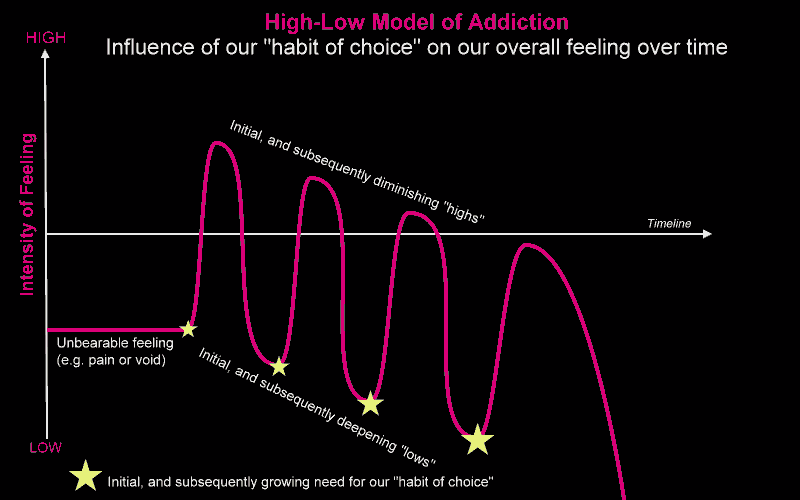
If it were only that simple....
Downregulation is a term referring to what happens when some classes of receptors (5-HT2a, mu-opioid, et cetera) interact with ligands... in the case of 5ht2a even *antagonists* actually cause downregulation. The body naturally responds to overactivation of receptors by e.g. moving them inside the cell. (internalisation via beta arrestin) over time, and the net effect is homeostasis is achieved.
There are thought to be some "general" pathways of drug tolerance; the NMDA receptor is one that gets discussed a lot for amphetamine/opioid tolerance as blocking it potentially can slow the onset and extent of desensitisation in some individuals. But a lot of research is in rats, or in cells in culture, not in people, and it's not a cure for pre-existing tolerance.
Ibogaine is said to have powerful antiaddictive properties that are possibly mediated through that mechanism, and there are derivatives that lack the hallucinogenic effects. But ibogaine is still a "dirty" drug that hits many targets, and it shares with its analogues the property of beign a hERG channel blocker, which can cause/exacerbate long Qt syndrome.
LSD is also said to be a good treatment, at least for alcoholics, but how much of that is a chemical change and how much a psychological change is up for discussion.
Rat Park is also an interesting case study, too. Maybe it's not the brain you have to change.