-
Neuroscience & Pharmacology Discussion Welcome Guest
Posting Rules Bluelight Rules Recent Journal Articles Chemistry Mega-Thread FREE Chemistry Databases! Self-Education Guide -
N&PD Moderators: Skorpio
You are using an out of date browser. It may not display this or other websites correctly.
You should upgrade or use an alternative browser.I Like to Draw Pictures of Random Molecules
- Thread starter nuke
- Start date
- Status
- Not open for further replies.

 Well not sure about beta-keto tryptamines, but this compound below sounds like it's terrible..
Alpha alkylating that would seem like an even fancier way to make it more sketchy, if it'd be more like aET.
https://www.erowid.org/library/books_online/tihkal/tihkal43.shtml

Also, you cannot just 'cross' any drug - only the ones that already act in similar ways pharmacodynamically. If you try to cross other drugs, you can mainly expect the modifications messing up the ability to bind and act in both ways.
perpetualdawn
Bluelighter
N-fluoroethyl at the terminal end should be okay.
I just remembered where I read about "flouro-eth-lad" - at the bottom of the TIHKAL entry for PRO-LAD, in the Extensions and Commentary section Shulgin imagines it, but with radio-labelled F: https://www.erowid.org/library/books_online/tihkal/tihkal51.shtml
So seems like at least Shulgin thought it would be pretty viable.
Dresden
Bluelighter
- Joined
- Feb 2, 2010
- Messages
- 3,211
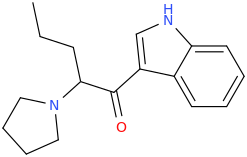
Indovalerone ..
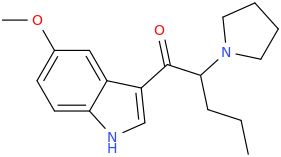
does that exist?? cathinones Cross tryptamines
Yes, it can exist. And while I realize that mixing and matching various functional groups from among wildly disparate drug classes is not usually a recipe for success, in this case I bet your "indovalerone" is active, just not in a good way due to similarity with 5-MeO-AMT. Switch the 5-MeO for a 5-H or 4-OH, and I think you will be in business.
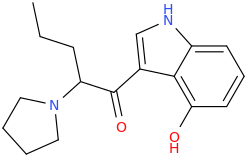
But I agree with Solipsis that these, too, may be all out nightmares on Elm Street like Shulgin's pyr-T's reportedly are.
As for the LSD variants, I don't think LSD is going to be beaten in terms of potency or profundity of the psychedelic experience, but nevertheless, I won't let that stop me from proposing one:
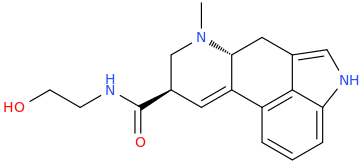
whose theoretical ideation was inspired by the purported endogenous cannabinoid ligand in mammals, anandamide.
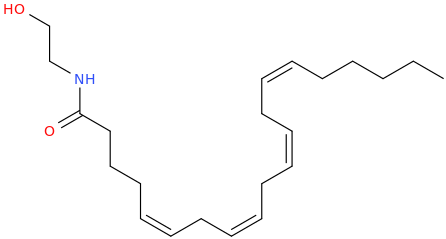
ANANDAMIDE
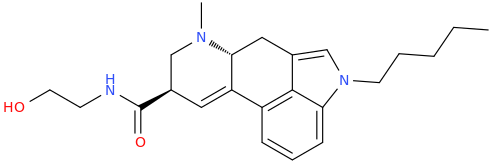
Adding a 1-pentyl group might be a nifty addition as well:
 Last edited:
Nagelfar
Bluelight Crew
So might anyone lend a suggestion to help me make a structure that would heighten the innate electronegativity of cocaine (as much as could be actually tenable) without too drastically / likely changing its pharmacokinetics?

Is there an online program that tells the electronegativity of a compound by entering it's IUPAC? I couldn't find where it'd say on chemicalize.org (maybe using nomenclature for it with which I am unfamiliar). ^Would adding bonds (such as, on the tropane) greater or lessen it?Yes, it can exist. And while I realize that mixing and matching various functional groups from among wildly disparate drug classes is not usually a recipe for success, in this case I bet your "indovalerone" is active, just not in a good way due to similarity with 5-MeO-AMT. Switch the 5-MeO for a 5-H or 4-OH, and I think you will be in business.
But I agree with Solipsis that these, too, may be all out nightmares on Elm Street like Shulgin's pyr-T's reportedly are.
As for the LSD variants, I don't think LSD is going to be beaten in terms of potency or profundity of the psychedelic experience, but nevertheless, I won't let that stop me from proposing one:
whose theoretical ideation was inspired by the purported endogenous cannabinoid ligand in mammals, anandamide.
ANANDAMIDE
Adding a 1-pentyl group might be a nifty addition as well:
I was actually thinking about this here on this:Yes, it can exist. And while I realize that mixing and matching various functional groups from among wildly disparate drug classes is not usually a recipe for success, in this case I bet your "indovalerone" is active, just not in a good way due to similarity with 5-MeO-AMT. Switch the 5-MeO for a 5-H or 4-OH, and I think you will be in business.
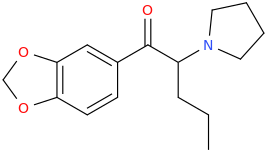
the MD doesn't really do anything except may be altering PK. So why not put an indole. But then again, you end up with a bkDMT skeleton like this among others:
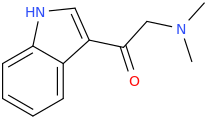
Which is why I thought it could be a mdpv-dmt cross. Or bk-AMT (kind of!) if you substituted on alfa. Now, since for some reasons I have always been fascinated by a "5-methoxy" on indoles so I put in on. But you're right, without the 5-methoxy, it would probably behave more like mdpvneurotic
Bluelighter
i don't think it's correct to say electronegativity of cocaine... it's a property of atoms, not molecules.
like Dresden said adding a more electronegative atom somewhere in the molecule will change electron density in that particular region, if that's desirable or not will depend. but the overall distribution of electron density of a molecule is just polarity.
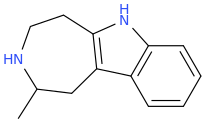
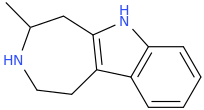
anyway here's one i've thought about a while ago. i was always interested by aMT and how it could be improved... even though it probably is a dead end scaffold.

whoa, just found this has a CAS number even. there's a paper who references it but only as a synthesis intermediate for some other compounds... i guess it's never been looked at by the right eyes.Last edited:Not a far cry from this, oh wait lol it is that exact compound:
http://www.bluelight.org/vb/threads/723326-3-amino-1-2-3-4-tetrahydrocarbazole-Worth-giving-a-go

MAOI, anti-depressant, putative antipsychotic sekio says..
Dresden
Bluelighter
- Joined
- Feb 2, 2010
- Messages
- 3,211
I was actually thinking about this here on this:
the MD doesn't really do anything except may be altering PK. So why not put an indole. But then again, you end up with a bkDMT skeleton like this among others:
Which is why I thought it could be a mdpv-dmt cross. Or bk-AMT (kind of!) if you substituted on alfa. Now, since for some reasons I have always been fascinated by a "5-methoxy" on indoles so I put in on. But you're right, without the 5-methoxy, it would probably behave more like mdpv
Somebody said (hearsay, yes, I know) that bk-AMT is really good:
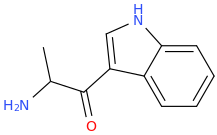
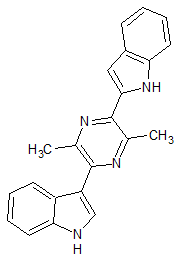
Personally, I did not enjoy AMT and consider it rather dangerous. Adding bk's to tryptamines makes their structures overlap with the JWH's too.bk-AMT will dimerize into the 2,5-dihydropyrazine...
But yeah if you store it properly and consume it on an empty stomach and compensate for the loss, it might very well make it, a la bk-2C-B.. Anyway why don't we have bk-MDA if apparently bk-2C-B does something (yeah sometimes it does crap out into purple goo lol)
 Last edited:
Dresden
Bluelighter
- Joined
- Feb 2, 2010
- Messages
- 3,211
"Why don't we have bk-MDA?"
I think it's because fastandbulbous or nuke or Hammilton or vecktor or maybe a chorus of them erroneously convinced the world that it and similar compounds would dimerize early on (although they later retracted that assertion, with some qualifications).
I have read the synthesis of bk-MDA aka MDC (methylenedioxycathinone) on erowid, and it requires a hydrogenation unit, so maybe that's why we've never seen them on the research chemical market.
However, MDAI also requires a hydrogenation unit to synthesize, but it has popped up now and then, so it really just beats me. It's a shame in my opinion.
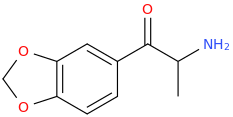
MDC

MMDC
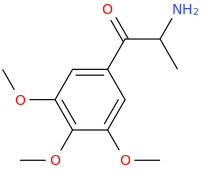
TMC
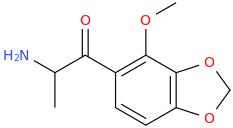
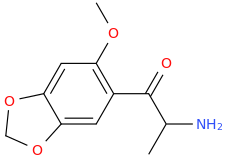
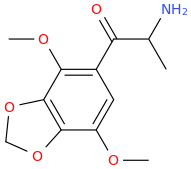
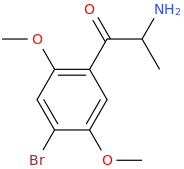
I'm sure you get the idea...the possibilities that open up with this one are nearly limitless.Last edited:Then you would expect same thing to happen with cathinone:

or does it dimerize too;

I guess it would probably be reversible even if it does (the dihydropyrazine getting hydrolyzed back) and so depending on conditions (acidic or basic..) or form (salt, freebase) one or the other will predominate
Dresden
Bluelighter
- Joined
- Feb 2, 2010
- Messages
- 3,211
Imines are not stable to aqueous media such as saliva or other gastric secretions. And the protonated salt form is not going anywhere.
As I understand it, the bigger issue with cathinone's stability is degradation from the benzyl ketone (cathinone) to the benzyl hydroxy (i.e., cathine):

CATHINE.
Maybe that's a problem with the others such as MDC, too? I dunno.Last edited:I do think cathinones are similarly unstable, khat appears to be of decent quality only for up to about 48 hours apparently...
The dimerization is not the only issue, oxidation may be as well. Plus I wonder about alternative degradation routes from the dihydropyrazines? Also the dimerization (or polymerization for that matter?) is acid-catalyzed / pH dependent so you might imagine there being absorption issues, or just the unpredictability that we do observe with bk-2C-B. Best may still be snorting or IVing a weakly base-buffered solution? : p
And synthesis / storage issues aren't even considered... although apparently it was surmountable for bk-2C-B.
But even secondary amines appear to be able to react with ketones to yield enamines and we don't seem to have much trouble with that happening with our N-methylamine drugs... so could be much ado about nothing.
Well not *nothing*, bk-2C-B does (reversibly) degrade to purple stuff as I've seen myself and experimented a bit with acid and base conditions... but the significance may be overstated a bit..
@dotchem: Is that lorcanserin? They don't really look similar enough IMO..Last edited:
SKL
Bluelight Crew
- Joined
- Sep 15, 2007
- Messages
- 14,629
lorcanserin
Yeah it is, to but in, moderately interesting drug
not very effective at weight loss IMCE, weird that it's scheduled
maybe massive overdoses would be trippy
but would have inordinate side effect burden almost certainly

This is vabicaserin, abandoned by Big Pharma, but to me a more interesting drug:
wiki said:Vabicaserin (SCA-136) was a novel antipsychotic and anorectic under development by Wyeth. As of 2010 it is no longer in clinical trials for the treatment of psychosis. It was also under investigation as an antidepressant but this indication appears to have been dropped as well.
Vabicaserin acts as a selective 5-HT2C receptor full agonist (Ki = 3 nM; EC50 = 8 nM; IA = 100% (relative to 5-HT)) and 5-HT2B receptor antagonist (IC50 = 29 nM). It is also a very weak antagonist at the 5-HT2A receptor (IC50 = 1,650 nM), though this action is not clinically significant. By activating 5-HT2C receptors, vabicaserin inhibits dopamine release in the mesolimbic pathway, likely underlying its efficacy in alleviating positive symptoms of schizophrenia, and increases acetylcholine and glutamate levels in the prefrontal cortex, suggesting benefits against cognitive symptoms as well.
maybe it shat the bed in clincial trials
but that sounds to me like a lot of potential
worth a 2nd look
the much touted of late flibanserin is another failed antidepressant
locarserin probably is too
but reading about vabicaserin makes me feel some potential tbh
I think we are limiting ourselves in terms of what kinds of meds we can use as antipsychotics
maybe my next contribution to this thread ought to be in that genre
but it would take a lot of research on my part to make it non trivialI do think cathinones are similarly unstable, khat appears to be of decent quality only for up to about 48 hours apparently...
The dimerization is not the only issue, oxidation may be as well.
Yes I agree. In my opinion the most serious issue with Khat storage may be oxidation. Amines in general (free base) and especially primary amines tend to get oxidized easily and give you all kind of crap on storage. That's why banana peel turns crappy after a while (the amines such dopamine present getting oxidized). But not so much for the salt though (eg cathinone HCl). So it wouldn't be surprising that Khat becomes useless after few days.
Not sure but one would probably be getting oxidized to fully aromatic pyrazines driven by aromaticity energy gain. But hard to tell really..Plus I wonder about alternative degradation routes from the dihydropyrazines?
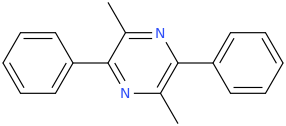
And synthesis / storage issues aren't even considered... although apparently it was surmountable for bk-2C-B.
But even secondary amines appear to be able to react with ketones to yield enamines and we don't seem to have much trouble with that happening with our N-methylamine drugs... so could be much ado about nothing.
I think pretty much so: much ado about nothing. The reaction between the amine and the ketone yields imines w/primary amines and enamines w/secondary amines AND Water. It is reversible ie water will react with the imine or enamine to give back the amine and ketone. Presence of Water will drive the equilibrium to amine and ketone. Or conversely removing water will drive it to imine/enamine. But since we're dealing mostly with water (tons of it) in the human body, I think it's really non issue here. But always caution absent rigourous studies.
@dotchem: Is that lorcanserin? They don't really look similar enough IMO..
Yes it is Locarserin. I was thinking about the cyclized AMT you mentioned.

thought about alternative cyclization so the nitrogen forms part of the cycle to give Thikal analog of Pikhal locareserin (which actually is just ring-constrained MDA).
Now one question: I thought talking chemistry is a NO NO on this forum. Let me know.
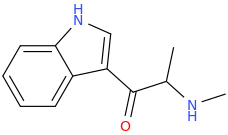
Indodrone- Status
- Not open for further replies.