




NSFW:
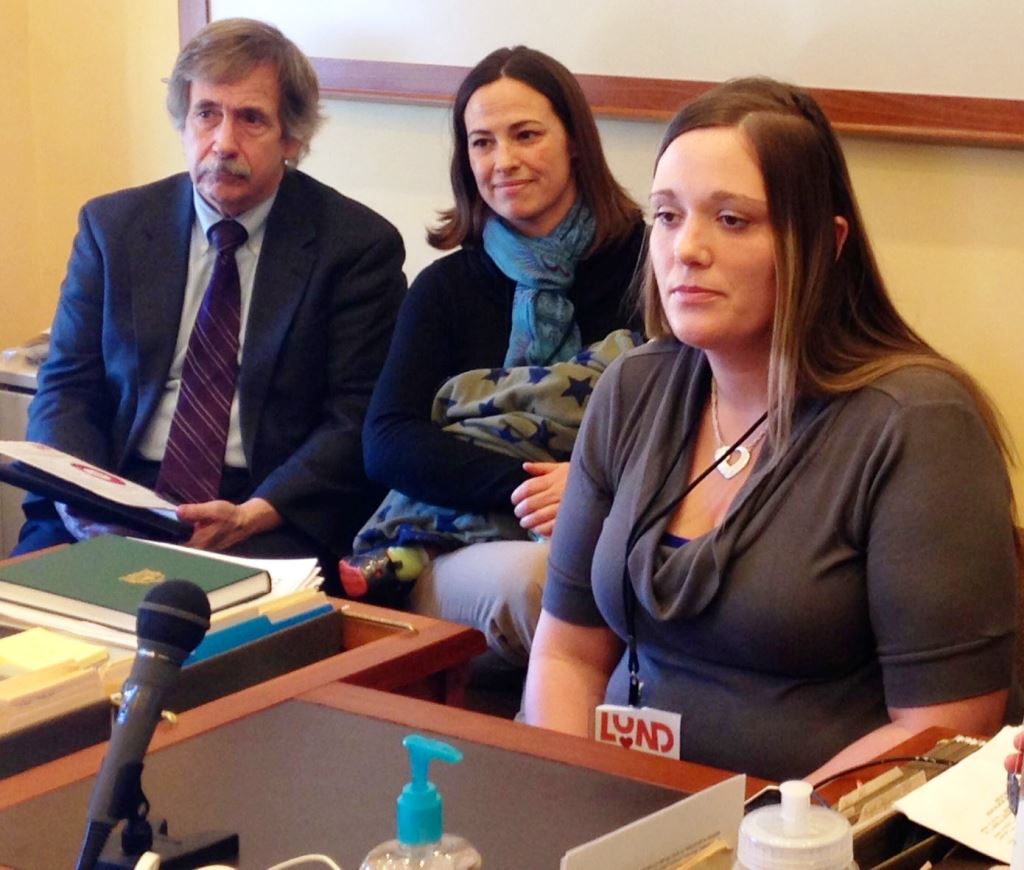
HOUSING A MUST TO HELP WOMEN BATTLING OPIATE ADDICTION, ADVOCATES SAY
"Amanda Bean finally got tired of losing everything.
The mother of five spent much of her adult life incarcerated and a slave to opiates and other drugs. Her lifestyle choices cost Bean her three oldest children, who now live with her parents.
Finally, Bean had had enough. After spending the past three months of her most recent pregnancy homeless, Bean was admitted a week before she delivered to Lund Family Center, a mental health and substance abuse treatment center for mothers in Burlington.
Women battling drug addiction need housing, doctors and help finding a job to so they can get back on track while overcoming their addiction, Bean, 30, told rapt members of the House Human Services Committee on Tuesday.
“Housing has been the biggest thing that I and many people, many mothers that I know, have struggled with in Vermont,” she said during a two-hour hearing on women battling substance abuse.
“There’s a lack of opportunity for employment and things that the Lund Family Center is able to address,” Bean said.
It can take a year or more to find a doctor to prescribe methadone or buprenorphine, drugs that help addicts recover, she said.
Bean also said there should be more treatment programs in prison, a service she said didn’t exist when she was behind bars.
“You just went in, you detoxed hard and you, you know, you tried your best to stay clean while you were in there which wasn’t – and isn’t – very easy to do,” she said.
Bean gave birth to 3-month-old Gabriel and her 4-year-old, while on medically assisted treatment. She hid her addiction from doctors during the pregnancies of her 16-, 10- and 9-year-olds, she told lawmakers.
Now, Bean is trying to find child care for her 4-year-old, who lives half of the time with her at Lund and the rest of the time with her parents. She is also taking parenting classes, she said.
Gabriel came with her to the Statehouse and slept through Tuesday’s hearing.
Chairwoman Ann Pugh, D-South Burlington, asked Bean how she became addicted in the first place.
Her mother was an addict, Bean told Pugh.
“That’s all I ever saw or knew, so it was like second nature to me,” she said.
The committee also heard from a neonatalogist, a substance abuse clinician, a Health Department employee and a representative from the Phoenix House, a residential treatment facility in Brattleboro.
They all said women need not only treatment, but housing, transportation and help finding jobs.
Waiting lists need to be drawn down, they said, so addicts can enter treatment at the moment they feel ready, said Alice Larned, a substance abuse treatment clinician at Lund.
More money should be devoted to assessing clients to find out exactly what type of services they need, she said. It is increasingly hard to place patients in residential detox facilities, she said.
Many people Larned sees are already taking buprenorphine they bought on the street, she said.
That is indication they want help “yet we don’t have the legitimate means for them to get this medication,” she said.
Pregnant women rise to the top of waiting lists and must receive treatment within 48-hours, said Jackie Corbally, chief of treatment at the office of Alcohol and Drug Abuse Programs in the Department of Health.
Corbally agreed housing is key to long-term recovery.
“We really do need to do a better job at providing housing for these individuals,” she said.
The number of pregnant women seeking addiction treatment has grown from 49 people in 2001 to 207 people in 2012, according to self-reported data collected by ADAP, Corbally said.
The new Hub and Spoke treatment model is helping people receive a range of services in addition to medication, she said.
Corbally said she adopted two children born to opiate-addicted mothers.
“This is an issue that really goes to my heart,” she said.
Dr. Anne Johnston, a pediatrician who specializes in newborn intensive care at the University of Vermont and works with opiate-dependent mothers and their babies, said the way to help babies is to help mothers.
“You can’t address the health of the fetus … or the baby, without addressing the health of the mother,” Johnston said.
Johnston advocated for mothers to receive medication such as methadone or buprenorphine to help them manage their addiction so they can be good parents.
Richard Turner of Phoenix House presented a spreadsheet detailing the types of addictions incarcerated women struggle with. He also talked about the need for housing.
“Transitional housing for women in this state is a big deal and a big need. It’s complicated and sort of expensive,” Turner said."
http://vtdigger.org/2014/01/28/housing-must-help-women-battling-opiate-addiction-advocates-say/




