Dave said:
Except that they let their compost go anaerobic, so it smelled horrible. Two showers later and I still smell like horribly acidic shit.
You need more carbon (as Dtergent pointed out). Turning is not necessary if you don't mind waiting longer. Actually, if you don't turn, the end product will be more copious and of higher quality.
Jam said:
Mehm, I completely space out on your post. Great pictures, is the cattle used for "Kobe" beaf?
Thanks

I love farming but it's a hard life I think. That is not Kobe beef as it doesn't come from the province of Kobe. Those cows were on an island outside of Hiroshima. We hand fed them a mixture of three different grains and three different grasses twice a day. The rest of the days were spent weed whacking big orange orchards...which seemed weird as we had a a bunch of cows around (to do the weed whacking for us. Oh well, I'm sure there were reasons.
Jam said:
This is surprising to me, is it recommended to pinch off buds to encourage more vegetative growth?
Yes, it is recommended. Pinching off the buds will make the plants get larger, and will extend their lifespan by preventing flowering.
Also, should I cut back and the Fish Emulsion feeding, and stick only with P&K? Or add the P-K in addition to the N.
Fruit plants like vegetables need more nitrogen while in vegetative growth. Don't cut this back until they start flowering. A surefire bet is hefty amounts of compost as they contain all nutrients necessary. Also, compost releases the nutrients as needed because of how the nutrients are bound to carbon in the compost. IE you can't poison plants with compost. If you wanted to, you could grow a plant in a bucket of pure compost.
What is the real story behind legumes and their nitrogen producing properties?
Bacteria living in soil "invades" legume roots and pulls nitrogen from the atmosphere. The nitrogen is then "fixed" it into the roots. Nitrogen is the one plant nutrient that exists in both gaseous and solid forms. The atmosphere is 70% nitrogen.
Symbiotic Nitrogen Fixation from
http://users.rcn.com/jkimball.ma.ultranet/BiologyPages/N/NitrogenFixation.html
Symbiotic nitrogen fixation occurs in plants that harbor nitrogen-fixing bacteria within their tissues. The best-studied example is the association between legumes and bacteria in the genus Rhizobium.
Each of these is able to survive independently (soil nitrates must then be available to the legume), but life together is clearly beneficial to both. Only together can nitrogen fixation take place.
A symbiotic relationship in which both partners benefits is called mutualism.
Link to discussion of the role of nitrogen fixation in the nitrogen cycle.
Rhizobia
Rhizobia are Gram-negative bacilli that live freely in the soil (especially where legumes have been grown). However, they cannot fix atmospheric nitrogen until they have invaded the roots of the appropriate legume.
have you guys successfully grown cool-weather veggies out of season?
I've tried. The plants "bolt", which means they send up a shoot that turns into seeds. The resulting leaf growth is very bitter. You can try growing them under a shade cloth to extend the cool season.









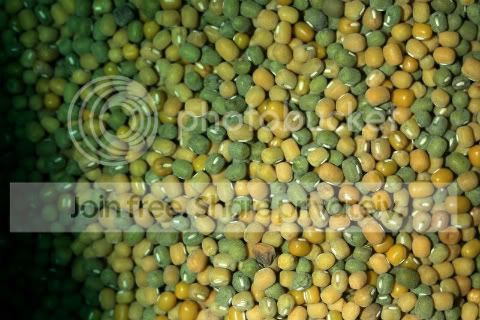
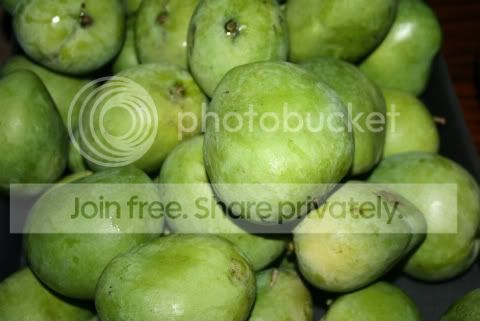



 It's taking quite sometime.