poledriver
Bluelighter
- Joined
- Jul 21, 2005
- Messages
- 11,543
Hazy Drug Driving Advice On Australian Roads
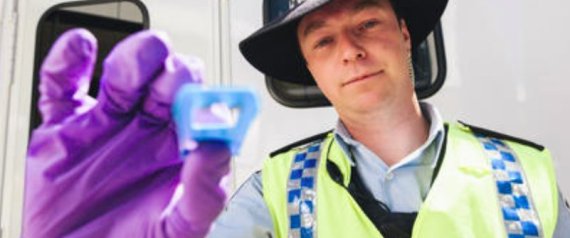
If you’re a little dazed and confused about Random Drug Testing on Australia's roadsides, it’s probably not just because of what you’re smoking.
RDTs are being rolled out across the country at an increasing rate, with as many as 200,000 drivers to be tested in Victoria and 100,000 in NSW by 2017.
Prompted by a recent NSW court case, where a Lismore man was acquitted after being pinged nine days after having cannabis, The Huffington Post Australia decided to investigate the state of play in each state.
Cannabis is, after all, the most widely cultivated, trafficked and abused illicit drug, and accounts for almost half of all drug seizures worldwide, while 34.8 percent of Australians aged 14 years and over have used it one or more times in their life, 10.2 percent using it in the 12 months to 2014.
But state governments in Australia, perhaps reflecting their territories' approach to illegal drugs in general, give different advice to drivers about just how long the psychoactive component of marijuana, THC, can be detected by a roadside test - ranging from zero tolerance, general guidelines over how long it takes to become undetectable, to no advice at all.

drug driving
In NSW, Queensland, and the NT, roadside saliva swabs are tested in the Draeger 5000; a box that looks a bit like like a 70's era Star Wars prop.
While the machines can pick up many drugs, in Australia RDTs are generally geared towards the psychoactive chemicals in marijuana, methamphetamine and ecstasy.
Drugs such as MDMA and crystal methamphetamine can generally be detected within 24 hours of taking them, but with THC it’s all a bit vague about how long it takes to get out of your system.
In NSW, RDTs are developing into a hotly debated issue following reports people have been picked up days after taking the drug, despite having been told to only wait at least 12 hours before getting behind the wheel.
Both NSW and the NT use the same testing device, however NT drivers are advised by the Department of Transport that THC takes an average of about 5 hours, with caveats, to break down and become undetectable in the body.
It goes further, and breaks down what happens THC in your system: "After approximately 5 hours, the Delta-9 THC component has metabolised into Carboxy THC in your body. Carboxy THC is inactive and may be present in your body for days or weeks after consuming the drug. Police will not be testing for Carboxy THC during the roadside swab test."
The NSW road safety website says cannabis can typically be detected in saliva by an RDT test stick for up to 12 hours after use.
Even Draeger points to slightly different advice on their website, linking to a 2013 industry product review that says the device can detect very small quantities of THC (five nanograms per milliliter), and pinpoints the time of drug consumption within an eight-hour time window.
“This makes it very easy to determine whether a person has taken one or more drugs recently and is still influenced by them,” Dr Stefan Steinmeyer, responsible for “Drug Testing” at Draeger is quoted as saying in the review.
In Victoria, police use Securetec's Drugwipe swabs and, according to police media, test them in Securtec's Drugwipe Twin II Combo.
Victoria's Road accident commission warns the effects of THC can last for up to 24 hours, and warns that "recent use of THC the risk of being killed in a fatal crash is similar to a driver with a BAC of up to approximately 0.15."
In SA, THC can be detected for several hours after use” (again the exact time varies depending on the amount and potency of the cannabis used and the individual metabolism).
“Inactive THC residue in the body of a driver from use in previous days or weeks will not be detected,” the SA advice says.
The state's legal services commission is slightly more specific about the window, and advises that THC can be detectable for up to 4 hours.
In WA, they also the Draeger (if you test positive for with the Securetec swab, the swab is placed in the Draeger 5000 for further analysis.)
WA's Road Safety Commission says THC is generally detectable for up to 4 hours after use, again with the usual caveats.
Queensland has an absolute zero tolerance policy toward drugs and driving, and neither the Queensland Police or the state's department of transport offer any advice on how long it takes for THC to become inactive.
Tasmania police warn it is illegal to drive a vehicles with illicit drugs in your blood, but offer no readily available breakdown of THC.
NSW Greens MP David Shoebridge compares the NSW drug testing system to the UK's, where a range of illicit and prescription drugs are tested for, with set detectable levels of impairment.
He believes the Lismore decision will open the state government to a flood of legal challenges, as drivers are fined despite believing they are taking sound government advice.
The NSW Greens recently used freedom of information laws to access police documents that show there is no lower limit of drugs that are detectable in the saliva of people subjected to the roadside oral drug tests.
drug impairment
An excerpt from the NSW Police RDT Standard Operating Procedure Handbook
Shoebridge believes RDTs should test for impairment, and the limited trio of drugs screened for expanded to take in cocaine and some prescription drugs (the NSW Greens are preparing to move a motion in parliament to have the state's tests reviewed).
“Roadside drug testing is not about getting impaired drivers off the road,” Shoebridge said of drug testing in NSW.
“Expressly and explicitly not about getting impaired drivers off the road. Then why are we doing it?
“It’s an ideological war on a handful of illegal drugs dressed up as a road safety campaign.”
Shoebridge recently sat in on Lismore local court, where he said there were about 150 matters listed for mention on the day.
Forty six were for drug-driving matters, he said, or one third of the court list.
“The magistrate was having enormous difficulty getting to some of those seriously important cases -- domestic violence, dangerous driving, assault matters -- things you want magistrates and barristers spending their time on.”
He pointed to the UK's Wolfe report, which sets out the effects that various drugs have on driving.
But we don’t as much about the effects surrounding driving and cannabis as we do about the effects of alcohol on driving, Queensland University of Technology's Professor Jeremy Davey told The Huffington Post Australia.
Davey, from the CARRS-Q Centre for Accident Research and Safety, sat on an expert panel that advised Queensland on its own drug driving laws.
He says THC can be detected in your saliva for up to 24 hours.
He argues the focus on impairment is misplaced, and likens it to the roughly 70-year history of observations into alcohol and driving, and old arguments people used to use about alcohol, such as "I drive better on on the sauce".
"The next one is 'I’m used to it and I’m not affected by it'. Well, you think you’re not affected by it. The other one is ‘Oh, I’ve used only a little bit'. All these excuses they said for alcohol 30, 40 years ago, are being used for illicit substances,” he said.
“We know that at .05 (alcohol reading) you are twice as likely to be involved in a motor accident. This fixation on impairment, we know that there are varying levels of impairment but where do you draw the line on impairment? Impairment is impairment,” he said.
“And also -- and this is the nature of drugs -- the same level may impair you to some degree today, and tomorrow it may impair you to another degree, and that can be more or less, and operate differently on different people, and at different times.
“So you have to look at it on a population base.”

Random Breath Testing changes driver behaviour, and there is some evidence to suggest the same approach works for drug testing, said Sydney University's Professor Rebecca Ivers, an injury epidemiologist and researcher in global health.
From a road safety perspective, the deterrence approach is generally seen as the most effective way of keeping people safe on the roads.
"When it comes to road safety, when we're talking about preventing people from crashing and having serious injuries and death, we have to be pretty hard line about it," she said.
"What we do know works, having random alcohol testing works very well in changing people's behaviour and there is some evidence that the same approach does work for drug testing.
"If they think they're going to be caught at a random roadside test and be penalised, then they are not going to do that behaviour."
"The reality is the ‘safe level of alcohol’ when you’re behind the wheel is set at a politically and socially prescribed level, and changing the test to narrow or expand it (to take in fewer or more drugs, including prescription drugs) will require a long conversation with the community.
"Like when Random Breath Testing was introduced, with the upper prescribed level .08, before we worked our way down while drawing on tens of thousands of clinical tests and controlled experiments," Davey said.
“Now, we don’t have those controlled experiments with cannabis. However, we have enough knowledge of the drug that we know that it does impair.
"One does use a piece of common sense.”
http://www.huffingtonpost.com.au/2016/02/23/rdt-australia_n_9269504.html?utm_hp_ref=australia
If you’re a little dazed and confused about Random Drug Testing on Australia's roadsides, it’s probably not just because of what you’re smoking.
RDTs are being rolled out across the country at an increasing rate, with as many as 200,000 drivers to be tested in Victoria and 100,000 in NSW by 2017.
Prompted by a recent NSW court case, where a Lismore man was acquitted after being pinged nine days after having cannabis, The Huffington Post Australia decided to investigate the state of play in each state.
Cannabis is, after all, the most widely cultivated, trafficked and abused illicit drug, and accounts for almost half of all drug seizures worldwide, while 34.8 percent of Australians aged 14 years and over have used it one or more times in their life, 10.2 percent using it in the 12 months to 2014.
But state governments in Australia, perhaps reflecting their territories' approach to illegal drugs in general, give different advice to drivers about just how long the psychoactive component of marijuana, THC, can be detected by a roadside test - ranging from zero tolerance, general guidelines over how long it takes to become undetectable, to no advice at all.
drug driving
In NSW, Queensland, and the NT, roadside saliva swabs are tested in the Draeger 5000; a box that looks a bit like like a 70's era Star Wars prop.
While the machines can pick up many drugs, in Australia RDTs are generally geared towards the psychoactive chemicals in marijuana, methamphetamine and ecstasy.
Drugs such as MDMA and crystal methamphetamine can generally be detected within 24 hours of taking them, but with THC it’s all a bit vague about how long it takes to get out of your system.
In NSW, RDTs are developing into a hotly debated issue following reports people have been picked up days after taking the drug, despite having been told to only wait at least 12 hours before getting behind the wheel.
Both NSW and the NT use the same testing device, however NT drivers are advised by the Department of Transport that THC takes an average of about 5 hours, with caveats, to break down and become undetectable in the body.
It goes further, and breaks down what happens THC in your system: "After approximately 5 hours, the Delta-9 THC component has metabolised into Carboxy THC in your body. Carboxy THC is inactive and may be present in your body for days or weeks after consuming the drug. Police will not be testing for Carboxy THC during the roadside swab test."
The NSW road safety website says cannabis can typically be detected in saliva by an RDT test stick for up to 12 hours after use.
Even Draeger points to slightly different advice on their website, linking to a 2013 industry product review that says the device can detect very small quantities of THC (five nanograms per milliliter), and pinpoints the time of drug consumption within an eight-hour time window.
“This makes it very easy to determine whether a person has taken one or more drugs recently and is still influenced by them,” Dr Stefan Steinmeyer, responsible for “Drug Testing” at Draeger is quoted as saying in the review.
In Victoria, police use Securetec's Drugwipe swabs and, according to police media, test them in Securtec's Drugwipe Twin II Combo.
Victoria's Road accident commission warns the effects of THC can last for up to 24 hours, and warns that "recent use of THC the risk of being killed in a fatal crash is similar to a driver with a BAC of up to approximately 0.15."
In SA, THC can be detected for several hours after use” (again the exact time varies depending on the amount and potency of the cannabis used and the individual metabolism).
“Inactive THC residue in the body of a driver from use in previous days or weeks will not be detected,” the SA advice says.
The state's legal services commission is slightly more specific about the window, and advises that THC can be detectable for up to 4 hours.
In WA, they also the Draeger (if you test positive for with the Securetec swab, the swab is placed in the Draeger 5000 for further analysis.)
WA's Road Safety Commission says THC is generally detectable for up to 4 hours after use, again with the usual caveats.
Queensland has an absolute zero tolerance policy toward drugs and driving, and neither the Queensland Police or the state's department of transport offer any advice on how long it takes for THC to become inactive.
Tasmania police warn it is illegal to drive a vehicles with illicit drugs in your blood, but offer no readily available breakdown of THC.
NSW Greens MP David Shoebridge compares the NSW drug testing system to the UK's, where a range of illicit and prescription drugs are tested for, with set detectable levels of impairment.
He believes the Lismore decision will open the state government to a flood of legal challenges, as drivers are fined despite believing they are taking sound government advice.
The NSW Greens recently used freedom of information laws to access police documents that show there is no lower limit of drugs that are detectable in the saliva of people subjected to the roadside oral drug tests.
drug impairment
An excerpt from the NSW Police RDT Standard Operating Procedure Handbook
Shoebridge believes RDTs should test for impairment, and the limited trio of drugs screened for expanded to take in cocaine and some prescription drugs (the NSW Greens are preparing to move a motion in parliament to have the state's tests reviewed).
“Roadside drug testing is not about getting impaired drivers off the road,” Shoebridge said of drug testing in NSW.
“Expressly and explicitly not about getting impaired drivers off the road. Then why are we doing it?
“It’s an ideological war on a handful of illegal drugs dressed up as a road safety campaign.”
Shoebridge recently sat in on Lismore local court, where he said there were about 150 matters listed for mention on the day.
Forty six were for drug-driving matters, he said, or one third of the court list.
“The magistrate was having enormous difficulty getting to some of those seriously important cases -- domestic violence, dangerous driving, assault matters -- things you want magistrates and barristers spending their time on.”
He pointed to the UK's Wolfe report, which sets out the effects that various drugs have on driving.
But we don’t as much about the effects surrounding driving and cannabis as we do about the effects of alcohol on driving, Queensland University of Technology's Professor Jeremy Davey told The Huffington Post Australia.
Davey, from the CARRS-Q Centre for Accident Research and Safety, sat on an expert panel that advised Queensland on its own drug driving laws.
He says THC can be detected in your saliva for up to 24 hours.
He argues the focus on impairment is misplaced, and likens it to the roughly 70-year history of observations into alcohol and driving, and old arguments people used to use about alcohol, such as "I drive better on on the sauce".
"The next one is 'I’m used to it and I’m not affected by it'. Well, you think you’re not affected by it. The other one is ‘Oh, I’ve used only a little bit'. All these excuses they said for alcohol 30, 40 years ago, are being used for illicit substances,” he said.
“We know that at .05 (alcohol reading) you are twice as likely to be involved in a motor accident. This fixation on impairment, we know that there are varying levels of impairment but where do you draw the line on impairment? Impairment is impairment,” he said.
“And also -- and this is the nature of drugs -- the same level may impair you to some degree today, and tomorrow it may impair you to another degree, and that can be more or less, and operate differently on different people, and at different times.
“So you have to look at it on a population base.”
A woman volunteering for a saliva drug test at the hands of a Melbourne police officer in 2006, shortly after it was announced the technology to detect the drug in saliva and blood samples had been perfected.
Random Breath Testing changes driver behaviour, and there is some evidence to suggest the same approach works for drug testing, said Sydney University's Professor Rebecca Ivers, an injury epidemiologist and researcher in global health.
From a road safety perspective, the deterrence approach is generally seen as the most effective way of keeping people safe on the roads.
"When it comes to road safety, when we're talking about preventing people from crashing and having serious injuries and death, we have to be pretty hard line about it," she said.
"What we do know works, having random alcohol testing works very well in changing people's behaviour and there is some evidence that the same approach does work for drug testing.
"If they think they're going to be caught at a random roadside test and be penalised, then they are not going to do that behaviour."
"The reality is the ‘safe level of alcohol’ when you’re behind the wheel is set at a politically and socially prescribed level, and changing the test to narrow or expand it (to take in fewer or more drugs, including prescription drugs) will require a long conversation with the community.
"Like when Random Breath Testing was introduced, with the upper prescribed level .08, before we worked our way down while drawing on tens of thousands of clinical tests and controlled experiments," Davey said.
“Now, we don’t have those controlled experiments with cannabis. However, we have enough knowledge of the drug that we know that it does impair.
"One does use a piece of common sense.”
http://www.huffingtonpost.com.au/2016/02/23/rdt-australia_n_9269504.html?utm_hp_ref=australia