Recently I read about a benzo derivative called Ro15-4513 which actually blocks the effects of ethanol.
This is due to the azido group blocking the binding site of ethanol on the α4β3δ subtype of the GABA-A receptor. (courtesy wikipedia)
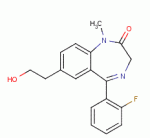
If this is true, then what if we attach a hydroxyethyl or hydroxypropyl group to that position? Would it bind in the same fashion ethanol does?
If so, this would create a very euphoric (and possibly dangerous) benzo.
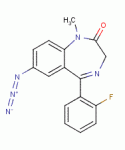
Or alternatively, we could fashion a regular benzo with the azido group, which would prevent alcohol+benzo combination overdoses.
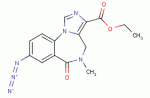
left to right:
Ro15, ethanol benzo, anti-ethanol benzo
This is due to the azido group blocking the binding site of ethanol on the α4β3δ subtype of the GABA-A receptor. (courtesy wikipedia)
If this is true, then what if we attach a hydroxyethyl or hydroxypropyl group to that position? Would it bind in the same fashion ethanol does?
If so, this would create a very euphoric (and possibly dangerous) benzo.
Or alternatively, we could fashion a regular benzo with the azido group, which would prevent alcohol+benzo combination overdoses.
left to right:
Ro15, ethanol benzo, anti-ethanol benzo