• BASIC DRUG
    DISCUSSION
    Welcome to Bluelight!
    Posting Rules Bluelight Rules
    Benzo Chart Opioids Chart
    Drug Terms Need Help??
    Drugs 101 Brain & Addiction
    Tired of your habit? Struggling to cope?
    Want to regain control or get sober?
    Visit our Recovery Support Forums
  • BDD Moderators: Keif’ Richards

Kratom Collection of 7-OH and kratom extract 3rd party Lab Analysis reports


So it's a prodrug, just like codeine. The only difference being that it's the CYP4A4 rather than the CYP2D6 enzyme responsible. I note that they even assign 14% as the amount coverted in a single human cadaver but go on to note that the natural an commecial herb wouldn't contain as much as the extracts and that it would be impossible to kill oneself even if you tried to because it would take so much of the natural extract.

Now it is known that the genetic makeup of a person will decide when on the range of non-metabolize to super-metabolizer lies. So we have no way of knowing from a single sample if that's an average.

I will explain why that is important. It's known that people of SE Asian descent are mostly classed as non or poor metabolizers, people of African heitage tend to be supermetabolizers.

In North America I've been informed that within certain circles, a drink called 'lean' has become ever so popular. While I honestly don't know anything about that scene, if the people in that scene share some genetic elements with those of the peoples of Africa, they might well fall into the super-metabolizer range.

I note that mitragynine and codeine appear to be toxic in about the same range.

You know, I'm actually quite surprised that no idiot has considered acetylating 7-OH mitragynine because it's very likely that it will reduce the melting-point and make a prodrug that is hydrolized to the active by non-specific blood enzymes in a matter of a few minutes. Making the product more lipopholic would also mean it would tend to accumulate in fatty tissue and do so more quickly. A trully terrible thing to do as it's only ever going to end with avoidable human misary - but I've I've thought of it, I assume whoever is behind making pills would know of it. I only used the acetyl ester by way of demonstration, I'm sure other esters would work and may even be preferable.

That's why I think herbal kratom is likely to be like raw opium. Yes, you could eat a vast block of raw opium on purpose, but I suggest it would be hard if not impossible to do so by accident.

 

So it's a prodrug, just like codeine. The only difference being that it's the CYP4A4 rather than the CYP2D6 enzyme responsible. I note that they even assign 14% as the amount coverted in a single human cadaver but go on to note that the natural an commecial herb wouldn't contain as much as the extracts and that it would be impossible to kill oneself even if you tried to because it would take so much of the natural extract.

Now it is known that the genetic makeup of a person will decide when on the range of non-metabolize to super-metabolizer lies. So we have no way of knowing from a single sample if that's an average.

I will explain why that is important. It's known that people of SE Asian descent are mostly classed as non or poor metabolizers, people of African heitage tend to be supermetabolizers.

In North America I've been informed that within certain circles, a drink called 'lean' has become ever so popular. While I honestly don't know anything about that scene, if the people in that scene share some genetic elements with those of the peoples of Africa, they might well fall into the super-metabolizer range.

I note that mitragynine and codeine appear to be toxic in about the same range.

You know, I'm actually quite surprised that no idiot has considered acetylating 7-OH mitragynine because it's very likely that it will reduce the melting-point and make a prodrug that is hydrolized to the active by non-specific blood enzymes in a matter of a few minutes. Making the product more lipopholic would also mean it would tend to accumulate in fatty tissue and do so more quickly. A trully terrible thing to do as it's only ever going to end with avoidable human misary - but I've I've thought of it, I assume whoever is behind making pills would know of it. I only used the acetyl ester by way of demonstration, I'm sure other esters would work and may even be preferable.

That's why I think herbal kratom is likely to be like raw opium. Yes, you could eat a vast block of raw opium on purpose, but I suggest it would be hard if not impossible to do so by accident.
I like 2 points you raised.

1. That yes ppl from different types of places across the world with there long DNA lineage that it will hit you harder or less ( metabolism wise )

2. The changing of the structure or breakdown of it to make it a productive of sorts and also changing they way of communication and so forth.

Plus I personally feel there is not enough data on this drug to even try it ( my personal choice ) and from. What I have seen so far and I hate to call it that but it's become an epidemic of addiction on this sites.
 
The only difference being that it's the CYP4A4 rather than the CYP2D6 enzyme responsible.
...
Now it is known that the genetic makeup of a person will decide when on the range of non-metabolize to super-metabolizer lies.

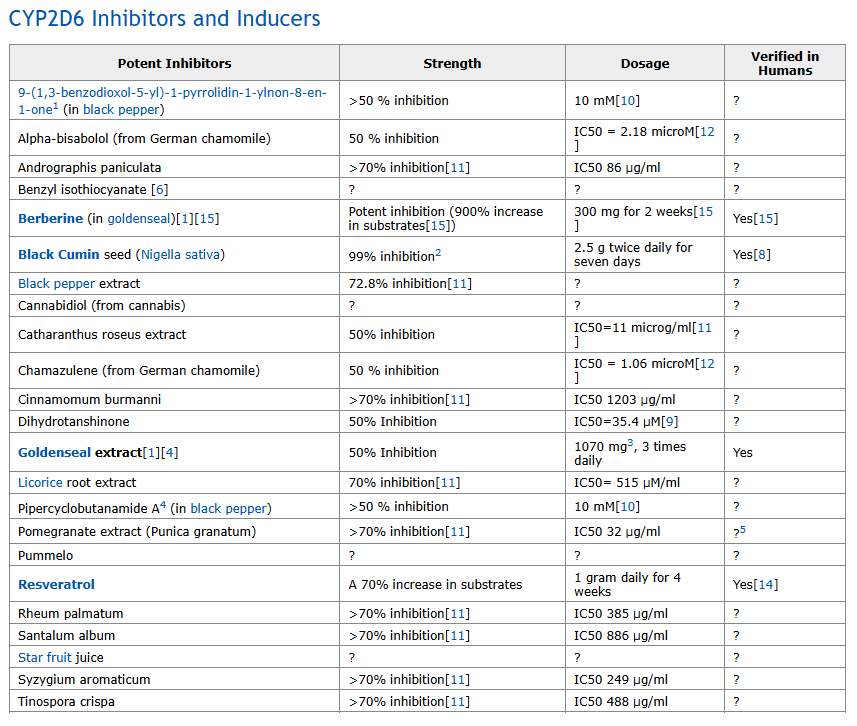
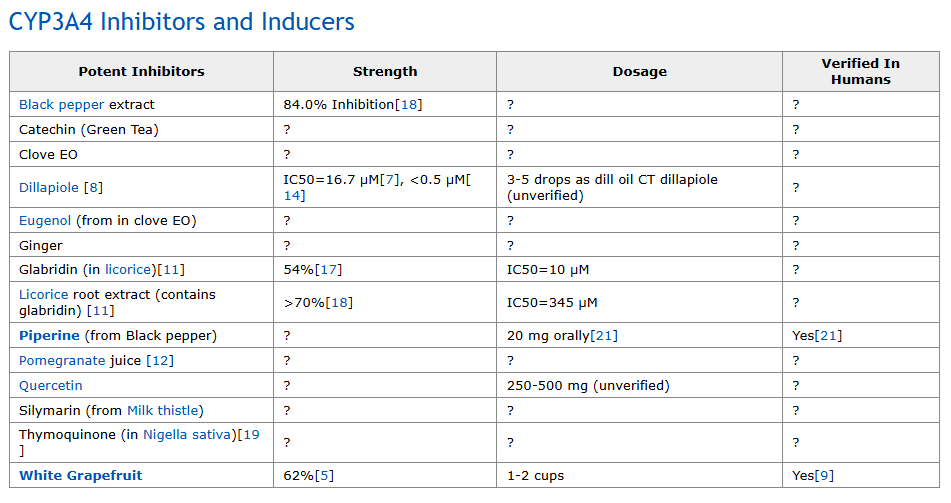
There is a dietary influence on enzyme activity too. Different cultures tend to have different diets.

image.png
image.png

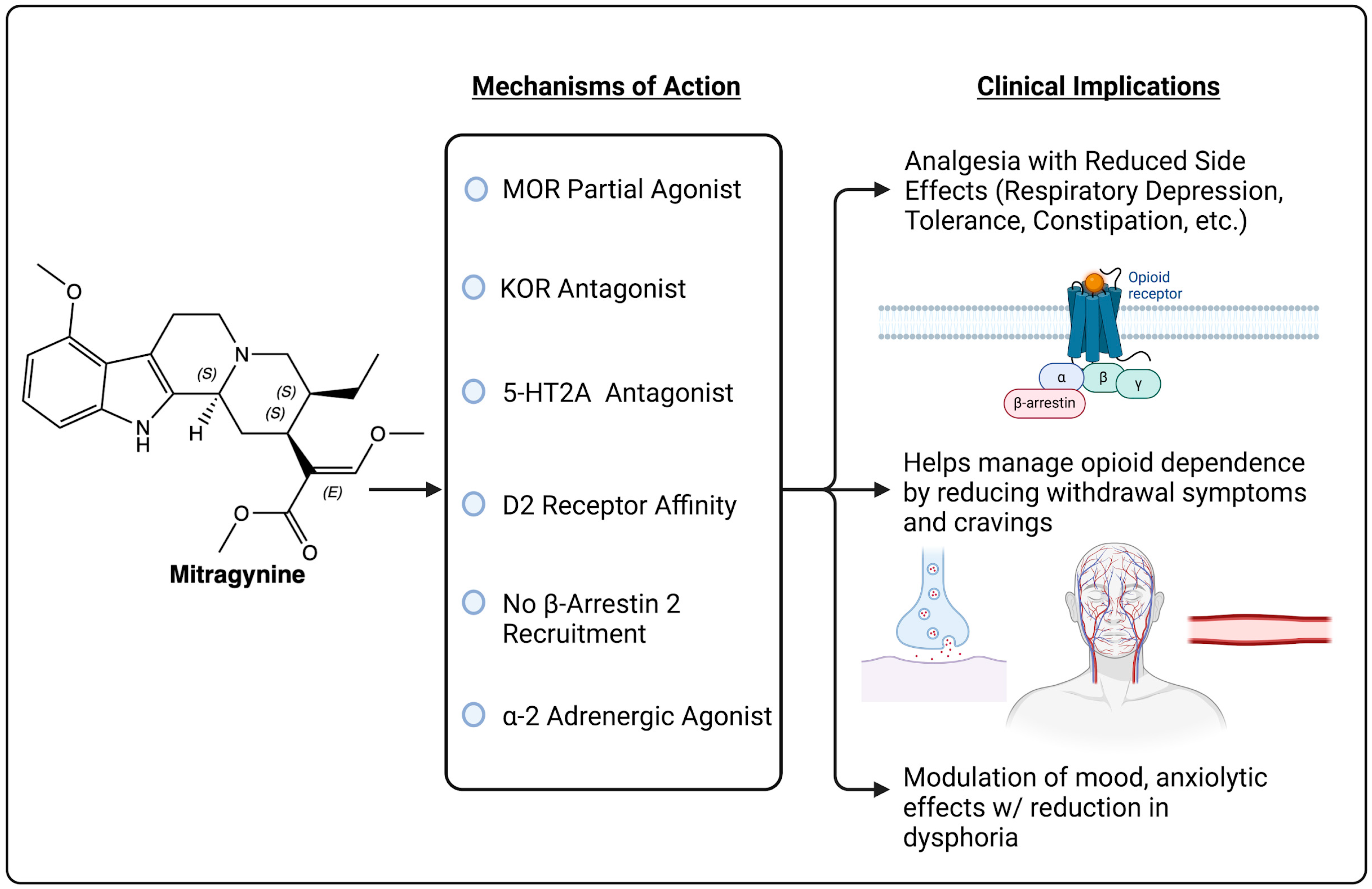
Also - kratom's alkaloids interact with many areas, not just the opioid system.
Eg mitragynine also interacts with cannabinoid receptors +

Mitragynine possesses a non-opioid action through alpha-2 adrenergic, adenosine (A2A), dopamine (D2), and serotonin (5-HT2A, 5-HT2C, 5-HT7) receptors.
 
Last edited:
Plus I personally feel there is not enough data on this drug to even try it ( my personal choice ) and from.

Maybe it's just a trace of cynicism in me but I recall reading the original pepers in which Japanese (?) researchers isolated the analgesic alkaloids in the ketatom plant. Now the fact they published does rather suggest that they would first have tested those metabolites with a view to offering a new class of analgesic. Never forget that even when human trials are undertaken, the pharmacutical company is not required to publish any results they may find and when they do, it's more as a basis for a patent. So I suggest no medical benefit was observed.

It MAY be the case that because genetic variability demonstrated that same non-metabolized <---> supermetabolizer range existed so only one compound could reliably be used and that one offered and it had no clinical advantage.

You indeed can temporarily alter the enzyme activity in man, but homeostatis simply means that the body produces more of that enzyme.

But purposefully monkey around with one's lizer enzymes itself poses risks. Don't forget, the whole purpose of the liver is to remove 'poisons' from the body.
 
Maybe it's just a trace of cynicism in me but I recall reading the original pepers in which Japanese (?) researchers isolated the analgesic alkaloids in the ketatom plant. Now the fact they published does rather suggest that they would first have tested those metabolites with a view to offering a new class of analgesic. Never forget that even when human trials are undertaken, the pharmacutical company is not required to publish any results they may find and when they do, it's more as a basis for a patent. So I suggest no medical benefit was observed.

It MAY be the case that because genetic variability demonstrated that same non-metabolized <---> supermetabolizer range existed so only one compound could reliably be used and that one offered and it had no clinical advantage.

You indeed can temporarily alter the enzyme activity in man, but homeostatis simply means that the body produces more of that enzyme.

But purposefully monkey around with one's lizer enzymes itself poses risks. Don't forget, the whole purpose of the liver is to remove 'poisons' from the body.
Thank you once again for a proper answer and facts you posted from your own research. Much appreciated
 
Thank you once again for a proper answer and facts you posted from your own research. Much appreciated

I'm sure I could find those original papers. I believe they even went as far as studying the QSAR but it never went anywhere. That indole moiety reminds me of compounds such as cebrantoparadol and am reminded that it's derived from BDPC which demonstated that the position of the HBA oxygen and basic nitrogen can be swapped,

People really have to draw them all in something like ChemOffice to see how the three compounds overlay in 3D. Because if compared in 2D, they appear to differ hugely... which is the trap.
 
I'm sure I could find those original papers. I believe they even went as far as studying the QSAR but it never went anywhere. That indole moiety reminds me of compounds such as cebrantoparadol and am reminded that it's derived from BDPC which demonstated that the position of the HBA oxygen and basic nitrogen can be swapped,

People really have to draw them all in something like ChemOffice to see how the three compounds overlay in 3D. Because if compared in 2D, they appear to differ hugely... which is the trap.
Not sure if we talking about the same thing but a chemical rendered ona PC in 3d that you can move around and such does look different then a 2d sketch and from what I have seen from my mates that's deep into this stuff ( I know very little but eager to learn, anything medicine wise) and as they have pointed out to me that certain moleculeattangement and from there forth is actually different then like I said a 2d sketch.

Is this more or less you referring to, once again excuse the ignorance
 
You indeed can temporarily alter the enzyme activity in man, but homeostatis simply means that the body produces more of that enzyme.

Aye, I was merly pointing out that common herbs, foods, spices and beverages inhibit and induce all sorts of enzymes which influence the activity of drugs like codeine and DXM. The same drug might behave differently amongst people in different cultures/countries.

Consider the amount of enzyme inhibiting foods, spices and herbs that Asiatic Indians eat on a daily basis (black pepper, cloves, cinnamon, nutmeg, turmeric, ginger etc).
Or the Brit with flavonoids like quercetin - tomatoes, tea and red wine are quite high. Brits love their tea and baked beans. Wine, well... Quercetin influences several enzymes including ALDH.
 
Last edited:
Not sure if we talking about the same thing but a chemical rendered ona PC in 3d that you can move around and such does look different then a 2d sketch and from what I have seen from my mates that's deep into this stuff ( I know very little but eager to learn, anything medicine wise) and as they have pointed out to me that certain moleculeattangement and from there forth is actually different then like I said a 2d sketch.

Is this more or less you referring to, once again excuse the ignorance

Exactly - it overlays the molecules in 3D. In fact it goes one better, it calculates the minimum energy conformation which it very important. Two chemicals can seem entirely different even in 3D. but when you perform the minimum-energy calculations, voila, compounds that look totally different in 2D turn out to overlay perfectly.

The (most active) stereoisomer of prodine overlays the (more active) enantiomer of U-47700, for example.

A couple of years ago a few of us wondered why Chinese RC vendors hadn't tried overlaying allyl prodine (x23 morphine) with the N-allyl homologue of U-47700. We named it U-93951. For reasons.
 
Aye, I was merly pointing out that common herbs, foods, spices and beverages inhibit and induce all sorts of enzymes which influence the activity of drugs like codeine and DXM. The same drug might behave differently amongst people in different cultures/countries.

Consider the amount of enzyme inhibiting foods, spices and herbs that Asiatic Indians eat on a daily basis (black pepper, cloves, cinnamon, nutmeg, turmeric, ginger etc).
Or the Brit with flavonoids like quercetin - tomatoes, tea and red wine are quite high. Brits love their tea and baked beans. Wine, well... Quercetin influences several enzymes including ALDH.

But in most examples no human trials were provided and in the rest. it's also worth pointing out most of those affinity values were not very encouraging and who knows how much of any oral dose of a herb (or extract thereof) is actually going to end up in the liver. We also have the potential for different demographic groups having different results.

But this is a thread for lab reports on 7-OH mitragynine. If you want a thread on something else, start a new thread.
 
I found a very useful discord with a fairly large collection of independent GC/MS lab reports of various kratom extracts, mainly 7-OH products. Most of these, but not all, are brands you will find in vape shops and online.

DO NOT TRUST VENDOR COAs... THEY ALL LIE!!

One commonality among all brands is they have significantly less 7-OH in them than advertised.

Great discord called KratomBlacklist. Discord Link: https://discord.gg/uPmqeRTT

The only slightly disappointing thing here is this lab does not detect mitragynine psuedoindoxyl, nor the more recent "11-OH" analogs.

Brands tested:
ON7
Hydroxi
Hydroxie
7Hydroz
Se7en
Stardust
7labs
KratomKulture
Hyku
Clandestine Capsules
7rx
VII
Omega Extrax
Sub7Ohmz
EFR+
EatOhmz
Tabz
EDP
7'OHeaven
OverseasOrganix
7Ohmz (the original)
7Omegaz
Sip Ohmz
Press'd


(crazy how many new brands have popped up in the last year...)
The link expired, can you send me the new one?
 
Top