




CLINTON ALLY: U.S. 'DIRECTLY RESPONSIBLE' FOR BORDER CRISIS BECAUSE DRUGS ARE ILLEGAL
by CAROLINE MAY
12 Aug 2014

“We are directly responsible” for the ongoing crisis of unaccompanied children illegally entering the U.S., according to former Clinton Labor Secretary Robert Reich.
“Look the minors that are coming from Central America are not coming for no reason. There is a surge because they are, many of them, if not most of them are refugees from a war. It’s a drug war. It’s a drug war that we are directly implicated in,” Reich told Fusion in an interview published Monday.
Since October more than 62,900 unaccompanied minors have been detained illegally entering the United States. The vast majority of the illegal immigrant minors are from Central America.
According to the former labor secretary, it is time to consider decriminalization of drugs as a way to confront the drug market.
“What we don’t talk about enough is the connection between that failed policy and all of these kids from Central America who are showing up on our border,” he said in his Fusion
interview. “We’ve got to have a serious discussion in this country about decriminalizing and regulating these drugs rather than making them criminal, creating this black market that is increasingly violent and doing more and more damage in Central America.”
He added that the unaccompanied minors should be allowed to stay in the U.S. if they are found to be “refugees from the Drug War.”
“Those kids who are coming to the United States, if they are refugees from the Drug War, we ought to find out, very quickly have a hearing process to determine whether they are,” he said. “If they are it’s inhumane to sent them back if they’re going to be killed when they go back.”
http://www.breitbart.com/Big-Govern...f-Unaccompanied-Minors-Illegally-Entering-U-S
......................................................................................................................................................
Robert Reich
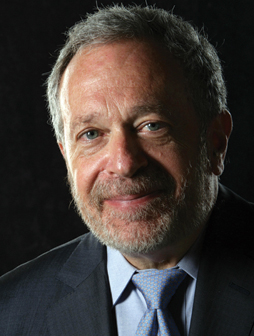
how many more intelligent people need to come out before this insanity ends????????????????????????????????
by CAROLINE MAY
12 Aug 2014
“We are directly responsible” for the ongoing crisis of unaccompanied children illegally entering the U.S., according to former Clinton Labor Secretary Robert Reich.
“Look the minors that are coming from Central America are not coming for no reason. There is a surge because they are, many of them, if not most of them are refugees from a war. It’s a drug war. It’s a drug war that we are directly implicated in,” Reich told Fusion in an interview published Monday.
Since October more than 62,900 unaccompanied minors have been detained illegally entering the United States. The vast majority of the illegal immigrant minors are from Central America.
According to the former labor secretary, it is time to consider decriminalization of drugs as a way to confront the drug market.
“What we don’t talk about enough is the connection between that failed policy and all of these kids from Central America who are showing up on our border,” he said in his Fusion
interview. “We’ve got to have a serious discussion in this country about decriminalizing and regulating these drugs rather than making them criminal, creating this black market that is increasingly violent and doing more and more damage in Central America.”
He added that the unaccompanied minors should be allowed to stay in the U.S. if they are found to be “refugees from the Drug War.”
“Those kids who are coming to the United States, if they are refugees from the Drug War, we ought to find out, very quickly have a hearing process to determine whether they are,” he said. “If they are it’s inhumane to sent them back if they’re going to be killed when they go back.”
http://www.breitbart.com/Big-Govern...f-Unaccompanied-Minors-Illegally-Entering-U-S
......................................................................................................................................................
Robert Reich
how many more intelligent people need to come out before this insanity ends????????????????????????????????
NSFW:
He attended Dartmouth College, graduating with an A.B. summa cum laude in 1968 and winning a Rhodes Scholarship to study Philosophy, Politics, and Economics at the University of Oxford.[11]
While at Dartmouth, Reich is reported to have gone on a date with Hillary Rodham, the future Hillary Clinton, then an undergraduate at Wellesley College.[12] While a Rhodes Scholar at Oxford, Reich first met Bill Clinton, also a Rhodes Scholar . Although he was drafted to serve in the Vietnam war, he did not pass the physical as he was under the required minimum height of five feet.[13] Reich subsequently earned a J.D. from Yale Law School, where he was an editor of the Yale Law Journal. At Yale, he was classmates with Bill Clinton, Hillary Clinton, Clarence Thomas, Michael Medved and Richard Blumenthal.[14]
From 1973 to 1974 he served as law clerk to Judge Frank M. Coffin, Chief Judge of the U.S. Court of Appeals for the First Circuit, and from 1974 to 1976 was Assistant to the U.S. Solicitor General, Robert Bork. In 1977, President Jimmy Carter appointed him Director of the Policy Planning Staff at the Federal Trade Commission.
From 1980 until 1992, Reich taught at the John F. Kennedy School of Government at Harvard University, where he wrote a series of influential books and articles, including The Next American Frontier and The Work of Nations. In The Next American Frontier he blamed the nation's lagging economic growth on "paper entrepreneurialism"—financial and legal gamesmanship that drained the economy of resources needed for better products and services.
In The Work of Nations he argued that a nation's competitiveness depends on the education and skills of its people and on the infrastructure connecting them with one another, rather than on the profitability of companies headquartered within it. Private capital, he said, was increasingly global and footloose, while a nation's people—its human capital—constituted the one resource on which the future standard of living of a nation uniquely depended. He urged policy makers to make such public investments the cornerstone of economic policy.
Bill Clinton incorporated Reich's thinking into his 1992 campaign platform, "Putting People First," and after being elected invited Reich to head his economic transition team. Reich later joined the administration as Secretary of Labor. During his tenure, he implemented the Family and Medical Leave Act (FMLA), successfully promoted increasing the minimum wage, successfully lobbied to pass the School-to-Work Jobs Act, and launched a number of job training programs.
In addition, Reich used the office as a platform for focusing the nation's attention on the need for American workers to adapt to the new economy. He advocated that the country provide more opportunities for workers to learn more technology.
Reich was born with multiple epiphyseal dysplasia, also known as Fairbanks disease, and as a result is 4 feet 10.5 inches (148.6 cm) tall. He has at times frankly discussed this fact about himself, often with a twist of humor. He once appeared with the 6 ft 4 in (193 cm) Conan O'Brien in a sketch on Late Night with Conan O'Brien.[15][16]
In 2012, Reich divorced British-born Clare Dalton, whom he married in 1973, and with whom he has two children, Sam and Adam.[17]
After the Clinton administration[edit]
In 1996, between Clinton's re-election and second inauguration, Reich decided to leave the department to spend more time with his sons, then in their teen years. He published his experiences working for the Clinton administration in Locked in the Cabinet. After publication of the book, Reich received criticism for embellishing events with invented dialogue. The paperback release of the memoir revised or omitted the inventions.[18]
Reich became a professor at Brandeis University, teaching courses for undergraduates as well as in the Heller School for Social Policy and Management. In 2003, he was elected the Professor of the Year by the undergraduate student body.
In 2002, he ran for Governor of Massachusetts. He also published an associated campaign book, I'll Be Short. Reich was the first Democratic candidate for a major political office to support same-sex marriage. He also pledged support for abortion rights and strongly condemned capital punishment. His campaign staff was largely made up of his Brandeis students. Although his campaign had little funding, he surprised many and came in a close second out of six candidates in the Democratic primary with 25% of the vote.
In 2003, he was awarded the prestigious Václav Havel Foundation VIZE 97 Prize, by the former Czech President, for his writings in economics and politics.[19]
In 2004, he published Reason: Why Liberals Will Win the Battle for America, a book on how liberals can forcefully argue for their position in a country increasingly dominated by what he calls "radcons", or radical conservatives.
In addition to his professorial role, he is a weekly contributor to the American Public Media public radio program Marketplace, and a regular columnist for the American Prospect, which he co-founded in 1990.[20] He is also a frequent contributor to CNBC's Kudlow & Company and On the Money.
In early 2005, there was speculation that Reich would once again seek the Democratic nomination for Governor of Massachusetts. He instead endorsed the then-little-known candidacy of Deval Patrick, who had previously served as Assistant Attorney General for Civil Rights in the Clinton Administration. Patrick won the party's endorsement, a three-way primary with nearly 50% of the vote, and the general election in November 2006.
In September 2005 Reich testified against John Roberts at his confirmation hearings for Chief Justice of the United States Supreme Court.
On January 1, 2006 Reich joined the faculty of UC Berkeley's Goldman School of Policy. Since then, he has taught a popular course called Wealth and Poverty, which he developed during his tenure at Brandeis.[21] In addition to his professorship, Reich is also a Member of the Board of Trustees for the Blum Center for Developing Economies at the University of California, Berkeley.[22] The Center is focused on finding solutions to address the crisis of extreme poverty and disease in the developing world.[23]
Two years later his book Supercapitalism: The Transformation of Business, Democracy, and Everyday Life was published. In it he argued turbo-charged corporate competition, fueled by consumers and investors seeking the best possible deals from anywhere in the world, was generating severe social problems. But governments were failing to address them because big corporations and Wall Street firms were also seeking competitive advantage over one another through politics, thereby drowning out the voices of ordinary citizens. The answer was to keep corporations focused on making better products and services and keep them out of politics. "Corporate Social Responsibility" is essentially forbearance from activities that undermine democracy.
During the 2008 primaries, Reich published an article that was extremely critical of the Clintons, referring to Bill Clinton's attacks on Barack Obama as "ill-tempered and ill-founded," and accusing the Clintons of waging "a smear campaign against Obama that employs some of the worst aspects of the old politics."[24]
On April 18, 2008 Reich endorsed Barack Obama for President of the United States.[25]
On April 3, 2009, Reich commented that published U6 employment figures indicate that the United States is in a depression.[26]
In September 2010, his book Aftershock: The Next Economy and America's Future was published. In it, Reich explained how America's widening inequality had contributed to the great recession and made it difficult for the economy to recover, by undermining the purchasing power of the middle class relative to the nation's productive capacity. In April 2012, his book Beyond Outrage was published as an e-book. In Beyond Outrage Reich focused on why an increasing portion of the public felt the game was rigged in favor of those with wealth and power, why the "regressive right" was nonetheless able to persuade many that taxes should be lowered even further on corporations and the wealthy while many public services should be cut, and what average people could do to take back the economy and reclaim democracy.
Last edited:


