




poledriver
Bluelighter
- Joined
- Jul 21, 2005
- Messages
- 11,543
Can Shame Be Useful?
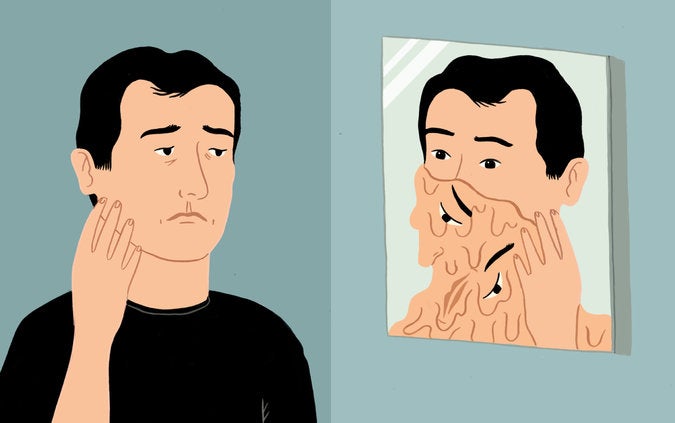
MODERN American culture is down on shame — it is, we are told, a damaging, useless emotion that we should neither feel ourselves nor make others feel. This is particularly the case when it comes to drug and alcohol addiction. The nation’s drug czar, Michael Botticelli, has led a well-intentioned campaign to eradicate feelings of shame in addicted people by, in part, likening addiction to cancer, a disease outside of people’s control.
But in fact, the experience of shame — the feeling that one has failed to live up to one’s own standards — can play a positive role in recovery from addiction, as well as from other kinds of destructive habits.
Certainly, as a psychiatrist and psychologist, respectively, we have observed the corrosive effects of shame on patients with conditions over which they have scant control, especially those with schizophrenia and bipolar disorder. And like most people, we consider it unethical, cruel and clinically pointless to disparage or judge people whose disorders — severe mental illness, cancer — are largely or entirely impossible to modify by the sheer force of will.
But addiction is different. In sharp contrast to schizophrenics, the afflicted person can take at least partial control of it.
Although heavy and repeated drug use alters the brain, especially regions that mediate self-control, the essential question is not whether those neural changes occur. Instead, it is whether they necessarily disable a person’s capacity to reason and to respond to carrots and sticks.
A vast literature shows that addiction is an activity whose course can be altered by its foreseeable consequences, including tangible rewards for cutting down on use. In contrast, no amount of reinforcement or punishment can alter the course of an entirely autonomous biological condition, like cancer. You would never bribe a patient with breast cancer to keep her tumor from spreading, or threaten to impose a penalty on her if it did.
Indeed, addicts make scores of choices every day. Most heroin addicts, for example, perform some kind of gainful work between shooting up. In the days between binges, cocaine addicts make many decisions as well. One of those decisions could be to enter treatment or to stop on their own.
This is not to say that quitting is easy; most people who enter treatment are deeply conflicted about giving up their habits. Still, many addicts have been motivated to quit by a spasm of self-reproach. In his addiction memoir “The Night of the Gun,” the New York Times columnist David Carr recounted how he decided to kick his drug habit after he realized how profoundly irresponsible he’d been when he locked his twin baby girls in a car while he met with his dealer to score crack.
So under what conditions does shame end up prodding people into correcting their course? Alternatively, when does intense self-criticism make matters worse by further fueling an addiction (for example, drinking even more to mute the pain of those shameful feelings)?
An important influence appears to be whether people buy into the notion that a habit is under or out of their control. In a meta-analysis — a mathematical synthesis of previous studies — just published in The Journal of Personality and Social Psychology, the University of Connecticut psychologist Colin Leach and one of his doctoral students, Atilla Cidam, examined the links between shame and “constructive approach behaviors,” such as helping or cooperating with others, apologizing and making amends for one’s failures.
They found that study participants who were vulnerable to experiencing shame were less inclined to engage in corrective actions when they believed their mistakes were not fixable, such as when they had no opportunity to apologize to someone they’d offended. In contrast, participants were more inclined to engage in positive behaviors when they thought their errors could be repaired.
The lesson is that shame can act as a spur to amend self-inflicted damage when people perceive that damage is fixable and manageable. In light of this finding, comparing addiction to a purely biological disorder, like cancer, might backfire, leading people to see their habits as unalterable.
None of this is to say that the culture, as a whole, needs to embrace the scarlet letter. But it does mean that therapists can harness patients’ sense of shame to help them. Consider the patient who feels ashamed because she was “a bad mother” — say, she took risks like routinely leaving her baby in the care of abusive adults. She should be helped to realize not only that her shame is realistic, but also that emotions can be signals. In this case, shame is a signal that the best way to mend and manage feelings of self-reproach is to fully commit herself to protecting her children and gaining their trust.
In other instances, shame is unwarranted and damaging. A classic example is a patient whose feelings of shame take the form of a conviction that she is inherently unlovable. It is critical for the therapist to help the patient distinguish such inappropriate shame, which goes to the core of self-worth, from realistic self-appraisals that guide restorative actions.
Despite its bad reputation, shame is an emotion like most others: It can be beneficial under certain circumstances. If people believe they can change, then shame might help bring that change about.
* Sally L. Satel, a psychiatrist and a resident scholar at the American Enterprise Institute, and Scott O. Lilienfeld, a professor of psychology at Emory University, are the authors of “Brainwashed: The Seductive Appeal of Mindless Neuroscience.”
Continue reading the main story
RECENT COMMENTS
SEE ALL COMMENTS
http://www.nytimes.com/2016/01/24/opinion/sunday/can-shame-be-useful.html?_r=0




