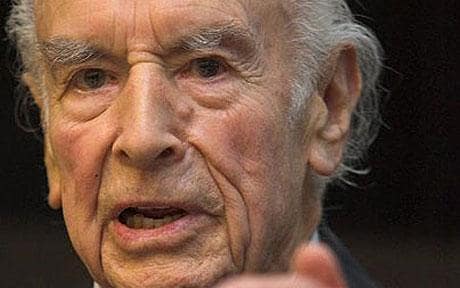
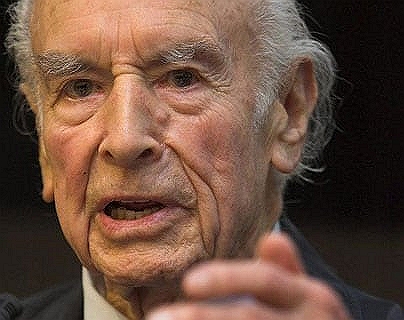
Who was Albert Hofmann?*
by Jeff Glorfeld | COSMOS | 28 May 2022
In a 2007 article, Britain’s Daily Telegraph newspaper named Swiss chemist Albert Hofmann and Tim Berners-Lee, the British computer scientist often called the inventor of the internet, as equal first in its list of the “top 100 living geniuses.”
To most people, Hofmann is primarily known as the man who first synthesised the crystalline compound lysergic acid diethylamide, the hallucinogenic drug better known as LSD.
But far more than an avatar of “acid”, as the drug became commonly known, Hofmann was an inspired chemist with many important discoveries to his name.
He was born in Baden, in northern Switzerland, on January 11, 1906. He studied chemistry at Zurich University, he said, because “he wanted to explore the natural world at the level where energy and elements combine to create life”, the New York Times wrote in its obituary for Hofmann, published on April 30, 2008.
He earned his PhD in Zurich in 1929 and then took a job with Sandoz Laboratories in Basel, attracted by a program there that sought to synthesise pharmacological compounds from medicinal plants.
The Telegraph described some of Hofmann’s less flamboyant discoveries, including hydergine, a substance for improving circulation and cerebral function, and dihydergot, a circulation and blood-pressure stabilising medicine.
His interest in synthesising LSD initially derived from the hope that it might also be useful as a circulatory and respiratory stimulant.
In the forward to his best-known book, LSD: My Problem Child, published in 1979, Hofmann described a childhood experience in a forest on a May morning in Switzerland: “I was filled with an indescribable sensation of joy, oneness, and blissful security.”
He continued: “I was often troubled in those days, wondering if I would ever, as an adult, be able to communicate these experiences … Because I wanted to gain insight into the structure and essence of matter, I became a research chemist.”
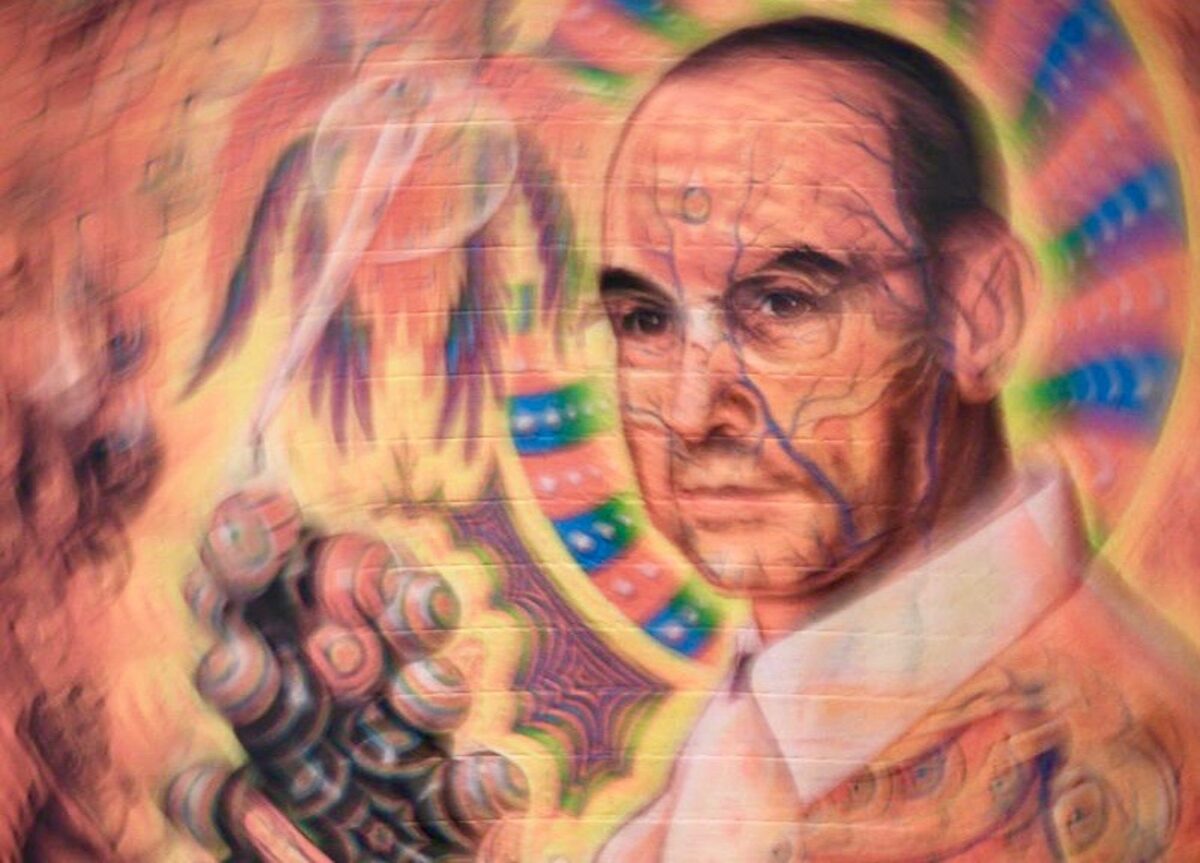
Off and on for some time he’d been working on a substance he called LSD-25. On April 16, 1943, he experienced an “accidental” dosing of the substance. In the book, Hofmann provided his laboratory journal entry for April 19, 1943, the day he intentionally tested LSD on himself.
4/19/43 16:20: 0.5 cc of 1/2 promil aqueous solution of diethylamide tartrate orally = 0.25 mg tartrate. Taken diluted with about 10 cc water. Tasteless.
17:00: Beginning dizziness, feeling of anxiety, visual distortions, symptoms of paralysis, desire to laugh.
Supplement of 4/21: Home by bicycle. From 18:00- ca.20:00 most severe crisis.
Since 1985, fans of Hofmann’s discovery have celebrated April 19 as “Bicycle Day.”
In a 2006 interview, the New York Times reported, Hofmann said that LSD had not affected his understanding of death. In death, he said, ‘I go back to where I came from, to where I was before I was born, that’s all’.”
Albert died at his home, near Basel, Switzerland on April 29, 2008. He was 102.
*From the article here :
 cosmosmagazine.com
by Jeff Glorfeld | COSMOS | 28 May 2022
In a 2007 article, Britain’s Daily Telegraph newspaper named Swiss chemist Albert Hofmann and Tim Berners-Lee, the British computer scientist often called the inventor of the internet, as equal first in its list of the “top 100 living geniuses.”
To most people, Hofmann is primarily known as the man who first synthesised the crystalline compound lysergic acid diethylamide, the hallucinogenic drug better known as LSD.
But far more than an avatar of “acid”, as the drug became commonly known, Hofmann was an inspired chemist with many important discoveries to his name.
He was born in Baden, in northern Switzerland, on January 11, 1906. He studied chemistry at Zurich University, he said, because “he wanted to explore the natural world at the level where energy and elements combine to create life”, the New York Times wrote in its obituary for Hofmann, published on April 30, 2008.
He earned his PhD in Zurich in 1929 and then took a job with Sandoz Laboratories in Basel, attracted by a program there that sought to synthesise pharmacological compounds from medicinal plants.
The Telegraph described some of Hofmann’s less flamboyant discoveries, including hydergine, a substance for improving circulation and cerebral function, and dihydergot, a circulation and blood-pressure stabilising medicine.
His interest in synthesising LSD initially derived from the hope that it might also be useful as a circulatory and respiratory stimulant.
In the forward to his best-known book, LSD: My Problem Child, published in 1979, Hofmann described a childhood experience in a forest on a May morning in Switzerland: “I was filled with an indescribable sensation of joy, oneness, and blissful security.”
He continued: “I was often troubled in those days, wondering if I would ever, as an adult, be able to communicate these experiences … Because I wanted to gain insight into the structure and essence of matter, I became a research chemist.”
Off and on for some time he’d been working on a substance he called LSD-25. On April 16, 1943, he experienced an “accidental” dosing of the substance. In the book, Hofmann provided his laboratory journal entry for April 19, 1943, the day he intentionally tested LSD on himself.
4/19/43 16:20: 0.5 cc of 1/2 promil aqueous solution of diethylamide tartrate orally = 0.25 mg tartrate. Taken diluted with about 10 cc water. Tasteless.
17:00: Beginning dizziness, feeling of anxiety, visual distortions, symptoms of paralysis, desire to laugh.
Supplement of 4/21: Home by bicycle. From 18:00- ca.20:00 most severe crisis.
Since 1985, fans of Hofmann’s discovery have celebrated April 19 as “Bicycle Day.”
In a 2006 interview, the New York Times reported, Hofmann said that LSD had not affected his understanding of death. In death, he said, ‘I go back to where I came from, to where I was before I was born, that’s all’.”
Albert died at his home, near Basel, Switzerland on April 29, 2008. He was 102.
*From the article here :
From the vault: Albert Hofmann trips the light fantastic
Albert Hofmann was the chemist discovered the hallucinogenic drug LSD and kickstarted the counter-culture. But who was he, really?
cosmosmagazine.com
Last edited: