



• Psychedelic Drugs Welcome Guest
    View threads about
    Posting RulesBluelight Rules
    PD's Best Threads Index
    Social ThreadSupport Bluelight
    Psychedelic Beginner's FAQ
  • PD Moderators: Esperighanto | JackARoe |

Phenethylamines 2C-B, worth trying on its own?

Just to confirm, in this case you mean AL-LAD, not some strange N-allyl amide? If so, your numbering is off - AL-LAD is 6-substituted.

165px-Ergolin_num_ABCD.svg.png


And of course I know which compound you mean with the (R)-sec-butyl amide. I'll try to hunt down your reference though, although I'm not sure if I want to believe that. It seems like Nick Sands never really had much qualms about breaking the law, so I hardly believe he wouldn't make the real deal, which is more conserving of the precursor anyways, due to greater potency.

Regarding that other data, to cite from the paper:
"It is important to note that all functional assays in this study were conducted using reconstituted systems, BRET-based biosensors, and in non-neuronal cell lines. While these systems provide precise, quantifiable insights into receptor transducer coupling and ligand bias, they may not fully capture the complexity of signaling networks present in native tissues. Therefore, the pharmacological properties observed in vitro could be more complex in vivo."

Yes, to the best of my knowledge the above scaffold resarch has gone into:

1-Different amides at the 8 position which demonstrate homologues as diverse as the (R)-sec-butyl (patented in 1962, legally controlled in 1996)) through the classic diethyl as demonstrated by LSD (legally controlled in 1970) and on to more modern (S,S)-2,4-dimethyl azetidide homologue (which as far as I know has the highest 5Ht2a affinity (in the absence of other modifications) and on to the various other amides (which I presume is because they remain legal in the nations where they are produced). As I understand it, the role of alkyl group(s) the amide is simply space-filling and some do it better than others so potency may alter. There LogP and metabolism by also differ but for decades they were ALL sold as LSD. Now the precice dose on a blotter may well have to me modified, but I'm unconvinced that they were significantly different QUALITATIVELY.

2-Different alkanes and alkenes at the 6 position is where various alkanes, cycoloalkane and alkenes result in different analogues and where the subjective character of the compound can be modified quite significantly. I only know of the N-ethyl is regarded as the most potent (all other moieties being unaltered) but which I know of the N-methyl (as nature provides), and the N-propyl, N-cyclopropyl and N-allyl all of which are reported to provide significantly different experiences.

3-The indole nitrogen at the 1 position of the indole moiety is where chemists have added an an amide or alkyl moiety to provide prodrugs. So they will be less potent by weight (having that higher MW) and also being prodrugs, may alter the onset and duration of the active. I assume that the various substitutions here are purely to ensure that the compound is legal in the nation of manufacture. Certainly ALD52 was made by Nick Sands and sold as 'Orange Sunshine' but only later was it referred to by it's IUPAC name when the makers were taken to task by the US government. I think I mentioned this but the DEA successfully argued that ALD52 could only have been made using LSD as a precursor. So Nick Sands had 'history' of trying to make legal analogues.

So without a doubt, those in point 2 are well known to produce significantly different experiences. Certainly Shulgin found no need to test the modifications in points 1 and 3. even though I find it hard to believe he wasn't well aware of the modicifations mentioned in in points 1 and 3. Now who knows if he was mistaken and there are subjective differeces - but at least the 1 amidation would have been trivial chemistry so I would have expected him to produce them if he saw value in that effort.

But I think the most compellling argument is that as I mentioned, prodrugs of the much simpler tryptamines would be equally viable but I think more importantly, we all know that with the chemically simpler tryptaines, dimethyl tryptamine, diethyl tryptamine, dipropyl trptamine and even diallyl tryptamine have vastly different subjective effects. With the lysergamides, it's tricky to suggest if that second N substituent (part of the scaffold) is more like a methyl, ethyl, allyl or other so I could equally have said methylethyl tryptamine, methylpropyl tryptamine or methylallyl trypamiine... or ethyppropyl tryptamine, dipropyl tryptamine, propylallyl tryptamine and so on. But we at least do have far more data on those.

Important note: IUPAC naming has changed over the decades but I would hope that someone who has studied the field to appreciate that (R)-decbutyl may NOW be known by a different IUPAC name but was not at the time and certainly not in the patent. So accusing someone of using incorrect IUPAC naming could be a artifact of a person not knowing that IUPAC has altered. But if both parties understand, Isn't that the important thing? In fact, when you begin to add moieties to the scaffold, numbering sometimes changes, but I stuck with your numbering for clarity.

My simple concludion is that the vast majority of the lysergamides are reasonably safe (in terms of acute toxicity) even when taken to excessive doses, but some of the NBomb family can be dangerous. It comes as no surprise to be that orally they are far less active as the liver has enzymes to N-debenzlate secondary aminnes so I suggest it's pushed users towards ROAs that avoid first pass metabolism and there lies the danger. By definition there is no such thing as a safe drug but I don't think you can argue with forensic analysis. I'm uncertain that anyone had died due to the toxicity of the lysergamides, but the NBomes appear to pose a danger to people who choose to use them.

I was rather pleased that someone bothered to compile such a detailed set of data concerning these classees. I'm sure it wasn't bad science, but for my money, I reallly would love to conduct a double-blind human study into the modications in points one and three. I would expect to see slight subjective differences but I would be surprised if people were able to confirm one or the over in a reliable manner unless experienced in all the compounds. Subtle at best, I suspect.

After all, if you are involved in the sale of a product, OBVIOUSLY you are going to claim it's the best one Psychedelics are riddled with myths. If you are TOLD it's better... well, the placebo effect is a thing.

Sorry to ramble on but I felt I should explain my underlying logic. Harm reduction being a key goal of Bluelight.

BTW Chemsketch was free last time I looked and can be a caluable tool because frankly, while learning how to IUPAC naming was of value, it's changed within my lifetime and will likely change again. But I used the numbering you provided to give you the insights I have gained.

Anyway, somewhat off the 2CB thread this was meant to be...
 
Last edited:

I think Shulgin never really did the ergoline chemistry in his laboratory. Instead, he white-washed reports from the Nichols laboratory and their chemistry. Reading the Pharmacology Notebooks found on Erowid sure is very insightful (https://www.erowid.org/library/books_online/shulgin_labbooks/). I particularly recommend reading the report on "Eric Holland's" LSD (gee, I wonder who that is) vs. their old stash of Sandoz LSD - p. 456, Pharmacology Notebook D. It is a fun anecdote. But in general, if you take a look at TiHKAL and compare to PiHKAL, it seems like the Shulgins ran out of steam a little bit. Interestingly, Wendy Tucker (daughter of Ann Shulgin) once said that Ann was more of a phenethylamine person, while 'Sasha' was drawn more towards the tryptamines. Of course I have no way to verify that. I've heard from people close to 'Sasha' that his favourite compound was indeed LSD though. Again, not sure if he himself ever said that in an interview or anything. Interestingly, in the interview of Robert Oberlender by Morris (see Oberlender interview YouTube, time: 54:29), Dr. Oberlender claims the precursor for the early lysergamide chemistry work in the Nichols lab was given by Shulgin, who has gotten it from... ...and then he halts the sentence suspiciously.

My question was really just for you to clarify which compound you meant with the training wheels - I assume you mean the N6-allyl compound (i.e. AL-LAD), rather than a (afaik yet to be made) N-allyl lysergic acid amide (different amide substitution on carbonyl dangling of C8). If you indeed mean AL-LAD, can you please confirm this in a full sentence? Btw, regarding changes in nomenclature: I just opened "Die Mutterkornalkaloide" by Hofmann, printed 1964, and sure enough, the numbering has stayed the same of these ergoline compounds.

Talking about amide substitution, I found it interesting that Ballz_Trippington mentioned said suspected LSB was aphroidisiac. I've recently got a small sample of an interesting LSD analogue with slightly altered amide residues (which compound will have to be disclosed once I finish my bioassaying) of which basically the only information I have is that it makes incredibly horny. However, I remain doubtful until tested.

By the way, it's not only the UK and US with a proactive approach. Many western nations have adopted analogue laws by now, unfortunately for the research chemical community NL has joined the ranks...

My simple concludion is that the vast majority of the lysergamides are reasonably safe )in terms of acute toxicity) even when taken to excessive doses, but some of the NBomb family can be dangerous. It comes as no surprise to be that orally they are far less active as the liver has enzymes to N-debenzylate secondary aminnes so I suggest it's pushed users towards ROAs that avoid first pass metabolism and there lies the danger. By definition there is no such thing as a safe drug but I don't think you can argue with forensic analysis. I'm uncertain that anyone had died due to the toxicity of the lysergamides, but the NBomes appear to pose a danger to people who choose to use them.

Yes, I agree that the NBOx class is certainly much more dangerous than the known compounds of the lysergamide class. But I do think your earlier speculation that it has to do with off-target binding is wrong. I'm not a pharmacologist either, but my money is on 5-HT2A activation being a driving factor for the toxicity. Of course my claims are only based on binding data of the unmetabolised compound, so who knows what is truly happening. I'd love to know - maybe it would be possible to invent compounds of similar potency with less toxicity.
 
Last edited:
I think Shulgin never really did the ergoline chemistry in his laboratory. Instead, he white-washed reports from the Nichols laboratory and their chemistry. Reading the Pharmacology Notebooks found on Erowid sure is very insightful (https://www.erowid.org/library/books_online/shulgin_labbooks/). I particularly recommend reading the report on "Eric Holland's" LSD (gee, I wonder who that is) vs. their old stash of Sandoz LSD - p. 456, Pharmacology Notebook D. It is a fun anecdote. But in general, if you take a look at TiHKAL and compare to PiHKAL, it seems like the Shulgins ran out of steam a little bit. Interestingly, Wendy Tucker (daughter of Ann Shulgin) once said that Ann was more of a phenethylamine person, while 'Sasha' was drawn more towards the tryptamines. Of course I have no way to verify that. I've heard from people close to 'Sasha' that his favourite compound was indeed LSD though. Again, not sure if he himself ever said that in an interview or anything. Interestingly, in the interview of Robert Oberlender by Morris (see Oberlender interview YouTube, I don't know the time stamp), Dr. Oberlender claims the precursor for the early lysergamide chemistry work in the Nichols lab was given by Shulgin, who has gotten it from... ...and then he halts the sentence suspiciously.

My question was really just for you to clarify which compound you meant with the training wheels - I assume you mean the N6-allyl compound (i.e. AL-LAD), rather than a (afaik yet to be made) N-allyl lysergic acid amide (different amide substitution on carbonyl dangling of C8). If you indeed mean AL-LAD, can you please confirm this in a full sentence? Btw, regarding changes in nomenclature: I just opened "Die Mutterkornalkaloide" by Hofmann, printed 1964, and sure enough, the numbering has stayed the same of these ergoline compounds.

Talking about amide substitution, I found it interesting that Ballz_Trippington mentioned said suspected LSB was aphroidisiac. I've recently got a small sample of an interesting LSD analogue with slightly altered amide residues (which compound will have to be disclosed once I finish my bioassaying) of which basically the only information I have is that it makes incredibly horny. However, I remain doubtful until tested.

By the way, it's not only the UK and US with a proactive approach. Many western nations have adopted analogue laws by now, unfortunately for the research chemical community NL has joined the ranks...


Yes, I agree that the NBOx class is certainly much more dangerous than the known compounds of the lysergamide class. But I do think your earlier speculation that it has to do with off-target binding is wrong. I'm not a pharmacologist either, but my money is on 5-HT2A activation being a driving factor for the toxicity. Of course my claims are only based on binding data of the unmetabolised compound, so who knows what is truly happening. I'd love to know - maybe it would be possible to invent compounds of similar potency with less toxicity.

Yeah - I think Shulgin was limited in what resources he could acquire, but I suggest he did concentrate on the one modification that provided the most information.

The LSD 'with training wheels' was proported to be 8-norallyl LSD. So only that modification Shulgin mentioned is altered. But recently others have stated that the 8-nor-n-propyl analogue is very similar.

I think the problem with lysergamides is that expectation plays a large part but one would require a double-blind human experiment to really know if that's something unique to that person or a general alteration of activity.

On aother thread I noted that a Swedish (?) vendor had been sent 2C-B Dragonfly marked as 2C-B fly and if memory serves, it killed them along with six customers and sent a dozen more to the hospital. I deeply respect the work of Ralf Helm but I suppose like Albert Hoffmann, he cannot be pleased to be associated with a 'notorious' drug. But you watch - give it a couple of decades for drug users to decide that Helm invented a new class of 'spiritual compound' and Ralf will be selling lecture tickets. To be fair, both him and Nichols have kept themselves largely out of site, which I respect. But I have an awful feeling that like it or not, there names alone will sell tickets.
 
You are indeed a bit stubborn with the numbering 🤣, but I'll accept this as meaning AL-LAD (6-nor-6-allyl-LSD: https://en.m.wikipedia.org/wiki/AL-LAD).

That accident you refer to was Haupt RC, from Denmark, who sent out Bromo-DragonFLY (benzodifuran DOB analogue) instead of 2C-B-FLY (benzotetrahydrodifuran 2C-B analogue) and paid the ultimate price, as well as some of his customers.

It is really interesting, Nichols seems to distance himself from the crowd surrounding Shulgin from all I've heard. Yet it his clear he isn't entirely "innocent" either. Ralf Heim seems to work in industry. I've heard some rumours of 25I-NBOMe human bioassays suspiciously close to FU Berlin before they were "hip" though. I don't know if Dr. Heim was among these brave people though.

Most NBOMe users have not heard of Heim though, they are often associated with Nichols despite him not inventing them. And most NBOMe users (not all) would declare the lack of spirituality within this class to be precisely the fun aspect of them.
 
You are indeed a bit stubborn with the numbering 🤣, but I'll accept this as meaning AL-LAD (6-nor-6-allyl-LSD: https://en.m.wikipedia.org/wiki/AL-LAD).

That accident you refer to was Haupt RC, from Denmark, who sent out Bromo-DragonFLY (benzodifuran DOB analogue) instead of 2C-B-FLY (benzotetrahydrodifuran 2C-B analogue) and paid the ultimate price, as well as some of his customers.

Leasons learned on both sides.

For You -add that amide and the numbering alters.
For me - never trust the Danish ;-)

BTW I just checked Tihkal and Shulgin does mention ALD52, he noted the slight differences and decided it wasn't worth the effort of even making it. Some reports claiming it to be totally different... others claiming it made no difference whatsoever. In those cases I suggest that genetic variability might have altered how quickly the hydrolysis takes place) and/or on the expections of the users.
 
Yes, I agree that the NBOx class is certainly much more dangerous than the known compounds of the lysergamide class. But I do think your earlier speculation that it has to do with off-target binding is wrong. I'm not a pharmacologist either, but my money is on 5-HT2A activation being a driving factor for the toxicity. Of course my claims are only based on binding data of the unmetabolised compound, so who knows what is truly happening. I'd love to know - maybe it would be possible to invent compounds of similar potency with less toxicity.

Forgive me not taking in the last part of your post.

I think it's quite well established that agents less selective in which of the 5HT receptors a compound binds with can produce toxicity. I mean, aminorex is the oldest one I know of but fenfluramine is another example and I'm a little dubious of that whole 'Benzo Fury' thing because as I understand it, synthesis of the intermediate carboxamide moiety results in positional isomers being formed:


Now I suspect that given the way that such compounds are consumed, the risk isn't that large but it would be interesting to learn their activities and metabolisms.
 
I don't think I need to learn that lesson, as that "tryptaminic" nitrogen is always N6 in ergolines. It's just how this scaffold is being counted, obviously starting the count from the indolic N1... I have not ever found it called 8 in any of the literature I came across. If you ever come across literature where this nitrogen within the ergoline scaffold is called "8", I'll stand corrected on that matter ;) But no need to argue over this. I'm just a bit confused why you are so convinced your unconventional numbering scheme is correct (as clearly you have a background in chemistry), but maybe there is indeed some older literature I'm not familiar with.

And indeed, never trust the Danish people - although (and I'm afraid the German "humour" will be lost):


In regards to NBOMes, the unmetabolised compound is indeed more selective than other psychedelics, as seen in the data a couple posts above. Of course there could be some toxification during metabolism, but I'm personally convinced much of the toxicity may be mediated by 5-HT2A itself, rather than some off-target binding.
 
Funky 1970s threads. I got some of it.

I collect German words from time to time. I want to know why we don't ALL use the word 'krankenhaus' as it's pretty accurate way of saying it. Why isn't 'außergewöhnlic' more popular? it's an AMAZING word!

BTW of course there are 5HT2a receptors in other parts of the body and I've noted that some very similar compounds were touted as the next 'silver bullet' when it came to weight loss. It reached human trials and disappeared. I would love to know if it was the compound itself or metabolite thereof. I note the lysergamides and tryptamines are classed as partial agonists. I'm just trying to figure out what ligand was used for reference as it does make me wonder if (2R)-N,N-dimethyl-1-(7-methyl-1H-indol-3-yl)propan-2-amine AKA (R) 7,alpha dimethyl trytamine WOULD be a safer MDMA alternative. While the (R) enantiomer has far lower 5HT2a affinity than the (S) enantiomer... it is quite a robust serotonin releaser/reuptake inhibitor.

Elsewhere I demonstrated that in fact it overlays (S) MMA (3-methoxy-4-methyl amphetamine) and that turned up in a seizure (forfeiture) in Italy during the 1970s (I believe Pihkal mentions the fact). Now AFAIK it wasn't legally controlled in itally but it had been sold as MDMA. I gave away my copy of that book decades ago so I could well be wrong on the details.
 
Last edited:
Jesus that was bad. Never doing that again. I overdosed very severely yesterday, Boofed 125mg heart started beating out of my chest like a jackhammer and I started throwing out all my drawers searching everywhere for my xanax while I was entering a very severe ego death. Started getting so confused didnt know what to do tried to climb into my bed but started forgetting basic concepts so I just ended up lying or falling on the floor dont quite remember. Dont know how long I was in that position for but I managed to stand up at like 2 AM. I was conscious and aware during the whole experience everything was just this overwhelming static that infiltrated every part of my mind that kept looping on repeat like an information bombardment so bad I was basically seizing. There were no shapes anymore everything was so dense it was just infinite static of every sense combined. Only other thing I remember is the sound of my cat purring very loudly and the feeling of her rubbing her face against me while I was lying face first on the ground. Be warned that 2cb is a drug that can cause DEFINITE overdoses and I am glad to be alive still.


I hope you learn and utilize some basic harm reduction practices.

You seem to use chaotically and recklessly and it's possible to work with that and minimize the likelihood of wrecking your body temporarily or permanently.

There are also solo use harm reduction practices that you and others can employ.
 
BTW of course there are 5HT2a receptors in other parts of the body and I've noted that some very similar compounds were touted as the next 'silver bullet' when it came to weight loss. It reached human trials and disappeared. I would love to know if it was the compound itself or metabolite thereof. I note the lysergamides and tryptamines are classed as partial agonists. I'm just trying to figure out what ligand was used for reference as it does make me wonder if (2R)-N,N-dimethyl-1-(7-methyl-1H-indol-3-yl)propan-2-amine AKA (R) 7,alpha dimethyl trytamine WOULD be a safer MDMA alternative. While the (R) enantiomer has far lower 5HT2a affinity than the (S) enantiomer... it is quite a robust serotonin releaser/reuptake inhibitor.
If you haven't seen this fresh patent yet, it may interest you:
 
2c-b is a good one -- I had a friend that fuckin IV'd it which I can't imagine (If I recall that one burns like holy hell if you snort it) but he said it was alot like MDMA mixed with LSD.. Orally it has some empactogen qualities as well.

First RC they made illegal I think? (I'm sure that isn't correct but first I can recall)

The body load is rough with any 2c-x product I have tried. I prefer the nbome but that is an unusual experience.
U prefer the nbome???
 
Sorry - to be clear, Nick Sands didn't alter the 8 position. He just swapped the diethylamine of LSD to R-Sec butyl. But the fact that he was making it for over 22 years sort of suggests nobody noticed. That was the point - he wasn't breaking Canadian law at the time. Of course, that LSD either knowingly or unknowingly (I suggest the latter because I damned well wouldn't MY product to be sold where it was illegal)
Discorvered my mistake, with my sleepy eyes, 8-allyl led me to 6-allyl.
Al-LAD. Still curious about 8-allyl, is it the same as [other naming] for R-Sec butyl.
Or a different Lysergic. Unknown ?
I suggest that ALD52 is likely to be nigh on identical. Because it's just a prodrug OF LSD.
It was, before MIPLA the most pleasant Lysergic i took, when i compare it.
With 1-p-LSD, its gentler, warmer, the mindset feels to me more natural,
as well the Psychedelic effect s. My supply dried up, but had plenty experiences.

IME, ALD-52 is unique, and if someone would ask advise.
Which 12 hours lasting Lysergic to take, this wold be the one.
Pro-drug makes total sense, on paper theoretically. But not in reality !

If they want shorter and/ or softer i d advise: Al-LAD and MIPLA.
The last especially to 1-st timer s. It s a pretty good companion.

I have also had dreams in Dutch where I was lost and everyone I could talk to could only speak Dutch.
Recognisable, after the seizures on Levetiracetam, side effect s:
-insomnia [cause of my seizures]
-nightmares
-lucid-dreaming
-Daytime agitation
-Suicidal idealisation

2 and 3 together made some weird dream-states.
1 catalysed them, so 2 nights awake sleep 1 repeat.
At the beginning, un-aware i was semi-conscious.
Soon as i found out they became interesting,
and no longer nightmares. Only flying was impossible.

Could set my hands on fire, jump extremely high.
But what was more important, they were a sort of healing.
The dream s progressed, got more and more under my control.
They were about my biggest trauma.

It was in DETOX, already on Valproic Acid.
They cured my insomnia, simple 5 day s Diazepam.
In descaling doses, 80 [too much]-40-30-20-10.
And then had my first non nightmare dream,
as if the trauma was repaired, the nightmares and insomnia.

Gone 🙏, and my faith in the body s capacity for self healing restored.
 
U prefer the nbome???

Yes absolutely. 2c-x the body load felt almost equipotent to a nbome dose. (Like 3mg of nbome and prolly more like 7mg of 2c-x same body load - almost none nbome IME) Taste - or pain of snorting non existent.

I really did not get anxiety on nbome either --- even the time I licked the inside of a g bag and thought I was gunna kick it forsure (AND IM LUCKY I DIDNT DO DO THAT) I remember falling asleep almost.

It is also worth noting this is the same period of times I had infinite benzo supply and I have never had an L supply that I could really 'not stress' on price or how much I took at a time ---- So those are factors forsure.
 
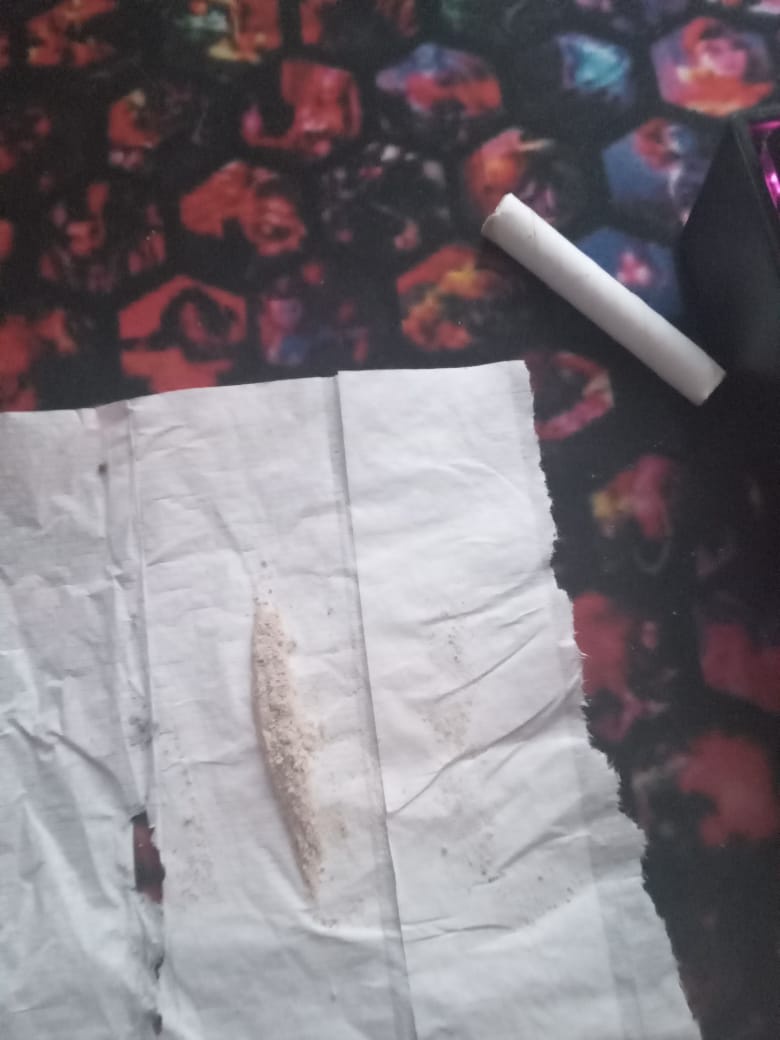
Huge line of 2cb down the hatch. Didn't measure it. Wish me luck.

dEGanvO.jpeg


Last time I did a line this size I had visuals on par to a complete 100% DMT breakthrough. The things I saw were out of this dimension yet I was still mentally there somehow and able to appreciate everything I was witnessing. I'm starting to seriously get hooked on this stuff
That's definitely a huge fucking dose of 2C-B. I've taken similar doses and have had similar experiences where it resembles a DMT breakthrough, except my mind was taken to the place that mescaline or allylescaline take me in high enough doses, seeing precognizant visions of my future and the sort. 2C-B Habituation is rarely spoken of, but I've witnessed it myself, it's prone to attracting those who specifically need a mania inducer to combat depression in my personal experience. I prefer low doses of ketamine, stimulants, 2C-B, or sometimes more energetic benzos (alprazolam, flualprazolam, etizolam, etc.) to do that for me.
The ONLY 2,5-dimethoxy-4-<something> compounds that interest me are 2CN and DON. Report on 2CN were that it was sort of OK with 'psychedelic tofu' was the term used. But DON is chiral and I really wonder if one enantiomer is a potent 5HT2a agonist (trippy) while the other is purely a monoamine modulator (so possibly more like MDA).
There were quite a few reports out of Eastern Europe back in the day about these compounds, the aldehyde was allegedly easily produced via nitration of 2,5-dimethoxybenzene, with the nitrogen predominantly attaching itself (conveniently) to the 4 position. 2C-N seemed pretty forgettable, but DON had some real diehard fans. Many people who used it as a daily stimulant claimed that it didn't form much tolerance iirc, someone called it "meth paper" once remarking on the duration of the stimulation and the fact that they had it on 5mg tabs.
The body load is rough with any 2c-x product I have tried. I prefer the nbome but that is an unusual experience.
25X-NBXX compounds overall are super slept on, but you and I make up some small contingency here on BL of people who adore them. They're insanely impactful and magical, I just wish we knew why once in a while, some people seem to lack the enzymes to survive a single dose, while most others are just fine. I keep NBXX's in the "inner circle" of people I know, whereas I've introduced tons of people I'm not incredibly close with to things like LSD, mushrooms, DMT, etc.
 
There were quite a few reports out of Eastern Europe back in the day about these compounds, the aldehyde was allegedly easily produced via nitration of 2,5-dimethoxybenzene, with the nitrogen predominantly attaching itself (conveniently) to the 4 position. 2C-N seemed pretty forgettable, but DON had some real diehard fans. Many people who used it as a daily stimulant claimed that it didn't form much tolerance iirc, someone called it "meth paper" once remarking on the duration of the stimulation and the fact that they had it on 5mg tabs.

5mg is a pretty hefty dose!

But it's almost certainly going to be the (R) enantiomer is responsible for the psychedelic effects and the (S) enantiomer is responsible for the stimulant activity. So maybe the raecemic compound could be resolved and the two enantiomers be sold as different products?

Dang, it sounds like the (S) enantiomer isn't more of an entactogen but I really do appreciate you dropping that information for me. It's something I've wondered about for something like 25 years and while it's a negative result, it's still a result - which is the most important thing.
 
5mg is a pretty hefty dose!

But it's almost certainly going to be the (R) enantiomer is responsible for the psychedelic effects and the (S) enantiomer is responsible for the stimulant activity. So maybe the raecemic compound could be resolved and the two enantiomers be sold as different products?

Dang, it sounds like the (S) enantiomer isn't more of an entactogen but I really do appreciate you dropping that information for me. It's something I've wondered about for something like 25 years and while it's a negative result, it's still a result - which is the most important thing.
I would assume that the product that was in question was produced as the racemate but there's no way to really tell since it was well in the past. Most reduction methods for DOx's leave you with a racemic product, even more niche ones like clandestinely performed Urishibara catalyzed reductions, which can smell like pennies and cigarette ashes if it gets too hot. No amount of febreeze helped that guy get the scent out, he had me intentionally burn a bag of popcorn in the microwave to cover it up.

I suspect that entactogenic DOx's exist, maybe something we haven't even thought of yet like the DO homolog of one of the 2C-BI's, or another one of Trachsel's creations with some modifications made. PEA-NDEPAS also seem really promising imo.

Personally, I've only come upon DOM, DOB and DOC so far, but DOC and DOM are both drugs I want enough of to dive in like I'm Scrooge McDuck, but if Scrooge McDuck was fucked up on psychedelic amphetamines. DOB is arguably empathogenic in a way, similarly to mescaline and 2C-B imo.
 
Oh, I copped out right after my single TMA-2 experience. Call me a lighweight but even that was too much for me.

I've mentioned elsewhere but I honestly believe that the tryptmines are the future. Try overlaying DOM with 5-methoxy-7-methyl AMT. Use Chemoffice to get the minimum-energy conformations.
 
Tryptamines a a little heavy for me -- than again I should not presume you misspelled anything (pyN/R). What are tryptmines(?) effect property wise? (Or is it theoretical)

DOx products are kind of a hard pass on duration alone -- woah I just gained full access to the site (What was I missing and didn't know it?) lol
 
Tryptamines a a little heavy for me -- than again I should not presume you misspelled anything (pyN/R). What are tryptmines(?) effect property wise? (Or is it theoretical)

DOx products are kind of a hard pass on duration alone -- woah I just gained full access to the site (What was I missing and didn't know it?) lol
Think psilocybin, DMT, 5-MeO-DMT, 4-HO-MET, 4-HO-MiPT, DPT, DiPT, etc. as being examples of tryptamines. There are some weirder ones out there but they aren't very interesting. They're all compounds built upon the scaffold of tryptamine, with various substitutions hanging off of it altering its characteristics.

DOx products' duration is one of my favorite thing, I wish acid lasted for a year man. That's just me being way too into it though, I think.
 
Tryptamines a a little heavy for me -- than again I should not presume you misspelled anything (pyN/R). What are tryptmines(?) effect property wise? (Or is it theoretical)

DOx products are kind of a hard pass on duration alone -- woah I just gained full access to the site (What was I missing and didn't know it?) lol

Well most of the interesting PEAs perfectly overlay their tryptamine counterparts, I think some very old research suggested that anything larger than a 7-methyl (overlays the 4 position of the PEA) meant the compound would not fit into the receptor. I strongly suspect that hypothesis to be incorrect because they ONLY tried different moieties at the 7 position.

I would bet £1 that 5-methoxy-7-ethyl AMT is going to be very similar to DOET. If so, that would open up RC vendors going right through all of the 2,5-dimethoxy-4-<something> PEAs using the N of the indole as the the 2-methoxy,

More costly? Yes? More potent? Likely yes - if LogP is any sort of guide. Legal - most everywhere AFAIK.
 
Top
