• Psychedelic Medicine
  • Psychedelic Medicine Moderator: mr peabody

RESEARCH | +80 articles

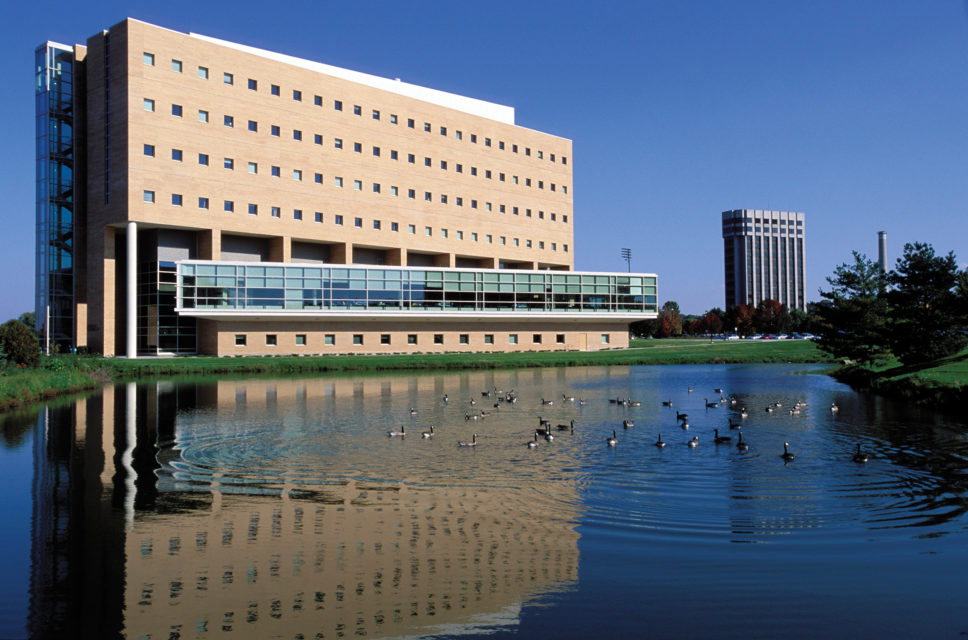
rennebohm_112307-9999x640-1.jpg


University of Wisconsin-Madison Launches New Psychedelic Research Center

This school offers the first accredited American degree focused on the study and therapeutic development of psychedelic compounds and related psychoactive drugs.

by Emily Jarvie | PSYCHEDELIC SPOTLIGHT | 24 Aug 2021​

Yet another university is focusing its psychedelic research efforts with the creation of a specific center for its work in the evolving space.

The University of Wisconsin-Madison has announced the launch of the UW-Madison Transdisciplinary Center for Research in Psychoactive Substances – a new center that will coordinate its ongoing research and education related to psychedelic compounds.

Under the UW-Madison School of Pharmacy, the center will conduct academic research into the science, history, and cultural impact of psychedelic agents. It will also study the potential therapeutic uses of psychoactive substances, expanding the scope for researchers at UW-Madison to build on clinical studies that have been active at the university since 2014.

The center will also support interdisciplinary educational programs to train scientists, teachers, and practitioners as a partner of the School of Pharmacy’s Master’s Of Science Program in Psychoactive Pharmaceutical Investigation. This school offers the first accredited American degree focused on the study and therapeutic development of psychedelic compounds and related psychoactive drugs.

UW-Madison is currently carrying out four clinical trials with various psychedelic compounds, ranging from Phase 1 to Phase 3, in preparation for submitting applications for new drugs to the Food and Drug Administration (FDA). One study, sponsored by MAPS, is assessing the efficacy of MDMA-assisted psychotherapy compared with psychotherapy and placebo in patients with severe post-traumatic stress disorder (PTSD).

Researchers at the university are also evaluating the efficacy of psilocybin to treat major depressive disorder and opioid use disorder.

“From cannabis to psilocybin and MDMA, psychoactive agents are the new frontier for potential new therapies and medications,” said the center’s founding director and UW-Madison School of Pharmacy Professor Paul Hutson. “In light of the opioid crisis and the ever-increasing mental health needs stemming from the pandemic, the growing list of psychedelic compounds shows tremendous promise in early clinical studies in helping patients with addiction and psychiatric disorders. We plan to be at the forefront of this field with innovation and development of novel therapies through our research and educational programs on psychoactive agents.”

In carrying out its research program, the center also hopes to increase the participation of underrepresented groups in clinical studies. “There is a substantial imbalance in the numbers of black, Hispanic, Asian, and Native American research participants in studies of psilocybin and other psychoactive medications,” Professor Hutson said.

“The center will seek opportunities to improve the representation of minorities, elderly, and marginalized groups in the forthcoming research on psychedelics.”

UW-Madison is the latest in a string of American universities to announce a psychedelics-focused research initiative. In 2019, Johns Hopkins University, which is regarded as the leading psychedelic research institution in the United States, launched the Johns Hopkins Center for Psychedelic and Consciousness Research to expand its psychedelic research.

In February this year, New York University also announced a $10 million psychedelic research and training center, the NYU Langone Center for Psychedelic Medicine. Most recently, in July, Harvard Law School’s Petrie-Flom Center for Health Law Policy, Biotechnology, and Bioethics revealed it would be launching the first academic initiative focused on psychedelics law and policy, titled the Project on Psychedelics Law and Regulation.​

 
Last edited:

holiday-inn-express-and-suites-cambridge-6541255674-2x1


Massachusetts General Hospital - Center for the Neuroscience of Psychedelics

The Center seeks to understand how psychedelics enhance the brain’s capacity for change, to optimize current treatments and create new treatments for mental illness, and to make the term “treatment resistant” obsolete.

Mental illness is the leading cause of disability in developed countries. Fifty percent of Americans experience mental illness in their lifetime and $350 billion is spent annually on treating depression in the U.S. and Europe alone.

Nearly half of that total represents the cost of treatment-resistant patients: those who do not improve despite multiple treatments.

One of the biggest clinical challenges in mental health is treatment resistant patients: those who seek help, but do not improve despite multiple medication and treatment intervention trials.

Treatment resistance reflects both the limitations of our currently available treatments, as well as the likelihood that these patients’ brains are less capable of change in ways that improve mental health.

The Promise of Psychedelic Medicines

Psychedelic compounds—in particular psilocybin, 3,4-methylenedioxymethamphetamine (MDMA) and N,N-Dimethyltryptamine (DMT)—have emerged as promising treatments that may increase the brain’s capacity for change.

Studies suggest that psychedelics may facilitate neuroplasticity at the cellular and network levels allowing the brain to form and reorganize connection.

This creates a unique opportunity to change patterns in brain activity, and in turn, improve symptoms, behavior and functioning, to ultimately eliminate suffering.

There is much to learn about how these psychedelic compounds work in the brain to promote neural plasticity. Initial clinical studies suggest immediate, sustained relief of symptoms after a single administration of a psychedelic compound in a therapeutic setting.

Our Research

Remarkable advances in brain imaging—many pioneered and developed at Mass General—allow scientists the unique opportunity to leverage the world’s most advanced neuroimaging tools and methods to see the neuroplastic effects of psychedelic drugs from neurons to networks.

Seeing and understanding these changes in the brain offers an unprecedented possibility to rapidly transform mental health research and treatment.

The knowledge of how psychedelics promote this sort of change, or neuroplasticity, can be harnessed to complement and even enhance current treatments and alleviate the suffering of those patients in the greatest need of help—and hope.

Comprehensive Interdisciplinary Approach

The Center brings together leaders in psychiatry, chemical neurobiology, and neuroimaging.

Our team of clinicians, clinician scientists, neuroscientists and medical physicists collaborate to investigate the effects of psychedelics at the molecular, cellular and systems levels across different patient populations. Our ultimate goal is to promote healing and alleviate patient suffering.

The Center will leverage Mass General's tradition of excellence, which attracts a global array of stakeholders from academia, industry, and the non-profit world to promote and accelerate collaboration and increase the impact of psychedelic research. The center operates in an extraordinary biomedical and biotech ecosystem that includes Mass General, Harvard Medical School, Harvard University and the Broad Institute along with dozens of biotechnology and biopharmaceutical companies.​
  • Department of Psychiatry
    • Mass General's Department of Psychiatry is consistently rated one of the top Psychiatry Departments in the United States per US News and World Report.​
    • It is home to more than 60 specialty clinics and research programs and has the largest clinical research program at Mass General, with studies at the forefront of neuroscience, molecular biology, and genetics.​
  • Chemical Neurobiology Laboratory
    • At the cellular and molecular level, Stephen J. Haggarty, PhD, leads efforts in the chemical neurobiology laboratory.​
    • Dr. Haggarty’s group applies precision medicine approaches to understand the molecular and cellular mechanisms of brain plasticity that underlie the beneficial effects of therapeutic psychedelics.​
Current Research

Our foundational research studies aim to understand how psychedelics facilitate changes in brain structure and function, with an initial focus on psilocybin for patients with treatment-resistant depression, and MDMA for patients with treatment-resistant PTSD.

For all studies, we will collect a wide array of neuroimaging data to fully understand the neural correlates of change with psilocybin and MDMA.​
  • The Center's first studies explore psilocybin's effect on rumination, a process which contributes to depression, anxiety and other mental illnesses, and the effects of MDMA assisted mindful self-compassion on loneliness in treatment-resistant PTSD, in partnership with MAPS.
Future studies will explore:
  • The effect of psilocybin on cognitive and emotional processing, specifically salience processing and cognitive reappraisal, in patients with treatment resistant depression​
  • Psilocybin for personality trait factors that predispose to mental illness​

 
Last edited:
Center for Psychedelic Research and Therapy launches at Texas University Austin

Dell Medical School at the University of Texas’ Austin campus will now host a Psychedelic Research Centre.

Truffle Report | 17 Dec 2021

Dell Medical School at the University of Texas’ Austin campus will now host a Psychedelic Research Centre, according to a press release issued on Thursday.

Dubbed The Center for Psychedelic Research and Therapy, the newly established institution will examine the potential “for drugs such as psilocybin, MDMA, ibogaine and ayahuasca” to act as treatments under the supervision of trained providers.

Conditions such as PTSD, depression, and anxiety will be the primary indications researched, with care objectives being focused on Texas’ substantial veteran population, the second highest of any U.S. State.

Veteran support organizations The Mission Within and The Heroic Hearts project will act as program partners, helping to organize and encourage psychedelic research with veteran subjects suffering from mental health issues.

This announcement adds Dell Medical to the growing list of academic affiliate psychedelic research centers currently operating in the United States, as the first of its kind in Texas.

“This research will bring further scientific rigor and expertise to study psychedelic therapy,” said center co-lead Charles B. Nemeroff, professor and chair of Dell Med’s Department of Psychiatry and Behavioral Sciences and holder of the Matthew P. Nemeroff Endowed Chair. “Recent studies have demonstrated considerable promise for these drugs when incorporated with clinical support, and this work has the potential to transform how we treat conditions like depression and PTSD, and to identify synergies between these and other well-established therapies to achieve long-term benefits for those seeking treatment.”

Earlier this year, the State of Texas passed a psychedelic research bill put forward by Representative Alex Dominguez initiating the study substances such as psilocybin, MDMA, and ketamine for the treatment of mental health issues in veterans.

The legislation authorized Texas’ Health and Human Services Commission, in collaboration with Baylor College of Medicine and the Veterans Affairs Medical Center, to conduct clinical psychedelic research studies with psilocybin-assisted therapy for treating veteran PTSD. The commission was also directed to carry out a scientific review to evaluate the therapeutic efficacy of the given psychedelic substances and provide quarterly reports.

The post Center for Psychedelic Research and Therapy Launches at Texas University appeared first on Truffle Report.

 
Last edited:
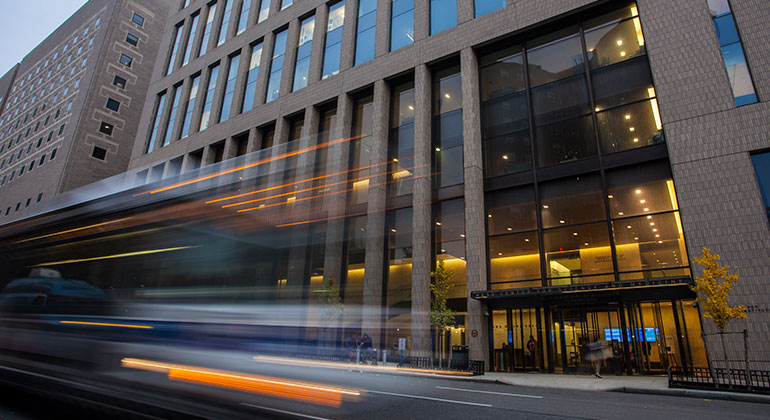
tisch-hospital-exterior.jpg


NYU Langone Health establishes Center for Psychedelic Medicine

Philanthropic support of more than $10 million is helping NYU Langone Health advance its already world-renowned reputation in the study of psychedelic medicine. This is being achieved through the establishment of a one-of-a-kind center that will expand research and physician training in this exciting and resurging field.

When fully developed, the NYU Langone Center for Psychedelic Medicine, under the auspices of NYU Langone’s Department of Psychiatry, will support health-focused research across the translational spectrum, from basic science to phase III clinical trials. Principally, it will have three transdisciplinary areas of focus: psychiatry, medicine, and preclinical research.

In addition, a robust training program, the Psychedelic Medicine Research Training Program—which differentiates this center from others—will support the development of early career faculty members and postdoctoral fellows to become independent investigators in the field of psychedelic medicine.

“These initiatives will provide an environment in which scientists, clinicians, trainees, and other staff contribute in meaningful ways to ensure that the momentum created by the modern psychedelic renaissance is sustained and continues to yield medical breakthroughs backed by sound science,” says Michael P. Bogenschutz, MD, professor of psychiatry at NYU Grossman School of Medicine, and an acknowledged leader in the field of psychedelic medicine who will serve as the center’s director.

Leading the way is funding support of $5 million from MindMed, a neuropharmaceutical company pioneering new ways to treat mental health disorders through the advancement of both non-hallucinogenic and hallucinogenic compounds. Specifically, it will help to establish a psychedelic-based training program for clinical investigators skilled in the study of psychedelic-inspired treatments for serious mental health needs. This gift will provide salary support, training, and pilot research funds for four positions (two junior faculty and two postdoctoral fellows) over the course of five years.

The remainder of support to establish the center will come from a $1 million gift from business leader and philanthropist Carey Turnbull, as well as from several seven-figure gifts that he galvanized from his network. He is president of the Heffter Research Institute, one of the country’s leading nonprofit organizations dedicated to supporting studies on hallucinogens like psilocybin for treatment of mental health and other disorders. NYU Langone and the Heffter Institute, through Turnbull’s support, enjoy a long and successful partnership in psychedelic research.

The NYU Langone Center for Psychedelic Medicine will serve as the hub for NYU Langone’s continuing efforts in psychedelics—work that already has garnered international acclaim, and which has been a major force in the field’s successful resurgence. Past and current research focuses principally on the treatment of advanced cancer-related psychiatric and existential distress, addiction, major depression and post-traumatic stress disorder (PTSD).

“Dr. Bogenschutz and Dr. Stephen Ross have assembled outstanding scientific and clinical teams to carry out completed, ongoing and proposed psychedelic-focused studies at NYU Langone Health,” says Charles R. Marmar, MD, the Lucius N. Littauer Professor and Chair of the Department of Psychiatry. “The infrastructure, support, and training opportunities under the auspices of this new center will springboard our psychedelic research efforts to new heights. We are very excited about what the future holds.”

If you are interested in learning more about the center, please visit the Center for Psychedelic Medicine website.

 
Europe’s first psychedelic drug trial firm to open in London

Startup Clerkenwell Health hopes to help make UK a world leader in psychedelics research.

by Linda Geddes | The Guardian | 9 May 2022

Europe’s first commercial facility for psychedelic drug trials is to open in London, with the goal of making the UK a global leader in psychedelics research and innovation.

The British startup Clerkenwell Health aims to begin trials in its central London facility in August, initially focusing on the use of psilocybin to help people deal with the anxiety associated with a diagnosis of terminal illness, and to support them through their end-of-life care.

The news comes as scientists and policymakers gather in London this Wednesday for the Agenda for Psych Symposium, a daylong programme to discuss the latest research and the future of the psychedelics industry in Europe.

Tom McDonald, the CEO at Clerkenwell Health, said: “Psychedelic assisted therapy could be groundbreaking for mental health treatment, and the UK is well placed to be at the vanguard of that as a global leader in clinical trials post-Brexit."

Our aim is to establish the UK as the heart of the commercial psychedelic research ecosystem, working closely with mental health experts and drug developers around the world to tackle some of the most complex mental health conditions.”

Drug developers are increasingly exploring psychedelic compounds as potential treatments for mental health conditions such as mood disorders, PTSD and addictions, but their status as controlled substances can make it bureaucratically challenging and expensive to progress them through clinical trials.

Conducting these studies in countries such as the UK – where similar trials have already been approved and regulators are more familiar with the safety profiles and potential benefits of these drugs – is one solution. However, foreign companies may need shepherding through UK regulatory processes to avoid unnecessary delays.

This is where specialist clinical research organisations come in: rather than developing one compound or class of compounds for a single condition, Clerkenwell Health will work with multiple drug developers to tackle a range of complex mental health conditions using various psychedelic agents. It will also offer training for therapists who want to work with psychedelic drugs.

Peter Rands, the CEO at Small Pharma, which is trialling the use of dimethyltryptamine (DMT) to treat depression, said: “A set of very specific conditions need to be met to do psychedelic-assisted therapy; it’s quite a specialised area of expertise. The eight or so companies in clinical trials with psychedelic-based medicines heavily rely on contract research organisations to do this kind of research – particularly as they begin to enter [late-stage] clinical trials.”

Prof David Nutt, director of the neuropsychopharmacology unit at Imperial College London and the former chair of the UK’s advisory committee on the misuse of drugs, said: “There is clearly a need to facilitate clinical trials with psychedelic drugs beyond the very few academic centres currently doing this research. So I welcome an external organisation developing the necessary skills and expertise to support companies wanting to invest in these treatments.”

The facility will be based near Harley Street and will initially employ 13 members of staff. The first trials, planned in collaboration with the Toronto-based biotechnology company Psyence, will focus on the use of psilocybin for the treatment of adjustment disorder – an emotional or behavioural reaction to a stressful event in someone’s life in people with terminal diagnoses.

Clerkenwell Health is also working with the Canada- and US-based companies Mindset Pharma and Mydecine, which focus on treatments for neurological and psychiatric disorders, and psychedelic-assisted psychotherapy for depression and nicotine addiction.

Jessica Riggleman, senior director of clinical and regulatory affairs at Mydecine, said the UK was an attractive place to conduct psychedelic drug trials because of a recently introduced pathway, called the Innovative Licensing and Access Pathway, which aims to reduce the time to market for innovative therapies.

 
Last edited:
ISMMS-Spotlight-Placeholder-2col-770x420-2.jpg


Mount Sinai launches a new Psychedelic Research Center in New York

by Luana Steffen | Intelligent Living

New York’s top private graduate medical school – The Icahn School of Medicine at Mount Sinai – has launched a new center for psychedelics research called the Center for Psychedelic Psychotherapy & Trauma Research. The facility will focus on studying MDMA, psilocybin, and other psychedelic compounds for post-traumatic stress disorder (PTSD), depression, anxiety, and other stress-related conditions.

The institution, led by professor of neuroscience and psychiatry Rachel Yehuda, will first investigate MDMA-assisted psychotherapy for PTSD – a promising treatment currently in advanced stages of Phase 3 trials with FDA approval anticipated over the next 1 – 2 years. Besides MDMA, the Center will study psychedelic-assisted psychotherapy with compounds like psilocybin for trauma-related disturbances.
People taking MDMA report feelings of introspection, connectedness, compassion towards self and others, empathy, and increased interpersonal trust, which are optimal conditions for engaging in the processing of difficult or traumatic material. It is important that we listen to people’s subjective experiences with these compounds and then study therapeutic possibilities through rigorous clinical trials.

Mount Sinai’s Center for Psychedelic Psychotherapy & Trauma Research is among the first official research facilities worldwide dedicated to the study of psychedelic medicine. Others include Imperial College London’s Center for Psychedelics Research and Johns Hopkins University’s Center for Psychedelic & Consciousness Research, both facilities were established in 2019.

The Mount Sinai Center will offer more than just clinical trials and research. It will also train clinicians in psychedelic-assisted psychotherapy and serve as an education facility to inform the public as new treatments begin to be clinically deployed over the upcoming years.

 
BUS.jpg


7 fascinating psychedelics that are making a resurgence in scientific research

by Donovan Alexander | Interesting Engineering | Aug 14 2019

Scientists are now, more than ever, excited about the new research surrounding psychedelics.

Properly understanding psychedelics and the effects on the human mind and body has taken center stage in the research and medical community. Though psychedelics have always been a point of interest for scientists, new research pointing towards the use of these trippy drugs to treat depression and other forms of mental illness are making their rounds in the scientific community.

Even the popular psychedelic magic mushrooms have begun the process of decriminalization in certain areas in the United States.

Yet before even breaking into that exciting world of psychedelics and mental health we decided to take a hard look at what psychedelics are, how they are categorized, and what science says about the effects they have on the human brain.

Categorizing psychedelics

For the uninitiated psychedelic drugs are psychoactive drugs whose primary action is to alter the thought processes of the brain. These trippy drugs are thought to disable filters which lock or suppress signals related to everyday functions from reaching the conscious mind.

Some go on to describe these effects as mind-expanding, or consciousness expanding as your conscious mind becomes aware of things normally inaccessible to it. Psychedelic drugs are actually a subcategory of hallucinogens and can be broken down into three main categories.

RELATED: RESEARCH SHOWS PSYCHEDELIC DRUGS COULD HELP BRAINS HEAL

Let’s start with serotonergic or classical psychedelic drugs. These are the drugs you usually think about when discussing psychedelics with friends. Well, known drugs like LSD, DMT, and mescaline all fall into this category. These psychedelics will cause drastic changes in your sensory perception including visual and audible hallucinations.

Secondly, you have empathogens. These drugs make you feel good. Empathogens affect your neurons that release serotonin, giving the user the feeling of euphoria, love, and increased attentiveness and awareness. Nevertheless, you only experience mild forms of changes to perception.

Finally, you have dissociatives. These psychedelics create a dramatic sense of depersonalization and derealization, creating something that is literally out of this world. People who take dissociatives tend to disconnect from the world, their surroundings and even their bodies.

Now lets a look at some of the world’s most popular psychedelics.

LSD

You're probably very familiar with LSD as this psychedelic has reemerged in pop culture because of the raging micro-dosing trend currently taking hold of the Silicon Valley and the potential of the drug to become a means to treat mental health issues. Lysergic acid diethylamide was synthesized in 1938 by Albert Hofman but was not revisited until 1943 when he accidentally absorbed some through his skin.

LSD was a staple of the hippie movement, creative muse for much of pop culture, only to eventually become a Schedule I drug as a part of the Controlled Substances Act. LSD temporarily alters how our brain interacts with dopamine and serotonin causing hallucinations and euphoria.

LSD is nonaddictive and builds a sort of self-regulating tolerance almost immediately. An LSD high can last up to 12 hours. In controlled experiments, those who have taken LSD have shown increased levels of optimism, openness, creativity, and imagination.

Peyote

Another spiritual guide, peyote has been used by the Native Americans for years. The drug has been used during religious ceremonies. Though it is not chemically like LSD or psilocybin it has been known to produce a similar effect to both of the substances. Users have been described to feel deep introspection and the ability to dissociate from one’s self.

Psilocybin

Another popular psychedelic, psilocybin or magic mushrooms are a group of fungi that have been used since prehistoric times as both an entheogen and hallucinogenic drug. Nevertheless, the substance exists in a wide range of genera with a little over 100 species in the genus.

The effect of psilocybin range from empathy, to euphoria, and altered thinking. Psilocybin is not chemically addictive or even represents a direct threat to your health. In fact, psilocybin is currently being researched to treat depression.

2C-B

Though it is less popular 2C-B is just as intriguing as some of the other psychedelics because of its unique properties. It was synthesized in 1974 by the famous Alexander Shulgin. The psychedelic creates euphoria, empathy, increased insight, brightened colors, and increased sexuality.

2C-B works on the serotonin receptors of the brain, blocking the 5-HT2C receptor which leads to the psychedelic effects. The psychedelic has been used to aid in the bonding between a therapist and their patient.

Salvia Divinorum

Salvia is one of the few psychedelics on this list that is not an illicit substance in the United States. Yet, it is one of the most potent naturally occurring psychedelics known to humankind. The psychedelic has been used for centuries by the Mazatec natives in South America.

Salvia bonds to only one of the receptors in the brain causing the dopamine in your brain to drop significantly. Some people who have smoked salvia had described a feeling of separation from the self.

DMT/Ayahuasca

DMT has grown in popularity over the years all thanks to Rick Strassman who gave it the nickname “the Spirit Molecule,” while Terence Mckenna studied the psychedelic in detail documenting the effects. It has been used for thousands of years for spiritual ceremonies that are still happening today.

DMT is considered to be one of the most powerful psychedelic drugs on earth causing in some case very literal out of this world trips.

MDMA

With two million pills being smuggled into the US every day, MDMA is a party drug for a reason. Yet, compared to the other substances on this list, MDMA is one of the more harmful drugs on this list. The drug was created in 1912 but was not explored until the 1970s by Alexander Shulgin in the field in of psychotherapy.

The drug dramatically affects your serotonin receptors creating a tremendous wave of euphoria which after 8-12 hours is followed by a comedown. Frequent use of MDMA has been said to cause permanent brain damage because of the drastic effects on serotonin. Even more so, MDMA on the black market is usually cut with other substances that can be life-threatening.

In our next psychedelic article, we will explore how some of these psychedelics are being used to treat mental health.

 
Top