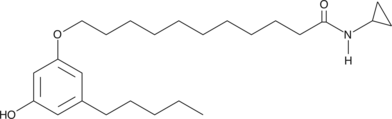
theirs been a flood of new cannaboids on the market, and drug test prevent me from the real deal, so I try to find a non anxiety prown synthetic cannaboid that will be safe to consume.
I feel sad that it's come to this. People who can't even spell are dabbling in organic compounds too complex for them to know what they do... None of these cannabinoids are new, either. Fewer still are worth ingesting.
Anyway, there's 2 basic variables a drug has when it interacts with the receptor.
1.
Affinity - how tightly does the drug couple to the receptor? Lower numbers are better. This number is known as Ki.
It is important to note that Ki means nothing about the drug's effect! Drugs with seemingly very high Kis can have strong activity if they are concentrated enough. Conversely, some drugs can bind very tightly but produce no effect.
2.
Activity - what does the drug make the receptor do?
A few common types of drugs exist. Usually drugs are rapidly binding and unbinding to receptors in the brain, and only one drug at a time actually causes activaton of receptors. There are a few exceptions like the benzodiazepines but they are receptor-specific and beyond the scope of this duscussion.
Full agonists have an activity above 100% of the "reference" chemical. For instance, morphine is a full agonist of the opiate receptor. It binds and acts "like" endorphin, activating the receptor the same amounr (or more) that endorphin does.
Partial agonists have activity between 0 and 100% of the "reference" compound. THC is a partial agonist at CB1 and CB2 - it only activates the receptors partially, compared to anandamide. Drugs like buprenorphine and methadone are partial agonists. In people dependent on full agonists like morphine or heroin, these drugs only produce some of the effect - whereas in individuals who are drug-naive, they act more like their stronger full agonist friends.
A lot of drugs are redered "safer" by them being partial agonists. For instance the partial agonist THC is less likely to cause seizures and paranoia than the full agonist JWH compounds.
Neutral antagonists or competitive antagonists - These are drugs that bind to the receptor and produce no effect. Naloxone is an example of a neutral agonist - it binds to opiate receptors so opiates can't, and the end result is less opioid activity.
Functional antagonists (sometimes "inverse agonists") produce some other signallng cascade than the "reference" compound does. Sometimes this is the "opposite" of normal receptor activation, like is seen in rimonabant. Rimonabant is a CB1 antagonist that unsurprisingly acts like anti-THC - it makes you satiated, depressed, and on edge, and was discontinued because of it.




 thanks for the help