



• Select Your Topic Then Scroll Down
    Alcohol Bupe Benzos
    Cocaine Heroin Opioids
    RCs Stimulants Misc
    Harm Reduction All Topics Gabapentinoids
    Tired of your habit? Struggling to cope?
    Want to regain control or get sober?
    Visit our Recovery Support Forums

Gabapentinoids Retro Sedatives  Megathread

Every single nation hat it's own array of sedatives and hypnotics. It really did end up with there being hundreds of pills and capsules out there with the makers each claiming the superiority of their product(s).

It's fascinating because so often medications whose use was limted to one or at most a handful of nations were largely overlooked by the UNODC list.

The UK still has chlormethiazole (Heminevrin™) and chlormezanone (Trancopal™) was only discontinued because of a rare but serious side-effect. Even before that things like acecarbromal (Sedamyl™) were replaced by something newer i.e. on-patent and and the common denominator is that possession of any of them isn't a crime.

France still has etifoxine (Stresam™) and certainly had Centalun™ (generic and propriatory names were the same) and fenadiazole (Hynazol™) and again, no law against having any of them.

If you are prepared to spend the time researching, you realize that the UNODC essentially only tried to ban CLASSES of medication so if something was unusual, usually it was either overlooked or considered to be something the nation that prescribed it should legally control.

I'm unsure if the bromides or the sulfonyl class of sedatives came first but due to the slow onset and extreme duration of action meant that both had essentially been replaced before someone descided that well informed adults shouldn't have the right to consume whatever they choose to and it seems to me that the stricter the control, the worse it is for the users.

 
makes sense, the gender and race differences are down to differences in CYP2C19 metabolization.
I've long wondered too if there's something here where sexual dimorphism enzymatically affects how bupropion modulates alcohol. I've known a fucking lot of people to use it and often in doses that I rarely hear others mention (450-600mg/day IR often some intranasal). Trans men and cisgender women consistently experience an amplification of the effects of ethanol, GHB, and benzodiazepines in a way that's made me wonder if there's something going on with GABAergic reception, because trans women and cisgender men that take the same doses do not experience this, in fact they often have been the types to tank a 30 rack of beers and be nonethewiser.

This is strictly from my own subjective perspective and lived experience, I feel like certain topics surrounding the interaction of drugs and how they impact our lives/societies are deeply underresearched. The prevalence of "tolerance blindness" for example, thousands of people on Instagram trying to file an obviously goofy class action lawsuit over claiming that their daily administrations of amphetamine lost potency over years. Their issue is that they don't realize that they've formed tolerance, because in the US our medical system just tells people to take the same medications at the same rate in a virtually neverending pattern. My local clinic tried to add oxycodone, zolpidem and lorazepam and I'm already prescribed bupropion, buspirone, promethazine, ondansetron, and when I need them I'll pick some Somas up at the pharmacy. My body is pretty fucking chopped up, 19 surgeries so far in a battle with Ulcerative Colitis to my death, I'm down ~3.5 organs rn. I turned down the opioids and benzos because the ones I prefer don't come from pharmacies, but the way that the US tries to load people up with pharmaceuticals is genuinely fucking wild, and it stands relative to our general lack of simple knowledge (like an understanding of tolerance being widespread in Americans, as it should be) in a way that scares the absolute fuck out of me. So many people use very meaningful amounts of highly impactful psychoactive drugs with virtually no fucking understanding of them.


Separate thought on the general topic of the thread:

Also, I think it's easy to forget when we think of nostalgic moments of the past, like those referred to in this retro sedatives thread, the present moment will some day be something equivalent, something adjacent in a way that's profoundly difficult to articulate. I know somebody who caught a Desoxyn prescription, brand named methamphetamine here in the USA. I've been coprescribed the holy trinity on accident and for legitimate pain management before while healing from a 14" long incision we had to heal open, leaving a large gash permanently in my torso, straight skin over abdominal wall civil war type shit. One time removing staples from a similar but nearby abdominal incision I was intravenously administered 600mg of ketamine as a 16 year old, that shit had a significant impact on my mental health in a positive way, similar to encountering salvia, zolpidem and dextromethorphan around that time. All three of those are things that tend to land poorly on most people, but for me subjectively they were catalysts of foundational and transformative experiences, and reflecting on that made me realize that the lens through which we view memories of nostalgic times with drugs, that is through the lens of our enzymatic profile at that point in time. What a peculiar little note of historiography to consider, historiography being the way that history is recorded.

Every single nation hat it's own array of sedatives and hypnotics. It really did end up with there being hundreds of pills and capsules out there with the makers each claiming the superiority of their product(s).

It's fascinating because so often medications whose use was limted to one or at most a handful of nations were largely overlooked by the UNODC list.

The UK still has chlormethiazole (Heminevrin™) and chlormezanone (Trancopal™) was only discontinued because of a rare but serious side-effect. Even before that things like acecarbromal (Sedamyl™) were replaced by something newer i.e. on-patent and and the common denominator is that possession of any of them isn't a crime.

France still has etifoxine (Stresam™) and certainly had Centalun™ (generic and propriatory names were the same) and fenadiazole (Hynazol™) and again, no law against having any of them.

If you are prepared to spend the time researching, you realize that the UNODC essentially only tried to ban CLASSES of medication so if something was unusual, usually it was either overlooked or considered to be something the nation that prescribed it should legally control.

I'm unsure if the bromides or the sulfonyl class of sedatives came first but due to the slow onset and extreme duration of action meant that both had essentially been replaced before someone descided that well informed adults shouldn't have the right to consume whatever they choose to and it seems to me that the stricter the control, the worse it is for the users.
You are one of a small group who can list out so many things I've never even heard of in countless nights of traversing academic literature surrounding anxiolytics, myorelaxants, that sort of deal. I'm currently really obsessed with researching if eperisone (or analogs), clobenzorex (or analogs), bupropion (or analogs), and THPC (just LSD's D ring pretty much) are of any meaningful use. I find ziprasidone, lurasidone and aripiprazole to be fascinating nootropics that don't really land on me as they do on others, so I suspect THPC's similar activity may be interesting, there was a 1980 publication showing its synthesis starting from arecoline which seems approachable, and it's currently totally uncontrolled. I am curious to ask you too, given the plethora of pharmaceutical knowledge you have kicking around, antipyretics. Fill me in, what's the real move? I ran ~101F for almost a decade for reasons I could never figure out nor could any of my medical teams, but it started after a 26-day episode of high dose meropenem exposure as a life-saving maneuver against surgical malpractice induced sepsis, Maine's healthcare is pretty shit. From then at age 13 until I was 24 I ran an almost constant fever, ibuprofen did nothing but diclofenac, high doses of cannabinoids (especially MDMB-4en-PINACA), all 2,5-Dimethoxy-4-bromophenethylamines I tried (2C-B, DOB, 25B-NBOH and 25B-NBOMe), and large amounts of Acorus calamus in gel caps all got my temperature down, but none of those were really sustainable for regular use as I'm sure you can imagine. I find it interesting that even super out-of-the-norm compounds like iodoresiniferatoxin (a pretty nutty TRPV1 antagonist) induce dose dependent hypothermia and could possibly act as antipyretics for people experiencing consistent fevers like I did. I figured maybe you'd heard of something antipyretic that I've overlooked, just a curiosity.
 
Last edited:
Well, look at butorphanol and nalbufene - both were formally used in the UK until it was noted that while they were both fairly good analgesics for women, they could actually INCREASE pain levels in men.

So yes, we have evidence that gender differences can make huge differences in how certain medications act.

I could list many others but suppose the advantage I give is the easiest for those interested to read about.

Certainly they were the only opioids that were abused more often by women than men. I doubt either really give an anormous kick but people don't always want that. It can be as seeminly minor as improved mood when someone is clinically depressed.
 
Talk about a coincidence. I just opened Bluelight to do a search for hydergine and I saw that this thread of mine received a new post (the above post) so I opened it. And then I proceeded with my hydergine search and one of the results that came up was this old post of mine, and as you can see, it contains a reference to the same book you just referenced in the above post:

Not only that, but you have the latest post in that thread!
 
Drug pornography @red22 mate of mine got his first psychosis. Gave the 1998 edition of "Farmacotherapeutisch Kompas" bit of the prescribe-able things bible. Ravaged, stained and missing some pages, i still got it. Back in 1998 a lot of weird things.

Vintage. Has Clomethiazole ao still in it in liquid form [drug memory works well] sad i never had any taste of the old goodies. Must be laying around very near i upload that page when i spot it.
 
The history of barbiturates a century after their clinical introduction

ChatGPT's summary:

This paper, "The History of Barbiturates a Century After Their Clinical Introduction", traces the rise, peak, and decline of barbiturates as major medical drugs.

Key points​


• Origins (1864–1903):

 • Adolf von Baeyer synthesized barbituric acid in 1864, though it had no known medical use initially.

 • In 1903, Josef von Mering and Emil Fischer discovered that one derivative, barbital, had powerful sedative and hypnotic effects, leading to its medical introduction.

• Rapid expansion:

 • Over 2,500 barbiturates were synthesized.

 • About 50 reached clinical use.

 • They became the standard drugs for insomnia, anxiety, sedation, epilepsy, and later anesthesia.

• Major medical breakthroughs:

 • Phenobarbital (introduced in 1911) became the first highly effective long-term treatment for epilepsy.

 • Thiopental revolutionized intravenous anesthesia and remained widely used for anesthetic induction.

• Psychiatric uses:

 • Before modern psychiatric medications, barbiturates were used for severe insomnia, agitation, and even "sleep cures," in which psychiatric patients were kept asleep for prolonged periods in hopes of improving psychosis or other disorders.

 • They were also used in "narcoanalysis" to reduce inhibition during psychotherapy.

• Why they fell out of favor:

 • Although effective, barbiturates have a narrow therapeutic index—the difference between a therapeutic dose and a fatal dose is relatively small.

 • They commonly caused tolerance, physical dependence, severe withdrawal, respiratory depression, and fatal overdoses.

 • Beginning in the 1950s and especially after the introduction of chlordiazepoxide and later diazepam, benzodiazepines largely replaced barbiturates because they were considerably safer in overdose.

• Modern role:

 • Today, only a handful of barbiturates remain in common medical use.

 • They are primarily used for:

  • Certain forms of epilepsy (especially phenobarbital)

  • Induction of general anesthesia (e.g., thiopental, where available)

  • A few specialized neurological and critical care applications.

Overall, the paper portrays barbiturates as one of the most important drug classes in 20th-century medicine. They transformed the treatment of insomnia, epilepsy, psychiatry, and anesthesia, but their significant risks of dependence and overdose ultimately led to their replacement by safer medications in most clinical settings.
 
Last edited:
Gave the 1998 edition of "Farmacotherapeutisch Kompas" bit of the prescribe-able things bible. Ravaged, stained and missing some pages, i still got it. Back in 1998 a lot of weird things.
I really like the old drug related stuff, I'd love to collect things if I could, but that wouldn't go down well with my partner I suspect!

Metta Beshay (https://www.youtube.com/@Mettabeshay) has started selling stuff https://metta-beshay.myshopify.com/

and I know that Hamilton has a big collection of literature, I love hearing him talk about it and interview the people who were there at the time actually developing things.

I really dig the history, chemical development and cultural evolution stories behind it.

The history of barbiturates a century after their clinical introduction
that looks like an interesting paper to read, thanks for posting, will stick it in my to do list!
 
I really like the old drug related stuff, I'd love to collect things if I could, but that wouldn't go down well with my partner I suspect!
Put on a false cover :ROFLMAO: Nah dont risk it bad advise any can and will be used ..
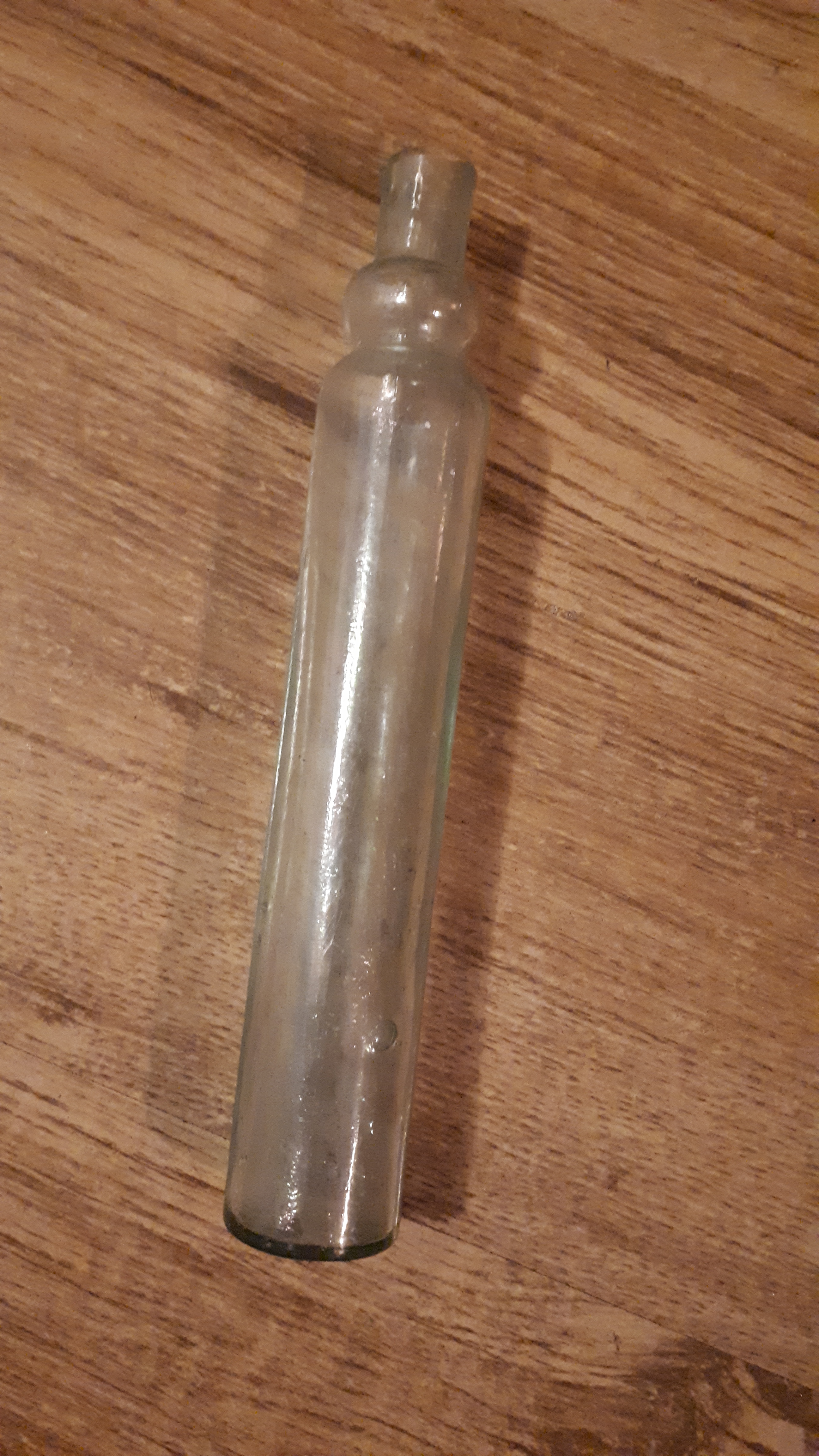
Used to live in a old place where they had to dig out the surrounding ground. Few meter deep. The dug up earth contained a glassware thing. Like this still have it, the glass: on the picture clear has the rainbow colors reflecting in light. Real old one. Like these

https://i.pinimg.com/originals/51/f8/0b/51f80bd1c5a9cec90c9ad8dedbb5faa9.jpg
 
Oh, the world of stimulants and sedative hypnotics is a WILD ride.

I was surprised to learn that there are still researchers resolving chiral barbituates such as seconal and discovering the two isomers have vastly different activities.

(S) seconal is described as a highly potent but highly toxic anesthetic with antiepileptic properties
(R) seconal is described as having little sedative activity, far less toxicity but is equally potent as an antiepileptic

It isn't that researchers a century ago weren't aware that most of the potent barbituates were chiral but it took sixty years before resolution became possible and another twenty for someone to find a way that makes it almost trivial.

Even today researchers are still developing novel barbituates to map the receptor site they bind to.

In 99% of cases one of the two 5 substitients will be an ethyl or an allyl but the other can be 4-10 carbons, contain double or triple bond and/or a halogen (mostly a bromine). THAT is fantastic from a researchers perspective because back in the 1930s-1950s, a patent that used guarded language stating that every one of them will lie somewhere on the antiepileptic-sedative-hypnotic spectrum simply wouldn't be accepted. For a patent to succeed, a researcher had to demonstrate that they understood the activities of what they were patented.

But I suspect that huge range simply meant every pharmacutical manufacturer could produce their own 'me too' drugs. With most other classes there aren't many homologues that retain activity so that a single patent will cover it so nobody else will even look at the work.

But there were a lot of other classes out there and I suugest it was only because there was competition between the makers of different barbiturates that meant a lot of resources went into convincing clinicials that whatever your new thing is, it's better than the thing it replaces.

I would LOVE someone to provide a timeline on when each barbiturate was patented and if it became a medication, the year it was granted a licence...

Can this AI thingy do something like that?
 
Came out of the ground 25 years ago
20260704-011445.jpg

Could have been used for anything

Do i have a Victorian bottle what. The place it came from behind that church But the whole area is from that time ... wow. Got a 100 year + item. Lived on the left side of the then broken down Church


https://wijkfeijenoord.nl/historie/de-wijk-feijenoord-vanaf-de-oorsprong/
 
Last edited:
I would LOVE someone to provide a timeline on when each barbiturate was patented and if it became a medication, the year it was granted a licence...

Can this AI thingy do something like that?

AI loves things like this, worth playing with it a bit though to get the right kind of info you want, but here an idea....

Scientifically, over 2,500 distinct barbiturate compounds have been successfully synthesized since 1903. While only roughly 50 of these ever crossed the threshold into human or veterinary clinical medicine, a vast chemical library was designed, patented, and cataloged. [1, 2, 3, 4, 5]
Below is an exhaustive master timeline organized by structural sub-types. This layout includes clinical mainstays, rare variants, discontinued compounds, and structural designs that were patented but never marketed or used. [1, 2]

The Complete Barbiturate History & Classification Timeline

Part 1: Classic Aliphatic & Branched Alkybarbiturates (Linear & Chain Substitutions)​


1. Barbital (Veronal)
  • Timeline: Patented 1903 | Licensed 1904
  • Formula: C₈H₁₂N₂O₃
  • 1-Line Summary: The world's first commercially available barbiturate, used primarily as a heavy sleep-inducing agent.
  • Effects: Induces heavy, prolonged drowsiness, severe motor incoordination, and a multi-day chemical hangover.
  • Key History: Synthesized by Emil Fischer and Joseph von Mering. Von Mering allegedly named it "Veronal" because the most peaceful place he knew on Earth was the Italian city of Verona.

2. Butabarbital (Butisol)
  • Timeline: Patented 1932 | Licensed 1939
  • Formula: C₁₀H₁₆N₂O₃
  • 1-Line Summary: An intermediate-acting barbiturate used to treat severe short-term insomnia and pre-operative anxiety.
  • Effects: Delivers uniform daytime sedation or hypnotic effects within 30 minutes, lasting roughly 6 to 8 hours.
  • Key History: Heavily used mid-century for calm daytime sedation, filling a medical niche between fast-acting and long-acting derivatives before being systematically discontinued.

3. Pentobarbital (Nembutal)
  • Timeline: Patented 1928 | Licensed 1930
  • Formula: C₁₁H₁₈N₂O₃
  • 1-Line Summary: A fast-acting, highly potent barbiturate widely transitioned from human medicine to veterinary euthanasia and capital punishment.
  • Effects: Triggers rapid onset of hypnosis, extreme muscle relaxation, respiratory depression, and high-dose lethality.
  • Key History: Granted license in 1930, its capsule color led to the 1960s pop-culture nickname "yellow jackets." It gained historical notoriety as the drug responsible for the overdose deaths of Marilyn Monroe and Judy Garland.

4. Amobarbital (Amytal)
  • Timeline: Patented 1923 | Licensed 1924
  • Formula: C₁₁H₁₈N₂O₃
  • 1-Line Summary: An intermediate-acting sedative famously dubbed a "truth serum" for its widespread use in mid-century psychiatry.
  • Effects: Lowers cognitive inhibitions, induces euphoria, slows reaction time, and causes profound drowsiness.
  • Key History: Patented by Eli Lilly, it was heavily utilized during WWII to treat shell-shocked soldiers (narcoanalysis). It became a major drug of abuse in the 1970s, famously known on the street as "blue heavens."

5. Hexethal (Ortal)
  • Timeline: Patented 1934 | Licensed 1936
  • Formula: C₁₂H₂₀N₂O₃
  • 1-Line Summary: An early, highly restricted short-acting sleeping aid designed to rapidly induce short-duration sleep.
  • Effects: Rapidly induces brief hypnosis coupled with strong motor impairment and balance loss.
  • Key History: Marketed briefly in the 1930s as a next-generation hypnotic but quietly withdrawn from production due to its extreme potential for physical addiction.

6. Butethal (Soneryl)
  • Timeline: Patented 1922 | Licensed 1923
  • Formula: C₁₀H₁₆N₂O₃
  • 1-Line Summary: An intermediate-duration sedative widely prescribed as a nighttime sleep aid throughout mid-century Europe.
  • Effects: Delivers mild to moderate nighttime sedation with intermediate duration and fewer day-after groggy symptoms.
  • Key History: One of the earliest structural modifications of Barbital designed to shorten the drug's half-life, though it was eventually phased out for safer alternatives.

Part 2: Alkenyl, Cyclic & Unsaturated Derivatives (Double-Bonded Chain Structures)​


7. Allobarbital (Dial)
  • Timeline: Patented 1912 | Licensed 1913
  • Formula: C₁₀H₁₂N₂O₃
  • 1-Line Summary: An intermediate-acting barbiturate primarily used in Europe during the early-to-mid 20th century as a daytime sedative.
  • Effects: Relieves mild anxiety and induces a calm state, but frequently causes dizziness and psychological dependence.
  • Key History: Patented by the chemical company CIBA. It was often compounded with analgesics (like aminophenazone) to target severe headaches, but fell out of favor due to toxicity.

8. Aprobarbital (Alurate)
  • Timeline: Patented 1915 | Licensed 1919
  • Formula: C₁₀H₁₄N₂O₃
  • 1-Line Summary: A fast-acting sedative-hypnotic engineered to find a structural sweet spot in metabolization time.
  • Effects: Fast-acting, reliable sleep induction; causes distinct physical dizziness and spatial disorientation.
  • Key History: Developed specifically to solve the long-acting "hangover" problem of early barbiturates by introducing an allyl functional group.

9. Secobarbital (Seconal)
  • Timeline: Patented 1934 | Licensed 1934
  • Formula: C₁₂H₁₈N₂O₃
  • 1-Line Summary: A highly potent short-acting sleep aid notorious for its narrow safety margin and high potential for abuse.
  • Effects: Promotes immediate sleep, heavily impairs balance, and causes intense psychological euphoria.
  • Key History: Patented by Eli Lilly, "red devils" became one of the most abused prescription drugs of Hollywood's Golden Era. Today, it is primarily used in US states where medical aid-in-dying is legal.

10. Talbutal (Lotusate)
  • Timeline: Patented 1953 | Licensed 1955
  • Formula: C₁₁H₁₆N₂O₃
  • 1-Line Summary: A late-era short-acting hypnotic introduced to capture the competitive insomnia prescription market.
  • Effects: Triggers deep, unyielding hypnotic sleep lasting roughly 6 hours with severe coordination drops upon waking.
  • Key History: Engineered by Winthrop Laboratories to directly rival Secobarbital's market share, it was eventually discontinued as benzodiazepines emerged.

11. Butalbital (Fiorinal/Esgic Component)
  • Timeline: Patented 1932 | Licensed 1934
  • Formula: C₁₁H₁₆N₂O₃
  • 1-Line Summary: One of the few remaining barbiturates routinely prescribed today, utilized strictly as a combination migraine treatment.
  • Effects: Relaxes smooth muscles and reduces intense vascular throbbing in the head.
  • Key History: Never used on its own; it is systematically co-formulated with acetaminophen, aspirin, or caffeine to prevent severe, rebound vascular headaches.

12. Cyclobarbital (Phanodorm)
  • Timeline: Patented 1924 | Licensed 1925
  • Formula: C₁₂H₁₆N₂O₃
  • 1-Line Summary: A short-acting hypnotic agent that achieved immense widespread distribution within Eastern Bloc countries.
  • Effects: Rapidly induces short, intense sedation accompanied by sudden cognitive slowing.
  • Key History: Throughout the Cold War era, it was the standard sedating tablet across Soviet territories, frequently combined with non-barbiturate sedatives like Reladorm.

Part 3: Aromatic Ring & Heterocyclic Barbiturates (Benzene / Phenyl Attachments)​


13. Phenobarbital (Luminal)
  • Timeline: Patented 1911 | Licensed 1912
  • Formula: C₁₂H₁₂N₂O₃
  • 1-Line Summary: A long-acting sedative and anticonvulsant that remains a core medicine worldwide for managing seizure disorders.
  • Effects: Provides significant central nervous system (CNS) depression and blocks abnormal electrical activity in the brain without extreme sedation.
  • Key History: Marketed by Bayer, it became the global standard for epilepsy. During World War II, it was tragically utilized in the German Nazi euthanasia program.

14. Mephobarbital (Mebaral)
  • Timeline: Patented 1931 | Licensed 1932
  • Formula: C₁₃H₁₄N₂O₃
  • 1-Line Summary: A long-acting anticonvulsant engineered to minimize the daytime sedation profiles of traditional treatments.
  • Effects: Suppresses motor focal points in the brain while producing less lethargy than phenobarbital.
  • Key History: Acts fundamentally as a metabolic prodrug; liver enzymes naturally strip away its methyl group to convert it into phenobarbital inside the user's body.

15. Benzobarbital (Benzonal)
  • Timeline: Patented 1959 | Licensed 1961
  • Formula: C₁₉H₁₆N₂O₄
  • 1-Line Summary: A specialized long-acting anti-seizure derivative used exclusively within regional Eastern European medicine.
  • Effects: Selectively dampens epileptic brain waves while entirely avoiding global hypnotic or sleep-inducing effects.
  • Key History: Developed and distributed entirely behind the Iron Curtain, remaining an active part of clinical epilepsy management in Russia and neighboring nations today.

16. Phetharbital (Pyremal)
  • Timeline: Patented 1960 | Licensed 1963
  • Formula: C₁₂H₁₂N₂O₃
  • 1-Line Summary: An anticonvulsant variant designed specifically to test alternative organ excretion path dynamics.
  • Effects: Controls neural hyper-excitation while relying on distinct renal clearance mechanisms.
  • Key History: Heavily explored as a potential anti-seizure option for kidney-impaired individuals before newer chemical classes rendered it obsolete.

Part 4: Thiobarbiturates & N-Methylated Agents (Ultra-Short Anesthetics)​


17. Thiopental Sodium (Pentothal)
  • Timeline: Patented 1932 | Licensed 1934
  • Formula: C₁₁H₁₇N₂O₂SNa
  • 1-Line Summary: An ultra-short-acting intravenous anesthetic historically favored for rapid surgical inductions.


    Comparative Pharmacology Overview
    The variance in how these drugs affect a user depends primarily on their chemical structure, which dictates how long they stay in the brain:

    Barbiturate [1, 2, 3, 4, 5]

    Duration Category

    Primary Modern/Historical Clinical Indication

    Thiopental

    Ultra-Short Acting

    Intravenous surgical induction

    Methohexital

    Ultra-Short Acting

    ECT therapy anesthesia

    Secobarbital

    Short Acting

    Severe acute insomnia, physician-assisted suicide

    Pentobarbital

    Short-to-Intermediate

    Veterinary euthanasia, procedural sedation

    Amobarbital

    Intermediate Acting

    Narcoanalysis, acute psychiatric sedation

    Butabarbital

    Intermediate Acting

    Short-term daytime sedation

    Phenobarbital

    Long Acting

    Chronic epilepsy management, alcohol withdrawal


Last edited:
Talk about a coincidence. I just opened Bluelight to do a search for hydergine and I saw that this thread of mine received a new post (the above post) so I opened it. And then I proceeded with my hydergine search and one of the results that came up was this old post of mine, and as you can see, it contains a reference to the same book you just referenced in the above post:


Not only that, but you have the latest post in that thread!
It's a sign!

3. Pentobarbital (Nembutal)
  • Timeline: Patented 1928 | Licensed 1930
  • Formula: C₁₁H₁₈N₂O₃
  • 1-Line Summary: A fast-acting, highly potent barbiturate widely transitioned from human medicine to veterinary euthanasia and capital punishment.
  • Effects: Triggers rapid onset of hypnosis, extreme muscle relaxation, respiratory depression, and high-dose lethality.
  • Key History: Granted license in 1930, its capsule color led to the 1960s pop-culture nickname "yellow jackets." It gained historical notoriety as the drug responsible for the overdose deaths of Marilyn Monroe and Judy Garland

9. Secobarbital (Seconal)
  • Timeline: Patented 1934 | Licensed 1934
  • Formula: C₁₂H₁₈N₂O₃
  • 1-Line Summary: A highly potent short-acting sleep aid notorious for its narrow safety margin and high potential for abuse.
  • Effects: Promotes immediate sleep, heavily impairs balance, and causes intense psychological euphoria.
  • Key History: Patented by Eli Lilly, "red devils" became one of the most abused prescription drugs of Hollywood's Golden Era. Today, it is primarily used in US states where medical aid-in-dying is legal.

11. Butalbital (Fiorinal/Esgic Component)
  • Timeline: Patented 1932 | Licensed 1934
  • Formula: C₁₁H₁₆N₂O₃
  • 1-Line Summary: One of the few remaining barbiturates routinely prescribed today, utilized strictly as a combination migraine treatment.
  • Effects: Relaxes smooth muscles and reduces intense vascular throbbing in the head.
  • Key History: Never used on its own; it is systematically co-formulated with acetaminophen, aspirin, or caffeine to prevent severe, rebound vascular headaches.

13. Phenobarbital (Luminal)
  • Timeline: Patented 1911 | Licensed 1912
  • Formula: C₁₂H₁₂N₂O₃
  • 1-Line Summary: A long-acting sedative and anticonvulsant that remains a core medicine worldwide for managing seizure disorders.
  • Effects: Provides significant central nervous system (CNS) depression and blocks abnormal electrical activity in the brain without extreme sedation.
  • Key History: Marketed by Bayer, it became the global standard for epilepsy. During World War II, it was tragically utilized in the German Nazi euthanasia program.

History: Heavily explored as a potential anti-seizure option for kidney-impaired individuals before newer chemical classes rendered it obsolete.
Managed to get my hands on all these over the years... Huge bottles of Nembutal had me crawling around on my hands and knees for a while, nearing death's doorstep. Dark net had some, somehow, and I bought two bottles with bitcoin. Also why I'm not rich right now... great stuff. Totally see why people call it the suicide drug.
I'd say the Pentobarbital was the only one I really enjoyed, but I also didn't have enough Seconal to compare. I was fortunate to even run into a handful of 'em. Phenobarbital sucks. Butalbital sucks, but works for its intended use. Used to get TONS of those from a friend.
 
Last edited:
I loved Phenobarbital (blagged my way to a prescription...SHOCKINGLY easy] but then I suffer severe anxiety and it was a miracle-cure. Phenobarbital is the only barbiturate still available on prescription in my country. Full disclosure: I got it for...well, suicide, but I failed* and had a load left over and I'd take like 2 or 3 60mg pills a day and no anxiety. I was also using a LOT of amphetamine sulphate at the time (I had anorexia and it made me never wanna eat) and 240mg Phenobarbital would knock me out at night and because it's so long-lasting it would help with side-effects like tachycardia and anxitey during the day.

*I'd just been made homeless. Took a whole bunch of 'em and decided to use a computer in my local library to listen to my fav music until they started kickin' in. The library has individual, private toilets so I was gonna lock myself in one and noone would know until it closed as staff came to check and that was 7 hours away. But they kicked in fucking FAST. As soon as I felt them start working, I got up and they hit so fast and hard I didn't even get to stand up. half-way through getting out of my seat, I remember falling backwards in what seemed like slow-motion. So ambulance was called IMMEDIATELY. Apparently, paramedics got there in 4 minutes and I was already in a coma.

I have Chlorpromazine (Thorazine; Largactil) which is a pretty old sedative (synthesised in the '40s, came out in the early '50s).
 
^Oh, once I was seizing (in a hospital, but I was in the waiting room so not a patient there, yet) and they gave me two doses (I forget if it was Diazepam or Lorazepam) and it wouldn't work, so they put me into a Phenobarbital coma. I don't remember anything of THAT drug experience, though.
 
Miltown: a game-changing drug you've probably never heard of. 2017-08-07. https://www.cbc.ca/radio/ondrugs/mi...drug-you-ve-probably-never-heard-of-1.4237946

Happy pills in America: From Miltown to Prozac. Kocsis, J. H. 2009. J Clin Invest, 119(7), 1744. 10.1172/JCI39766

Blockbusters and controlled substances: Miltown, Quaalude, and consumer demand for drugs in postwar America. Herzberg, David. 2011. Studies in History and Philosophy of Science Part C: Studies in History and Philosophy of Biological and Biomedical Sciences, 42(4), 415–426. 10.1016/j.shpsc.2011.05.005


The Complete History of Miltown: 1950s Housewife Tranquilizer Before Valium. @sedated-history. 2026-02-24. h‍ttps://m.youtube.com/watch?v=UgkaTsOw33I

Before Valium dominated medicine cabinets, there was Miltown, the tranquilizer that reshaped 1950s America. Marketed as a breakthrough treatment for anxiety and “nervous tension,” it quickly became one of the first blockbuster prescription drugs in U.S. history.
Introduced in 1955 under the generic name meprobamate, Miltown was hailed as a safer alternative to barbiturates. Doctors prescribed it widely to middle-class patients, especially women coping with postwar domestic pressures. Pharmaceutical advertising promoted calm, composure, and emotional stability as medical necessities. Within a few years, millions of prescriptions were written annually, and the drug became a cultural symbol of suburban stress. But dependence, withdrawal symptoms, and misuse soon raised alarms, foreshadowing the later rise of benzodiazepines like Valium.


Ahhh, I once saw a picture similar to that, but her family were in the background at the dinner table and it said: "MILTOWN: without it, you'd kill them!"
I didn't get it then as I didn't know what it was ("Miltown" sounds like a place, not a drug)
I assume it was satire, not a genuine ad, though.
 
@ChemicallyEnhanced - I believe Miltown was named after a town in which it was developed.

I think I'm correct in saying that barbiturates are first distributed into the fatty tissue of the brand and is then redistributed so plasma half-life isn't a great guide to duration of action.

At the time it seemed that certain QSAR models were developed but as I pointed out, most of the intermediate-acting barbiturates (the ones suited to abuse) are chiral so in truth, you should more correctly consider them as two or even four different medicines and that the subjective effects were produced by that mixture.

Of course, there isn't really much point in researching them further but researchers have discovered examples vastly more potent that those that were prescribable and yes, they are chiral.

But interesting document. Is it possible to make it go crazy ape mental and go through all 50 that ended up being used medically?
 
Top