• N&PD Moderators: Skorpio

Selective Dopamine Releasing Agents ?

The thing is pure DRIs suck for recreational purposes, try it yourself, the -afinils, amfonelic acid, pemoline. No real fun to be had. Norepinephrine plays a key role in arousal and euphoria from stimulants

Pyrovalerone is a fairly selective DRI. All of those 5-carbon cathinones are riffing on pyrovalerone.

Even dexmethylphenidate is pretty selective.

Both amfonelic acid and more commonly BTPC have been encountered as grey-market products. The former is just too complex to make, the latter has a steep dose-response curve BUT was misrepresented as MDMA which was around for over a year. Again, one key precursor would block production.

So is mazindol but the pharmokinetics (slow onset, long duration) make it less liable to abuse.

It isn't so much the subjective effects, it's just that most are tricky to syntheize.

But even cocaine, (S)-methamphetamine and (S)-ampetamine are classed as DRIs although I freely admit, are less selective.

Maybe that is why some people prefer raecemic (meth)amphetamine and indeed raecemic methylphenidine?

As with all subjective effects, YMMV.
 
Last edited:
Pyrovalerone is a fairly selective DRI. All of those 5-carbon cathinones are riffing on pyrovalerone.

Even dexmethylphenidate is pretty selective.

Both amfonelic acid and more commonly BTPC have been encountered as grey-market products. The former is just too complex to make, the latter has a steep dose-response curve BUT was misrepresented as MDMA which was around for over a year. Again, one key precursor would block production.

It isn't so much the subjective effects, it's just that most are tricky to syntheize.
These are not good examples, ”pretty selective” when their binding affinities and ki show NET activity is still significant enough to be considered an NDRI. D-MPH also still has considerable NET reuptake inhibition and simultaneously acts as an inverse agonist at DAT.

BTCP also consistently shows very little promise from the user reports ive seen.

Pure DRIs are simply shit for recreation
 
Affinity ≠ Effaciacy

I did rather give you a hint by noting that it was the (S) enantiomers that were the more selective of compounds more commonly encountered as raecemates.

Or are none of those abused?

Feel free to offer an opinion of your own subjective experiences, but extenting it to include EVERYONE does rather seem arrogant.

Even the Ki values of dexmethylphenidate are an order higher for DAT than they are for NET! THAT is selective!
 
Affinity ≠ Effaciacy

I did rather give you a hint by noting that it was the (S) enantiomers that were the more selective of compounds more commonly encountered as raecemates.

Or are none of those abused?

Feel free to offer an opinion of your own subjective experiences, but extenting it to include EVERYONE does rather seem arrogant.

Even the Ki values of dexmethylphenidate are an order higher for DAT than they are for NET! THAT is selective!
Its not a subjective experience that the more NET reuptake inhibition or release decreases in relation to DAT the closer you get to the edge where euphoria diminishes. There seems to be some sort of perfect valley of DAT to NET.

Of course a stim with more DAT to NET will feel cleaner and more pleasurable. But purely DAT? I dare you to find a single compound that is truly selective for DAT as in NET plays no significant action in its effects, thats more euphoric than D-Meth, 4-MAR, D-MPH, D-EPH etc. It doesnt exist, otherwise a megadose of those obscure modafinil analogues you see on wikipedia would be the best shit on planet earth
 
As I said right at the start, YMMV.

But dexmethylphenidate seems to have a street value...

Because pharmokinetics are at least as important as selectivity. Mazindol, no fun at all, but Focalin™?
 
As I said right at the start, YMMV.

But dexmethylphenidate seems to have a street value...
Well we obviously disagree and I cant change your mind, D-MPH is still within that valley of enough NET to have significant euphoria and the inverse agonism plays a part in its euphoria too. Dopamine agonists like pramipexole and ropinirole cause some degree of mania and euphoria, pure DRIs do not. I can try to find the studies showing how norepinephrine increases the arousal and pleasure of dopamine tomorrow. There used to be a writeup and collection of studies on someones blogpost or similar years ago ill try to find that.

But for now lets just agree to disagree
 
@TheLightBringer - BTW I ethylphenidate is even more DAT selective and we sold loads of that stuff.

It's fine to disagree. I loathe all stimulants so I can only go of what I've directly seen (sales) and what people take when offered (cocaine). To me, all were equally dysphoric.

After being offered a line of coke and poitely refusing, the next thing the dust-mite exclaims is 'but it's free' as if I'm refusing because they think I expected a bill. I say no because it's just awful. YMMV.
 
Last edited:

I posted this on another thread but I think it's an interesting read for everyone. As an academic exercise.

I note clofenciclan is excluded likely due to the limited amount of information stating that it is indeed a dopamine releaser. Now how selective it is, I do not know. But overlaying it with 4-fluorotropacocaine & dimethocaine is interesting. Again, of academic interest only except to say that replacing the 4-amino of dimethocaine with a 4-chloro* does indeed increase activity. We discovered that the hydrochloride salt of 'clomethocaine'* was not particularly water soluble so snorting was nasty. The sulfate salt WAS soluble, but asking the idiots for anything BUT the hydrochloride was beyond them i.e. the problem was identified but not corrected. The 4-nitro was even more active, but aryl nitro groups are risky, so we did not persue development.

I just think that the more scaffolds a person has, the better constructed a training-set will be.

(±)-McN 5652 and JNJ-7925476 are not selective but as @TheLightBringer points out, many people prefer ligands that modulate DAT,NET and SERT and those two appear to be pretty dang potent and even come with a little QSAR so that ratio can be altered by ring-substitution. Of course, both were intended to be antidepressants so one assumes that the onset is slow and the half-life very long. So the pharmokinetics means they are not attractive targets.
 
Threomethylphenidate is a balanced NDRI not a selective DRI.


As for mazindol, this is marketed as a NRI but binding studies have shown it to be a relatively ‘balanced’ SNDRI.

The Ki for inhibition of RTI-55 binding was the following: hDAT=45nM, hSERT=50nM & hNET=18nM.
 
Please, don't use Wikipedia as a source - it's hardly reliable, is it?
 
I wrote the table there but here is the background source:

Williard RL, Middaugh LD, Zhu HJ, Patrick KS (February 2007). "Methylphenidate and its ethanol transesterification metabolite ethylphenidate: brain disposition, monoamine transporters and motor activity". Behavioural Pharmacology. 18 (1): 39–51. doi:10.1097/FBP.0b013e3280143226. PMID 17218796. S2CID 20232871.

This is the article with the Ki values for mazindol i quoted above:

Houlihan, William J.; Kelly, Lawrence; Pankuch, Jessica; Koletar, Judith; Brand, Leonard; Janowsky, Aaron; Kopajtic, Theresa A. (2002). "Mazindol Analogues as Potential Inhibitors of the Cocaine Binding Site at the Dopamine Transporter". Journal of Medicinal Chemistry. 45 (19): 4097–4109. doi:10.1021/jm010302r.
Houlihan, William J.; Ahmad, Umer F.; Koletar, Judith; Kelly, Lawrence; Brand, Leonard; Kopajtic, Theresa A. (2002). "Benzo- and Cyclohexanomazindol Analogues as Potential Inhibitors of the Cocaine Binding Site at the Dopamine Transporter". Journal of Medicinal Chemistry. 45 (19): 4110–4118. doi:10.1021/jm010301z.

It's a few of the mazindol analogues that are tremendously powerful SNDRI's, not mazindol itself.

Ciclazindol is the only one of the mazindol analogs that was given a name.
 
Last edited:
DOI: 10.1007/s002130050267

'Our comparative PET studies demonstrate the neurochemical specificity of d-threo-MP in vivo, supporting the prevailing view that the stimulant effects of MP and related drugs are related more consistently to their inhibitory actions on the dopamine transporter than other neurotransmitter transporters'. Yes, it's a primate model BUT that is still far more valuable than an in-vitro model as a ligand may display certain activities in-vitro, but that is often not how it acts in vivo.

doi.org/10.1021/jm010302r

'Mazindol Analogues as Potential Inhibitors of the Cocaine Binding Site at the Dopamine Transporter'

Mazindol was a diet drug and I even pointed out that the pharmokinetics didn't make it a likely 'drug of abuse'. I then went on to note that the ring-expanded homologue, homomazindol was far more potent and as it turns out, far more selective.

(DAT Ki ) 1.1 nM;
(SERT/DAT) ratio 1283
(NET/DAT) ratio 38

Yes, homologues of mazindol are nice in that the substitution of the aromatic and the fact that the 4,5-dihydro-1H-imidazole ring can be expanded with the 1,4,5,6-tetrahydropyrimidine allows the selectivity to be modified, but the pharmokinetics means that the class isn't really of value beyond it's role as an anoretic or an anti-depressant, as the paper discusses.

I'm always keen to note that affinity ≠ effaciacy and admit that I struggled to find a decent source for the EC50, which I think if often a better metric. But that would use an in vitro model and who knows if a ligand turns out to be a substrate for an enzyme.

DOI 10.1517/13543784.16.9.1365

Above is a paper on many classes of potential antidepressants and that ring-expansion provides for more selective DAT ligands while equally noting that disubstitution of the aromatic provides for less selective ligands. It's an interesting paper in that it does cover many classes of ligand, but does (in my opinion) mistakenly assume that monoamines are the only things involved in clinical depression.

It's odd that both selective serotonin-reuptake inhibitors (SSRIs) AND selectives serotonin-reuptake enhancers (SSREs) are both studied as potential new antidepressants. I'm sure I don't need to detail just how musunderstood the action of tianeptine was. I recall it being seen as a replacement for aminepertine, itself misunderstood. Both have been withdrawn due to their abuse potential.
 
Last edited:
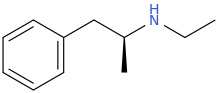
1-phenyl-2-(S)-2-ethylaminopropane.png


d-eth
 
It IS an interesting pattern that the N-ethyl homologues of several classes of stimulant appear to be more selective.

It's a shame that fencamfamine is no longer used and that even when it was, the endo pair was 90% of the product simply due to it being energetically favoured. But the fact that the researchers went with the N-ethyl always seemed a bit odd to me. I've read (S) fencamfamine was responsible for most of the activity but designation of (R) and/or (S) is dependent on the structure in question (Cahn-Ingold-Prelog rules). I found one paper in which cyclodextrins were used to resolve the stereoisomers but it looks like it was a bit of a bust.

I've tasted camfentamine just once and at a low(ish) dose, it was surprisingly subtle. Obviously the original N-ethyl homologe (fencamfamine) would have a slightly more favourable LogP but the fact it's more rigid also likely plays a part in it's potency and activity. That extra steric bulk is possibly why it is selective, but I cannot radio-label a sample and undertake FMRI or FPET.

Obviously, I had noted that several papers suggested that fencamfamine had opioid activity but nothing that nailed down exactly what the relationship was. But I have previously mentioned that Fencamfamine's norbornane system can be viewed as two cyclopentane rings that share two carbons. The synthesis resulted in an intermediate with an olefinic bond. The fact that a reduction is undertaken MAY suggest that conformation was vitally important in the sought activity. Is it an indirect dopamine agonist? Do we really know given that research stopped two decades ago.

DOI 10.1016/0091-3057(94)00236-C

Yes, it IS an old reference, but the only one I could find that studied the hypothesized dual activities and then, based it on:

DOI: 10.1007/BF02244190

So I would consider it to be weak evidence. Yet we know that ampetamine uses that ambiguous term 'opiate sparing'.

But maybe just as the opioid activity of tianeptine wasn't recognized, equally does fencamfamine also act on the opiate receptors? Are we certain? Have noted that fencamfamine overlays both stimulants and opioids BUT it only has two key moieties identified by training-sets of opioids and as far as I know, to have significant opiate activity, three key moieties seem to be the minimum found in all of the MOR ligands I am aware of the aromatic and the lone-pair of the N are in the correct relative spacial positions and orientations for just one stereoisomer.

So of course I did try to work out if a benzylic nitrile or a benzylic hydroxyl derivative of fencamfamine/camfentamine was facile. I have to say now that I could not any a such synthesis - but feel free to suggest. Because experimentation using a derivative with an benzylic ethyl carboxylate or a benzylic propionoxy moiety would either show increased opate activity or, equally, less opioid activiy - but that WOULD require the four stereoisomers to be resolved - particularly since the stereoisomerism is so important and based on the training-set, the less energetically favoured pair would be the (potential) opioids. Or, rather, one of the pair would have the appropriate conformation.

This is to be expected. A lot of rational design relies on training-sets but if a ligand isn't potentially of value, it's rarely researched. I even wondered in a derivative with a phenoic meta hydroxyl derivative had been studied although the phenolic derivatives of the related opioids were in fact LESS active then their parents, but I still checked, just in case. I found nothing, but then, that doesn't mean I just missed a reference.

It also made me wonder if the reason the reason that a pair of the four stereoisomers of tramadol are more active analgesics than the single stereoisomer is also because the non-opioid stereoisomer is similarly monkeying around with monoamines. After all, nefopam is often cited as being as active as morphine in terms of analgesia and that seems to be a triple reuptake inhibitor.

Yes, I was trialled on Acupan (nefopam) because I asked if an alternative to an opioid might work. Yes, it did help control the pain but the anxiety was remorseless. Much like tramadol but amplified. I think it's been establised that one of the pair is a non-rigid analogue of codeine while the other monkeys around with the same monoamines.

I only searched for phenolic derivatives of fencamfamine because tapentaol has three key moieties and one of those is phenolic meta hydroxyl. In that case most sources state that a single stereoisomer has both opioid and NRI activity. I've never been prescribed tapentadol because it turned out to produce an unusual and difficult to manage physical dependence liability. The BNF even included a section on dexoxification of dependent patients - I suggest because methadone and buprenorphine cannot substitute for the activity of tapentadol. It's NRI activity likely meant that in patient subject to seizures, it's prescribing was contra-indicated. Whatever the detail, it was added to the list of Class A drugs so rightly or wrongly, the ACMD recommended it be listed as a class-A drug.

 
Last edited:
Would'nt L-Dopa be it?

L-DOPA?

Well yes, it is an endogenous compound and potenially could be the precursor to all three neurotransmitters under discussion. Yet it's side-effect profile is quite nasty. BUT It does usefully show that the developers had to identify a ligand that could cross the blood-brain barrier whereas none of the nurotransmitters can do so.

That's one reason why I will tend to go with an in-vitro study as what happens in a test-tube may not be representitive of what happens within a highly complex system. Particially when that system specifically seperates that system into two compartments and goes to great lengths to protect one compartment.

Good point well made. 4 words, impressive!
 
@TheLightBringer - BTW I ethylphenidate is even more DAT selective and we sold loads of that stuff.

It's fine to disagree. I loathe all stimulants so I can only go of what I've directly seen (sales) and what people take when offered (cocaine). To me, all were equally dysphoric.

After being offered a line of coke and poitely refusing, the next thing the dust-mite exclaims is 'but it's free' as if I'm refusing because they think I expected a bill. I say no because it's just awful. YMMV.
See you almost get it yet you dont. You think more dopamine selective = more euphoric.
If thats the case how come Isopropylphenidate is not even better than EPH and MPH? Because to a degree noradrenaline is needed for arousal and euphoria. As I said there seems to be a ”perfect valley” of just enough dopamine to norepinephrine where it causes sufficient arousal.

Norepinephrine itself enhances the release of dopamine, knockout mice without DAT continue to release dopamine in the nucleus accumbens when Norepinephrine is stimulated. However animals with lesioned NE receptors release less dopamine in the nucleus accumbens when given stimulants. Blocking Norepinephrine also decreases the addictiveness and self-administration of stimulants

Stimulating adrenergic receptors also increases the firing rate of dopaminergic receptors.


I asked you to provide a truly selective DRI with more euphoria than traditional stimulants. But you cant. Because they all suck

And D-MPH and EPH arent selective enough to qualify, selective DRIs have significantly less cardiac effects than traditional stims, and anyone who has taken D-MPH or EPH knows they have a highly activating effect on your cardiac system.
 
Dopamine creates the reward, Norepinephrine increases signal to noise in cortex, pushes your brain into a high activatiom state etc etc

Just DAT is flat and boring and just NET is just jittery and speedy. At the right ratio they cause the euphoric stimulant experience.
Too much or too little of either results in a lackluster experience
 
Top