• Select Your Topic Then Scroll Down
    Alcohol Bupe Benzos
    Cocaine Heroin Opioids
    RCs Stimulants Misc
    Harm Reduction All Topics Gabapentinoids
    Tired of your habit? Struggling to cope?
    Want to regain control or get sober?
    Visit our Recovery Support Forums

🧑‍🌾 Gardening 🧑‍🌾 Mapacho/Makhorka: My Nicotine back-to-the-roots Project almost 5 months later.

Gardening
Today is a good day to fly!
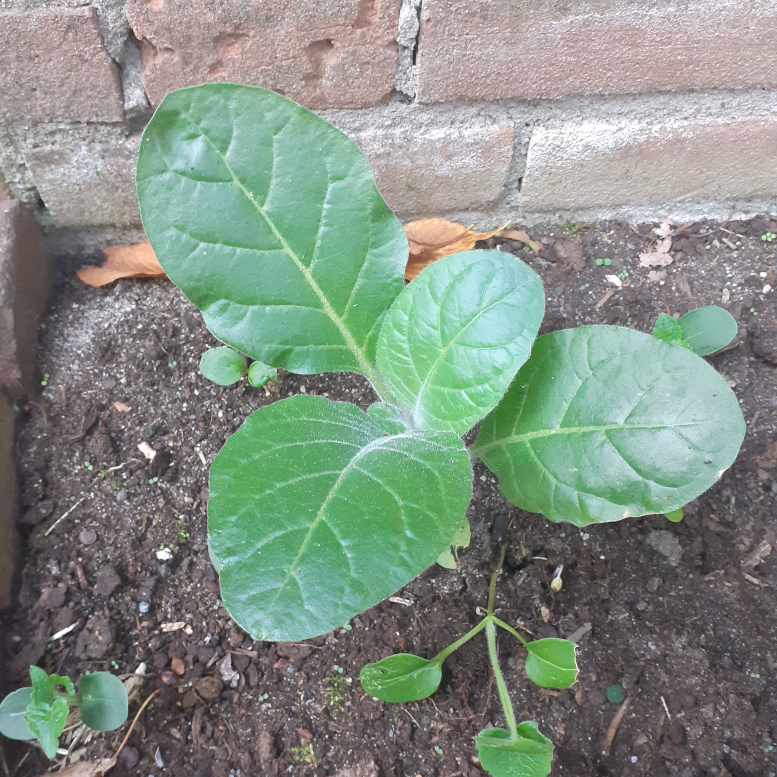
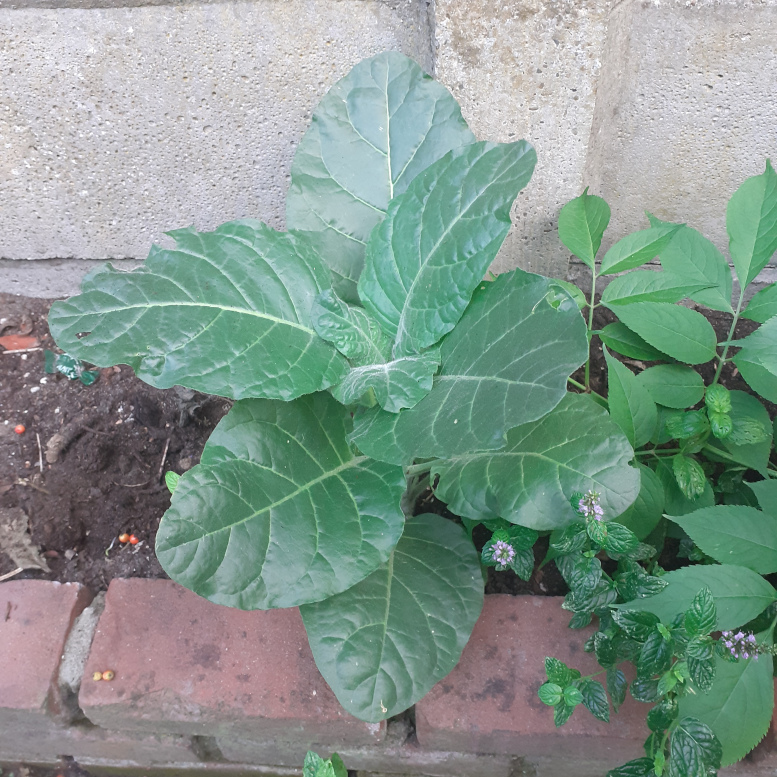
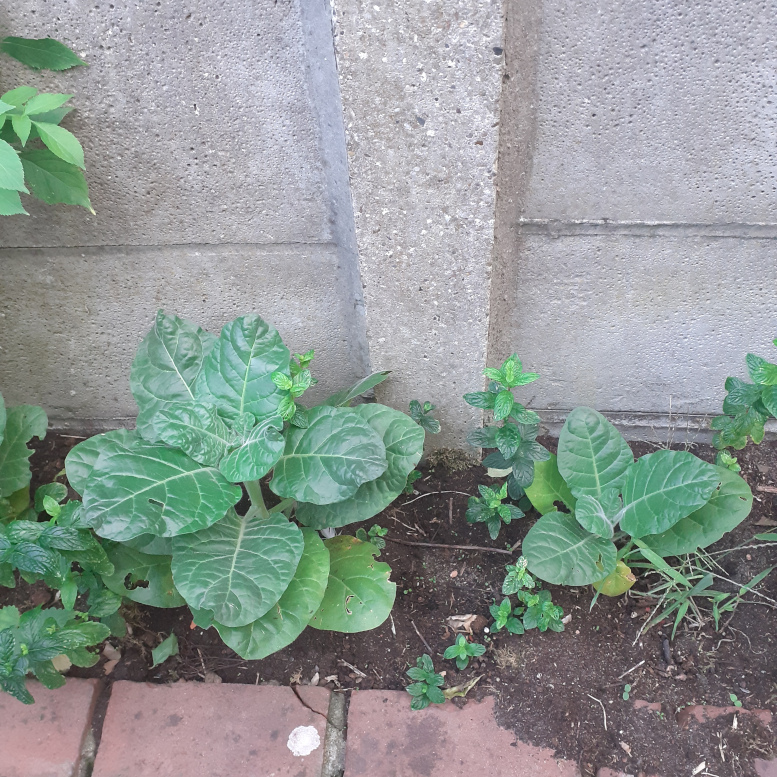
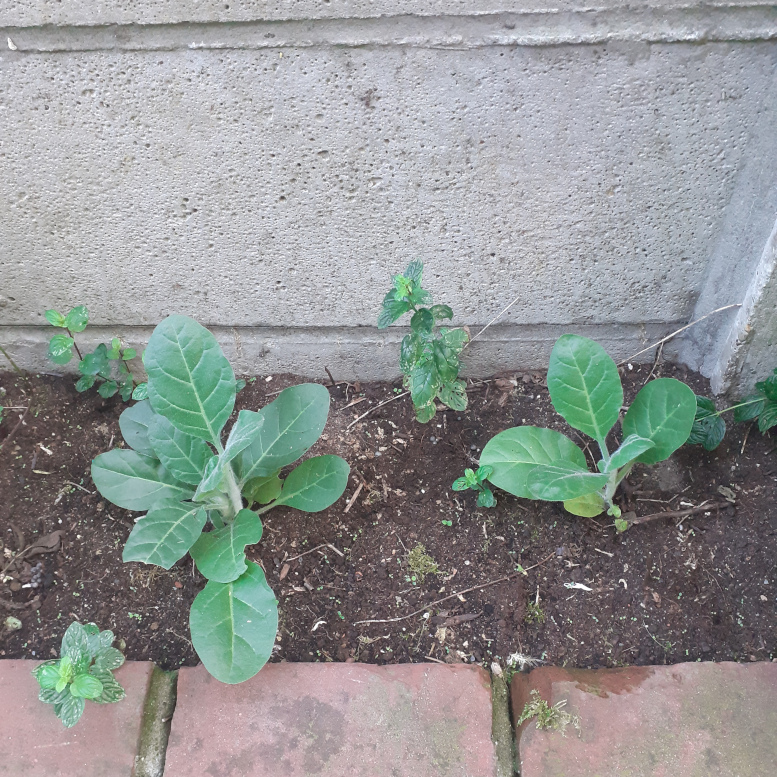
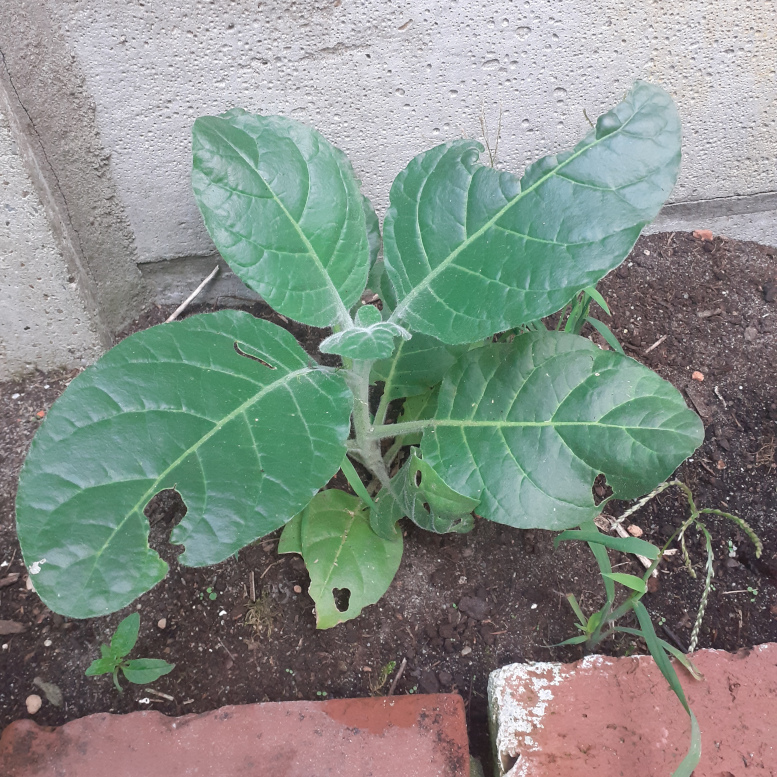
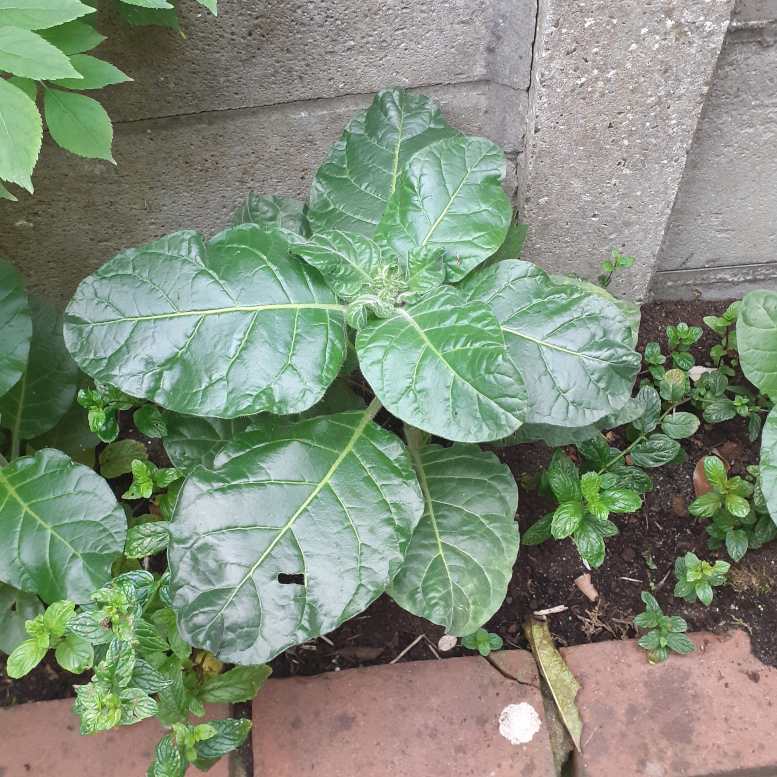
Check out my garden Makhorka/Mapacho/Rapé (Indian Tobacco, Nicotiana rustica)
Will at least one of them set seed?

861466732-makhorka_23sept25_01_web.jpg


861466707-makhorka_23sept25_02_web.jpg


861466679-makhorka_23sept25_03_web.jpg


861466652-makhorka_23sept25_04_web.jpg


861466622-makhorka_23sept25_05_web.jpg
Beautiful plants, I love how glossy rustica leaves get once they grow larger

Unrelated but is your username in any relation to swahili?
 
Yes the leaves shine with nicotine and related alkaloids, the alkaloid make up of Rustica is different than Tabacum. a more complex effect.

Having intereacted with the plant spirit, it is so much more to me than a "nicotine source", its a true Spirit Plant, quite unlike the 4mg nicotine lozenges I use for daily nicotine use :)

I went to use the lozenges to see whether a mature oral/buccal relationship with nicotine was possible, a decade after 28 years of hedonistic and harmful smoking. It is.
I use 2-4 lozenges a day typically, as 1/4-1 tab per dose. Even 125mcg has a noteworthy effect on me. It lacks the addictive craving and destruction cigarettes caused.
Now that i'm 52 and 100% against smoking anything (you dont do that to your lungs, your mouth is made to deal with herbs) I wanted to see if a mature relationship with nicotine was possible, the original Amazon way, on the tongue or under your lip, no snorting or smoking chemically treated freebase like its crack. It is possible.

Yes, its Swahili. Asante is "Thank you", a word of gratitude. I have done lots of fundraising and donating towards Africa. I never set foot there due to health reasons but, i'm in love with the Mother Continent, cradle of humanity. I have a very active relationship with God regarding Africa and the wellbeing of Humankind in general (click link in my signature for my site full of gifts for you) so to make gratitude, Thank You the African way, my username felt right.

Not to boast but thanks to my fundraising and donating efforts, over a quarter million fruit trees were planted in Africa in permaculture agroforestry (trees.org), ten villages have a water well, I helped inspire formation of a small charity https://kwes-foundation.org/ and I'm Board Advisor at https://onehomemission.org/

 
Yes the leaves shine with nicotine and related alkaloids, the alkaloid make up of Rustica is different than Tabacum. a more complex effect.

Having intereacted with the plant spirit, it is so much more to me than a "nicotine source", its a true Spirit Plant, quite unlike the 4mg nicotine lozenges I use for daily nicotine use :)

I went to use the lozenges to see whether a mature oral/buccal relationship with nicotine was possible, a decade after 28 years of hedonistic and harmful smoking. It is.
I use 2-4 lozenges a day typically, as 1/4-1 tab per dose. Even 125mcg has a noteworthy effect on me. It lacks the addictive craving and destruction cigarettes caused.
Now that i'm 52 and 100% against smoking anything (you dont do that to your lungs, your mouth is made to deal with herbs) I wanted to see if a mature relationship with nicotine was possible, the original Amazon way, on the tongue or under your lip, no snorting or smoking chemically treated freebase like its crack. It is possible.

Yes, its Swahili. Asante is "Thank you", a word of gratitude. I have done lots of fundraising and donating towards Africa. I never set foot there due to health reasons but, i'm in love with the Mother Continent, cradle of humanity. I have a very active relationship with God regarding Africa and the wellbeing of Humankind in general (click link in my signature for my site full of gifts for you) so to make gratitude, Thank You the African way, my username felt right.

Not to boast but thanks to my fundraising and donating efforts, over a quarter million fruit trees were planted in Africa in permaculture agroforestry (trees.org), ten villages have a water well, I helped inspire formation of a small charity https://kwes-foundation.org/ and I'm Board Advisor at https://onehomemission.org/


Yes the rustica variety has a higher MAOI content in the form of beta carbolines and harmala alkaloids

Lozenges are really nice but they can sneak up on you as well and you find yourself with a crazy tolerance down the line. Everytime I relapse on nicotine my tolerance gets to the point where I can do two 17mg pouches at once. Its my own fault for making a habit of chasing the buzz though 😅 I needed something to give me a kick after I got sober lol


Ive actually been studying a bit of Swahili for a year (lost my consistency recently but hoping to get back to it). My reasoning is that if I can learn french, arabic, swahili and maybe a few sentences in some other bantu language ill be able to travel solo throughout most of africa with decent communication 😅 (+ I like learning languages and already speak 4 fluently)
But thats a dream Im saving for a few years forward


Back to the tobacco, what methods do you use for drying/curing your tobacco when harvested? Currently drying a minor batch to make some smokeable tobacco but will likely make the rest into snus once I harvest it
 
I am anti-curing and anti smoking/snorting. Curing introduces carcinogens, as does smoking. I dry green leaves in hours in a food dehydrator at 40'C, and put pieces of dried leaf on my tongue for Spirit Plant Entheogenic purposes. didn't smoke in 10 years.

The plant spirit says: "so called curing involves rotting my leaves, which forms carcinogenic decomposition products, so it becomes easier to abuse me. Does that sound like a 'cure'? I am good medicine, dried green or fresh, in your mouth, where herbs belong. That is natural."
 
Last edited:
I am anti-curing and anti smoking/snorting. Curing introduces carcinogens, as does smoking. I dry green leaves in hours in a food dehydrator at 40'C, and put pieces of dried leaf on my tongue for Spirit Plant Entheogenic purposes. didn't smoke in 10 years.

The plant spirit says: "so called curing involves rotting my leaves, which forms carcinogenic decomposition products, so it becomes easier to abuse me. Does that sound like a 'cure'? I am good medicine, dried green or fresh, in your mouth, where herbs belong. That is natural."


Tobacco, which for many reasons we do not advise using, is a problem if the tobacco is cured (fermented) because the commercial companies use sugar and yeast in the curing process. The tobacco then has very high levels of yeast, fungus, and mycotoxins, which are taken directly into the lungs. Some people believe that cancer is not so much caused by the nicotine as by the fermented tobacco with the yeast and fungus and mycotoxins. In Fungal/Mycotoxin Etiology of Human Disease, Vol. 2, the mycotoxic fungi Alternaria and Aspergillus niger were found in six brands of commercial cigarettes. It is interesting to note that cigars, which are not cured, do not seem to cause cancer and do not seem to have much fungus. (I am not recommending, however, that people take up cigar smoking.) Research in Fungal/Mycotoxin Etiology of Human Disease, Vol. 2, found that in some chewing tobacco, there are nine species of Aspergillus, providing a variety of cancer-producing mycotoxins including ochratoxin, patulin (also found in apple juice), aflatoxin, and sterigmatocystin. Research found that cigarette smokers also have a higher amount of fungi in their mouth; Candida albicans is especially increased.


Gabriel Cousens. Rainbow Green Live-Food Cuisine. 2003. Chapter 2. Preventing the Composting of Western Civilization.
 
Some leaves were starting to slightly yellow so i picked them and took them to the food dehydrator at 70'C

AI, hit it!

Protocol (condensed)


  • Dry: Dehydrator 70 °C, single layer, 3–6 h (until midrib snaps, lamina shatters).
  • Powder: Cool, then mortar & pestle to fine dust.
  • Store: Glass jars, airtight, freezer (optionally add a food-safe desiccant).

Chemistry preserved


  • Alkaloids: Stable at 70 °C; enzymes denatured; fermentation/TSNAs minimized.
  • Aroma: Some top-note loss; heavier volatiles retained.

Expected alkaloids (dry N. rustica leaf)


  • Total alkaloids: ~6–14% (≈60–140 mg/g).
  • Nicotine: usually >90% of total (≈55–130 mg/g).
  • Others: nornicotine, anatabine, traces anabasine (together a few mg/g).
  • β-Carbolines (“harmala-type” like harman/norharman): typically trace (µg/g) in leaf; negligible in non-combusted use.

Single buccal dose: 25 mg leaf powder


  • Typical estimate: ~2–3 mg nicotine + ~0.2–0.7 mg other alkaloids (total ~2.2–3.7 mg).
  • Range from variability: 1.35–3.15 mg nicotine + 0.15–0.35 mg other alkaloids (total 1.5–3.5 mg).
  • β-Carbolines: negligible per 25 mg (well below 0.01 mg).

Note: 2–3 mg buccal nicotine is noticeable for most people; dose cautiously.
 
You took my advice* and asked the bot to give you the response in BB code!

Your AI text used to look like this ↓


# Protocol (condensed)

- **Dry:** Dehydrator **70 °C**, single layer, 3–6 h (until midrib snaps, lamina shatters).
- **Powder:** Cool, then mortar & pestle to fine dust.
- **Store:** **Glass** jars, airtight, **freezer** (optionally add a food-safe desiccant).

## Chemistry preserved

- **Alkaloids:** Stable at 70 °C; enzymes denatured; fermentation/TSNAs minimized.
- **Aroma:** Some top-note loss; heavier volatiles retained.

## Expected alkaloids (dry *N. rustica* leaf)

- **Total alkaloids:** ~6–14% (≈60–140 mg/g).
- **Nicotine:** usually >90% of total (≈55–130 mg/g).
- **Others:** nornicotine, anatabine, traces anabasine (together a few mg/g).
- **β-Carbolines (“harmala-type” like harman/norharman):** typically **trace** (µg/g) in leaf; negligible in non-combusted use.

## Single buccal dose: 25 mg leaf powder

- **Typical estimate:** ~**2–3 mg nicotine** + **~0.2–0.7 mg other alkaloids** (total ~2.2–3.7 mg).
- **Range from variability:** **1.35–3.15 mg nicotine** + **0.15–0.35 mg other alkaloids** (total **1.5–3.5 mg**).
- **β-Carbolines:** **negligible** per 25 mg (well below 0.01 mg).

*Note:* 2–3 mg buccal nicotine is noticeable for most people; dose cautiously.


*"Next time, ask ChatGPT to give you the reply in BB code."

https://www.shroomery.org/forums/showflat.php/Number/29076162#29076162

"Start asking for messages in BB code!"

 
Yes the rustica variety has a higher MAOI content in the form of beta carbolines and harmala alkaloids

"While to date no native varieties of tobacco have been analyzed for these substances, it is a reasonable supposition that their composition may vary widely, depending upon the variety and growth, and that some of the native-grown tobaccos may contain a relatively high concentration of them.8"

8. Henry Hobhouse, Seeds of Change: Five Plants That Transformed Mankind
(New York: Harper & Row, 1985), p. 108[/quote]
Food of the Gods. Terence McKenna, 1992, 1993 11. Complacencies of the Peignoir: Sugar, Coffee, Tea, and Chocolate, pages 196-197


Food of the Gods. Terence McKenna, 1992, 1993 11. Complacencies of the Peignoir: Sugar, Coffee, Tea, and Chocolate / SHAMANIC TOBACCOS, pages 196-197


"There is no direct evidence that Nicotiana rustica contains beta-carbolines based on current research." (Consensus)


Tobacco may only contain harman and norharman when heated and it may be neurotoxic and it may not even work as a DMT enabler. Further reading: https://www.bluelight.org/community/threads/948527/

 
"While to date no native varieties of tobacco have been analyzed for these substances, it is a reasonable supposition that their composition may vary widely, depending upon the variety and growth, and that some of the native-grown tobaccos may contain a relatively high concentration of them.8"

8. Henry Hobhouse, Seeds of Change: Five Plants That Transformed Mankind
(New York: Harper & Row, 1985), p. 108

Food of the Gods. Terence McKenna, 1992, 1993 11. Complacencies of the Peignoir: Sugar, Coffee, Tea, and Chocolate, pages 196-197

Food of the Gods. Terence McKenna, 1992, 1993 11. Complacencies of the Peignoir: Sugar, Coffee, Tea, and Chocolate / SHAMANIC TOBACCOS, pages 196-197


"There is no direct evidence that Nicotiana rustica contains beta-carbolines based on current research." (Consensus)


Tobacco may only contain harman and norharman when heated and it may be neurotoxic and it may not even work as a DMT enabler. Further reading: https://www.bluelight.org/community/threads/948527/


[/QUOTE]
The stated fact that tobacco does not contain beta carbolines yet contains harman and norharman is contradictory as norharman IS beta-carboline

But yes I agree that tobacco probably isnt nearly strong enough to be a DMT enabler altough this study seems to state they do potentiate N,N-DMT
 
Some leaves were starting to slightly yellow so i picked them and took them to the food dehydrator at 70'C

AI, hit it!

Protocol (condensed)


  • Dry: Dehydrator 70 °C, single layer, 3–6 h (until midrib snaps, lamina shatters).
  • Powder: Cool, then mortar & pestle to fine dust.
  • Store: Glass jars, airtight, freezer (optionally add a food-safe desiccant).

Chemistry preserved


  • Alkaloids: Stable at 70 °C; enzymes denatured; fermentation/TSNAs minimized.
  • Aroma: Some top-note loss; heavier volatiles retained.

Expected alkaloids (dry N. rustica leaf)


  • Total alkaloids: ~6–14% (≈60–140 mg/g).
  • Nicotine: usually >90% of total (≈55–130 mg/g).
  • Others: nornicotine, anatabine, traces anabasine (together a few mg/g).
  • β-Carbolines (“harmala-type” like harman/norharman): typically trace (µg/g) in leaf; negligible in non-combusted use.

Single buccal dose: 25 mg leaf powder


  • Typical estimate: ~2–3 mg nicotine + ~0.2–0.7 mg other alkaloids (total ~2.2–3.7 mg).
  • Range from variability: 1.35–3.15 mg nicotine + 0.15–0.35 mg other alkaloids (total 1.5–3.5 mg).
  • β-Carbolines: negligible per 25 mg (well below 0.01 mg).

Note: 2–3 mg buccal nicotine is noticeable for most people; dose cautiously.
Hmm, I wonder if its worth investing in a dehydrator or if I could just do something similar with my oven 😅

The methods ive tried so far are towel drying, hanging the leaves in bunches, leaving them on the plant to dry or pulling up the whole plant by the root and hanging it to dry

Seems like towel drying or just letting the plant dry out have been the most effective for browning for me
 
The stated fact that tobacco does not contain beta carbolines yet contains harman and norharman is contradictory

The first two quotes in my post convey that there have been no studies showing β-carbolines specifically in N. rustica (and perhaps similar varieti(es)).

 
I happen to have a food dehydrator and its the best way.


Whether there are no beta carbolines or microgram levels - in either case they aren't important in buccal use of 25mg dried leaf.

this analysis abstract shows none so, you may be right that the AI hallucinated that. ethnobotanical sources say it does.

Nicotiana rustica L. (Aztec tobacco) is the only Nicotiana species, except common tobacco (N. tabacum L.), which is cultivated for tabacco products. The leaves of N. rustica, however, accumulate various specialized metabolites of potential interest. Therefore, the objective of this study was to evaluate certain classes of metabolites (by HPLC and GC-MS) in the leaves, the essential oil (EO), concrete and resinoid of N. rustica. Three pentacyclic triterpenes were identified in the leaves (by HPLC): betulin (252.78 µg g-1), betulinic (182.53 µg g-1) and oleanolic (69.44 µg g-1) acids. The dominant free phenolic acids in the leaves (by HPLC) were rosmarinic (4257.38 µg g-1) and chlorogenic (1714.40 µg g-1), and conjugated forms of vanillic (3445.71 µg g-1), sinapic (1963.11 µg g-1), and syringic (1784.96 µg g-1). The major flavonoids in the leaves were luteolin (960.44 µg g-1), apigenin (880.66 µg g-1) and hyperosid (780.72 µg g-1). The GS-MS profiling of the EO identified 19 components and the major ones were phytol (43.68 %), solanone (5.54 %), cis-5-butyl-4-methyldihydrofuran-2(3H)-one (5.23 %), dihydro-β-ionone (4.25 %), α-ionene (3.54 %),and β-damascenone (3.03 %). The major volatiles in the concrete were isoamyl alcohol (28.82 %), oxynicotine (9.02 %), phytol (7.80 %), 4-mеthyl-1-penthanol (6.33 %), cotinine (5.55 %) and 3-metyl-3-penthanol (4.09 %). Resinoid composition was dominant by nicotine (39.75 %), phytol (11.23 %), eicosane (4.88 %), diethyl phthalate (4.19 %), dibutyl phthalate (3.48 %) and solanone (3.27 %). Concrete and resinoid showed weak antibacterial activity . These results create grounds for considering N. rustica as a source to obtain aroma or other bioproducts.


by contrast: This is an enthogenic species of Nicotiana (tobacco) native to South America containing up to nine times more nicotine then commercial Nicotiana tabaccum. N. rustica leaves also contain high levels of β-carbolines including harmala alkaloids.
 
Last edited:
Might be a good idea to add them, though: does it have a history of use in combo with B. caapi?

What chems other than nicotine interest you?

 
Hmm, I wonder if its worth investing in a dehydrator or if I could just do something similar with my oven 😅

The methods ive tried so far are towel drying, hanging the leaves in bunches, leaving them on the plant to dry or pulling up the whole plant by the root and hanging it to dry

Seems like towel drying or just letting the plant dry out have been the most effective for browning for me
A anti-freeze fridge is a de-hydrater, only difference is the temperature.
So for dyring it should work. Couldn t test it myself i de-frost manual.
Or it becomes a ice cave in no time, if you have a frost free one.

That s the one probably you need, great for dehydrating too.
Good luck, wonder if it works. eMKee. it should work on paper ?
 
Great tip using an anti frost freezer as a freeze drier, yes that works!

quote from the Shroomery worth reposting here too due to information content:


I write 45 minute posts that care very much about motivating people to stay quit, and they act like nothing was said at all and carry on banter with people giving them barely 2 lines of cliche.

Fuck me wasting time here.

You are now on day 20.

Had you quit all nicotine the physical addiction would be over.

Drop the vape, stick to lozenges, quit lozenges too, do a year clean where you grow Nicotiana Rustica (see my topics on that and of the dried uncured green leaf powder, take 25mg pinches in your mouth as a Spirit Plant, for instance after dinner to settle your food.

Spam any sense of wanting to smoke with your top 5 reasons why not smoking is entirely what you really want, and you will win this one.

Addiction is dumb.
You are smart.
Yes You Can
Make Breathing Fun Again.

Fuck big tobacco.
death pusher.

Grow Rustica for under your tongue or lip.

No curing, no cancer, no lung damage.

Fuck that hardship.

Fuck me going all out and you being halfhearted.

Love you, man :hug:


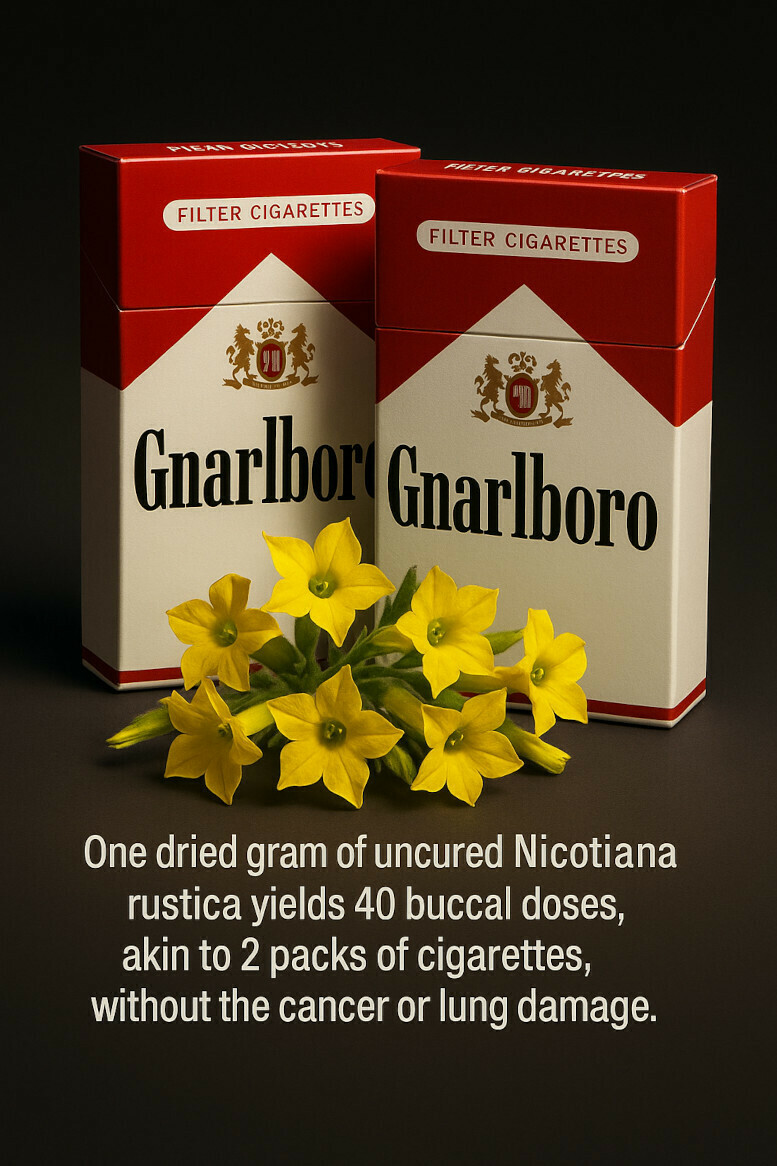
840620828-1gr_nicotiana_rustica__2_packs.jpg


Edible lime is foodgrade Ca(OH)2 edible sodium bicarbonate, arm and hammer baking soda, NaHCO3 may substitute, as can warming with foodgrade ammonium bicarbonate baking powder NH4HCO3 driving off excess ammonia, leaving nicotine freebase, as in making crack.
 
A anti-freeze fridge is a de-hydrater, only difference is the temperature.
So for dyring it should work. Couldn t test it myself i de-frost manual.
Or it becomes a ice cave in no time, if you have a frost free one.

That s the one probably you need, great for dehydrating too.
Good luck, wonder if it works. eMKee. it should work on paper ?
Wow you just gave me a flashback to many years ago, my friend used to use some form of fridge to dehydrate his speed paste before bagging it 😂

I assume whatever solvent was in the speed must have still been able to evaporate efficiently at that temperature 🤔
 
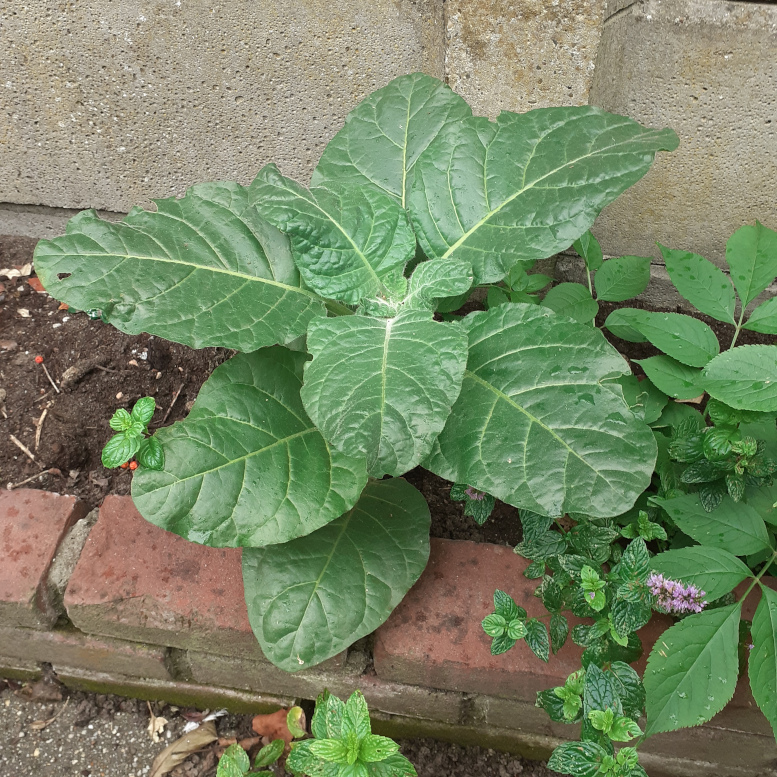
October 3, this makhorka is really going! May there be an Indian Summer?


949818591-3oct25_nicotiana_rustica777.jpg


AI advice on turning uncured tabacum and rustica leaf powder into freebase:


Baking Soda Leaf Treatment – Simple Guide

Purpose:

To lightly increase the pH of dried tobacco or makhorka leaf so more nicotine is in “free base” form, which absorbs faster through the mouth.

---

What you need
- Food-grade baking soda (sodium bicarbonate, NOT washing soda, NOT ammonia)
- Clean water
- Spray bottle or small mister
- pH paper (strips, range 6–10)
- Gloves, good ventilation

---

Make the solution
- Mix 5–10 grams baking soda per 1 liter of water
(≈ 1–2 level teaspoons per quart).
- This gives a mild solution, pH ~8.3. Stronger is not better.

---

Treat the leaf
1. Place dry, crumbled leaf in a clean bowl.
2. Lightly mist with the solution: about ½–1 mL per gram of leaf.
(Just damp, never wet or soaking.)
3. Mix well so moisture spreads evenly.

---

Check & adjust
- Press pH paper against the damp leaf.
- Target pH: 8.0–8.5.
- If lower, add one more light mist.
- Never push above pH 8.8.

---

Dry & store
- Spread treated leaf thinly.
- Air-dry completely (no heat).
- Store only when crisp-dry again.

---

Safety notes
- Higher free-base nicotine = faster, stronger hit. Go slowly.
- Stop immediately if you feel nausea, dizziness, sweating, or palpitations.
- Always wear gloves; avoid dust or spray in eyes.
- Keep solution away from children/pets.

---

Rule of thumb: Light spray, mild pH, never above 8.5.
 
Last edited:
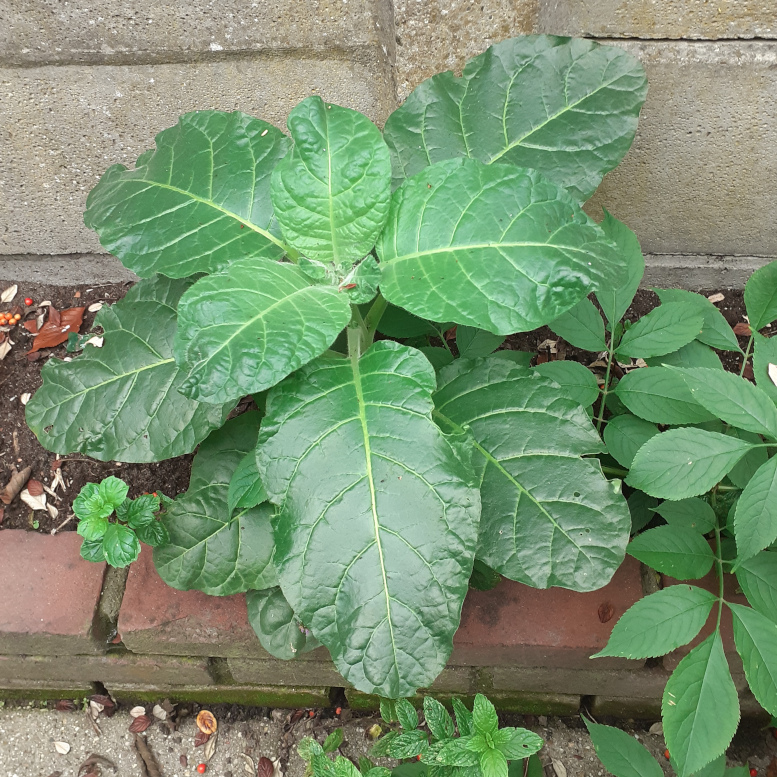
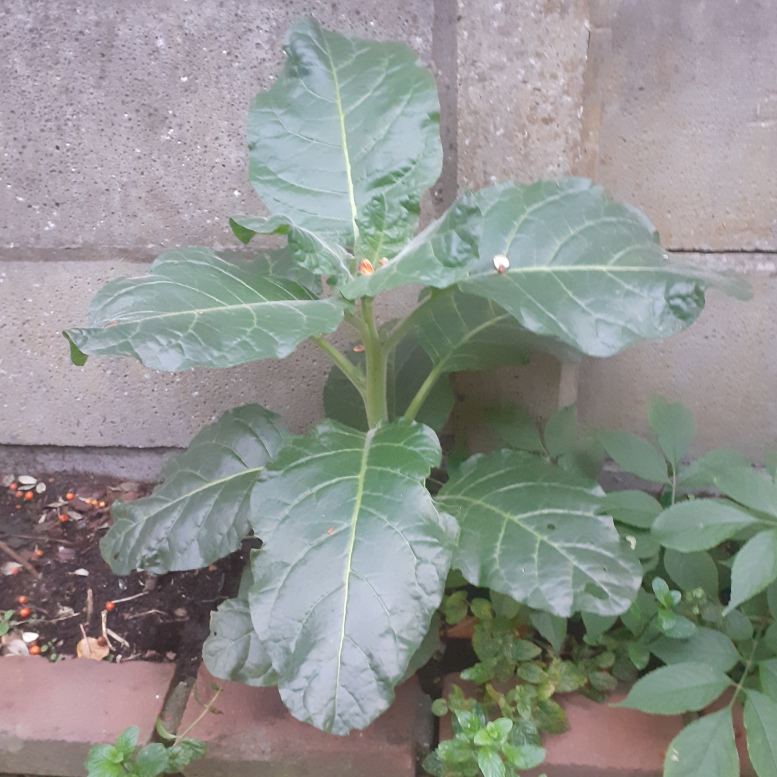
12 days later, 15 effin october in Dutch climate, the Makhorkas are growing huge. I dont think i'll get seeds this year but look at these!

053765750-15oct25_makhorka2_web.jpg


this one shows its first flower bud.. Not gonna make it i think before the frost, but a good leaf harvest is coming!

053765721-15oct25_makhorka1_web.jpg


The leaves shine with nicotine. I love this plant, and old CCCP Makhorka, as grown in Siberia, proves to be fairly hardy so far. Please: mild weather!
 
Top