[I omitted slide 4 because of misinformation. Nicotiana tobaccum
does contain MAOIs.✱]
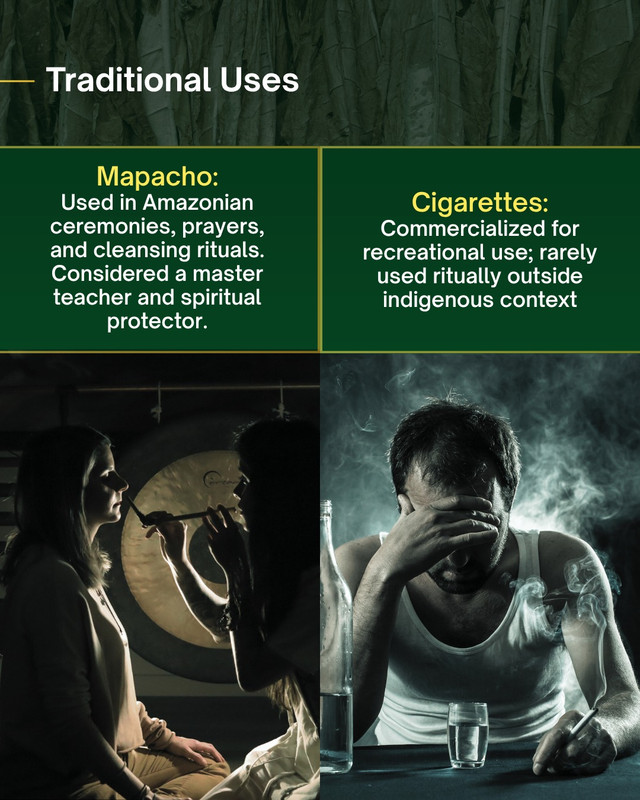
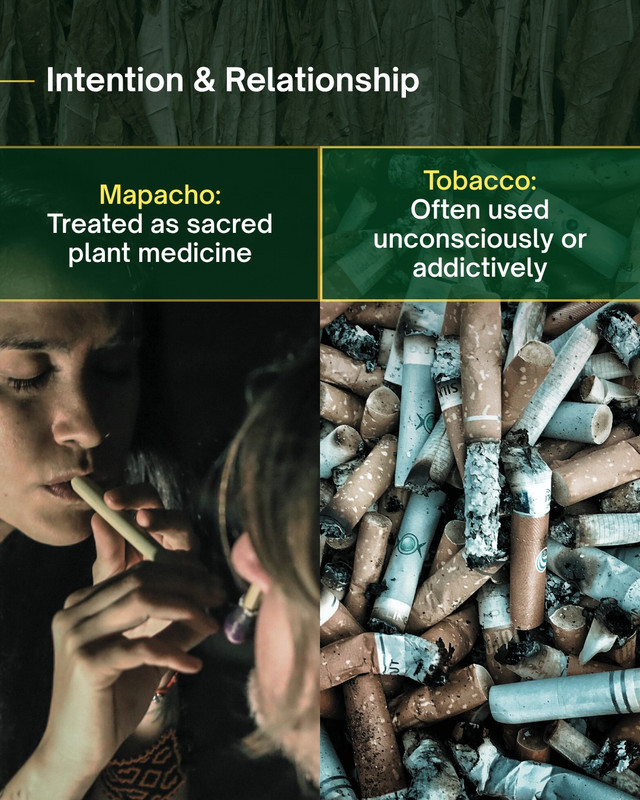

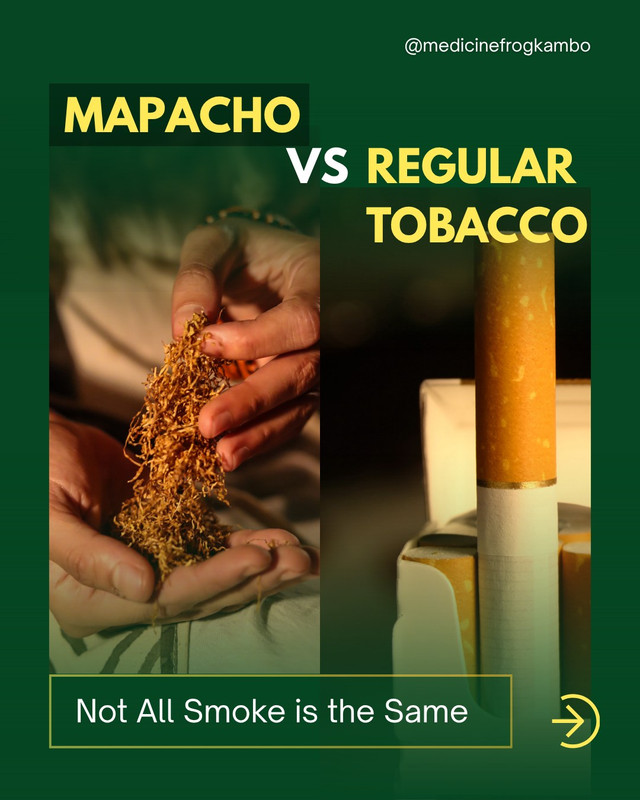
Did you know not all tobacco is the same?
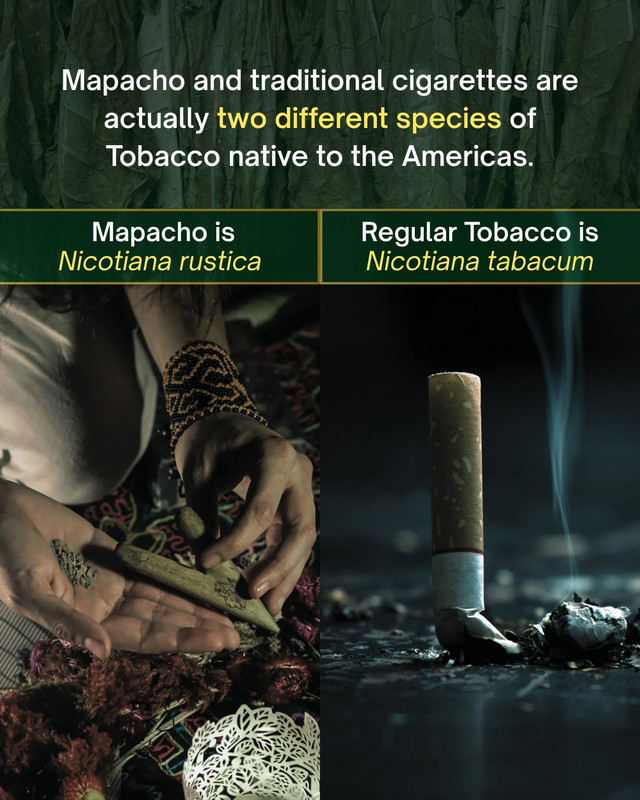
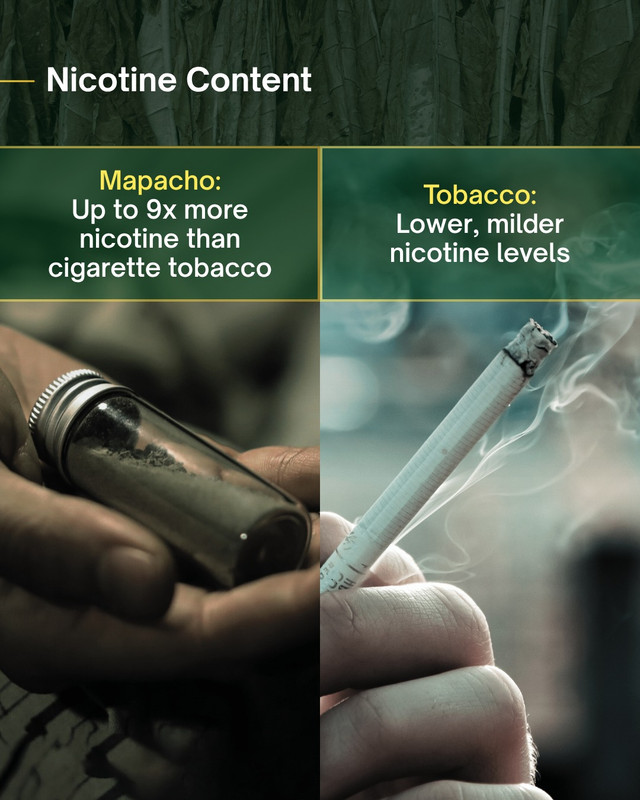
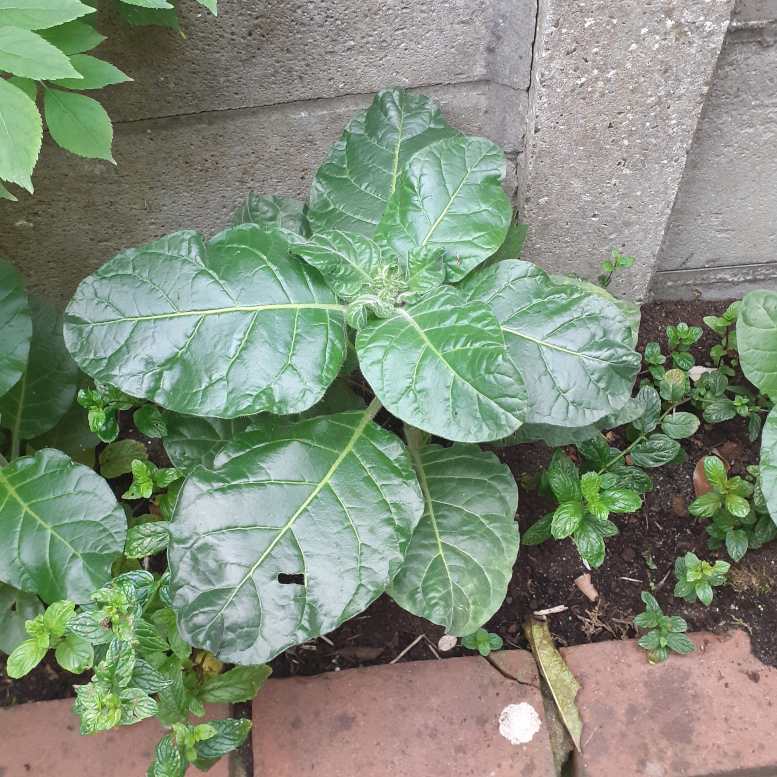
Mapacho, or Nicotiana rustica, is a potent, sacred plant used ceremonially by many Indigenous cultures of the Amazon. Unlike commercial tobacco, it has significantly more nicotine, fewer chemical additives, and is regarded as a powerful spirit ally.
Mapacho is often used for grounding, prayer, and energetic protection, a far cry from the way cigarettes are typically consumed. One is a medicine, the other an industry.

Know the difference. Respect the lineage.
Ready to deepen your understanding of sacred tobacco?
Join our Sacred Rapéh Tobacco Course and unlock profound healing and spiritual transformation by mastering the sacred practices of Rapéh and tobacco.
[
https://kambospecialist.com/tobaccocourse/]
https://www.instagram.com/medicinefrogkambo/p/DXE1Wz3lcCQ/ 2026-04-13
✱"Recently alkaloids of the harmala group, harman and norharman, have been isolated from cured commercial tobaccos and their smoke. They constitute a chemical group of beta-carbolines, which include harmine, harmaline, tetrahydroharmine, and 6-methoxy harmine, all with hallucinogenic properties. While to date no native varieties of tobacco have been analyzed for these substances, it is a reasonable supposition that their composition may vary widely, depending upon the variety and growth, and that some of the native-grown tobaccos may contain a relatively high concentration of them.[ 8 ]
8. Henry Hobhouse, Seeds of Change: Five Plants That Transformed Mankind
(New York: Harper & Row, 1985), p. 108
Food of the Gods. Terence McKenna. 1992, 1993. Chapter 11. Complacencies of the Peignoir: Sugar, Coffee, Tea, and Chocolate, pages 196-197
"Recently, positron emission tomography imaging has shown that smokers have a much lower activity of peripheral and brain MAO-A (30%) and -B (40%) isozymes compared to non-smokers."
Human monoamine oxidase is inhibited by tobacco smoke: beta-carboline alkaloids act as potent and reversible inhibitors. Herraiz, T., Chaparro, C. 2005. Biochemical and biophysical research communications, 326(2), 378–386. 10.1016/j.bbrc.2004.11.033 Abstract









 This is the work of repair,
 And if it moves you, hit subscribe so you never miss a thread in this larger weave. We be weavin these plants into the social fabric daily!
 Try it free or join the circle at kambocommunity.com