jveiojajoivioedsac
Bluelighter
- Joined
- Jun 27, 2025
- Messages
- 110
What does Xanax do to MDMA and 2C-B? I thought it would make you go to sleep.Xanax, but close



What does Xanax do to MDMA and 2C-B? I thought it would make you go to sleep.Xanax, but close


Well Xanax is GABA-ergic, like alcohol and GHB, for example. Like other benzos, it's sedating, hypnotic, amnesic, and it's a musculoskeletal relaxant. Xanax's strong suit is anxiolysis, at which it excels – I simply cannot feel panicked on alprazolam. It generally triggers the parasympathetic nervous system (opposite of fight or flight), calming your nerves and lessening adrenergic responses, allowing blood to flow toward the skin away from the muscles, and lowering tension in the body.What does Xanax do to MDMA and 2C-B? I thought it would make you go to sleep.

For when im coming downWhat does Xanax do to MDMA and 2C-B? I thought it would make you go to sleep.

Imo synthetic and semisynthetic xanthines are the key, once I get my lab back up and running I'll be taking a series of swings at maximizing the euphoria you can get from theobromine while minimizing physical stimulation. Will likely need to pair it with an anxiolytic like L-theanine with phenibut, but that's fine. I'm just trying to make myself the best variants of caffeine pills I can hahaha.

Have you tried the xanthine called theacrine? It's available from a few places. A nice alternative to caffeine.
Has anyone of you tried pure 8-chlorotheophylline? Have been curious about it for a while. I’ve never seen a report apart from dramamine where it is the counter ion of the diphenhydramine base.Imo synthetic and semisynthetic xanthines are the key, once I get my lab back up and running I'll be taking a series of swings at maximizing the euphoria you can get from theobromine while minimizing physical stimulation.
Has anyone of you tried pure 8-chlorotheophylline? Have been curious about it for a while. I’ve never seen a report apart from dramamine where it is the counter ion of the diphenhydramine base.
Imo synthetic and semisynthetic xanthines are the key, once I get my lab back up and running I'll be taking a series of swings at maximizing the euphoria you can get from theobromine while minimizing physical stimulation.
...it looks like caffeine does behave as 5-HT2 antagonist according to this study. Human dose equivalent to achieve these effects would be about 7mg/kg daily for 7 days. What is also of note is that caffeine seems to be a stronger serotonin antagonist than adenosine antagonist, and adenosine antagonism was thought to be caffeine's primary role.
Chronic Caffeine Alters the Density of Adenosine, Adrenergic, Cholinergic, GABA, and Serotonin Receptors and Calcium Channels in Mouse Brain
"1. Chronic ingestion of caffeine by male NIH strain mice alters the density of a variety of central receptors.
2. The density of cortical A1 adenosine receptors is increased by 20%, while the density of striatal A2Aadenosine receptors is unaltered.
3. The densities of cortical β1 and cerebellar β2 adrenergic receptors are reduced by ca. 25%, while the densities of cortical α1 and α2 adrenergic receptors are not significantly altered. Densities of striatal D1 and D2 dopaminergic receptors are unaltered. The densities of cortical 5 HT1 and 5 HT2 serotonergic receptors are increased by 26–30%. Densities of cortical muscarinic and nicotinic receptors are increased by 40–50%. The density of cortical benzodiazepine-binding sites associated with GABAA receptors is increased by 65%, and the affinity appears slightly decreased. The density of cortical MK-801 sites associated with NMDA-glutaminergic receptors appear unaltered.
4. The density of cortical nitrendipine-binding sites associated with calcium channels is increased by 18%.
5. The results indicate that chronic ingestion of caffeine equivalent to about 100 mg/kg/day in mice causes a wide range of biochemical alterations in the central nervous system."
This is the table summarizing the effects of caffeine on various receptors and ion channels.
Chronic Caffeine Alters the Density of Adenosine, Adrenergic, Cholinergic, GABA, and Serotonin Receptors and Calcium Channels in Mouse Brain
...
Increase in "receptor" density implies caffeine is an antagonist at that "receptor". Hence, the increase in densities of adenosine, serotonin, GABA, nicotine, etc receptor


These halo-xanthines may also be useful for making captagon-like pro-drugs of phenethylamines surpassing molecular weight limits in some legislations.Has anyone of you tried pure 8-chlorotheophylline? Have been curious about it for a while. I’ve never seen a report apart from dramamine where it is the counter ion of the diphenhydramine base.
@Allylbenzene woah I had to look up theacrine because I'd never heard of it, and apparently it's found in cupuaçu (a very exotic Brazillian amazon fruit) and in chinese bitter tea - both of which I've tried and had no idea about the stimulant effects or about theacrine. Very interesting.
@Allylbenzene it has such a long half-life eh? I could see myself getting insomniac on it
Theacrine, i.e., 1,3,7,9-tetramethyluric acid, is one of the major purine alkaloids found in leaf of a wild tea plant species Camellia kucha. Theacrine has been attracted great attentions academically owing to its diverse health benefits. Present review examines the advances in the research on the health beneficial effects of theacrine, including antioxidant effect, anti-inflammatory effect, locomotor activation and reducing fatigue effects, improving cognitive effect, hypnotic effect, ameliorating lipid metabolism and inhibiting breast cancer cell metastasis effect.
This suggests that theacrine possesses potent sedative and hypnotic properties and its central nervous system effects is different from those of caffeine and theobromine.
...
Theacrine worked as a non-selective adenosine receptor agonist to induce a hypnotic effect through the adenosine system.
 pmc.ncbi.nlm.nih.gov
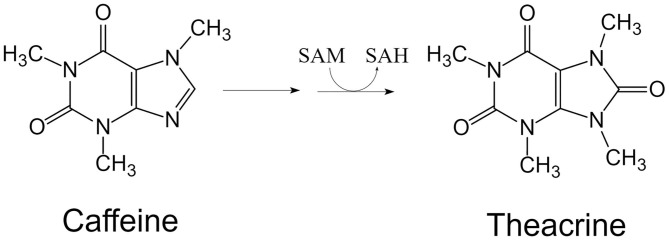
Theacrine is structurally similar to caffeine, but in fact its physiological effects are quite different from the latter. Theacrine is shown to be stimulatory when used in higher doses, however, it can actually have a sedative effect when used in low doses such as the amount consumed through tea leaves of Camellia kucha. Oral administration of theacrine (10 and 30 mg/kg) could significantly prolong the sleeping time induced by pentobarbital (p < 0.01), while caffeine and theobromine exhibited an inverted effect on mice. This suggests that theacrine possesses potent sedative and hypnotic properties and its central nervous system effects is different from those of caffeine and theobromine.
@Allylbenzene well I'll definitely give bitter tea a second shake, this is very intriguing. Maybe track down the powder form if the tea is still tastes too bitter to drink.

I've actually got a baggie of theacrine about ten feet away from me. I don't know if I'd call it noticeably sedative, but it's certainly weaker than caffeine and a little bit more euphoric. It reminds me of the mania that can come from 15-30mg of ketamine, or 0.25mg of Xanax, the way that there's an overlap in light sedation and mania.It's reported to be like a relaxing vesion of caffeine. Traditionally, the tea is drank for uplifting relaxation iirc.
I'm sure pro-GABA things like theanine/linalool/agmatine/uridine/CBG/magnolol/honokiol would easily calm things down.
Theacrine From Camellia kucha and Its Health Beneficial Effects - PMC
Theacrine, i.e., 1,3,7,9-tetramethyluric acid, is one of the major purine alkaloids found in leaf of a wild tea plant species Camellia kucha Hung T. Chang. Theacrine has been attracted great attentions academically owing to its diverse health ...
I've actually got a baggie of theacrine about ten feet away from me. I don't know if I'd call it noticeably sedative, but it's certainly weaker than caffeine and a little bit more euphoric. It reminds me of the mania that can come from 15-30mg of ketamine, or 0.25mg of Xanax, the way that there's an overlap in light sedation and mania.
Theacrine is structurally similar to caffeine, but in fact its physiological effects are quite different from the latter. Theacrine is shown to be stimulatory when used in higher doses, however, it can actually have a sedative effect when used in low doses such as the amount consumed through tea leaves of Camellia kucha.
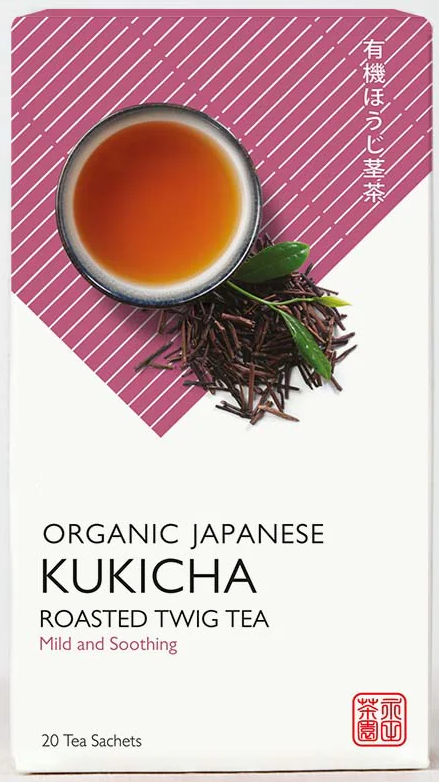
It looks like this tea is made from the normal tea plant Camellia sinensis, I guess the stems and twigs must have a different balance of caffeine/theobromine/theacrine than the leaves do. Interesting.There's also roasted twig tea.

Looks like there's theanine in the mix too.It looks like this tea is made from the normal tea plant Camellia sinensis, I guess the stems and twigs must have a different balance of caffeine/theobromine/theacrine than the leaves do. Interesting.
Theanine, a tea plant (Camellia sinensis)-specific non-proteinogenic amino acid, is one of the most important components conferring the taste quality and health benefits of tea. It is primarily synthesized in roots of tea plants and transported to new shoots, where it is mainly distributed to the young stem; however, tea is predominantly produced from young leaves. To promote more theanine allocation to young leaves, the molecular mechanism underlying theanine distribution between stems and leaves requires elucidation. In this study, we found the ratios of stem-to-leaf theanine content in the new shoots of 11 tea plant cultivars ranged from 3.8 to 8.8.
I've never tried these, as just judging by the phenethylamine SAR, they should be weaker and less impressive than MDA, MDMA, 6-APB, etc., but as somebody who finds a ton of empathogenic value in certain psychedelics (mescaline, 25X-NBXX's, 2C-B, etc) do you think these would be worth trying?Scrolling through erowids experience vaults makes me sad the days of methylone & it's hype tail riders are gone.
It's been so long since I've tried methylone, ethylone & 5-Methylethylone.
They really deserve a place in the drug market.
I really have a soft spot in my heart for Methylone, Ethylone & 5-Methylethylone.I've never tried these, as just judging by the phenethylamine SAR, they should be weaker and less impressive than MDA, MDMA, 6-APB, etc., but as somebody who finds a ton of empathogenic value in certain psychedelics (mescaline, 25X-NBXX's, 2C-B, etc) do you think these would be worth trying?
It breaks my heart to think of 5-Methyl-3,4-Methylenedioxy-anything being used on ethylone instead of 5-Me-MDA.