Would Remote Mind Control Be Possible With Current Technology?

Im not sure about serial killers but don’t believe that targeting plays much if any role in most serial killers.

Mass shooters are another story. Aaron Alexis was almost assuredly targeted by a the covert weapon.

This looks like the intelligence officials from Russia, China and possibly islamic nations are intentionally trying to exacerbate the racism against that type of people, to provoke them to commit terrorist attacks in USA.
 
Yeah, I forgot about that evil scumbag, that Oprah promoted. I forget all the sick details, but a monster and a few hundred, yes hundreds of women accused this guy of sexual misconduct.

Like all the other scumbag men, Dr. Phil is just annoying and Dr Oz is just a crazy, shit obsessed heart surgeon who aspired to be a quack, but so many others. Of course I don't remember Oprah apologizing about promoting this pervert fake healer or any other degenerates she was pals with. She is above doing wrong in her own delusional narcissistic mind.

John of God; ah shouldn't that name alone be enough to sense something is wrong. This guy like all the 'healers' are frauds and you would think Oprah would know that. Some where along the way Oprah became oblivious to reality. Oprah seems to have gone missing since the Diddy scandal,🤔.
 
So are they trying to get this Act passed? How do we try to get that in other states?
It's pretty weakly written legislature. Low hanging fruit will provide much stronger legal protection.

here is some decent laws passed by Colorado. Given the amazing amount of felines regularly committed by the criminals behind thus filth I don't think legal protection is a barrier, but could eventually be used for prosecution.

\
 
•5 min. ago
Atoraxic


Diagnosing American Decline: The Geopolitics of Havana Syndrome Jamey Essex (21 Feb 2025)​


"ABSTRACT

Beginning in 2016, American diplomats and family members

posted to Havana, Cuba reported debilitating medical symp-

toms with no known physical cause. Many US officials labelled

these as evidence of a new malady called ‘Havana syndrome’,

caused by experimental weaponry deployed by hostile rival

states. Since then, American personnel in numerous other coun-

tries have self-reported hundreds more cases. Despite no med-

ical consensus on the cause or coherence of symptoms and no

proof that such weaponry exists, US officials have consistently

claimed that Havana syndrome is the result of directed attacks

by hostile powers. I examine how, amid questions of US vulner-

ability and potential shifts in the global balance of power,

Havana syndrome presents both a medical and a geopolitical

diagnosis. The contested diagnosis and scripting of Havana

syndrome reflects and propagates anxieties about American

power, rewriting and enacting US geopolitical codes through

sites and scales from the body to the globe.

Introduction

In July 2015, then-Secretary of State John Kerry arrived in Havana to oversee

the US embassy’s re-opening in the Cuban capital, closed since the US severed

diplomatic relations in 1961. The embassy re-opening formed a cornerstone of

President Barack Obama’s attempts to thaw relations between the US and

Cuba, alongside easing of travel and financial restrictions, the re-opening of

Cuba’s own embassy in Washington and even talk of lifting the longstanding

embargo. Yet tensions remained between the US and Cuba and this opening in

US–Cuba relations snapped shut through 2017 as the incoming Trump

administration quickly began reversing Obama’s policies towards its

Caribbean neighbour. That summer, the US expelled two Cuban diplomats

from Washington after initial reports of ‘sonic attacks’ in Havana, and

President Donald Trump announced that he was ‘canceling the last adminis-

tration’s completely one-sided deal with Cuba’ (quoted in Phippen 2017; see

also Gramer 2017). The US pulled two-thirds of its staff from Havana, issued

a travel alert for the country and upgraded the Havana posting to the State

Department’s highest risk level (Essex and Bowman 2022). By this point, two

dozen Americans and several Canadians posted to Havana had reported

a range of debilitating health symptoms. Some US officials began labelling

these symptoms as evidence of ‘Havana syndrome’ and accusing Cuba of

allowing or facilitating attacks on US personnel by hostile powers, namely,

Russia and potentially China, using experimental weaponry. Though there is

no medical consensus on the cause or coherence of symptoms and no tangible

public proof that such weaponry was the cause of reported symptoms, many

US officials and pundits have consistently claimed that Havana syndrome is

the result of directed attacks, and the federal government has begun compen-

sating what they identify as victims of these ‘anomalous health incidents’ (AHIs).

Amid questions of potential shifts in the global order and US vulnerability,

Havana syndrome presents both a medical and a geopolitical diagnosis, high-

lighting anxieties about American strength and great power rivalry in the

twenty-first century. This paper explores this double diagnosis by examining

how US geopolitical imagination and geopolitical codes are changing in

relation to Havana syndrome, as it cannot be understood in its particulars or

its import through medical diagnosis alone. Official and media framings and

responses in the US are coalescing around an emergent geopolitical consensus

about Havana syndrome not despite but because of the medical dissensus

around the condition’s symptoms, causes and coherence. Confusion and

disagreement about the aetiology of Havana syndrome among pundits, offi-

cials, lawmakers and bureaucrats is a marker of the kind of threat it presents,

a fog of engagement rooted in new forms of hybrid warfare, challenges to US

hegemony and the weakness of American response. In what follows, I look

first at the medical debate around Havana syndrome and its coherence as

a clear and diagnosable condition with an identifiable cause. I then examine

how Havana syndrome presents a vital element in the potential reworking of

US geopolitical codes and the spatialisation of threats as the US contends with

the possibility of renewed great power rivalry alongside the emergence of

strategies, tactics and technologies associated with hybrid warfare. In this,

the bodies and infrastructures that form US diplomatic and intelligence net-

works become key sites where state actors articulate these processes, rework

geopolitical codes and forge new strategic paths and narrative frames

The Medical Diagnosis

There is currently no medical consensus that a condition that can be

uniformly and consistently diagnosed as Havana syndrome exists, nor

that the symptoms reported by those suffering them are primarily the

result of the physiological impacts of exposure to directed sonic or

microwave energy. These symptoms include a range of neurological and

physical symptoms often associated with concussion, though in these

cases without any evidence of concussion: tinnitus and inner ear pain;

lingering issues with sleep, balance, vision and memory; persistent and

often debilitating headaches; and depression and anxiety. Despite the lack

of medical agreement of causes, many US officials and media outlets have

cited diagnoses of the initial few dozen personnel who complained of

symptoms in Havana as evidence of a singular condition with an identifi-

able cause, namely, that hostile foreign actors targeted them with pre-

viously unknown sonic or microwave weapons. A range of medical and

other scholars have strongly questioned the validity of these diagnoses

and a vigorous debate about medical techniques, clinical care, access to

patient data, the role of pre-existing conditions and the physiological and

mental health effects of life abroad in the diplomatic and intelligence

services has followed.

The contours of this debate, in which US government officials, policy-

makers and media outlets have persisted in discussing Havana syndrome as

an identifiable and diagnosable condition produced through attacks by hostile

powers, suggest that the medical diagnosis of Havana syndrome cannot be

understood outside of its geopolitical context. Most important in this respect is

the syndrome’s purported novelty as a particular set of symptoms without

clear evidence for their usual physical causes. This has allowed for a strong

geopolitical framing of the syndrome’s aetiology that has taken on

a momentum and legitimacy within official circles amid ongoing medical

debate about the coherence of the syndrome as a singular condition and the

causes of the reported symptoms. I do not argue that the symptoms experi-

enced are not real and debilitating for those suffering them, but instead that

the resulting gap between medical dissensus and an emerging geopolitical

consensus allows US strategists, media and lawmakers to propagate

a framing of American bodies and spaces, especially those tied to the diplo-

matic and intelligence communities posted abroad, as vulnerable and under

attack. This in turn informs and shapes the rewriting of US geopolitical codes

in line with now seemingly tangible evidence of the intents and capabilities of

hostile autocratic powers.

One of the primary factors in the gap between clinical descriptions of self-

reported symptoms in affected individuals and the interpretation of these as

evidence of a more coherent and diagnosable singular condition caused by

directed attacks is the oft-stated finding that those suffering symptoms had no

obvious evidence of the physical and especially neurological trauma, such as

concussion, that would normally produce them. A March 2018 article in the

Journal of the American Medical Association based on the examination of 21

individuals self-reporting symptoms noted that most reported hearing a loud

piercing directional noise immediately before the onset of symptoms

(Swanson Ii et al. 2018). This crucial early piece of medical literature on

Havana syndrome identifies ‘additional notable differences between the man-

ifestations observed in the Havana cohort and characteristic acute

and persistent symptoms of concussion’, including some symptoms lasting

for several months (Swanson Ii et al. 2018, 1131). Without completely ruling

out other possible causes, including viral, chemical or social and psychogenic

origins, discussed below, this influential initial report in a leading medical

journal opened the door for a reading of these symptoms as a coherent whole

with an unknown but potentially singular cause."

https://www.tandfonline.com/doi/full/10.1080/14650045.2025.2468770?src=exp-la

This paper is paywalled but I'm going to quote some of its content and demystify some of everyone's questions.

under construction so stop back to read the full post

 

Forced Orgasm and Remote Sexual Assault​


Sexual Assault ranks as one of the most traumatic experiences. With widespread victims, especially female victims, reporting remote sexual assaults and even forced orgasm it's important to demystify how this is being done.

Once again we see infrasound and near hearing and bio resonance frequencies being used in the assaults.

Here is an explanation

JUNE 25, 2024

Sensory Secrets of Penis and Clitoris Unlocked after More Than 150 Years

Mysterious nerve structures called Krause corpuscles respond to specific low-frequency vibrations, scientists finally confirm

BY SARA REARDON & NATURE MAGAZINE

"Mysterious nerve structures called Krause corpuscles respond to specific low-frequency vibrations, scientists finally confirm"

https://www.scientificamerican.com/article/sensory-secrets-of-penis-and-clitoris-unlocked-after-more-than-150-years/#:~:text=In%20a%2019%20June%20paper,range%20of%2040–80%20hertz.

Every body cavity has a specific bio resonance frequency, these are unique to individual targets dynamics.


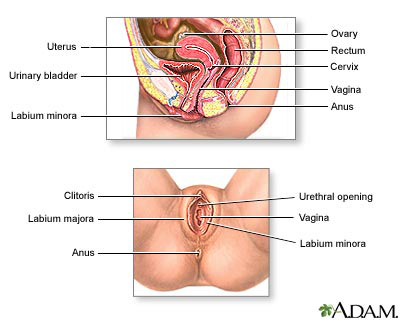
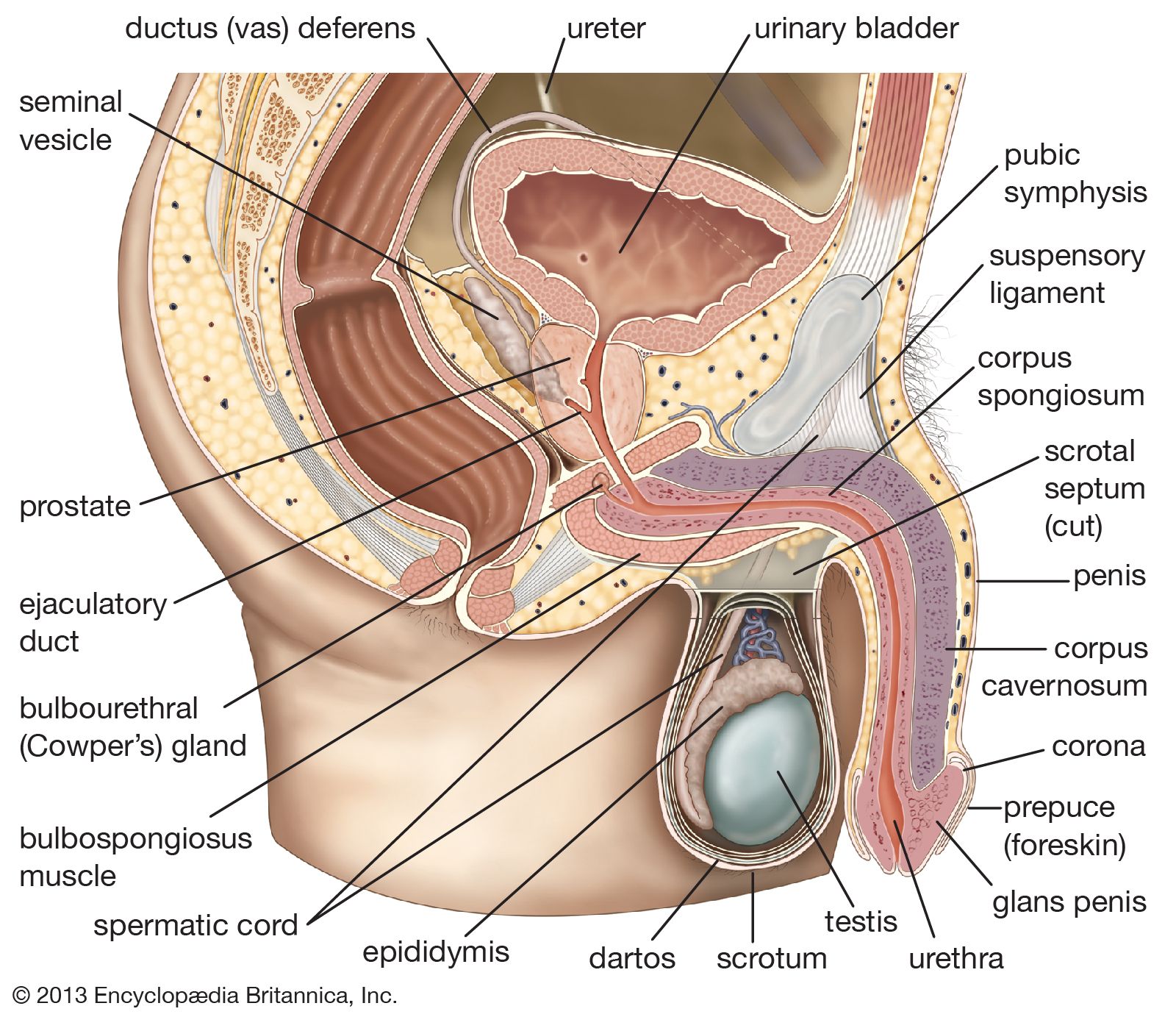
The Vagina is a body cavity. The Urethras in the Penis is a cavity. The Anus is a cavity. The systems ability to target vibrational induced sensation to specific areas of the anatomy allow low frequency vibration to the Clitoris.


LowerKb_Female_Anatomy.jpg


Organs-system.jpg


By utilizing target specific bio frequencies it is possible to induce low frequency vibrations in the sexual anatomy of targets. This is how the sexual assaults are done. With some victims reporting enduring sexual assaults, TWELVE HOURS A DAY, for months or years, we really see how traumatic this dynamic of the onslaught can be. We also need to think of those victims who are enduring this silently and alone because they are terrified to talk about it.
 
If this goes trough, and I'm certainly not racist, but racism is different from combating Foreign Enemies.. will this filth end? This physiological weapon has undeniable roots in Communist indoctrination and almost no roots in Fee World thinking or tactics. Remember the Gulag or face its modern technological equivalent.


If this happens .. I wonder what effect it may have on this weapon and its victims.

Let's see what this "purge" brings.
 
Last edited:
Navigating who, where, what, when, how and why of trauma exposure and response 2021


These concepts are key to look at in the delusional implant process and level of delusion found in victims of this weapon.

Profound and sustained torture and trauma requires victims to answer these hard wired questions.

If there are no legitimate or easily found answers then victims will generate answers or be very susceptible to false answers suggested to them from sources like public media. The delusions are formed to psychologically protect the victim from the vicious assault.

This weapon implants delusion and then uses the implanted delusion to fool unaware people that its vile existence is a “mass delusion.”
 
I totally believe that DID…multiple personality disorder is being weaponized as methods involved in SRA

The people involved with these cults go to great lengths to keep these victims under their control once they’ve been fully programmed and considered an asset

MkUltra

Most of this stems all the way back from the nephilum bloodlines

This is why the London bridge is always falling down

It goes deeeeep

Some do become targets. But people gaslight them with the conspiracy theories claim. People really have no idea what some have been thru
 
Last edited by a moderator:
The Battle for Your Brain: Defending the Right to Think Freely in the Age of Nuerotechnology Nita Farahany


Nita Farahany is a professor of Law and Philosophy at Duke University. Her worst fears are already here and much worse, have been in unconsensual development for twenty years and victims of the forced BCI/SSI are already aware of this. Working my way through this work right now. Clearly gets it.. wonder what she would write if she knew how advanced it really is.

Thoughts.. please include quotes if you can.

This work is $
 
A new law in California protects consumers’ brain data. Some think it doesn’t go far enough. MIT Technology Review 2024


3 down.. but I have returned to CO multiple times since the law passed and it was ignored.. imagine that mass killer, mass tortures, mass sexual assault criminals break this law. It’s a good thing though because it establishes laws that eventually may become useful.


But it is largely based off sound not EMF.. mind control on free people doesn’t work.. I can’t wait to see the rest of the Worlds response.. hupp seeya China. Your shit doesn’t work on free people and since your population is all ready weak from indoctrination your future does not look bright.
 
Last edited:
Advertisers Are Hijacking Your Dreams Caroline Delbert 2021

So many victims of the weapon are reporting forced dreams that deliver specific content.. here is an interesting related article.


“this is the actual stuff of nightmares”

The techniques they presented was what i was thinking of how they do it, but until now i didn’t make the connection to the subliminal audio being to root.

I occasionally have sleep paralysis so i will wake up before the weapon realizes i’m awake and i get to listen until i break the paralysis. I heard nothing one time, i heard a cartoon snoring sound repeated another (like a sound effect possibly used in a sleep lab) and heard the simple nonsense looped abuse the other. This is what threw me off. As soon as the sleep paralysis is broken at all, twitch of a finger, the weapon instantly fires up.

About the concept presented of cigarette cessation this system uses fear association implantation in many of its attempts at induced dream behavior modification.
 
Last edited:
Hypnotic Induction and the Forced Interface

“Some documents of this MKULTRA precursor explain the desire to create Manchurian

Candidates, which are individuals that could be used to act in a certain way against their will, for

CIA use. This could be done in a variety of ways; however, hypnosis was the most enticing”

[https://digitalcommons.cedarville.e...t.cgi?article=1005&context=history_capstones)

“Hypnosis can be seen as ‘a waking state of awareness, (or consciousness), in which a person’s attention is detached from his or her immediate environment and is absorbed by inner experiences such as feelings, cognition and imagery’.[^(1)](https://pmc.ncbi.nlm.nih.gov/articles/PMC6357291/#bibr1-1178224219826581) Hypnotic induction involves focusing of attention and imaginative involvement to the point where what is being imagined feels real. By the use and acceptance of suggestions, the clinician and patient construct a hypnotic reality.

Everyday ‘trance’ states are part of our common human experience, such as getting lost in a good book, driving down a familiar stretch of road with no conscious recollection, when in prayer or meditation, or when undertaking a monotonous or a creative activity. Our conscious awareness of our surroundings *versus* an inner awareness is on a continuum, so that, when in these states, one’s focus is predominantly internal, but one does not necessarily lose all outer awareness.

Hypnosis could be seen as a meditative state, which one can learn to access consciously and deliberately, for a therapeutic purpose. Suggestions are then given either verbally or using imagery, directed at the desired outcome. This might be to allay anxiety by accessing calmness and relaxation, help manage side effects of medications, or help ease pain or other symptoms. Depending on the suggestions given, hypnosis is usually a relaxing experience, which can be very useful with a patient who is tense or anxious. However, the main usefulness of the hypnotic state is the increased effectiveness of suggestion and access to mind/body links or unconscious processing. Hypnosis can not only be used to reduce emotional distress but also may have a direct effect on the patient’s experience of pain.[^(2)](https://pmc.ncbi.nlm.nih.gov/articles/PMC6357291/#bibr2-1178224219826581)

Hypnosis in itself is not a therapy, but it can be a tool that facilitates the delivery of therapy in the same way as a syringe delivers drugs. Hypnosis does not make the impossible possible, but can help patients believe and experience what might be possible for them to achieve.

Hypnotic states have been used for healing since humankind has existed, but because hypnosis can be misused for so-called entertainment and has been portrayed in the media as something mysterious and magical, supposedly out of the hypnotic subject’s control, it has been viewed with distrust and scepticism by many health professionals. However, recent advances in neuroscience have enabled us to begin to understand what might be happening when someone enters a hypnotic state,[^(3)](https://pmc.ncbi.nlm.nih.gov/articles/PMC6357291/#bibr3-1178224219826581)^(–)[^(8)](https://pmc.ncbi.nlm.nih.gov/articles/PMC6357291/#bibr8-1178224219826581) and evidence is building for the use of hypnosis as a useful tool to help patients and health professionals manage a variety of conditions, especially anxiety and pain.

Landry and colleagues[^(9)](https://pmc.ncbi.nlm.nih.gov/articles/PMC6357291/#bibr9-1178224219826581) and Jensen and Patterson[^(10)](https://pmc.ncbi.nlm.nih.gov/articles/PMC6357291/#bibr10-1178224219826581) give good and comprehensive information on recent research into the neural correlates of hypnosis. The study of hypnosis is complex and many factors such as context, expectation and personality affect hypnotic response as well as the suggestions used.

As clinicians, we know that simply knowing something cognitively does not necessarily translate into being able to control emotions such as fear and anxiety. A simple ‘model’ that can be used to help patients understand that this is quite a usual response is that of right/left brain, which can also correlate with conscious/unconscious and intellectual/emotional processing.Hypnosis can be seen as ‘a waking state of awareness, (or consciousness), in which a person’s attention is detached from his or her immediate environment and is absorbed by inner experiences such as feelings, cognition and imagery’.[^(1)](https://pmc.ncbi.nlm.nih.gov/articles/PMC6357291/#bibr1-1178224219826581) Hypnotic induction involves focusing of attention and imaginative involvement to the point where what is being imagined feels real. By the use and acceptance of suggestions, the clinician and patient construct a hypnotic reality.

Everyday ‘trance’ states are part of our common human experience, such as getting lost in a good book, driving down a familiar stretch of road with no conscious recollection, when in prayer or meditation, or when undertaking a monotonous or a creative activity. Our conscious awareness of our surroundings *versus* an inner awareness is on a continuum, so that, when in these states, one’s focus is predominantly internal, but one does not necessarily lose all outer awareness.

Hypnosis could be seen as a meditative state, which one can learn to access consciously and deliberately, for a therapeutic purpose. Suggestions are then given either verbally or using imagery, directed at the desired outcome. This might be to allay anxiety by accessing calmness and relaxation, help manage side effects of medications, or help ease pain or other symptoms. Depending on the suggestions given, hypnosis is usually a relaxing experience, which can be very useful with a patient who is tense or anxious. However, the main usefulness of the hypnotic state is the increased effectiveness of suggestion and access to mind/body links or unconscious processing. Hypnosis can not only be used to reduce emotional distress but also may have a direct effect on the patient’s experience of pain.[^(2)](https://pmc.ncbi.nlm.nih.gov/articles/PMC6357291/#bibr2-1178224219826581)

Hypnosis in itself is not a therapy, but it can be a tool that facilitates the delivery of therapy in the same way as a syringe delivers drugs. Hypnosis does not make the impossible possible, but can help patients believe and experience what might be possible for them to achieve.

Hypnotic states have been used for healing since humankind has existed, but because hypnosis can be misused for so-called entertainment and has been portrayed in the media as something mysterious and magical, supposedly out of the hypnotic subject’s control, it has been viewed with distrust and scepticism by many health professionals. However, recent advances in neuroscience have enabled us to begin to understand what might be happening when someone enters a hypnotic state,[^(3)](https://pmc.ncbi.nlm.nih.gov/articles/PMC6357291/#bibr3-1178224219826581)^(–)[^(8)](https://pmc.ncbi.nlm.nih.gov/articles/PMC6357291/#bibr8-1178224219826581) and evidence is building for the use of hypnosis as a useful tool to help patients and health professionals manage a variety of conditions, especially anxiety and pain.

Landry and colleagues[^(9)](https://pmc.ncbi.nlm.nih.gov/articles/PMC6357291/#bibr9-1178224219826581) and Jensen and Patterson[^(10)](https://pmc.ncbi.nlm.nih.gov/articles/PMC6357291/#bibr10-1178224219826581) give good and comprehensive information on recent research into the neural correlates of hypnosis. The study of hypnosis is complex and many factors such as context, expectation and personality affect hypnotic response as well as the suggestions used.”

As clinicians, we know that simply knowing something cognitively does not necessarily translate into being able to control emotions such as fear and anxiety. A simple ‘model’ that can be used to help patients understand that this is quite a usual response is that of right/left brain, which can also correlate with conscious/unconscious and intellectual/emotional processing. “

[https://pmc.ncbi.nlm.nih.gov/articl...://pmc.ncbi.nlm.nih.gov/articles/PMC6357291/)

Everything you experience.. no matter how seemingly bizarre has a reason.. even if it’s ultimately pseudoscience or super classified “science“ bullshit. You can track their intention down.

One of the major goals of the original MK Ultra goals is hypnosis. This is a “mind control“ program. Its directive and intent is to influence thinking and behaviors of victims covertly or despite conscience resistance. Hypnotism is a mojor spear they want and are probing in this program and weapon.

Hypnosis requires induction. Apparently some people are more susceptible than others to this. The forced audio uses clear and easily identifiable hypnotic induction techniques during phases of its assault.

Some of the blatantly obvious ones:

Sensory overload

[https://howtodoinductions.com/induc...ntroduction,sounds from within the building…)

Rhythmic induction

[https://hypnosiscredentials.com/tec...om/techniques/mastering-hypnotic-inductions/)

Mirroring

[

Rhythmic brain wave induction

[https://www.frontiersin.org/journal...ence/articles/10.3389/fncel.2021.649262/full)

Suggestibility and brain waves

[https://m1psychology.com/brain-wave...//m1psychology.com/brain-waves-and-hypnosis/)

Brain wave overview

[https://nhahealth.com/brainwaves-the-language/](https://nhahealth.com/brainwaves-the-language/)

If your in one of these phases i would suggest breaking the rhythmic pattern regularly buy throwing in a dance step or other technique to disrupt your rhythm so the system has to readjust to mirror you.

It uses a multi layered rhythmic induction technique in order to attempt to mirror your movements and also induce a theta brain wave.
 
Top