sekio
Bluelight Crew
Ergoline benzodiazepine site agonists?
Could we have a more innately anxiolytic ergoline psychedelic?
Could we have a more innately anxiolytic ergoline psychedelic?




N&PD Moderators: Skorpio
You are using an out of date browser. It may not display this or other websites correctly.
You should upgrade or use an alternative browser.
I Like to Draw Pictures of Random Molecules
sekio
Bluelight Crew
Ergoline benzodiazepine site agonists?
Could we have a more innately anxiolytic ergoline psychedelic?

Ergoline benzodiazepine site agonists?
Could we have a more innately anxiolytic ergoline psychedelic?
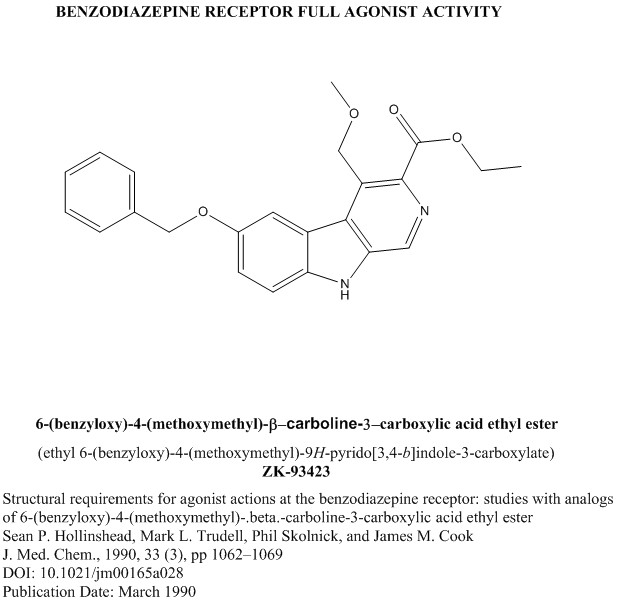
To get a new molecule therapy candidate this far it had to go through a lot of screens & tests. I don't think it's a psychedelic.
This image
This is old cross-quoting, as this molecular strikingly reminds me of some bioactive-like structure which I cant recall at that time, but it is intriguing.
I can remember now what it resemble!
It is a deworming agent, Mebendazole!
Does this strange bzp site agonist have antihelminthic activity too?
https://thehill.com/policy/defense/416485-cia-considered-potential-truth-serum-for-terror-suspects
[h=1]CIA considered use of anti-anxiety drug in terror suspect interrogations: report[/h]
The CIA considered the use of an anti-anxiety medication for use in questioning terror suspects about upcoming plans for attacks, according to an unreleased agency report.
The Associated Press, which obtained a copy of the document, reports that the agency considered the use of the drug Versed for use during terror suspect interrogations in 2002 but ultimately decided against asking government lawyers for permission to use it.
A federal court ordered the 90-page CIA report, which details the existence of "Project Medication," to be provided to the American Civil Liberties Union (ACLU), which spent more than two years in court fighting the Obama and Trump administrations over it.
"Project Medication," the report states, was permanently shut down in early 2003 after the CIA decided against setting up another potential conflict with the Justice Department over the use of enhanced interrogation techniques, according to the AP.
The report states that prior to its closure, CIA researchers looked into old agency experiments with LSD during the 1950s and 1960s as well as experiments done by the Soviet Union, both of which were apparently in search of some kind of "truth serum," the AP reported.
“Versed was considered possibly worth a trial if unequivocal legal sanction first were obtained,” the report says, according to the AP. “There were at least two legal obstacles: a prohibition against medical experimentation on prisoners and a ban on interrogational use of ‘mind-altering drugs’ or those which ‘profoundly altered the senses.’”
“At the beginning of 2003, the Office of Medical Services’ review, informally termed ‘Project Medication’ was shelved, never to be reactivated,” the report concludes.
sekio
Bluelight Crew
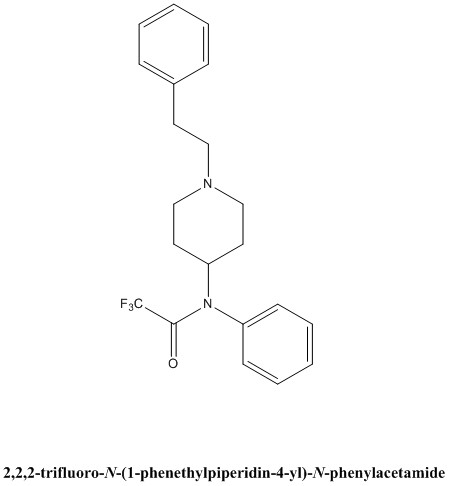
Sulfonamide analogs of fentanyl? Are they active? Do we know anything about 'em?

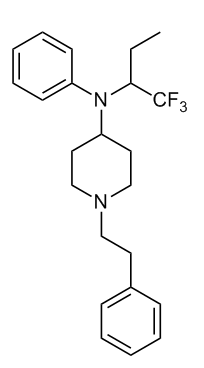
Or maybe an alpha-CF3 amine instead of an amide?
 Last edited:
Sulfonamide analogs of fentanyl? Are they active? Do we know anything about 'em?
Or maybe an alpha-CF3 amine instead of an amide?
Sulfonamide analogues show up in one patent but were not developed as analgesics. There are no reports on any alpha-trifluoromethyl compounds that I could find.
sekio
Bluelight Crew
or even, oxazoline analogs of carfentanyl?

Sulfonamide analogs of fentanyl? Are they active? Do we know anything about 'em?
The sulfonamide version of methadone ("IC-26"; "methiodone") seems to be active at least, although its exact potency is not exactly known (it seems to be generally in the same ballpark as methadone though).
https://en.wikipedia.org/wiki/IC-26
Wouldn't be surprised if Janssen had actually synthed the sulfonyl version of fentanyl ("sulfontanyl"? wait, that sounds too close to sufentanil...) at one point.
Forensic Toxicology
July 2017, Volume 35, Issue 2, pp 232–243| Cite as
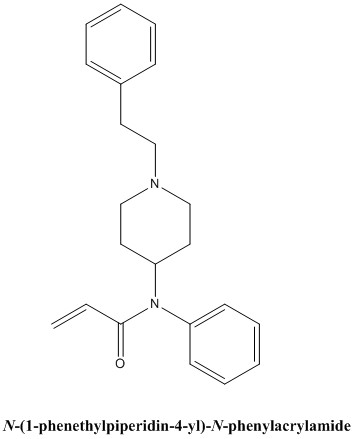
Acryloylfentanyl, a recently emerged new psychoactive substance: a comprehensive review
Abstract
N-(1-Phenethylpiperidin-4-yl)-N-phenylacrylamide, or acryloylfentanyl (acrylfentanyl), is a synthetic opioid and a close structural analogue of fentanyl, which is widely used in medicine as an adjunct to general anaesthesia during surgery and for pain management. Until recently, acryloylfentanyl was known only from the scientific literature, but in 2016 this non-controlled substance became available on the illicit drug market as a powder and nasal spray in Europe and the USA. By the end of 2016, detection of acryloylfentanyl in six European countries, including 47 deaths associated with the drug, had been reported to the European Monitoring Centre for Drugs and Drug Addiction (EMCDDA) through the European Union Early Warning System, which is a part of the system designed to identify and respond to the appearance of new psychoactive substances that may pose potential public health risks similar to drugs controlled under the United Nations drug control conventions. Herein we review what is known about this potent narcotic opioid. In addition to describing its chemical properties and the synthetic routes, analytical methodologies for the identification of the substance, as well as the limited information on the biological properties, including in vitro and in vivo pharmacological studies with the substance, are summarised. Analytically confirmed acute intoxications show that the signs and symptoms of acryloylfentanyl poisoning correspond to the opioid overdose triad of decreased consciousness, miosis and respiratory depression. Importantly, naloxone works as an antidote in life-threatening poisoning. The major human urinary metabolites identified in fatal overdose cases were nor-acryloylfentanyl, as well as mono- and dihydroxylated derivatives and their conjugates.
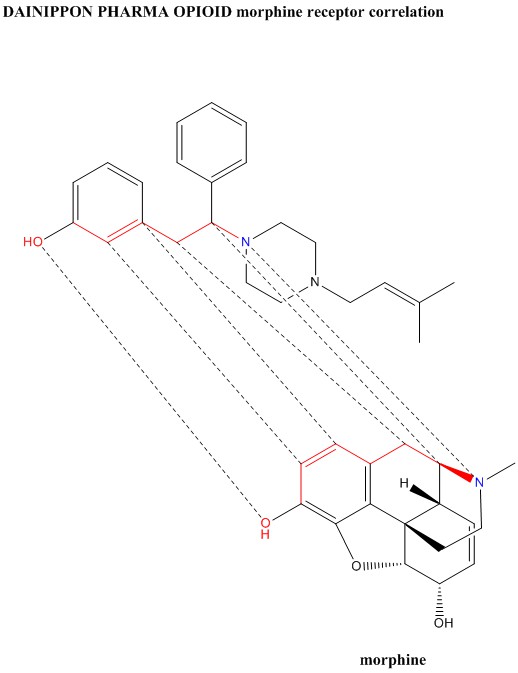
 Dainippon Pharma: MT-45 lead & optimized analogs claimed in 1978 patent. Recreational use of MT-45 has been associated with hearing loss and unconsciousness. See
https://en.wikipedia.org/wiki/MT-45 The patent claims that the double bond on the butenyl group can be on either carbon #2 or #3.

These Dainippon pharma opioid analgesics based on MT-45 are very interesting for a number of reasons. They can act as agonists or antagonists. And chemically they are very simple compounds.
 Last edited by a moderator:
sekio
Bluelight Crew
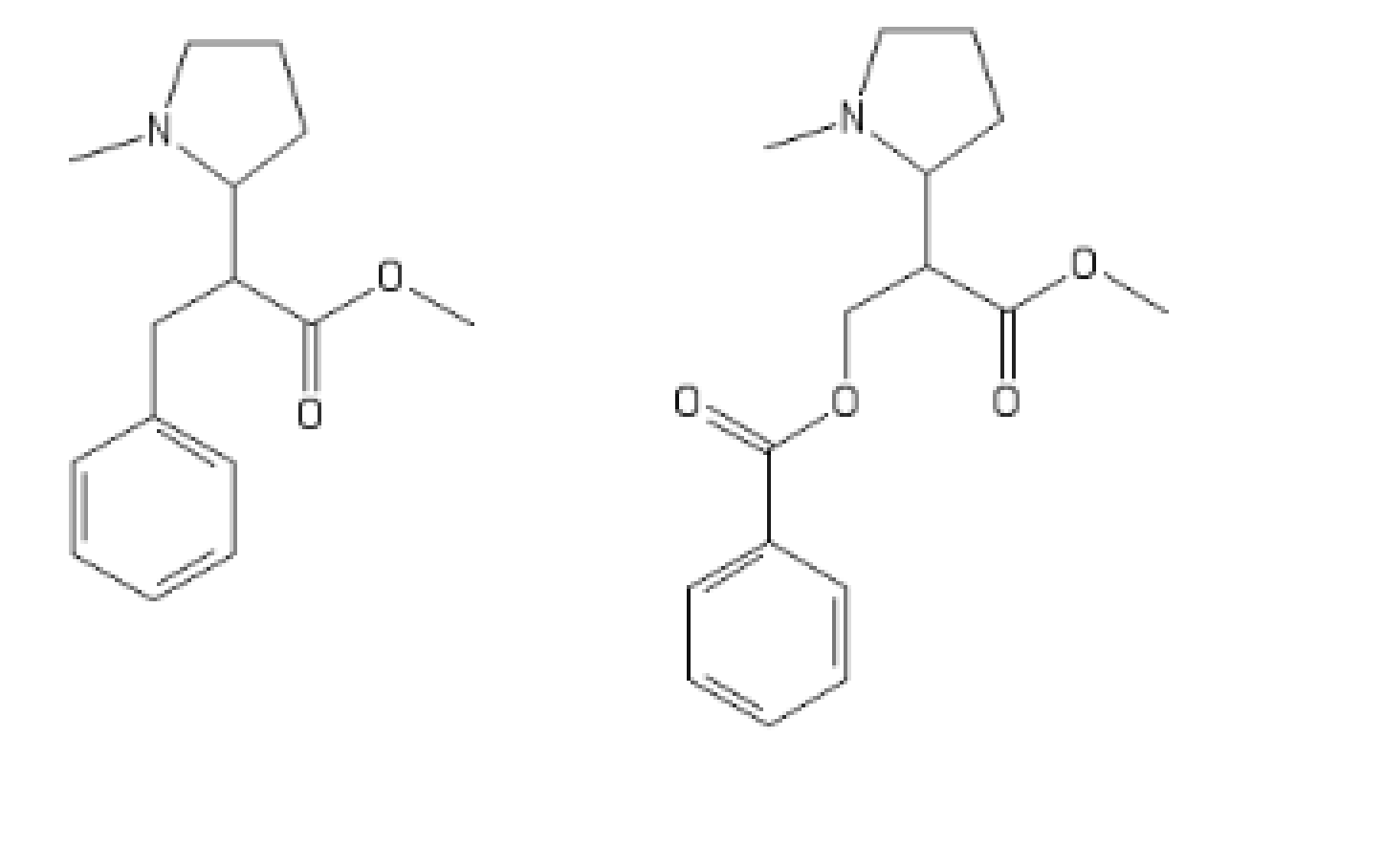
Are the amide analogs of cocaine, RTI-xx, and/or methylphenidate known, active, etc?


Dresden
Bluelighter
Are the amide analogs of cocaine, RTI-xx, and/or methylphenidate known, active, etc?
Should be. Not as euphoric but much longer lasting.
Should be. Not as euphoric but much longer lasting.
Any ref?
Are the amide analogs of cocaine, RTI-xx, and/or methylphenidate known, active, etc?
The N-methyl-amide cocaine analogue is known. A study was done (https://doi.org/10.1021/jm00079a017) comparing a series of cocaine analogues with the methyl ester swapped out for various moieties. The potency of each compound was tested by seeing what concentration was required to displace a tritiated cocaine analogue in rat striatal membrane. The results suggest that the N-methyl-amide analogue is ~1/30th the potency of cocaine.
The other amides you drew seem to be unreported.