





"if you wanted to reduce crime ... you could abort every black baby in the country and your crime rate would go down. That would be an impossible, ridiculous, and morally reprehensible thing to do, but your crime rate would go down."
~William Bennett
NSFW:

Drug Warriors Say 'Bring Back The War On Drugs,' Because It Totally Worked
09/10/2015

For most Americans, including some presidential candidates, the record on the U.S.-led drug war is settled: After spending more than $1 trillion on efforts that have taken or destroyed the lives of millions around the world, drug purity has risen, prices have fallen and rates of use have remained the same. It has, in no uncertain terms, been a catastrophic failure.
But in an op-ed published in The Boston Globe this week, two former drug czars say we have it all wrong. It's time to "Bring back the war on drugs," they argue, and recommit to an enforcement-first policy that puts forth incarceration and interdiction as the best tools to address surging heroin overdose rates.
The column, written by William J. Bennett and John P. Walters, drug czars under Presidents George H.W. Bush and George W. Bush, is based on the controversial premise that the drug policies of the last quarter century have actually been effective.
"For 25 years before President Obama, U.S. policy confronted drug addiction with effective public health measures, emphasizing education, prevention, and treatment and, crucially, programs to reduce production, interdict the drugs, and lead international partnerships to destroy drug cartels," they write. "It worked."
The drug czars don't provide any metric to explain how they arrived at this conclusion. And the notion that the drug war did much of anything to reduce the supply of drugs is befuddling.
Heroin wasn't the drug of choice during the height of the drug war in the 1980s, but the price of cocaine -- a key target for drug warriors of that period -- gradually fell throughout the decade, reflecting an increase in supply. To address crack-cocaine use, politicians enacted harsh mandatory minimum sentencing laws, throwing people in jail for simple possession and treating 5 grams of crack the same as 500 grams of powder cocaine. These laws have long been criticized as racially biased, and in 2010, Congress finally lowered the sentencing disparity from 100-to-1 to 18-to-1 -- so today, 5 grams of crack is treated like 90 grams of cocaine.
The basic claim that Obama has somehow reversed drug control priorities -- requiring someone to "bring back the war on drugs" -- also seems wildly overstated. While Obama has indeed shifted efforts toward treatment, his 2015 drug control budget still allocated $14.5 billion to domestic law enforcement, interdiction and international operations. He requested $10.9 billion for treatment and prevention the same year.
Bennett and Walters employ revisionist history and at least one prohibitionist aphorism to conclude that we need a return to the "war on drugs" of the 1980s and 1990s to combat heroin. Stopping "criminal acts will stop the epidemic," they write, suggesting overdose deaths could be prevented if not for a lack of political will from the White House.
But the Obama administration "refuses to attack supply," the drug czars argue, instead dedicating resources to overdose-reversal medication and treatment. They also write that Obama's concerns about the drug war's legacy on mass incarceration represent a "deadly falsehood."
It's unclear what's false about criticizing a set of drug war-era policies that helped make the U.S. home to what is now 25 percent of the world's prisoners, despite being home to less than 5 percent of its population. What's clearer is that Bennett and Walters have grossly oversimplified the very serious issue of opioid abuse.
One thing the drug czars zip past is an inconvenient fact: this addiction crisis isn't just about heroin. Thousands and thousands of people are also addicted to -- and dying from -- prescription pain medications. The effort to restrict that supply has already greatly harmed those in genuine need of pain pills, yet people are still addicted. We will never entirely eliminate the supply of pain medications -- they are legal, beneficial and highly profitable products, after all -- and so, the only sensible route is to treat the addiction itself.
The drug czars also overlook a key factor in how the epidemic spreads. Addicts who have blown through their savings and have no income need money to fund their habits. What they often do is turn to people they know and suggest that, as a group, they all go in together and buy a bag. An addict doesn't have much, but access to a dealer is a valuable commodity, and in exchange for that access, the addict will get a free hit and split the rest with friends or associates. That makes an addict not just a single, static casualty, but also a source of spreading addiction. If you can treat that addict, they will stop spreading the disease, so to speak.
But for Bennett and Walters, Obama is partly to blame for this proliferation, because he permitted states like Colorado and Washington to legalize marijuana, which they say has allowed drug gangs to spread addiction and drug use "on a widening scale."
Kevin Sabet, who worked for both Walters and his successor, said the drug czars are "tapping into a legitimate criticism," and seconded their concern about loosening marijuana laws and the message it sends. But banging the war drums isn't necessarily helpful, Sabet said in an email to The Huffington Post. "I don't think using War analogies is particularly helpful, nor do I think [heroin addiction] is a partisan issue. Interestingly, the only person to make real substantive mention of this issue so far has been Hillary, and she should be commended for that."
But let's not even go there with the gateway thing. Seriously? As a broader principle, it's simply not true. We've also done an awful lot of reporting on the opiate crisis over the last few years, and none of us have met a single person who said something like, "The moment it all fell apart for me was when I took that first puff of a joint." That's just not how it happens.
Continued with links here http://www.huffingtonpost.com/entry/drug-war-william-bennett-john-walters_55f1ae50e4b03784e27840fb
.................................................................................................................
I was not aware the drug war was ever ended.. seems to me its still going strong????
William J. Bennett
John P. Walters
Look at all the sketchy stuff these guys are wrapped up in..
Weapons, propaganda, world power.. and education.. LOL there is a reason the government wants to educate our children for free!!!!!
Hudson Institute
NSFW:
The Hudson Institute is an American conservative[2][3] non-profit think tank based in Washington, D.C.. It was founded in 1961 in Croton-on-Hudson, New York, by futurist, military strategist, and systems theorist Herman Kahn and his colleagues at the RAND Corporation.
The Institute is committed to innovative research and analysis that promotes "global security, prosperity and freedom."[4] It promotes public policy change in accordance with its stated belief that "America’s unique and central role in the global system offers the best foundation for security, the defense of liberty, and assuring economic growth."
The Institute is committed to innovative research and analysis that promotes "global security, prosperity and freedom."[4] It promotes public policy change in accordance with its stated belief that "America’s unique and central role in the global system offers the best foundation for security, the defense of liberty, and assuring economic growth."
RAND Corporation
NSFW:
"General Henry H. Arnold, commander of the United States Army Air Forces, established Project RAND with the objective of looking into long-range planning of future weapons"
"RAND was created after individuals in the War Department, the Office of Scientific Research and Development, and industry therefore began to discuss the need for a private organization to connect military planning with research and development decisions"
"RAND was created after individuals in the War Department, the Office of Scientific Research and Development, and industry therefore began to discuss the need for a private organization to connect military planning with research and development decisions"
K12 (company)
NSFW:
K12 Inc. is a for-profit education company that sells online schooling and curriculum to state and local governments. Its educational products and services are designed as alternatives to traditional "bricks and mortar" education for public school students from kindergarten to 12th grade. K12 is a publicly traded education management organization (EMO) that provides online education services to charter school students. It is paid for from taxes.[3] K12 is the largest EMO in terms of enrollment.[4]
Claremont Institute
NSFW:
"The mission of the Claremont Institute is to teach the practical application of the principles of the American Founding to the next generation of Conservative leaders, and to build them into a community dedicated to preserving constitutional government"
Project Lead the Way
NSFW:
Project Lead The Way (PLTW) is a United States 501(c)(3) non-profit organization that develops STEM curricula for use by elementary, middle, and high schools. PLTW also provides professional development training for instructors.
Center for Security Policy
NSFW:
"The Center for Security Policy (CSP) is a conservative national security think tank based in Washington, DC. CSP has attracted controversy due to its hard line against radical Islam and the July 2015 nuclear agreement with Iran. CSP advocates policies based on what it describes as a philosophy of "Peace through Strength" through research, outreach to Congress and policymakers, books and publications, and a daily radio show, Secure Freedom Radio.[1][2] CSP has close ties to top Republicans and hosted a series of national security summits in 2015 with GOP presidential candidates"
So it promotes its crazy talk through bribery and propaganda and is hooked all the way up to the top of the GOP.
So it promotes its crazy talk through bribery and propaganda and is hooked all the way up to the top of the GOP.
Futurology
NSFW:
"futurology is the study of postulating possible, probable, and preferable futures and the worldviews and myths that underlie them."
In studying this they have a decent understanding of how to promote myths in an attempt to create a future scenario that they desire. I bet controlling the education of children would be a great place to promote these myths.
In studying this they have a decent understanding of how to promote myths in an attempt to create a future scenario that they desire. I bet controlling the education of children would be a great place to promote these myths.
NSFW:
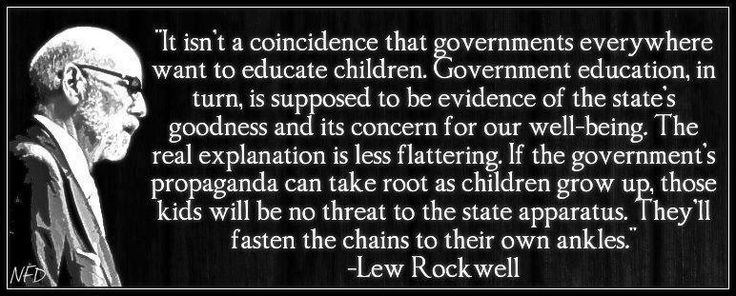
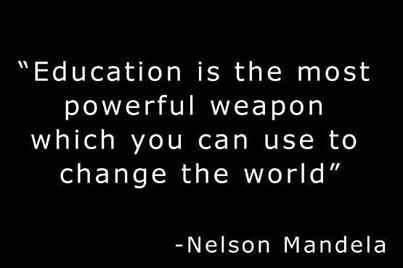

Well well well.. two people clearly interested in exercising and establishing control over large groups of people are backing the drug war. Who would have thunk it??
Last edited:




