


-
🇬🇧 🇸🇪 🇿🇦 🇮🇪 🇬🇭 🇩🇪 🇪🇺
European & African
Drug Discussion
Welcome Guest!
Posting Rules Bluelight Rules -
EADD Moderators: Shambles
You are using an out of date browser. It may not display this or other websites correctly.
You should upgrade or use an alternative browser.
You should upgrade or use an alternative browser.
Anonymous Operations
- Thread starter Marmalade
- Start date





cherrycolouredfunk
Bluelighter

Every house should have one.
Last edited:

hx_
Bluelighter
Yeah, fight the system!

parttime crackhead
Bluelighter
^ Haha, awesome.

cherrycolouredfunk
Bluelighter
Yeah, fight the system!
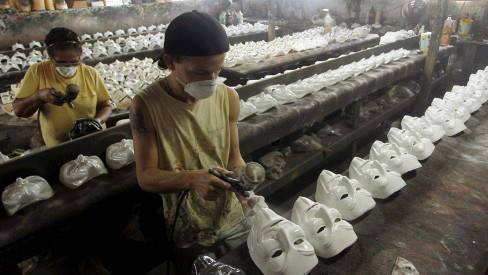
Well, I have to admit, that's news to me. The irony of it all, protesters probably wore them to protest about sweatshops.
I'll make my own. It's easy to do. It just won't be my features obviously.
Saudi Arabia banned importation of them back in May.
Last edited:

knock
Bluelighter
That has a name: recuperation.
Recuperation, in the sociological sense, is the process by which politically radical ideas and images are twisted, co-opted, absorbed, defused, incorporated, annexed and commodified within media culture and bourgeois society, and thus become interpreted through a neutralized, innocuous or more socially conventional perspective.[1][2][3] More broadly, it may refer to the cultural appropriation of any subversive works or ideas by mainstream culture. It is the opposite of détournement, in which images and other cultural artifacts are appropriated from mainstream sources and repurposed with radical intentions.
The concept in political philosophy of recuperation was first proposed by members of the Situationist International. The term conveys a negative connotation because recuperation generally bears the intentional consequence (whether perceived or not) of fundamentally altering the meanings behind radical ideas due to their appropriation or being co-opted into the dominant discourse.
Occupy Wall Street activists buy $15m of Americans' personal debt
Rolling Jubilee spent $400,000 to purchase debt cheaply from banks before 'abolishing' it, freeing individuals from their bills
Rolling Jubilee spent $400,000 to purchase debt cheaply from banks before 'abolishing' it, freeing individuals from their bills

A group of Occupy Wall Street activists has bought almost $15m of Americans' personal debt over the last year as part of the Rolling Jubilee project to help people pay off their outstanding credit.
Rolling Jubilee, set up by Occupy's Strike Debt group following the street protests that swept the world in 2011, launched on 15 November 2012. The group purchases personal debt cheaply from banks before "abolishing" it, freeing individuals from their bills.
By purchasing the debt at knockdown prices the group has managed to free $14,734,569.87 of personal debt, mainly medical debt, spending only $400,000.
"We thought that the ratio would be about 20 to 1," said Andrew Ross, a member of Strike Debt and professor of social and cultural analysis at New York University. He said the team initially envisaged raising $50,000, which would have enabled it to buy $1m in debt.
"In fact we've been able to buy debt a lot more cheaply than that."
The group is able to buy debt so cheaply due to the nature of the "secondary debt market". If individuals consistently fail to pay bills from credit cards, loans, or medical insurance the bank or lender that issued the funds will eventually cut its losses by selling that debt to a third party. These sales occur for a fraction of the debt’s true values – typically for five cents on the dollar – and debt-buying companies then attempt to recoup the debt from the individual debtor and thus make a profit.
The Rolling Jubilee project was mostly conceived as a "public education project", Ross said.
"We're under no illusions that $15m is just a tiny drop in the secondary debt market. It doesn't make a dent in the amount of debt.
"Our purpose in doing this, aside from helping some people along the way – there's certainly many, many people who are very thankful that their debts are abolished – our primary purpose was to spread information about the workings of this secondary debt market."
The group has focussed on buying medical debt, and has acquired the $14.7m in three separate purchases, most recently spending $13.5m on medical debt owed by 2,693 people across 45 states and Puerto Rico, Rolling Jubilee said in a press release.
“No one should have to go into debt or bankruptcy because they get sick,” said Laura Hanna, an organiser with the group. Hanna said 62% of all personal bankruptcies have medical debt as a contributing factor.
Due to the nature of the debt market, the group is unable to specify whose debt it purchases, taking on the amounts before it discovers individuals’ identities. When Rolling Jubilee has bought the debt they send notes to their debtors “telling them they’re off the hook”, Ross said.
Ross, whose book, Creditocracy and the case for debt refusal, outlines the problems of the debt industry and calls for a “debtors’ movement” to resist credit, said the group had received letters from people whose debt they had lifted thanking them for the service. But the real victory was in spreading knowledge of the nature of the debt industry, he said.
"Very few people know how cheaply their debts have been bought by collectors. It changes the psychology of the debtor, knowing this.
“So when you get called up by the debt collector, and you're being asked to pay the full amount of your debt, you now know that the debt collector has bought your debt very, very cheaply. As cheaply as we bought it. And that gives you moral ammunition to have a different conversation with the debt collector."
fucking unbelievable. 10 years
Jeremy Hammond: FBI directed my attacks on foreign government sites
Anonymous hacktivist told court FBI informant and fellow hacker Sabu supplied him with list of countries vulnerable to cyber-attack
Anonymous hacktivist told court FBI informant and fellow hacker Sabu supplied him with list of countries vulnerable to cyber-attack
The Anonymous hacktivist sentenced on Friday to 10 years in federal prison for his role in releasing thousands of emails from the private intelligence firm Stratfor has told a Manhattan court that he was directed by an FBI informant to break into the official websites of several governments around the world.
Jeremy Hammond, 28, told a federal court for the southern district of New York that a fellow hacker who went under the internet pseudonym “Sabu” had supplied him with lists of websites that were vulnerable to attack, including those of many foreign countries. The defendant mentioned specifically Brazil, Iran and Turkey before being stopped by judge Loretta Preska, who had ruled previously that the names of all the countries involved should be redacted to retain their secrecy.
Within a couple of hours of the hearing, the three countries had been identified publicly by Forbes, the Huffington Post and Twitter feeds serving more than a million followers. “I broke into numerous sites and handed over passwords and backdoors that enabled Sabu – and by extension his FBI handlers – to control these targets,” Hammond told the court.
The 28-year-old hacker has floated the theory in the past that he was used as part of an effective private army by the FBI to target vulnerable foreign government websites, using the informant Sabu – real name Hector Xavier Monsegur – as a go-between. Sabu, who was a leading figure in the Anonymous-affiliated hacking group LulzSec, was turned by the FBI into one of its primary informants on the hacker world after he was arrested in 2011, about six months before the Stratfor website was breached.
Referring to the hacking of foreign government websites, Hammond said that in one instance, he and Sabu provided details on how to crack into the websites of one particular unidentified country to other hackers who then went on to deface and destroy those websites. “I don’t know how other information I provided to [Sabu] may have been used, but I think the government’s collection and use of this data needs to be investigated,” he told the court
He added: “The government celebrates my conviction and imprisonment, hoping that it will close the door on the full story. I took responsibility for my actions, by pleading guilty, but when will the government be made to answer for its crimes?”
Hammond’s 10-year federal prison service makes it one of the longest punishments dished out for criminal hacking offences in US history. It joins a lengthening line of long jail terms imposed on hackers and whistleblowers as part of the US authorities' attempt to contain data security of government agencies and corporations in the digital age.
Preska also imposed a three-year period of probationary supervision once Hammond is released from jail that included extraordinary measures designed to prevent him ever hacking again. The terms of the supervision state that when he is out of prison he must: have no contact with “electronic civil disobedience websites or organisations”; have all his internet activity monitored; subject himself to searches of his body, house, car or any other possessions at any time without warrant; and never do anything to hide his identity on the internet.
Hammond’s 10-year sentence was the maximum available to the judge after he pleaded guilty to one count of the Computer Fraud and Abuse Act (CFAA) relating to his December 2011 breach of the website of the Austin, Texas-based private intelligence company Strategic Forecasting, Inc. Delivering the sentence, Preska dismissed the defendant’s explanation of his motivation as one of concern for social justice, saying that he had in fact intended to create “maximum mayhem”. “There is nothing high-minded and public-spirited about causing mayhem,” the judge said.
She quoted from comments made by Hammond under various internet handles at the time of the Stratfor hack in which he had talked about his goal of “destroying the heart, hoping for bankruptcy, collapse”. She criticised what she called his “unrepentant recidivism – he has an almost unbroken record of offences that demonstrate an almost total disrespect for the law.”
Before the sentence came down, Hammond read out an outspoken statement to court in which he said he had been motivated to join the hacker group Anonymous because of a desire to “continue the work of exposing and confronting corruption”. He said he had been “particularly moved by the heroic actions of Chelsea Manning, who had exposed the atrocities committed by US forces in Iraq and Afghanistan. She took an enormous personal risk to leak this information – believing that the public had a right to know and hoping that her disclosures would be a positive step to end these abuses.”
In his own case, he said that as a result of the Stratfor hack, “some of the dangers of the unregulated private intelligence industry are now known. It has been revealed through Wikileaks and other journalists around the world that Stratfor maintained a worldwide network of informants that they used to engage in intrusive and possibly illegal surveillance activities on behalf of large multinational corporations.”
Margaret Kunstler, Hammond’s lead defence lawyer, told the Guardian after the sentencing that the maximum punishment was “not a great surprise”. She said that Preska had turned Hammond’s own comments in web chats against him, “but I think she doesn’t understand the language that’s used in chat rooms and the internet – for her to have used such language against him and not understand what his comments meant seemed piggy to say the least.”

pinkpapaver
Bluelighter
don't know how true it is but I heard warner brothers have the rights to them masks or something?