• Psychedelic Drugs Welcome Guest
    View threads about
    Posting RulesBluelight Rules
    PD's Best Threads Index
    Social ThreadSupport Bluelight
    Psychedelic Beginner's FAQ
  • PD Moderators: Esperighanto | JackARoe |

Nootropics which psychedelic would induce the most neuroplasticity?

neuroplasticity is a bit of a fake term, a catch all, panacea word that is seriously abused by researchers, reporters, and psychonauts.

when I try to direct people to study nature, I am trying to get them to dig into and beyond the veils that accumulate in popular culture like the term "neuroplasticity" which people use freely and never grasp the meaning of.

it is abused in marketing, law making, and in experimental science as well.

Instead of you coming up with an explanation for "neuroplasticity" that is an apology for all the people abusing the term, you can abandon the word.
Focus instead upon what is really detected in experiments, and, or what is really happening in the lives we live. you can see in yourself and others increases and decreases in vigor, clarity, flexibility, etc.

---

Most people have the view that nerve tendrils like branching rootlets grow making new connections during neuroplastic activities, but this is only the case in developmental biology, i.e. for humans it happens in the first 3 months of foetal existence, after that hardly at all except in growth and healing from severe damage, or in experimentally growing brain organoids which more closely resemble tumors than functional brain tissue.

The changes in nerve tissue involving protein that happens every second of every minute of every day while awake or dreaming in adult humans, involves the microscopic formation of protein spines connecting branched axons and dendrites of cortical neurons - this interlinks neurons that fire together in the same fraction of a second - thus forming memory, enabling us to recognize what we encounter.

Even if you ask neuroscientists about "neuroplasticity", you will get more hand waving and confusion, because usually they cannot say what they mean other than - yes, protein was formed among nerve tissue, and we can see radio-labelled protein in this part of the tissue when the animal learned something.
 
I haven't seen any mention of DMT in this thread. Supposedly DMT is good for neuroplasticity via it's moderate activation of the sigma receptors.

Hopefully somebody better educated than me can elaborate.
 
There is something about Nature that is neuroplastic.
I think that walking barefoot on actual earth would be the most neuroplastic thing possible. Also drinking water from a freshwater source, water that has been structured in a coherent manner.

...after talking with my friend's daughter I am trying to formulate exactly what neuroplasticity is and what helps or hinders. Still real fuzzy.
Perhaps in simple terms, it's neurogenesis v the opposite.

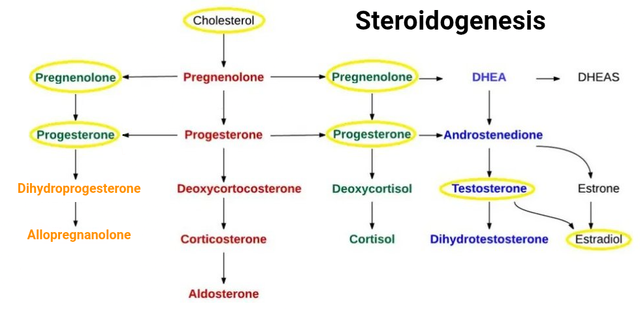
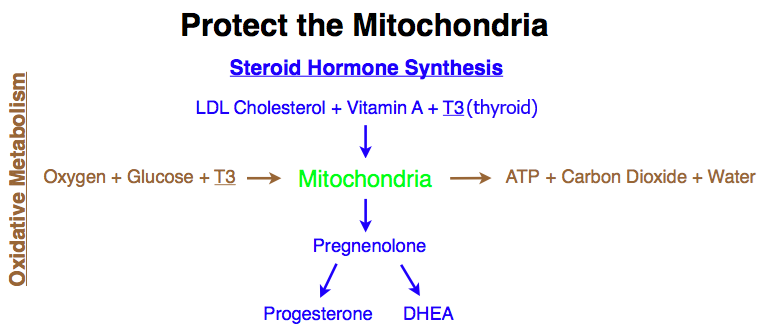
Neurogenesis involves notably BDNF, GDNF, NGF, 5-HT2a alongside inhibitory things like GABA & adenosine (but also inhibitory hormones notably progesterone, pregnenolone, allopregnanolone; see images below).

The opposite of neurogenesis is excitatory things which promote excitotoxicity (ie neurotoxicity) eg cortisol, adrenaline, glutamate.

2026-06-20-0o7-Kleki.png

image.png
 
Last edited:
Supposedly DMT is good for neuroplasticity via it's moderate activation of the sigma receptors.

Nice! I didn't know that sigma receptors did that kinda stuff.
These findings support a role for sigma-1 in the modulation of BDNF levels... Treatment with sigma-1 agonists might provide benefit...by increasing BDNF levels from endogenous sources. (source)
 
Nice! I didn't know that sigma receptors did that kinda stuff.
It's theorized that the sigma receptors are why some people respond to certain SSRIs better than others as some SSRIs hit the sigma receptors hard while others only minimally.

My personal speculation is that sigma might be why DMT produces rapid antidepressant effects in some people - though many of the same people respond well to psilocybin which is weaker at the sigma receptors so 5ht2a activation is probably still the main effect. As well as whatever downstream effects activation of these receptors has.

DXM also hits the sigma receptors, though I would assume it's nmda antagonism and SNRI effects are the main reason it's being used as an antidepressant nowadays.

The sigma receptors fascinate my casual armchair scientist mind though. I believe it is an area that deserves a lot more study.
 
Last edited:
I think that walking barefoot on actual earth would be the most neuroplastic thing possible. Also drinking water from a freshwater source, water that has been structured in a coherent manner.
Funny enough I walk through one of our state parks 2 miles away from my house to get natural spring water from an aquifer. Cleanest water comes from when the Earth filters it. Been doing that at least 20 years.

And even better recently one of my friends new girlfriends told me walking barefoot in grass is the fastest way to ground oneself. Been doing that too every morning in my meadow walk.

Lately been forest bathing. I have a mountain near my house, takes 40 minutes to climb straight up, then I just sit and let the forest ground me.

These are my non drug ways of doing a few things. But I notice no matter what I do at some point life comes back in and something aggravates me again.
 
The sigma receptors fascinate my casual armchair scientist mind though. I believe it is an area that deserves a lot more study.
Amantadine is also a sigma agonist. The wikipedia page for amantadine has plenty of info on the downstream effects of sigma-1 activation. Amantadine feels like a psychostimulant, almost a cross between amphetamine and ketamine/DXM. I imagine that amantadine + pro-5HT2a item (eg agmatine, citral, terpinolene) would be interesting.
 
i think weed would introduce neuroplasticity
From what I've gathered weed has a mixture of effects wrt neuroplasticity. In small and non-chronic amounts it seems to stimulate some neuroplasticity (maybe this is just the novelty factor rather than a pharmacological effect) whereas larger and chronic amounts seem to reduce neuroplasticity - it is more neuroprotective, or encouraging stasis.

Anecdotally from what I've seen in how it affects myself and people around me, this checks out. One effect of overconsumption of cannabis is getting stuck in certain modes, less flexibility, less learning, whereas initial and light use can be really expanding. It's definitely complex though, there are definitely some really high-functioning chronic users who seem to maintain a lot of growth, positive change and learning. Not sure if it's their approach to how they use it, nuances in how they respond to it, or what. All this stuff is really complex and we don't know much about it yet.
 
From what I've gathered weed has a mixture of effects wrt neuroplasticity. In small and non-chronic amounts it seems to...

The key 'issue' here is what exactly is the weed you're referring to(?) Eg is it:
  • THC-dominant
  • CBD-dominant
  • THCV-dominant
  • CBG-dominant
  • CB×-dominant
Then there's the question of terpenoid content. These all have unique psychoactive properties, including pro-neuroplasticity. Some interact with 5-HT2A directly, others promote neuroplasticity via BDNF / NGF.
 
The key 'issue' here is what exactly is the weed you're referring to(?) Eg is it:
  • THC-dominant
  • CBD-dominant
  • THCV-dominant
  • CBG-dominant
  • CB×-dominant
Then there's the question of terpenoid content. These all have unique psychoactive properties, including pro-neuroplasticity. Some interact with 5-HT2A directly, others promote neuroplasticity via BDNF / NGF.
Are many people actually consuming anything other than THC dominant weed?
 
Are many people actually consuming anything other than THC dominant weed?

The clue is that other cannabinoids are widely available (notably CBD & CBG) as 99.9% isolate, flower (eg 25% CBD buds) or extract (eg 30% CBG hash). I usually make bespoke ratios depending on the goal. The result is usually "THC not dominant", and sometimes zero THC.

Add to that a tailor made terpenoid combination.
 
Last edited:
I'm pretty confident that we don't have enough research out to meaningfully compare the neuroplasticity of different psychedelics, and the term neuroplasticity (and honestly also the term psychedelic) are somewhat ambiguous for this application. I would suspect that they're all relatively similar but I also know that only time and consistently reproducible study results will truly be able to inform us meaningfully.
 
I guess the goal is to hit all the receptors randomly and at different intervals with the least drugs possible.
 
...compare the neuroplasticity of different psychedelics... I would suspect that they're all relatively similar
Imo each psychedelic has a unique MOA which would lead to different degrees of "neuroplasticity". I'm implying they're dissimilar besides influencing 5HT2a.
 
Imo each psychedelic has a unique MOA which would lead to different degrees of "neuroplasticity". I'm implying they're dissimilar besides influencing 5HT2a.
It very well may be the case, at this point in understanding all of this I'm strictly in the realm of guesswork until far more total research is done, hopefully within a few decades.
 

BREE.jpg

The next wave of psychedelics focuses on brain rewiring without the trip

by Bree Foster is a science writer at Drug Discovery News

By separating therapeutic neuroplasticity from hallucinations, new psychedelic-inspired molecules could make treatment safer and more accessible.

For decades, psychedelics like psilocybin and N,N-dimethyltryptamine (DMT) have intrigued scientists and clinicians with their ability to rapidly reshape the brain and improve mental health. Clinical trials have shown promise for conditions ranging from depression and anxiety to post-traumatic stress disorder (PTSD), but there is still a potential downside.

Their hallucinogenic effects can be intense and overwhelming, with dosing sessions that last for hours and outcomes that often depend on an individual’s mindset and environment. As a result, patients typically require close supervision in clinical settings, guided through the experience, and monitored for adverse psychological reactions. These constraints limit how widely such treatments can be used and pose significant challenges for commercialization.

Now, a new wave of biotech companies, including Enveric Biosciences, Delix Therapeutics, and Mindstate Design Labs, is racing to redefine what psychedelic-inspired medicine can look like. Rather than centering treatment around a guided psychedelic experience, these companies are working to separate the brain-rewiring benefits of these compounds from the hallucinations themselves. By teasing apart the molecular pathways that drive therapeutic neuroplasticity from those that trigger hallucinations, researchers aim to create drugs that are scalable, easier to administer, and reduce treatment burden.

“Early on, many assumed the hallucinatory experience itself was the therapy. What we and others began to question was whether that was really true. Our view, from the start, has been that most biological effects are separable,” Joseph Tucker, CEO of Enveric Biosciences, told DDN. “If you understand the molecular mechanisms in enough detail, you can isolate the therapeutic benefit from the hallucinatory effects.”

Building a library from scratch

Instead of simply modifying existing psychedelic molecules, Enveric started from the serotonin core and built a library of entirely new compounds. Beginning in 2020, the team designed and tested more than a thousand molecules, searching for ones that could promote neuroplasticity while avoiding hallucinogenic effects.

“Most of the molecules we made were hallucinogenic, and many that weren’t didn’t have any effect. It was a lot of trial and error, but this process ultimately allowed us to identify candidates that appear to safely deliver the brain-rewiring benefits in animal models,” Tucker explained.

Each candidate was rigorously tested in vitro and in animal models. The team used a specialized assay called the head-twitch response in mice as a preclinical behavioral proxy for hallucinogenic activity. By iteratively testing, discarding, and optimizing, they narrowed their library to a handful of promising molecules.​

The result was EB-003, a neuroplastogen designed to open a window of brain plasticity while stabilizing circuits that regulate emotion and behavior.

The science behind the effect

Most psychedelic molecules are promiscuous, meaning they hit many different serotonin receptors at once. With 14 receptor subtypes, most compounds engage multiple receptors and pathways, creating unpredictable effects. This pharmacological complexity is why existing psychedelic therapies are typically administered under clinical supervision, and why traditional pharma has historically aimed for more selective, well-defined targets.

Classic psychedelics — like lysergic acid diethylamide (LSD), psilocybin, and DMT — produce their hallucinatory effects largely through the 5‑HT2A receptor, which can activate multiple signaling pathways. Recent research published in Nature has now described two distinct signaling pathways downstream of 5‑HT2A, which appear to separate therapeutic from hallucinatory effects.

This insight has helped to explain EB-003’s preclinical profile. EB-003 is a partial agonist at the 5-HT2A receptor and also engages the 5-HT1B receptor. This dual mechanism, according to Tucker, may allow the molecule to promote adaptive rewiring in the brain while keeping the experience non-hallucinogenic.

Emerging research suggests that 5-HT1B receptors may play a key role in stabilizing neural circuits. A study published in Nature Communications found that serotonin and psilocybin activate 5-HT1B receptors to suppress cortical signaling, pointing to a modulatory role for 5-HT1B in brain network function distinct from the classic effects of psychedelics.

“Neuroplasticity gives the brain a chance to rewire,” Tucker said. “But you want to rewire it in a beneficial, stable way. Activating 5‑HT2A alone opens the door to brain rewiring, but without much direction. That's why, our hypothesis is, pairing it with a second receptor matters. In our case, 5‑HT1B helps stabilize brain circuits, so you’re guiding change in a controlled, positive way rather than triggering something unpredictable.”

Partial agonism adds another layer of control. Most psychedelics are full agonists, meaning that they will activate a receptor more strongly as the dose increases. However, partial agonists have a built-in ceiling. Even at higher doses, receptor activation plateaus. “This is important because it allows you to dose high enough to get the neuroplasticity benefit without triggering unwanted effects,” Tucker explained.​

Promising preclinical results

According to Tucker, EB-003 has shown striking effects in preclinical studies. In animal models, the compound produced rapid and durable improvements in behaviors related to anxiety, depression, and PTSD — sometimes observable within just half an hour of administration.

“From a preclinical point of view, it hits the two things people get excited about in this field — fast onset and durability,” Tucker said. “The next step is making sure those effects translate to humans.” He noted that the durability observed in rodents was comparable to that seen with classical psychedelics in similar preclinical assays, while lacking hallucinogenic-like behaviors.

The combination of speed and durability addresses a major limitation of many current psychiatric treatments, which can take weeks to show effects and often require continuous dosing. By opening a controlled window of neuroplasticity, EB-003 may allow the brain to relearn more adaptive patterns of thought and behavior with a fraction of the treatment burden.

Equally important, EB‑003’s non-hallucinogenic profile in preclinical models may make it more amenable to outpatient or at-home administration, potentially avoiding some of the logistical and regulatory complexities associated with traditional psychedelic therapies. While human safety and efficacy remain to be determined, this characteristic positions EB‑003 as a compound that could eventually support more scalable and accessible approaches to mental health care — a direction already being explored in the field, as seen by the FDA’s clearance to allow at-home administration of Delix Therapeutic’s neuroplastogen, DLX-001.​

The future of mental health treatment

As Enveric prepares to advance EB-003 into human trials later this year, the company’s work reflects a broader evolution in psychiatric drug development. By targeting neuroplasticity while minimizing hallucinatory effects, compounds like EB-003 are designed to reduce treatment burden and may ultimately offer a more practical approach to a range of mental health conditions. While classic psychedelics may continue to have a role for select patients, the future of neuropsychiatric therapeutics may increasingly emphasize compounds that balance therapeutic impact with real-world clinical application.​

 
Last edited:
Top