• MDMA &
    Empathogenic
    Drugs

    Welcome Guest!
  • MDMA Moderators: Esperighanto

What is wrong with the MDMA available today? - v2

I've mentioned the reporting of 3,4-dimethoxy species a couple times in this thread, I think. MDMA syntheses often isomerize safrole
Not safrole - this is an issue of buying fake pmk which is just 3,4-dimethoxyphenylacetone ethyl glycidate.

As outlined in this post from thevespiary, dated May 1st 2025.
So I recently discovered that a MASSIVE (close to 100 ts) amount of 'PMK' has been sold by various vendors to the public market. None of these vendors have been willing to disclose the CAS number of the product.
Upon many discussions and testing we have found that (at least one of the vendors) has sold tons of the following chemical as their 'PMK':
3,4-Dimethoxyphenylacetone ethyl glycidate.


This is gonna be a huge problem for the future of MDMA availability, because I guarantee that very few people are going do the ring closure.
...
I do know 3,4 dimethoxyphenylacetone is out there, I haven't gotta good quote yet, as I keep getting generic 1usd/MT responses, but I know it's out there.
...
> What analysis was done to positively identify the compound in question?

It was spilled beans by the supplier
 
Not safrole - this is an issue of buying fake pmk which is just 3,4-dimethoxyphenylacetone ethyl glycidate.

As outlined in this post from thevespiary, dated May 1st 2025.
If this is true, then we should be seeing 3,4-dimethoxy-n-methylamphetamine and 3,4-dimethoxy-n-amphetamine showing up in testing samples and in law enforcement seizures. Can we confirm if that checks out?

Regardless, nice find! Thanks for sharing.
 
If this is true, then we should be seeing 3,4-dimethoxy-n-methylamphetamine and 3,4-dimethoxy-n-amphetamine showing up in testing samples and in law enforcement seizures. Can we confirm if that checks out?

Regardless, nice find! Thanks for sharing.

Also @unodelacosa I do present a 3 prong approach to this question....

1. My nomenclature SUCKS. But the first thing I thought of is if you are in the USA. All I could think about was the pre work JACKD/ JACKD3D XD

Banned in USA, makes sense why this could be potentially regional outside the USA. Even within the USA prime unregulated precourser, it just doesn't make sense if I have to close the ring. There are probably cheaper chemicals, such as Vanilla or multiple benzofuran analogues if I wanna bitch to close da ring. To helional to ketone, etc etc, and everything in between. While there are a few precursors, I have thought of that from what I believe most aren't using YET.

It just makes more sense either to follow the maps method. The hardest part would be the gringard/ bromination but honestly, at these prices, it makes sense about chemical engineering and that's all figured from a continuous flow standpoint. I mean we ARE talking SUPER LABS, I have people who ask if I know so much, I should make my own. And I have to remind them, reguardless of jail you can't beat these scale/ standard testing purity

At the same time, I would hate for these labs to monkey see monkey do, I mean I get how they hope around, but have we banned or just got to the iso/butyl analogue precursors XD

I mean I get how this works, china/whoever stocks the most common precursor price goes down, etc etc. But come on I haven't seen the intermittent for helional to MDP2P for sale XD.

And I have a bunch more. Reguardless maybe I'm overthinking it. But I would wanna use a crispr and make precourcers like they are doing milk nowadays XD

Anyways I'm not discounting that it could be a 1 off or consistent with a precursor that needs a "ring to close" that isn't a glycidate or ketele like compound. Idk how to explain it but I wanna think about the exact wording sorry

2) Please understand from what I understand testing is not only part Technician but also part of equipment on hand on spectre on hand. If not on hand reference material ordered from Cayman or Sigma. I know you wanna give shit on EC not having "BLANK SPECTRE" and that we should reference it. But not even my friends NMR had MDMA. Yes we looked up but, he did say he can only infer so much, as a reference from Merke or whatever. Idk how to explain this, but he said, "This is my degree, think of analytical chemistry like reagents, it it's to say YES OR NO, but instead to include this or exclude that" What is ODD is my spectra shows 98-99%, GC/MS, I think HPLC ETC ETC. So then I decided to include MALDI

I KNOW EVERYONE wants to give on our current testing situation which I get is FAIR. But idk, I imagine there would be SOME variance of the molecular weight if 3,4-dimethoxy-n-methylamphetamine and 3,4-dimethoxy-n-amphetamine. I understand that chances are we wouldn't get a 100% mol weight match here
Nor is 2025

Between OLD and NEW samples submitted during the era of COVID #1. But I DO WANNA EXPLAIN WHY testing could be flawed, but also how I got to EXPERIENCE NMR

First, experience a vendor on sr2 offered a 10k bounty to test his Xanax API as ACTUALLY ALP powder VIA NMR. Didn't care of the results, just wanted to confirm if it was the real deal. HE REQUIRED AN NMR, NOTHING LESS. When I asked if an GC/MS or similar either at EC/drug data he said NOPE, I've had issues with everyone NMR OR BUST, 10K BOUNTY just wanna a double report.

Needlessly to say, I didn't understand WHY, until I was sold "XANAX POWDER" that came back 99% "pure" via energy control and I could take, " a thumb print worth of XANAX" I wanna say it was tolerance, but no, no I hardly used it, and while EC might have more comprehensive testing, at the time, you could crush yellow buses and it would come up 99% XANAX. Why it missed the BINDER I HAVE NO IDEA.

I got some other XANAX from someone else, they also had 97% pure but an H20 PEAK. This was PS/MS. FTIR was pure. UVIC says PS/MS is the gold standard the also offer RAMAN AND FTIR, get your drugs DID DETECT both ISONITZ AND a random benzo, "in fake XANAX and named the benzo" UVIC told me it was ISONITZ via fingerprint and an UNKNOWN SPECTRA for the BENZO.

PRETTY FUCKING NEAT RIGHT, GOTTA SEE IT TO BELIEVE IT.

Anyways my second experience that was a mix of "3rd of first". Was I sent a claimed bottle of NITROETHANE. COME ON MAN THIS SHOULD BE EASY AND I MEAN EASY AS F

Nah man NAH F THIS SHIT, THAT opens this WHOLE RABBIT HOLE. His normal test my from from university. Did it come back NITROETHANE? it's boiling point, it's mol weight I think 🤔 basic GC/MS. well Ya, but it Always failed Henry reaction XD

NMR came back AS DRUMROLL PLEASE
Nitropropene/PROPANE XD

You would think you can tell the
difference, just know, and I DONT say this lightly, but Get your drugs tested fired everyone then the owner tried to rehire everyone, and because they broke their goodwill noone wanted to jail, he said this is a, 'Highly TECHNICAL ROLE and there is NO WAY, even with experience can pick this up in 1 month. I know he is saying he can do it but as someone that runs the labs, and there is many other fronts end facing positions, this is NOT TRUE. MAYBE IM WRONG but kiss Get your drugs tested goodbye"

Anyways they ONLY RAN FTIR. So what does SPECTRA, MEAN? Well only one small portion. I'm pretty sure I have both results saved if I look extremely hard enough

What I can say is BEFORE Kykelon analytics I wish I could have gotten my 10k bounty at the same time, lessons learned...

You might say oh the MDMA or XANAX can be easily looked up. At the same time this is a UHHHH, I DIDN'T UNDERSTAND WHY, now I do with tests 1,2,3

3. The case of The IT'S GOOD ENOUGH FOR THEE BUT NOT FOR ME.

Sterling manufacturing, MAPS, Purdue /David E. Nichols,... NICK SANDS, SANDOZ, MERCK ETC VS THE WORLD/RACE TO THE BOTTOM

On the 1 hand I wanna be the MDMA OR LSD IS MDMA, LAB TESTS CLEARLY SHOW

MDMA, LSD, METH, COCAINE... IT'S PURITY IS THE HIGHEST IT'S EVER BEEN. IF YOU KNOW YOU LNOW, WE ARE TALKING
Terry Dal Cason was a Senior Forensic Chemist with the Drug Enforcement Administration (DEA) whose work primarily focused on the forensic analysis of controlled substances. His research is widely cited in the field of forensic science for its contributions to understanding the chemical signatures of illicitly manufactured drugs.

Instructors:
Terry Dal Cason
– Mr. Dal Cason is a retired DEA Sr. Research Chemist with over 40 years of experience in drug Chemistry. His major area of concentration was clandestine laboratories and the synthesis of “designer drugs.” He currently teaches methamphetamine synthesis at the DEA academy in Quantico, VA. On a bi-monthly basis. He is also a board member at large for CLIA with responsibility for the “Hands on cooks” held at the university.


NEEDLESSLY TO SAY IS Terry Dal Cason a PIG OR A BEE? VERY VERY FEW. FUCK WITH NMR IN THIS FIELD, In the world of MDMA ANALOGUE AND HOMOLOGUES. GOD DAMN I DONT KNOW SHIT. BUT HEY, let us PEAK INTO THE VEIL
 
Last edited:
I looked into the synthesis of glycidate esters from ketones. I can only guess that the Darzens Reaction is used if only because it's a name-reaction therefore it's scope and limitations are well characterized.

I'm only too well aware that Chinese vendors are extremely cost-sensitive and if they can save money, they do - sometimes even to the detrement of the final product. As long as the final product is of 'acceptable' standard, that's good enough for them.

I had a theory that ethyl 2-chloropropanoate was used in the synthesis of the glycidate ester and in turn that the 2-chloropropanoate itself was ultimatly synthesized from lactic acid... which is chiral. So the theory runs that instead of hydrolysis of the glycidate ester, some other pathway was discovered and crucially, that the intermediate(s) are also chiral.

Decarboxylation yields an intermediate epoxide (oxirane) which certainly IS chiral. Direct amination is known and yields the chiral β-amino alcohol which could either be oxidized to methylone or reduced in the same way that (pseudo)ephedrine can be reduced to optically pure methamphetamine.

Based on the simple GIGO metric, IF raecemic lactic acid (a 50-50 mixute of lactic acid & sarcolactic acid) is used, the product is raecemic. However, given that natural lactic acid produced by the fermentation of milk is cheaper than sarcolactic acid which is usually produced by the fermentation of carbohydrates using Bacillus coagulans, the latter costing around 30 times more than the former, there would be a tendency to go with the (muh) cheaper option.

I freely admit that this is purely a hypothesis, but Explosion 'room odourizer' was sold in Dutch 'smart shops' for many years. The not-very-secret ingredient was methylone. So at least one chemist was constantly working out the cheapest way to make MDMC. Since MDMC came under legal control in The Netherlands, someone had likely optimized MDMC synthesis over years.
 
If this is true, then we should be seeing 3,4-dimethoxy-n-methylamphetamine and 3,4-dimethoxy-n-amphetamine showing up in testing samples and in law enforcement seizures. Can we confirm if that checks out?

Regardless, nice find! Thanks for sharing.
4) BULLSHIT TESTING AND THE CASE OF DISAPPEARING POLYMORPHISM AND HYDROMORPHISM

LOOK very very few delve vinto analytics. I wanna preface I DONT KNOW SHIT, at the same time, how many people have contributed HONESTLY Vs me. I wanna be genuine here


ANYWAYS... MAPS has FORM 1,2,3... MAPS. MDMA COOL AMAZING

MY friends, the CASE OF POLYMORPHISM/Hydromorphic compounds...

I WANNA SAY THIS IS BULLSHIT

But people GO FROM THIS MDMA YOU SOLD ME IS 💯 FIRE. I WANT MORE, OMG.. Turns INTO THIS IS BULLSHIT I WANNA REFUND! YOU SOLD ME 100% COMPLETE DIFFERENTLY STUFF!

And I'm like PSFH MAYBE, BUT I DONT THINK SO, I HAVE DUTCH DIRT YOU WANT CHEAP YOU GET CHEAP, I HAVE NIDDLE OF THE ROAD, MORE EXPENSIVE, BUT MY EXPERIENCE SHOWS, ITS NOT THAT, PUT UP OR SHUT UP. MAYBE I SENT YOU LIME GREEN SODA GLASS S BROWN DUTCH DIRT


But... But ... I KNOW MY SHIT. and I have a super ultra recrystallised batch. Cheap man get CHEAP SHIT. But ya know, you get what you PAY FOR!

Do you WANNA PUT UP OR SHUT UP. BECAUSE "YOU BOUGHT MEH, I OFFERED MAGIC, YOU WANTED TO BE A CHEAP ASS, VERY VERY FEW PEOPLE UNDERSTAND THIS, I PERSONALLY WANNA LOWER THE PRICE, just KNOW I WILL MATCH WHAT YOU PAID 30-50%, BUT 1 GRAM IS EQUAL to 7+...

Just KNOW YOU LEARNED A CHEAP LESSON HERE . BECAUSE, not ONLY to I tier quality, I WILL GIVE YOU THE BENEFIT OF THE DOUBT EVEN THOUGH I CAN AND COULD @ you here


YOU LEARNED WHAT I LEARNED 10+ YEARS OF ARGUMENT HERE AND OTHERWISE

Anyways @unodelacosa I wanna be ALL MDMA IS 99% PURE

AT the same time... No NONONO...

VERY FEW AND I MEAN VERY FEW, 'NOW UNDERSTAND WHY, WHY EC IS MISSING A SPECTRA ON XXX" CAN REALLY MEAN THAT MUCH..


OH NO IF UVIC CAN TEST XANAX AND SEE H20 PEAK ON PS/MS. BUT THEY MISS CLOBOZ
BUT GET YOUR DRUGS TESTED POSITIVE VIA SPECTA

AND MY FRIEND WAS MISSING SPECTRA FOR MDMA WITH NMR.


I WANNA SAY ITS ALL BULLSHIT...


UNTIL YOU HAVE NMR CONFIRMED SAFROLE AND MDMMA/MDDMA or whatever came up.


STARTED FROM TOTAL SYNTHESIS 2/ STRIKE NIW WE ARE HERE

XD

AND YES I GAVE THE MOST PURE MDMA SHARDS FROM DH20. SEE THRU SHARDS MOST PURE OF MDMA

DID NOT DO SHIT THRU MY TRUST CONFIRMED RESELLERS

Anyways

Late Appearing Polymorphs: Ritonavir

Feb 13, 2023 — There have been at least three different occurrences of late-appearing polymorphs for ritonavir

What does MDMA HAVE TO DO AN HIV MED

OH idk?

How about 3-4 HOGHMELT RECRYSTALLIZATION REMAINING UNDETECTED FOR OVER 25 YEARS


MDMA AND METH DOES NOT MAKE THE CRYSTALS WE SEE.

BUT FORM 4/5. YEP UNDETECTED UNTIL NOW

WHO THE F UNDERSTOOD EVERYTHING WE EXPERIENCED EXCEPT A FEW SELECT FEW .
I MEAN, EVERYONE WILL THINK THEY GET IT UNTIL


"I UNDERSTAND YOU HAVE CHEAP MDMA" GOT FUCKING DAMN, 🦆 ALL THE BS. I DONT CARE THE PRICE THAT RECRYSTALLIZATION BATCH THAT IS MAPS COMPARED TO WHAT YOU MIGHT RELEASE FROM "E&((_))'KC"

GOT DAMN THATS NOT CHEMISTRY THAT IS ART. NEVER HAVE I ENCOUNTER ANYTHING REMOTELY CLOSE SINCE THE 90s. VERY FEW PEOPLE KNOW WHAT YOU DO

Personal statement race to the bottom exits but not quiet today live and learn

AND THEN GET LOVES XD
 
Last edited:
BTW the reason I thought about it was because someone I knew remarked on the fact that apparently at least some Chinese-made methamphetamine was synthesized from (pseudo)ephedrine via the chloroephedrine route. They remarked that it didn't make sense UNTIL you bear in mind that a lot of stuff made in China isn't synthesized in a conventional laboratory by chemists but rather in small generic industrial units by semi-skilled (read cheap) workers.

It took them quite some time to sit down and calculate the costs but it WAS cheaper than some other routes. Especially if things like iodine, RP or their equivelents could not be obtained via direct sales from producers.
 
BTW the reason I thought about it was because someone I knew remarked on the fact that apparently at least some Chinese-made methamphetamine was synthesized from (pseudo)ephedrine via the chloroephedrine route. They remarked that it didn't make sense UNTIL you bear in mind that a lot of stuff made in China isn't synthesized in a conventional laboratory by chemists but rather in small generic industrial units by semi-skilled (read cheap) workers.

It took them quite some time to sit down and calculate the costs but it WAS cheaper than some other routes. Especially if things like iodine, RP or their equivelents could not be obtained via direct sales from producers.
I'm not knocking you

Just saying what I know

That you for the positive and Negative feedback from myself and @unodelacosa

At the same time

Get your @$¢ hole ripped either

Here,the hive, vesp or hyper

XD

No offence

We are at the level of

Noone KNOWS UNTIL THEY HAVE EXPERIENCED THIS SHIT

AND I WANNA SAY BS BUT READ MY LAST 2-5 COMMENTS

XD

No Joke I WANNA ADMIT IM WRONG

AT THE SAME TIME

MAPS HAS NOT TESTED RAPID/FAST/,SLOW MELT RECRYSTALLIZATION

MDMA/METH DOES NOT FORM GIANT ROCKS/ CRYSTALS

AN OG LIKE MYSELF KNOWS WHAT

"GLUE BLOCK" MDMA IS from "OLD DUTCH MDMA FORUMS"

AND KNOWS WHAT A POLYMORPHISM IS

AND GAVE HYDROMORPHS MDMA THAT LOOKED AS PURE AS METH. SHARDS THAT COMPETE WITH WITH SEE THRU

BUT SMALLER LETS SAY ,3-7mm

There WILL ALWAYS BEE MOSQUITOS

THERE WILL ALWAYS BE THE WASPS/ THEEHIVE


BUT A VERY VERY FEW OF US WILL CALL OR BE NAMED A STRIKE

AKA HOBART HUSON

On Oct. 18, 2001, federal agents raided an office in an industrial park in Escondido, Calif. Inside, they found one of the largest ecstasy laboratories ever seized in U.S. history and a copy of “Total Synthesis II,” a book explaining how to manufacture the drug.

That same day, Hobart Huson, author of “Total Synthesis II,” was arrested in San Antonio and charged with conspiracy to manufacture and distribute ecstasy.

The book, which Huson wrote under the pen name “Strike,” provides specific instructions on how to create an ecstasy lab. Huson wrote the book while serving a six-month sentence for attempting to manufacture the drug. After he was released, he formed Scientific Alliance, a company that distributes otherwise legal chemicals that could be used to produce ecstasy.

Wanna be THE FIRST PERSON TO OFFER A 10K BOUNTY ON AN NMR FOR XANAX

@unodelacosa and I might SAY FUCK AROUND AND FIND OUT

AT THE SAME TIME.


HERE YE HERE YE

YOU KNOW THE RULES AND SO DO I ...the BAR IS RAISED AND VERY VERY few people here have reached it. Personally

I HOPE SMALLER ROCKS ARE THE FIRE.

AND VERY FEW UNDERSTAND

Researchers and clinicians describe three distinct phases of this therapy: preparation, the MDMA experience, and integration. The non-psychedelic components, which involve talk therapy, are essential for both effectiveness and safety. A therapeutic alliance and trust are developed during the preparation stage, alongside an exploration of the participant’s struggles. Preparatory sessions also help familiarize patients with MDMA therapy and allow time to address questions and concerns.

The setting for MDMA therapy, even within clinics or research institutes, tends to be a living room-like environment. These spaces are quiet, decorated with pleasing artwork and/or flowers, and provide an aesthetically pleasing ambiance. This is to encourage a positive experience.

During the dosing session, the participant will sit or lie on a couch, wear an eye mask, and, at times, listen to a carefully selected playlist of music. The participant ingests a full dose (75–125 mg) to start and an optional second dose (half the quantity of the first) about two hours into the session. The session, which lasts 6–8 hours, is non-directed by the therapy team. This means that the client follows wherever the experience leads them—they are invited to access their inner healing intelligence. The therapists provide an empathetic presence and rapport, offering gentle help and emotional support if needed.

I litterly WORKED WITH MAPS, AND UNDER NOT ALL MDMA AND LSD IS EQUAL

FUCK AROUND

BUT I CAN AS KID ROCK WOULD SAY


I CAN SEE THE MAPS VOLUNTEER COORDINATOR FROM. A MILE AWAY

EITHER IN A BAR IN SAN FRAN

OR SANTA CRUZ CA

Either way

EHO HERE HAS FUCKED AROUND AND FOUND OUT

2-Nitropropane (2-NP) and nitroethane are both aliphatic nitrocompounds used in industry, but they differ significantly in their chemical structure, reactivity, and toxicity. 2-NP is a secondary nitroalkane, while nitroethane is a primary nitroalkane.

Key Differences and Comparisons:
Structure & Reactivity: Nitroethane (
) is a primary nitroalkane, whereas 2-nitropropane

) is a secondary nitroalkane. Primary nitroalkanes are generally more thermally stable than secondary nitroalkanes.

Ritonavir: how the discovery of a new polymorph changed drug development forever
October 11, 2024


Pharma Focus Europe
@pharma_eu
The ritonavir crisis changed drug development forever! A new polymorph’s discovery led to its withdrawal, emphasizing the need for thorough polymorph screening.


Ritonavir: How the Discovery of a New Polymorph Changed Drug Development Forever
Victor M. Diaz Perez, Operations Director, Solid Technologies S.L.
The ritonavir crisis, triggered by the unexpected discovery of a new, less soluble polymorph, reshaped the pharmaceutical industry's approach to solid state characterization. This article explores how the crisis led to the withdrawal and reformulation of ritonavir, emphasizing the critical need for thorough polymorph screening to prevent similar disruptions in drug development.

Ritonavir is an antiretroviral drug discovered by Abbott Laboratories to treat acquired immunodeficiency syndrome (AIDS). It was approved by the Food and Drug Administration (FDA) in 1996, and was marketed in semi-solid capsule form under the brand name Norvir.

Ritonavir works by inhibiting the growth of the causative organism of AIDS called human immunodeficiency virus (HIV) and preventing damage to the immune system. The discovery of ritonavir, together with another contemporaneous protease inhibitor, saquinavir, contributed to drop the AIDS-related death rate in the US remarkably.

In the beginning, ritonavir was thought to exist as only one crystal form. However, almost two years after reaching market authorization, multiple drug lots started failing the dissolution test. Further investigation showed the existence of a more stable, crystalline form, which created a challenge for a drug that was already on the market.

This article discusses the impact of the discovery of the new crystalline form of ritonavir after the drug had been commercialized, and how it changed the perception of polymorphism in the pharmaceutical industry forever.

Emergence of AIDS

AIDS is a chronic illness that gained global attention in the 1980s. It weakens the immune system of the body, making it hard to fight infections. When HIV enters the body, it targets CD4 T-cells, a type of white blood cell that helps defend against diseases. It uses the machinery of T-cells to make new copies of the virus, due to which the immune cells are destroyed. As the virus spreads and the number of healthy T-cells falls below 200 cells/mm3, it leads to the more advanced stage of HIV infection called AIDS. People who develop AIDS are vulnerable to opportunistic infections (infections from a weakened immune system) and certain types of cancer.

The exact origin of HIV is unknown. However, researchers believe it originally came from a virus found in chimpanzees in central Africa. The virus, called simian immunodeficiency virus (SIV), is believed to be transmitted to humans through direct contact with chimpanzee blood while hunting. Later, the SIV would mutate to HIV within the human host.

Although HIV/AIDS surfaced as far back as the 1930s, the devastating impact of this virus gripped the world in the 1980s. In the early 1980s, medical experts began to report an alarming rise in cases causing widespread concern. In mid-1981, the Centre for Disease Control and Prevention (CDC) published its initial reports describing rare types of pneumonia and cancer affecting young, previously healthy homosexual men in the US. The disease was associated with immune suppression, causing the deaths of hundreds of people within a year of diagnosis. Primarily, the cases of AIDS were reported in the gay community. However, the ongoing investigation concluded that AIDS was not specific to sexual orientation. Rather, it spread through blood transfusions, sexual contact, and breast milk.

The limited knowledge about the virus and the lack of effective treatment options exacerbated the crisis. In 1983, researchers were able to identify the virus responsible for causing deaths, marking a critical turning point in the fight against the epidemic. With this groundbreaking discovery, researchers were able to develop diagnostic tests and pave the way for the development of antiretroviral therapies.

The growing public health crisis required an urgent approach, which led to the use of experimental treatment in its early stages. One of the first drugs used against HIV infection was a Nucleoside reverse transcriptase inhibitor (NRTI), zidovudine (also called Retrovir, azidothymidine, or AZT). This drug was previously developed to treat cancer, but it failed in doing so. Marketed in 1987, zidovudine showed some promise against HIV and was effective in decreasing death rates and opportunistic infections. A year after its use, the experts found that AZT didn't work well on its own and had toxic side effects at higher doses.

When AZT therapy didn't prove to be as promising as the scientists hoped, they developed additional NRTIs, including didanosine, zalcitabine, stavudine, and lamivudine. These drugs gained FDA approvals in the early 1990s, expanding treatment options. Unfortunately, patients quickly developed resistance to NRTIs, rendering the treatment ineffective.

After the short-lived benefits of NRTIs, there was a critical urgency to find new treatment options as the death toll was rising. At that time, the number of AIDS-related deaths exceeded 700,000 globally. Experts were continuously working to develop a drug that could transform this fatal disease into a manageable chronic condition. With the ongoing clinical trials, scientists soon discovered a new class of HIV drugs called protease inhibitors, which suppressed the replication of the virus. In 1995, the FDA approved saquinavir as the first protease inhibitor (PI). A few months later, ritonavir, another drug of this class, was developed by Abbott Laboratories.

HIV / AIDS

Figure 1. Deaths caused by AIDS by year and age group.

In March 1996, ritonavir was approved for the treatment of HIV/AIDS. This powerful antiviral drug works by binding to the active site of HIV protease, which is essential for the replication of the virus. Once the active site is inhibited by the drug, the virus cannot mature and produce functional proteins. As a result, the amount of HIV virus is reduced in the body, leading to slow progression of the disease. Studies have found that ritonavir also inhibits cytochrome P450-34A enzyme in the liver and intestine, which is involved in the metabolism of protease inhibitors.

Ritonavir was one of the first protease inhibitors that became a part of Highly active antiretroviral therapy (HAART), involving the use of combination drugs to treat HIV. Within two years of HAART, the AIDS diagnosis was dropped by 45%, whereas the death rate declined by 63% in the US.

Withdrawal from the market

Abbott Laboratories marketed Ritonavir (Norvir) in 1996, as a semisolid capsule formulation. But then, the nightmare began. In 1998, researchers found that several batches of ritonavir were failing the quality control tests. The drug substance was not dissolving properly, and a solid was precipitating out of the semisolid capsules. The commercial lots were depleting rapidly, and the drug was severely diminishing its efficacy.

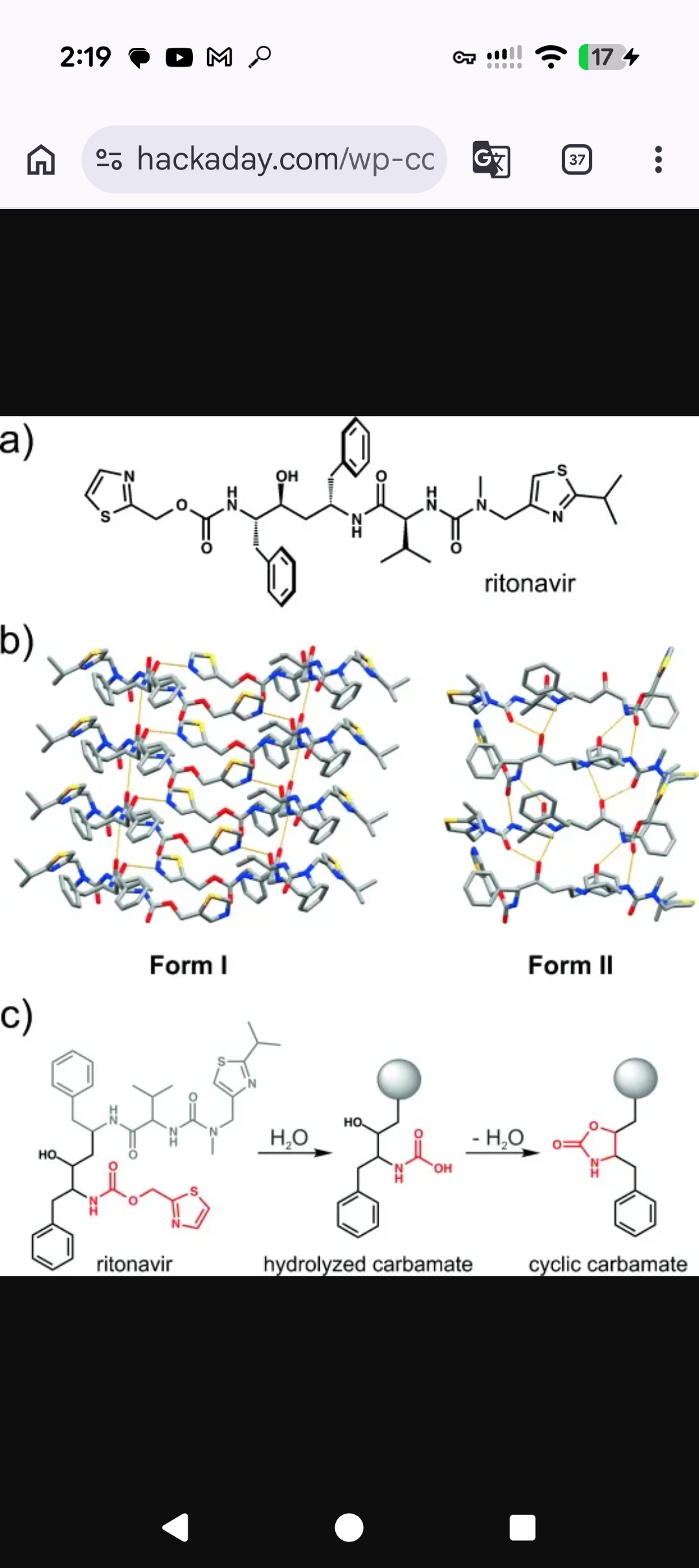
To understand the issue, the content of capsules was examined using microscopy and X-ray powder diffraction. The investigation revealed the existence of a new crystalline form (polymorph) denoted form II. This newly discovered form was more stable and much less soluble than the existing form I.

During the drug development stage, ritonavir was known to exist in only one crystalline form, form I, which was not easily absorbed by the body in a solid state due to which it was formulated in semi-solid capsule form. However, after the appearance of form II, the oral bioavailability of the drug was compromised in the semisolid formulation. The semisolid formulation of Norvir consisted of a hydro-alcoholic solution of ritonavir which was not saturated with respect to form I, but was much supersaturated with respect to form II.

Soon after the appearance of form II, Abbott sent a team of scientists to their manufacturing facility in Italy. The goal was to investigate if any changes had occurred during the manufacturing process that led to the development of the form II. At that time, form II did not appear in the drug in detectable quantities. However, shortly after the visit, the new polymorph began appearing in manufacturing lots and in lab formulations. The exact reason for the emergence of form II remains debatable but this dominance caused the failure to formulate semisolid capsules.

Norvir was also marketed in an oral liquid dosage form which was recommended to be stored at a temperature range of 2-8°C to maintain its stability. However, after the appearance of form II, the oral solution was prone to crystallization at this temperature.

Due to the stability crisis, Abbott withdrew the drug from the market, leading to disruption in the treatment of AIDS. In October 1998, Abbott Laboratories held a press, explaining why they could no longer supply ritonavir capsules. It is reported that the appearance of a late polymorph form caused Abbott laboratories to lose more than 250 million US dollars.

Characterization of form I and form II

The crystalline forms were analyzed using solid-state spectroscopy and microscopy techniques such as solid-state nuclear magnetic resonance (NMR), Nuclear infrared (NIR) spectroscopy, powder X-rat diffraction and single crystal X-ray. These techniques confirmed that ritonavir existed in two forms and both forms had significant differences.

The solubility of ritonavir’s polymorphs in ethanol:water solvent mixtures, which was the system used for the original formulation, showed that form II had lower solubility throughout the whole range of mixtures.

The determination of the structure of both forms by single crystal X-ray showed that the two forms had differences in three specific torsion angles, which affected the shape and stability of each form. Form II exhibits an unusual torsion angle, adopting “cis” conformation for its carbamate group. This conformation should make the crystal less stable and more soluble because it requires energy to adopt and grow as a crystal. Despite this, form II crystals were far more stable because of the presence of strong hydrogen bonds.

Hydrogen bonds

Figure 2. Hydrogen-bond motifs of ritonavir’s form I and form II.

Both polymorphs of ritonavir exhibit hydrogen bonds, but these differ in their bonding patterns. The difference in the bonding network influences its crystallization and dissolution. Form I has a large surface area of exposed hydrogen bond donors and acceptors, which is why it can easily interact with the solvent (like water and alcohol) to dissolve quickly. In contrast, form II shows a uniform hydrogen bonding pattern where all the hydrogen bond donors and acceptors are satisfied internally. As a result, the stability of form II is increased. Here, the ritonavir solution follows Ostwald’s rule, which states that, in a supersaturated solution, the first crystals to form are usually the ones having the lowest energy barrier. So, even though form II is more stable, form I is likely to form first.

Once ritonavir is dissolved, both crystalline forms become identical, so either polymorph of ritonavir can be used in the production of Norvir soft gelatin capsules, as long as a new formulation is developed to maintain the drug fully dissolved.

However, ritonavir form II has certain drawbacks due to which it is not the most desirable form for manufacturing. Extensive studies on form II determined that lots prepared with the new polymorph had failure rates of up to 50%. The reason for this failure lies in the fact that it easily co-crystallizes with impurities, making it difficult to purify it during the crystallization process. It also requires extended drying time to get rid of residual solvents, affecting the quality of the final product. Finally, it dissolves much slower than form I, which compromises the bioavailability of the product.

Since the new polymorphic form was not the form of choice for manufacturing, the next goal was to identify how the desired polymorph (form I) could be obtained from form II.

First, it was key to understanding if the supersaturated solution of form II kept its crystal memory. Using sonication (a technique that applies sound energy to agitate particles in a liquid), the scientists created a super-saturated solution of ritonavir form II which was kept in a closed system to prevent any contamination. After this, it was seeded with crystals of form I to induce crystallization. The final product showed that form I had crystallized, and no memory of form II was retained. This observation confirmed that ritonavir form I can be selectively generated from form II under a controlled environment.

To obtain seed crystals of form I, a reverse crystallization technique was used. This technique involved adding a small amount of form I seed crystals in a liquid solvent in which ritonavir is less soluble. Then a small amount of ritonavir solution was slowly added to the anti-solvent containing the seeds of form I. Since the solution is added in a small amount, the product immediately begins to crystallize and yields a large amount of seed crystals.

This approach proved successful as it led to the generation of form I using a minimal amount of seed crystals. Moreover, this process ensured the production of form I crystals starting with 100% form II. Scientists quickly put this technique into practice, which contributed to the reformulation of ritonavir. Finally, in 1999, ritonavir was re-marketed with a new formulation, which included butylated hydroxytoluene, ethanol, gelatin, iron oxide, oleic acid, polyoxyl 35 castor oil, and titanium dioxide, thus, once again, providing relief to patients.

Why did form II initially happen?

After the new polymorph was fully characterized, the researchers found the reason for the occurrence of form II. They established that crystallization of form II can only happen in a highly supersaturated solution if it was seeded with form II crystals. Since such seeds didn’t exist initially, this crystallization might have been due to heterogeneous nucleation by an impurity. When ritonavir is exposed to a base, it undergoes a degradation reaction that produces a cyclic carbamate linkage, structurally similar to form II. It is likely that this degradation product acted as a seed for the nucleation of ritonavir form II.

Coincidental discovery of ritonavir form III

The sudden stability crisis of Norvir highlighted the importance of comprehensive identification of all solid forms of an active ingredient. A thorough polymorph screening, and the identification of new forms are fundamental for effective drug development. It also helps in understanding solubility, stability, bioavailability, and other important physical properties of the different polymorphs, and how these can affect the development and manufacture of the drugs.

To screen polymorphs, multiple techniques have been developed to date including direct solid-solid conversion (i.e. grinding, thermal and moisture stress, etc.) and solvent mediated techniques (i.e. anti-solvent addition, cooling, evaporation, Ostwald ripening, etc.) and other techniques which expose the samples to non-ambient conditions (i.e. high-pressure crystallization, crystallization from the melt, sublimation, etc.). So, even after the drug was re-marketed, the researchers continued their efforts to understand the complex polymorphic behavior of ritonavir. In 2003, scientists from Cambridge, MA, performed an estimated 2000 experiments using high-through crystallization platforms to study ritonavir's polymorphs.

These experiments led to the discovery of two new solvated forms (form III and form V) and one metastable, anhydrous form (form IV).

A few years later, in 2014, scientists in Japan discovered a new crystalline form by crystallizing ritonavir from its melt after heating it in the oven at 60°C for several days. This form was initially believed to be similar to the anhydrous form IV found earlier in 2003. However, when the crystalline structure was observed under X-ray powder diffraction (XRPD), it did not match the published data. Despite this, it was referred to as form IV.

Almost twenty years after the appearance of form II, in 2022, a report was published describing the discovery of a new true polymorphic form of ritonavir, denoted form III . The XRPD of the new crystal form was compared with the published data on the form IV pattern found in 2014, which revealed that the crystalline form discovered by Kawakami was not form IV; instead, it was a mixture of both form III and amorphous material. Therefore, although form III was, in fact, discovered in 2014, it was not recognized as a new form until 2022.

Ritonavir polymorph

Figure 3. Hydrogen bonding motifs in ritonavir polymorphs.

The detailed analysis of form III found that it is the least stable and dense form when compared to form I and form II. The previously described metastable form IV was not considered for this comparison, owing to its obvious lack of stability. Form III presents a needle-like morphology and a lower melting point at approximately 114°C, while the melting point for form I and form II was around 120 and 121°C respectively.

When the solubility of the ritonavir polymorphs was determined under different pH conditions, the order of solubility was form III > form I > form II, which also confirms that form II is the most stable of this trio, while form III would be the most labile.

The hydrogen bonding patterns of form III are even more complex, forming a two-dimensional structure as compared to the other two forms that exhibit one-dimensional bonds. Similarly, the difference of conformations in various functional groups also affects the behavior and stability of this crystalline form. For instance, the N-methyl urea group of form III adopts trans conformation just like form II while the carbamate group forms trans conformation the same as form I.

Kaletra, a solution to solubility challenges

Following the challenges with ritonavir, Abbott Laboratories leveraged the knowledge gained to create Kaletra, a combination of two protease inhibitors: lopinavir and ritonavir. Approved in 2000 for HIV treatment, Kaletra incorporated ritonavir as a booster, enhancing lopinavir’s bioavailability through cytochrome P450 inhibition.

However, Kaletra’s formulation presented solubility issues. The solution was an amorphous solid dispersion (ASD), a critical technology to increase the bioavailability of poorly soluble drugs. Unlike crystalline forms, amorphous dispersions lack the orderly molecular structure, improving solubility and absorption.

The choice of ASD for Kaletra reflects a broader trend in addressing drug solubility challenges, particularly in protease inhibitors like ritonavir, where polymorphism can destabilize formulations. Amorphous dispersions continue to serve as a powerful tool for poorly soluble drugs, offering flexibility in API selection and increased therapeutic efficacy. Kaletra’s success with this technology emphasizes its potential to enhance other formulations struggling with solubility.

Conclusions

The commotion caused by ritonavir’s polymorphism emphasizes the need for comprehensive solid state investigation during the early stages of drug development. When a new, less soluble crystalline form of ritonavir appeared, it changed the stability and efficacy of the drug, leading to a costly market withdrawal. This sudden polymorphic transformation taught researchers that new crystalline forms can appear even years after rigorous testing and approval of the drug. The ritonavir case also caused a shift in the attitude towards the control of the physical properties of the APIs, such that the ability to demonstrate that these properties are well understood and will undergo no changes during development, manufacturing or storage, became a regulatory requirement.

The unpredictability of polymorphism highlights the need

 
Last edited:
I'm not knocking you

Just saying what I know

That you for the positive and Negative feedback from myself and @unodelacosa

At the same time

Get your @$¢ hole ripped either

Here,the hive, vesp or hyper

XD

No offence

We are at the level of

Noone KNOWS UNTIL THEY HAVE EXPERIENCED THIS SHIT

AND I WANNA SAY BS BUT READ MY LAST 2-5 COMMENTS

XD

No Joke I WANNA ADMIT IM WRONG

AT THE SAME TIME

MAPS HAS NOT TESTED RAPID/FAST/,SLOW MELT RECRYSTALLIZATION

MDMA/METH DOES NOT FORM GIANT ROCKS/ CRYSTALS

AN OG LIKE MYSELF KNOWS WHAT

"GLUE BLOCK" MDMA IS from "OLD DUTCH MDMA FORUMS"

AND KNOWS WHAT A POLYMORPHISM IS

AND GAVE HYDROMORPHS MDMA THAT LOOKED AS PURE AS METH. SHARDS THAT COMPETE WITH WITH SEE THRU

BUT SMALLER LETS SAY ,3-7mm

There WILL ALWAYS BEE MOSQUITOS

THERE WILL ALWAYS BE THE WASPS/ THEEHIVE


BUT A VERY VERY FEW OF US WILL CALL OR BE NAMED A STRIKE

AKA HOBART HUSON

On Oct. 18, 2001, federal agents raided an office in an industrial park in Escondido, Calif. Inside, they found one of the largest ecstasy laboratories ever seized in U.S. history and a copy of “Total Synthesis II,” a book explaining how to manufacture the drug.

That same day, Hobart Huson, author of “Total Synthesis II,” was arrested in San Antonio and charged with conspiracy to manufacture and distribute ecstasy.

The book, which Huson wrote under the pen name “Strike,” provides specific instructions on how to create an ecstasy lab. Huson wrote the book while serving a six-month sentence for attempting to manufacture the drug. After he was released, he formed Scientific Alliance, a company that distributes otherwise legal chemicals that could be used to produce ecstasy.

Wanna be THE FIRST PERSON TO OFFER A 10K BOUNTY ON AN NMR FOR XANAX

@unodelacosa and I might SAY FUCK AROUND AND FIND OUT

AT THE SAME TIME.


HERE YE HERE YE

YOU KNOW THE RULES AND SO DO I ...the BAR IS RAISED AND VERY VERY few people here have reached it. Personally

I HOPE SMALLER ROCKS ARE THE FIRE.

AND VERY FEW UNDERSTAND

Researchers and clinicians describe three distinct phases of this therapy: preparation, the MDMA experience, and integration. The non-psychedelic components, which involve talk therapy, are essential for both effectiveness and safety. A therapeutic alliance and trust are developed during the preparation stage, alongside an exploration of the participant’s struggles. Preparatory sessions also help familiarize patients with MDMA therapy and allow time to address questions and concerns.

The setting for MDMA therapy, even within clinics or research institutes, tends to be a living room-like environment. These spaces are quiet, decorated with pleasing artwork and/or flowers, and provide an aesthetically pleasing ambiance. This is to encourage a positive experience.

During the dosing session, the participant will sit or lie on a couch, wear an eye mask, and, at times, listen to a carefully selected playlist of music. The participant ingests a full dose (75–125 mg) to start and an optional second dose (half the quantity of the first) about two hours into the session. The session, which lasts 6–8 hours, is non-directed by the therapy team. This means that the client follows wherever the experience leads them—they are invited to access their inner healing intelligence. The therapists provide an empathetic presence and rapport, offering gentle help and emotional support if needed.

I litterly WORKED WITH MAPS, AND UNDER NOT ALL MDMA AND LSD IS EQUAL

FUCK AROUND

BUT I CAN AS KID ROCK WOULD SAY


I CAN SEE THE MAPS VOLUNTEER COORDINATOR FROM. A MILE AWAY

EITHER IN A BAR IN SAN FRAN

OR SANTA CRUZ CA

Either way

EHO HERE HAS FUCKED AROUND AND FOUND OUT

2-Nitropropane (2-NP) and nitroethane are both aliphatic nitrocompounds used in industry, but they differ significantly in their chemical structure, reactivity, and toxicity. 2-NP is a secondary nitroalkane, while nitroethane is a primary nitroalkane.

Key Differences and Comparisons:
Structure & Reactivity: Nitroethane (
) is a primary nitroalkane, whereas 2-nitropropane

) is a secondary nitroalkane. Primary nitroalkanes are generally more thermally stable than secondary nitroalkanes.

Ritonavir: how the discovery of a new polymorph changed drug development forever
October 11, 2024


Pharma Focus Europe
@pharma_eu
The ritonavir crisis changed drug development forever! A new polymorph’s discovery led to its withdrawal, emphasizing the need for thorough polymorph screening.


Ritonavir: How the Discovery of a New Polymorph Changed Drug Development Forever
Victor M. Diaz Perez, Operations Director, Solid Technologies S.L.
The ritonavir crisis, triggered by the unexpected discovery of a new, less soluble polymorph, reshaped the pharmaceutical industry's approach to solid state characterization. This article explores how the crisis led to the withdrawal and reformulation of ritonavir, emphasizing the critical need for thorough polymorph screening to prevent similar disruptions in drug development.

Ritonavir is an antiretroviral drug discovered by Abbott Laboratories to treat acquired immunodeficiency syndrome (AIDS). It was approved by the Food and Drug Administration (FDA) in 1996, and was marketed in semi-solid capsule form under the brand name Norvir.

Ritonavir works by inhibiting the growth of the causative organism of AIDS called human immunodeficiency virus (HIV) and preventing damage to the immune system. The discovery of ritonavir, together with another contemporaneous protease inhibitor, saquinavir, contributed to drop the AIDS-related death rate in the US remarkably.

In the beginning, ritonavir was thought to exist as only one crystal form. However, almost two years after reaching market authorization, multiple drug lots started failing the dissolution test. Further investigation showed the existence of a more stable, crystalline form, which created a challenge for a drug that was already on the market.

This article discusses the impact of the discovery of the new crystalline form of ritonavir after the drug had been commercialized, and how it changed the perception of polymorphism in the pharmaceutical industry forever.

Emergence of AIDS

AIDS is a chronic illness that gained global attention in the 1980s. It weakens the immune system of the body, making it hard to fight infections. When HIV enters the body, it targets CD4 T-cells, a type of white blood cell that helps defend against diseases. It uses the machinery of T-cells to make new copies of the virus, due to which the immune cells are destroyed. As the virus spreads and the number of healthy T-cells falls below 200 cells/mm3, it leads to the more advanced stage of HIV infection called AIDS. People who develop AIDS are vulnerable to opportunistic infections (infections from a weakened immune system) and certain types of cancer.

The exact origin of HIV is unknown. However, researchers believe it originally came from a virus found in chimpanzees in central Africa. The virus, called simian immunodeficiency virus (SIV), is believed to be transmitted to humans through direct contact with chimpanzee blood while hunting. Later, the SIV would mutate to HIV within the human host.

Although HIV/AIDS surfaced as far back as the 1930s, the devastating impact of this virus gripped the world in the 1980s. In the early 1980s, medical experts began to report an alarming rise in cases causing widespread concern. In mid-1981, the Centre for Disease Control and Prevention (CDC) published its initial reports describing rare types of pneumonia and cancer affecting young, previously healthy homosexual men in the US. The disease was associated with immune suppression, causing the deaths of hundreds of people within a year of diagnosis. Primarily, the cases of AIDS were reported in the gay community. However, the ongoing investigation concluded that AIDS was not specific to sexual orientation. Rather, it spread through blood transfusions, sexual contact, and breast milk.

The limited knowledge about the virus and the lack of effective treatment options exacerbated the crisis. In 1983, researchers were able to identify the virus responsible for causing deaths, marking a critical turning point in the fight against the epidemic. With this groundbreaking discovery, researchers were able to develop diagnostic tests and pave the way for the development of antiretroviral therapies.

The growing public health crisis required an urgent approach, which led to the use of experimental treatment in its early stages. One of the first drugs used against HIV infection was a Nucleoside reverse transcriptase inhibitor (NRTI), zidovudine (also called Retrovir, azidothymidine, or AZT). This drug was previously developed to treat cancer, but it failed in doing so. Marketed in 1987, zidovudine showed some promise against HIV and was effective in decreasing death rates and opportunistic infections. A year after its use, the experts found that AZT didn't work well on its own and had toxic side effects at higher doses.

When AZT therapy didn't prove to be as promising as the scientists hoped, they developed additional NRTIs, including didanosine, zalcitabine, stavudine, and lamivudine. These drugs gained FDA approvals in the early 1990s, expanding treatment options. Unfortunately, patients quickly developed resistance to NRTIs, rendering the treatment ineffective.

After the short-lived benefits of NRTIs, there was a critical urgency to find new treatment options as the death toll was rising. At that time, the number of AIDS-related deaths exceeded 700,000 globally. Experts were continuously working to develop a drug that could transform this fatal disease into a manageable chronic condition. With the ongoing clinical trials, scientists soon discovered a new class of HIV drugs called protease inhibitors, which suppressed the replication of the virus. In 1995, the FDA approved saquinavir as the first protease inhibitor (PI). A few months later, ritonavir, another drug of this class, was developed by Abbott Laboratories.

HIV / AIDS

Figure 1. Deaths caused by AIDS by year and age group.

In March 1996, ritonavir was approved for the treatment of HIV/AIDS. This powerful antiviral drug works by binding to the active site of HIV protease, which is essential for the replication of the virus. Once the active site is inhibited by the drug, the virus cannot mature and produce functional proteins. As a result, the amount of HIV virus is reduced in the body, leading to slow progression of the disease. Studies have found that ritonavir also inhibits cytochrome P450-34A enzyme in the liver and intestine, which is involved in the metabolism of protease inhibitors.

Ritonavir was one of the first protease inhibitors that became a part of Highly active antiretroviral therapy (HAART), involving the use of combination drugs to treat HIV. Within two years of HAART, the AIDS diagnosis was dropped by 45%, whereas the death rate declined by 63% in the US.

Withdrawal from the market

Abbott Laboratories marketed Ritonavir (Norvir) in 1996, as a semisolid capsule formulation. But then, the nightmare began. In 1998, researchers found that several batches of ritonavir were failing the quality control tests. The drug substance was not dissolving properly, and a solid was precipitating out of the semisolid capsules. The commercial lots were depleting rapidly, and the drug was severely diminishing its efficacy.

To understand the issue, the content of capsules was examined using microscopy and X-ray powder diffraction. The investigation revealed the existence of a new crystalline form (polymorph) denoted form II. This newly discovered form was more stable and much less soluble than the existing form I.

During the drug development stage, ritonavir was known to exist in only one crystalline form, form I, which was not easily absorbed by the body in a solid state due to which it was formulated in semi-solid capsule form. However, after the appearance of form II, the oral bioavailability of the drug was compromised in the semisolid formulation. The semisolid formulation of Norvir consisted of a hydro-alcoholic solution of ritonavir which was not saturated with respect to form I, but was much supersaturated with respect to form II.

Soon after the appearance of form II, Abbott sent a team of scientists to their manufacturing facility in Italy. The goal was to investigate if any changes had occurred during the manufacturing process that led to the development of the form II. At that time, form II did not appear in the drug in detectable quantities. However, shortly after the visit, the new polymorph began appearing in manufacturing lots and in lab formulations. The exact reason for the emergence of form II remains debatable but this dominance caused the failure to formulate semisolid capsules.

Norvir was also marketed in an oral liquid dosage form which was recommended to be stored at a temperature range of 2-8°C to maintain its stability. However, after the appearance of form II, the oral solution was prone to crystallization at this temperature.

Due to the stability crisis, Abbott withdrew the drug from the market, leading to disruption in the treatment of AIDS. In October 1998, Abbott Laboratories held a press, explaining why they could no longer supply ritonavir capsules. It is reported that the appearance of a late polymorph form caused Abbott laboratories to lose more than 250 million US dollars.

Characterization of form I and form II

The crystalline forms were analyzed using solid-state spectroscopy and microscopy techniques such as solid-state nuclear magnetic resonance (NMR), Nuclear infrared (NIR) spectroscopy, powder X-rat diffraction and single crystal X-ray. These techniques confirmed that ritonavir existed in two forms and both forms had significant differences.

The solubility of ritonavir’s polymorphs in ethanol:water solvent mixtures, which was the system used for the original formulation, showed that form II had lower solubility throughout the whole range of mixtures.

The determination of the structure of both forms by single crystal X-ray showed that the two forms had differences in three specific torsion angles, which affected the shape and stability of each form. Form II exhibits an unusual torsion angle, adopting “cis” conformation for its carbamate group. This conformation should make the crystal less stable and more soluble because it requires energy to adopt and grow as a crystal. Despite this, form II crystals were far more stable because of the presence of strong hydrogen bonds.

Hydrogen bonds

Figure 2. Hydrogen-bond motifs of ritonavir’s form I and form II.

Both polymorphs of ritonavir exhibit hydrogen bonds, but these differ in their bonding patterns. The difference in the bonding network influences its crystallization and dissolution. Form I has a large surface area of exposed hydrogen bond donors and acceptors, which is why it can easily interact with the solvent (like water and alcohol) to dissolve quickly. In contrast, form II shows a uniform hydrogen bonding pattern where all the hydrogen bond donors and acceptors are satisfied internally. As a result, the stability of form II is increased. Here, the ritonavir solution follows Ostwald’s rule, which states that, in a supersaturated solution, the first crystals to form are usually the ones having the lowest energy barrier. So, even though form II is more stable, form I is likely to form first.

Once ritonavir is dissolved, both crystalline forms become identical, so either polymorph of ritonavir can be used in the production of Norvir soft gelatin capsules, as long as a new formulation is developed to maintain the drug fully dissolved.

However, ritonavir form II has certain drawbacks due to which it is not the most desirable form for manufacturing. Extensive studies on form II determined that lots prepared with the new polymorph had failure rates of up to 50%. The reason for this failure lies in the fact that it easily co-crystallizes with impurities, making it difficult to purify it during the crystallization process. It also requires extended drying time to get rid of residual solvents, affecting the quality of the final product. Finally, it dissolves much slower than form I, which compromises the bioavailability of the product.

Since the new polymorphic form was not the form of choice for manufacturing, the next goal was to identify how the desired polymorph (form I) could be obtained from form II.

First, it was key to understanding if the supersaturated solution of form II kept its crystal memory. Using sonication (a technique that applies sound energy to agitate particles in a liquid), the scientists created a super-saturated solution of ritonavir form II which was kept in a closed system to prevent any contamination. After this, it was seeded with crystals of form I to induce crystallization. The final product showed that form I had crystallized, and no memory of form II was retained. This observation confirmed that ritonavir form I can be selectively generated from form II under a controlled environment.

To obtain seed crystals of form I, a reverse crystallization technique was used. This technique involved adding a small amount of form I seed crystals in a liquid solvent in which ritonavir is less soluble. Then a small amount of ritonavir solution was slowly added to the anti-solvent containing the seeds of form I. Since the solution is added in a small amount, the product immediately begins to crystallize and yields a large amount of seed crystals.

This approach proved successful as it led to the generation of form I using a minimal amount of seed crystals. Moreover, this process ensured the production of form I crystals starting with 100% form II. Scientists quickly put this technique into practice, which contributed to the reformulation of ritonavir. Finally, in 1999, ritonavir was re-marketed with a new formulation, which included butylated hydroxytoluene, ethanol, gelatin, iron oxide, oleic acid, polyoxyl 35 castor oil, and titanium dioxide, thus, once again, providing relief to patients.

Why did form II initially happen?

After the new polymorph was fully characterized, the researchers found the reason for the occurrence of form II. They established that crystallization of form II can only happen in a highly supersaturated solution if it was seeded with form II crystals. Since such seeds didn’t exist initially, this crystallization might have been due to heterogeneous nucleation by an impurity. When ritonavir is exposed to a base, it undergoes a degradation reaction that produces a cyclic carbamate linkage, structurally similar to form II. It is likely that this degradation product acted as a seed for the nucleation of ritonavir form II.

Coincidental discovery of ritonavir form III

The sudden stability crisis of Norvir highlighted the importance of comprehensive identification of all solid forms of an active ingredient. A thorough polymorph screening, and the identification of new forms are fundamental for effective drug development. It also helps in understanding solubility, stability, bioavailability, and other important physical properties of the different polymorphs, and how these can affect the development and manufacture of the drugs.

To screen polymorphs, multiple techniques have been developed to date including direct solid-solid conversion (i.e. grinding, thermal and moisture stress, etc.) and solvent mediated techniques (i.e. anti-solvent addition, cooling, evaporation, Ostwald ripening, etc.) and other techniques which expose the samples to non-ambient conditions (i.e. high-pressure crystallization, crystallization from the melt, sublimation, etc.). So, even after the drug was re-marketed, the researchers continued their efforts to understand the complex polymorphic behavior of ritonavir. In 2003, scientists from Cambridge, MA, performed an estimated 2000 experiments using high-through crystallization platforms to study ritonavir's polymorphs.

These experiments led to the discovery of two new solvated forms (form III and form V) and one metastable, anhydrous form (form IV).

A few years later, in 2014, scientists in Japan discovered a new crystalline form by crystallizing ritonavir from its melt after heating it in the oven at 60°C for several days. This form was initially believed to be similar to the anhydrous form IV found earlier in 2003. However, when the crystalline structure was observed under X-ray powder diffraction (XRPD), it did not match the published data. Despite this, it was referred to as form IV.

Almost twenty years after the appearance of form II, in 2022, a report was published describing the discovery of a new true polymorphic form of ritonavir, denoted form III . The XRPD of the new crystal form was compared with the published data on the form IV pattern found in 2014, which revealed that the crystalline form discovered by Kawakami was not form IV; instead, it was a mixture of both form III and amorphous material. Therefore, although form III was, in fact, discovered in 2014, it was not recognized as a new form until 2022.

Ritonavir polymorph

Figure 3. Hydrogen bonding motifs in ritonavir polymorphs.

The detailed analysis of form III found that it is the least stable and dense form when compared to form I and form II. The previously described metastable form IV was not considered for this comparison, owing to its obvious lack of stability. Form III presents a needle-like morphology and a lower melting point at approximately 114°C, while the melting point for form I and form II was around 120 and 121°C respectively.

When the solubility of the ritonavir polymorphs was determined under different pH conditions, the order of solubility was form III > form I > form II, which also confirms that form II is the most stable of this trio, while form III would be the most labile.

The hydrogen bonding patterns of form III are even more complex, forming a two-dimensional structure as compared to the other two forms that exhibit one-dimensional bonds. Similarly, the difference of conformations in various functional groups also affects the behavior and stability of this crystalline form. For instance, the N-methyl urea group of form III adopts trans conformation just like form II while the carbamate group forms trans conformation the same as form I.

Kaletra, a solution to solubility challenges

Following the challenges with ritonavir, Abbott Laboratories leveraged the knowledge gained to create Kaletra, a combination of two protease inhibitors: lopinavir and ritonavir. Approved in 2000 for HIV treatment, Kaletra incorporated ritonavir as a booster, enhancing lopinavir’s bioavailability through cytochrome P450 inhibition.

However, Kaletra’s formulation presented solubility issues. The solution was an amorphous solid dispersion (ASD), a critical technology to increase the bioavailability of poorly soluble drugs. Unlike crystalline forms, amorphous dispersions lack the orderly molecular structure, improving solubility and absorption.

The choice of ASD for Kaletra reflects a broader trend in addressing drug solubility challenges, particularly in protease inhibitors like ritonavir, where polymorphism can destabilize formulations. Amorphous dispersions continue to serve as a powerful tool for poorly soluble drugs, offering flexibility in API selection and increased therapeutic efficacy. Kaletra’s success with this technology emphasizes its potential to enhance other formulations struggling with solubility.

Conclusions

The commotion caused by ritonavir’s polymorphism emphasizes the need for comprehensive solid state investigation during the early stages of drug development. When a new, less soluble crystalline form of ritonavir appeared, it changed the stability and efficacy of the drug, leading to a costly market withdrawal. This sudden polymorphic transformation taught researchers that new crystalline forms can appear even years after rigorous testing and approval of the drug. The ritonavir case also caused a shift in the attitude towards the control of the physical properties of the APIs, such that the ability to demonstrate that these properties are well understood and will undergo no changes during development, manufacturing or storage, became a regulatory requirement.

The unpredictability of polymorphism highlights the need

The commotion caused by ritonavir’s polymorphism emphasizes the need for comprehensive solid state investigation during the early stages of drug development. When a new, less soluble crystalline form of ritonavir appeared, it changed the stability and efficacy of the drug, leading to a costly market withdrawal. This sudden polymorphic transformation taught researchers that new crystalline forms can appear even years after rigorous testing and approval of the drug. The ritonavir case also caused a shift in the attitude towards the control of the physical properties of the APIs, such that the ability to demonstrate that these properties are well understood and will undergo no changes during development, manufacturing or storage, became a regulatory requirement.

Just gotta ask who here is

The FUCK AROUND AND FIND OUT TO THE 1 MILLION TO 500 MILLION RANGE XD

Tldr:

Took 20-30 years that fast melt recrystallization is MEH

Alot of monkey see monkey do but very few people reach either my level or otherwise


And my level is always is always GOT DAMN

WHAT Don't I KNOW?

I do know MAPS don't have SOLID MELT TEST

AND TOOK RIVITOR

THE KING OF DISAPPEARING POLYMORPHISM TO GET HERE
 
Last edited:
Interesting page but slightly going over my head. Thanks for the posts.

Kykeon are moving their lab so haven't been able to go ahead with the analysis of the non-mdma components. I've asked them for a reopening date and to confirm that it's the same team, and they're still ok to go ahead with this analysis. @vash445 do you still think it's worthwhile persuing the Kykeon contaminants analysis? Don't know what else I could be doing tbf, in order to move things forward.
 
Interesting page but slightly going over my head. Thanks for the posts.

Kykeon are moving their lab so haven't been able to go ahead with the analysis of the non-mdma components. I've asked them for a reopening date and to confirm that it's the same team, and they're still ok to go ahead with this analysis. @vash445 do you still think it's worthwhile persuing the Kykeon contaminants analysis? Don't know what else I could be doing tbf, in order to move things forward.
Yes
 

Also @unodelacosa I do present a 3 prong approach to this question....

1. My nomenclature SUCKS. But the first thing I thought of is if you are in the USA. All I could think about was the pre work JACKD/ JACKD3D XD

Banned in USA, makes sense why this could be potentially regional outside the USA. Even within the USA prime unregulated precourser, it just doesn't make sense if I have to close the ring. There are probably cheaper chemicals, such as Vanilla or multiple benzofuran analogues if I wanna bitch to close da ring. To helional to ketone, etc etc, and everything in between. While there are a few precursors, I have thought of that from what I believe most aren't using YET.

It just makes more sense either to follow the maps method. The hardest part would be the gringard/ bromination but honestly, at these prices, it makes sense about chemical engineering and that's all figured from a continuous flow standpoint. I mean we ARE talking SUPER LABS, I have people who ask if I know so much, I should make my own. And I have to remind them, reguardless of jail you can't beat these scale/ standard testing purity

At the same time, I would hate for these labs to monkey see monkey do, I mean I get how they hope around, but have we banned or just got to the iso/butyl analogue precursors XD

I mean I get how this works, china/whoever stocks the most common precursor price goes down, etc etc. But come on I haven't seen the intermittent for helional to MDP2P for sale XD.

And I have a bunch more. Reguardless maybe I'm overthinking it. But I would wanna use a crispr and make precourcers like they are doing milk nowadays XD

Anyways I'm not discounting that it could be a 1 off or consistent with a precursor that needs a "ring to close" that isn't a glycidate or ketele like compound. Idk how to explain it but I wanna think about the exact wording sorry

2) Please understand from what I understand testing is not only part Technician but also part of equipment on hand on spectre on hand. If not on hand reference material ordered from Cayman or Sigma. I know you wanna give shit on EC not having "BLANK SPECTRE" and that we should reference it. But not even my friends NMR had MDMA. Yes we looked up but, he did say he can only infer so much, as a reference from Merke or whatever. Idk how to explain this, but he said, "This is my degree, think of analytical chemistry like reagents, it it's to say YES OR NO, but instead to include this or exclude that" What is ODD is my spectra shows 98-99%, GC/MS, I think HPLC ETC ETC. So then I decided to include MALDI

I KNOW EVERYONE wants to give on our current testing situation which I get is FAIR. But idk, I imagine there would be SOME variance of the molecular weight if 3,4-dimethoxy-n-methylamphetamine and 3,4-dimethoxy-n-amphetamine. I understand that chances are we wouldn't get a 100% mol weight match here
Nor is 2025

Between OLD and NEW samples submitted during the era of COVID #1. But I DO WANNA EXPLAIN WHY testing could be flawed, but also how I got to EXPERIENCE NMR

First, experience a vendor on sr2 offered a 10k bounty to test his Xanax API as ACTUALLY ALP powder VIA NMR. Didn't care of the results, just wanted to confirm if it was the real deal. HE REQUIRED AN NMR, NOTHING LESS. When I asked if an GC/MS or similar either at EC/drug data he said NOPE, I've had issues with everyone NMR OR BUST, 10K BOUNTY just wanna a double report.

Needlessly to say, I didn't understand WHY, until I was sold "XANAX POWDER" that came back 99% "pure" via energy control and I could take, " a thumb print worth of XANAX" I wanna say it was tolerance, but no, no I hardly used it, and while EC might have more comprehensive testing, at the time, you could crush yellow buses and it would come up 99% XANAX. Why it missed the BINDER I HAVE NO IDEA.

I got some other XANAX from someone else, they also had 97% pure but an H20 PEAK. This was PS/MS. FTIR was pure. UVIC says PS/MS is the gold standard the also offer RAMAN AND FTIR, get your drugs DID DETECT both ISONITZ AND a random benzo, "in fake XANAX and named the benzo" UVIC told me it was ISONITZ via fingerprint and an UNKNOWN SPECTRA for the BENZO.

PRETTY FUCKING NEAT RIGHT, GOTTA SEE IT TO BELIEVE IT.

Anyways my second experience that was a mix of "3rd of first". Was I sent a claimed bottle of NITROETHANE. COME ON MAN THIS SHOULD BE EASY AND I MEAN EASY AS F

Nah man NAH F THIS SHIT, THAT opens this WHOLE RABBIT HOLE. His normal test my from from university. Did it come back NITROETHANE? it's boiling point, it's mol weight I think 🤔 basic GC/MS. well Ya, but it Always failed Henry reaction XD
NMR came back AS DRUMROLL PLEASE
Nitropropene/PROPANE XD

You would think you can tell the
difference, just know, and I DONT say this lightly, but Get your drugs tested fired everyone then the owner tried to rehire everyone, and because they broke their goodwill noone wanted to jail, he said this is a, 'Highly TECHNICAL ROLE and there is NO WAY, even with experience can pick this up in 1 month. I know he is saying he can do it but as someone that runs the labs, and there is many other fronts end facing positions, this is NOT TRUE. MAYBE IM WRONG but kiss Get your drugs tested goodbye"

Anyways they ONLY RAN FTIR. So what does SPECTRA, MEAN? Well only one small portion. I'm pretty sure I have both results saved if I look extremely hard enough

What I can say is BEFORE Kykelon analytics I wish I could have gotten my 10k bounty at the same time, lessons learned...

You might say oh the MDMA or XANAX can be easily looked up. At the same time this is a UHHHH, I DIDN'T UNDERSTAND WHY, now I do with tests 1,2,3

3. The case of The IT'S GOOD ENOUGH FOR THEE BUT NOT FOR ME.

Sterling manufacturing, MAPS, Purdue /David E. Nichols,... NICK SANDS, SANDOZ, MERCK ETC VS THE WORLD/RACE TO THE BOTTOM

On the 1 hand I wanna be the MDMA OR LSD IS MDMA, LAB TESTS CLEARLY SHOW

MDMA, LSD, METH, COCAINE... IT'S PURITY IS THE HIGHEST IT'S EVER BEEN. IF YOU KNOW YOU LNOW, WE ARE TALKING
Terry Dal Cason was a Senior Forensic Chemist with the Drug Enforcement Administration (DEA) whose work primarily focused on the forensic analysis of controlled substances. His research is widely cited in the field of forensic science for its contributions to understanding the chemical signatures of illicitly manufactured drugs.

Instructors:
Terry Dal Cason
– Mr. Dal Cason is a retired DEA Sr. Research Chemist with over 40 years of experience in drug Chemistry. His major area of concentration was clandestine laboratories and the synthesis of “designer drugs.” He currently teaches methamphetamine synthesis at the DEA academy in Quantico, VA. On a bi-monthly basis. He is also a board member at large for CLIA with responsibility for the “Hands on cooks” held at the university.


NEEDLESSLY TO SAY IS Terry Dal Cason a PIG OR A BEE? VERY VERY FEW. FUCK WITH NMR IN THIS FIELD, In the world of MDMA ANALOGUE AND HOMOLOGUES. GOD DAMN I DONT KNOW SHIT. BUT HEY, let us PEAK INTO THE VEIL


OH MY GAWDH I CANT HEAR U BECAUSE UR YELLING ALL THE TIME AND NOT GRANTING ANY SORT OF CREDIBILITY TO THIS WACKASS CONJECTURE OF A TOPIC WHICH SHOULD BE TITLED

"THE DRUGS WERE BETTER WHEN I WAS YOUNG AND I KNOW BECAUSE I TRUST MY SHITTY DRUGGED UP MEMORIES AND MDMA DEFINITELY DOESNT SUCK NOW BECAUSE I HAVE AN ANNOYING SPOUSE AND SIX KIDS AND SHIT JOB AND AN UGLY DOG AND AN ADDICTION TO SPORTS BETTING"
 
If this is true, then we should be seeing 3,4-dimethoxy-n-methylamphetamine and 3,4-dimethoxy-n-amphetamine showing up in testing samples and in law enforcement seizures. Can we confirm if that checks out?

Regardless, nice find! Thanks for sharing.
Just wanna say 3,4-DMA is in my spectral database and ive never seen it once.

If it was commonly found in MDxx i would have seen it by now.
 
Last edited:
OH MY GAWDH I CANT HEAR U BECAUSE UR YELLING ALL THE TIME AND NOT GRANTING ANY SORT OF CREDIBILITY TO THIS WACKASS CONJECTURE OF A TOPIC WHICH SHOULD BE TITLED

"THE DRUGS WERE BETTER WHEN I WAS YOUNG AND I KNOW BECAUSE I TRUST MY SHITTY DRUGGED UP MEMORIES AND MDMA DEFINITELY DOESNT SUCK NOW BECAUSE I HAVE AN ANNOYING SPOUSE AND SIX KIDS AND SHIT JOB AND AN UGLY DOG AND AN ADDICTION TO SPORTS BETTING"
I don't sports bet

And I did less drugs, then I do know and even then don't get high on your own supply sorta deal...

Maybe learn what a polymorphism is

And slow/fast melt recrystallization is

Because that's what I'm talking about

Considering how it took ritonavir like 25-50 years to find the polymorph #4

And MAPS recrystallization techs does not mention fast melt. It kinda makes sense.

But the fact I can have meh and magic today. And turn meh into magic says something.

Imagine you’re working at a laboratory that creates pharmaceuticals. You figure out the reactants and the chemistry involved to make a new drug. You design a production line, and your new factory starts churning out the drug in mass quantities. This goes well for years, until suddenly, the drugs stop working.

You run an analysis, and the drugs coming out of the factory aren’t what you designed at all. They’re a weird new form of the same chemical with a different crystal structure, and they’re no longer working the same way. What happened?

You’ve probably come across the case of a disappearing polymorph. This is where the original version of a chemical’s crystal structure becomes impractical or impossible to produce. Instead, you tend to end up with a new version instead, typically a more stable, lower-energy version. The mere presence of this newer, more stable version tends to convert the original version into the new form quite easily. Since the new form is more stable, it tends to become difficult to convert the product back to the original form, or functionally, to produce it at all


Last edited:
OH MY GAWDH I CANT HEAR U BECAUSE UR YELLING ALL THE TIME AND NOT GRANTING ANY SORT OF CREDIBILITY TO THIS WACKASS CONJECTURE OF A TOPIC WHICH SHOULD BE TITLED

"THE DRUGS WERE BETTER WHEN I WAS YOUNG AND I KNOW BECAUSE I TRUST MY SHITTY DRUGGED UP MEMORIES AND MDMA DEFINITELY DOESNT SUCK NOW BECAUSE I HAVE AN ANNOYING SPOUSE AND SIX KIDS AND SHIT JOB AND AN UGLY DOG AND AN ADDICTION TO SPORTS BETTING"
The issue caused legal problems down the line. Years later, other drug manufacturers wished to produce paroxetine, too. The patent on paroxetine anhydrate had ran out, so generic manufacturer Apotex moved to begin production. The issue was that the company found it could not produce the original form. Instead, its product inevitably came out as paroxetine hemihydrate. It’s believed that the Earth’s atmosphere had functionally become populated by trace amounts of paroxetine hemihydrate, to the point where any paroxetine anhydrate would immediately be transformed into the new structure.

By this time, GSK was the company that held a still-active patent on paroxetine hemihydrate. It sued Apotex, arguing that its generic pills contained paroxetine hemihydrate that had been created through the atmospheric seeding process. The courts accepted GSK’s submission on this point, but ruled in favor of Apotex’s right to continue producing its generic pills. It was noted Apotex could not be held responsible for the issue of uncontrolled crystal seeding.

Later research saw two separate companies independently create another polymorph. Both Synthon and SmithKline Beecham sought patents for the production of polymorphs known as paroxetine mesylate. However, a similar problem cropped up shortly after. Any attempt to create the Synthon polymorph would end up creating the Beecham structure instead. This lead to much confusion over whether Synthon’s version was a new case of a disappearing polymorph, or whether the company had made errors in its patent work. Ultimately, no satisfying consensus was reached as to the truth of the matter.

Sadly, disappearing polymorphs can create more than legal woes. Ritonavir was released for public use in 1996, a crucial antiretroviral drug used in the fight against HIV. In its original crystal form, known as ‘Form I”, it was quite soluble and medically useful for treating the condition. However, in 1998, “Form II” was discovered. This was a more stable polymorph that existed at a lower energy level. The problem was that this crystal form was much less soluble. This made the drug less bioavailable, ruining its effectiveness at treating the disease.

The existence of Form II threatened the production of the useful form of the drug. Any laboratory that saw the introduction of Form II was unable to produce Form I afterwards. It was speculated by researchers that individuals that had worked in such labs could carry traces of the new form, and potentially poison facilities that were still producing Form I. In the space of a few weeks, everywhere that could once produce Form I was rapidly turning out only Form II instead.

Due to problems with production and the lack of efficacy of Form II ritonavir, the drug was pulled from the market. This lead to thousands of patients going without medication for their condition, and losses of over $250 million for the manufacturer, Abbott. The company held press conferences that highlighted the gravity of the issue.

ACS Publications
Crystal Structure of Ritonavir Form IV and Thermodynamic Relationships between ...
Jan 23, 2026 — The crystal structure of Ritonavir Form IV is reported. The structure was determined by electron diffraction, and the molecular

PubMed Central (PMC) (.gov)
Predicting the ritonavir crisis by revisiting the polymorph landscape with crystal ...
by L Iuzzolino · 2025 · Cited by 1 — Furthermore, we determined the crystal structure of form 4 of ritonavir by three-dimensional electron diffraction
So why don't you quit giving people "Shit" and calling us "drug addicts"

When maybe you should LEARN SOMETHING about chemistry instead of giving useless information

Disappearance/Transformation: Understanding Form IV helps explain the "disappearing polymorph" crisis of 1998, where the unexpected appearance of the stable Form II prevented the formation of the originally used Form I.

It exhibits a disordered motif and molecular conformations/hydrogen bonding that show similarities to Forms I and III.

Ritonavir uses specifically form 2

MAPS specifically uses MDMA FORM 1


Science and engineering usually create consistent results. Generally, when you figure out how to make something, you can repeat that at will to make more of something. But what if, one day, you ran the same process, and got different results? You double-checked, and triple-checked, and you kept ending up with a different end product instead?

Perhaps it wasn’t the process that changed, but the environment? Or physics itself? Enter the scary world of disappearing polymorphs.

Here we have fast melt recrystallization a type of recrystallization maps has not done and encountered...
 
Last edited:
When you have mdma in form 4

I thought It was my lab skills why I couldn't crack 40% and can't get any better. Seems it not my technical knowledge. But a real world issue


Instead of calling people drug addicts

Maybe you should research drug history the past 50 years and realize the knowledge of 1 drug of polymorph #4 wasnt known until last year

Can you imagine mdma which hasn't even passed phase 3 trials ?
 
Instead of calling people drug addicts

Maybe you should research drug history the past 50 years and realize the knowledge of 1 drug of polymorph #4 wasnt known until last year

Can you imagine mdma which hasn't even passed phase 3 trials ?
Crystalline MDMA hydrochloride dissolves in water very quickly, and the solubility is high, regardless of the particular crystalline form (hydrate, polymorph, etc.). As soon as it gets dissolved, the crystals just disappear, and any polymorphism is the last thing you would want to care about.

I mean, what you are saying about drug polymorphism is absolutely irrelevant here.
 
Crystalline MDMA hydrochloride dissolves in water very quickly, and the solubility is high, regardless of the particular crystalline form (hydrate, polymorph, etc.). As soon as it gets dissolved, the crystals just disappear, and any polymorphism is the last thing you would want to care about.

I mean, what you are saying about drug polymorphism is absolutely irrelevant here.
I've done recrystallization in H20 it WAS MEH

NICE SHINY see thru LONG BLADES almost looked like meth

MEH

recrystallization using different solvent, a mix of meh mdma H20 and other meh mdmaproducts

Magic. But A VERY VERY small amount

So yes yes it DOES.

AND ITS HARD TO RECRASH OUT CRYSTALS when it reaches form 4 though

Check maps

You say it doesn't matter maps specifically uses form 1 encountered form 2 and 3

So yes yes it does matter to MAPS when it comes to a 250 million dollar lawsuit
 
Last edited:
This MDMA polymorph form is the same that has been used in all MAPS sponsored studies to date, now known as “Form 1,” previously characterized through X-ray powder diffraction (XRPD). It is by far the most stable of the forms, and to force the MDMA molecules into the new polymorphs (Form 2 and Form 3) it requires manipulation using different solvents and crystallization techniques. Both Form 2 and Form 3 are metastable to Form 1, meaning that they easily revert to Form 1. However, now that their presence is known, identification of these forms has been added to the release and stability specifications via a method sensitive enough to identify them (even in small quantities relative to Form 1).

This MDMA polymorph form is the same that has been used in all MAPS sponsored studies to date, now known as “Form 1,” previously characterized through X-ray powder diffraction (XRPD). It is by far the most stable of the forms, and to force the MDMA molecules into the new polymorphs (Form 2 and Form 3) it requires manipulation using different solvents and crystallization techniques. Both Form 2 and Form 3 are metastable to Form 1, meaning that they easily revert to Form 1. However, now that their presence is known, identification of these forms has been added to the release and stability specifications via a method sensitive enough to identify them (even in small quantities relative to Form 1).


FORM 4 is fast melt, see Ritonavir 2025/2026

This does not easily revert to 1,2 or 3 in my experience.
 
Crystalline MDMA hydrochloride dissolves in water very quickly, and the solubility is high, regardless of the particular crystalline form (hydrate, polymorph, etc.). As soon as it gets dissolved, the crystals just disappear, and any polymorphism is the last thing you would want to care about.

I mean, what you are saying about drug polymorphism is absolutely irrelevant here.
During my A-levels (the UK’s version of high school), I made the choice to drop art class and take up chemistry. I had come to really enjoy chemistry during my school years, and eventually it seemed like a better option for me to study than art, which felt too abstract—chemistry is exact and predictable, right? What I learned throughout those years and my subsequent chemistry degree, however, was something different: Science is not exact, and our understanding is constantly evolving. It started to seem like a relentless attempt to place evermore complex sets of round pegs in square holes.

Having said that, it is not as though the results of these human scientific endeavors aren’t astounding and necessary, as they include feats of engineering and medicine. The point is that even those feats are imperfect; they are not always fully understood and can carry risks. Just like the building that won awards for structural and architectural brilliance can have unknown faults and fail years later, the drug that is shown to be highly effective in its target indication can bring unknown side effects that surface after licensure.

The path for a molecule, therefore, from early-phase API and drug product to a commercial product, is an iterative one. It involves increased levels of understanding around the synthesis, potential impurities, isomers, crystalline forms, and physical properties—all of which need to be controlled and understood to the fullest, as they can have an effect the safety and pharmacology of the drug.

Crystalline forms are solid materials with highly ordered, repeating atomic structures (lattices), categorized into seven main systems based on symmetry: cubic, tetragonal, hexagonal, trigonal, orthorhombic, monoclinic, and triclinic. These determine the crystal habit (shape), including cubic, tabular, acicular (needle-like), or prismatic, often based on internal structure
^ ya know polymorphism

The chemistry of MDMA is not a given, and requires expert development to get to the commercial standard we need to ensure patient access and safety at scale. However, it should not be expected that we will stop learning about the chemistry of this compound; changes in manufacturing process, scale, and product formulation can bring with them new challenges and lessons.


ArticleJuly 14, 2023
Ritonavir Revisited: Melt Crystallization Can Easily Find the Late-Appearing Polymorph II and Unexpectedly Discover a New Polymorph III
 
Last edited:
Crystalline MDMA hydrochloride dissolves in water very quickly, and the solubility is high, regardless of the particular crystalline form (hydrate, polymorph, etc.). As soon as it gets dissolved, the crystals just disappear, and any polymorphism is the last thing you would want to care about.

I mean, what you are saying about drug polymorphism is absolutely irrelevant here.
. Patient access, not maximizing profits, is “the most important factor of our intellectual property strategy, because our mandate is to advance public benefit through access to healing,” wrote MAPS PBC in an email following the interview.

To underscore the difference in how MAPS PBC thinks about patents and intellectual property, compared with other drug developers, the organization went on to write that the “current American drug development model incentivizes patents for for-profit companies, but intellectual property claims can drive up the costs of treatments and make them less accessible. Intellectual property tools also can be applied within a patient access framework to promote health equity, and if we were to pursue a patent it would be for that purpose.” A fine sentiment, but is it believable? Most every biopharmaceutical company talks about putting patients first, but that typically doesn’t prevent them from protecting their IP against competing interests, in court when necessary.

In April, after the May issue of Life Science Leader was finalized for publication, MAPS and MAPS PBC announced the publication of what it called “the first validated commercial synthetic process for producing multi-kilogram batches of MDMA under current Good Manufacturing Practices.” Published in the American Chemical Society’s ACS Omega, a peer-reviewed scientific journal, the article, which describes the manufacturing process, “establishes ‘prior art,’ contributing to MAPS’ patient access strategy by making intellectual property public,” MAPS said in the announcement.

In the biopharmaceutical industry, the term “prior art” describes “previously published patent applications, issued patents, or just technical publications generally… really anything that forms the basis of what the public might understand to be the state of a technology, or state of the art,” explains Matt Zapadka, a patent attorney at Arnall Golden Gregory, LLP. Openly publishing a process for the mass production of a substance like MDMA is part of a changing environment with respect to psychedelic drugs, as well as cannabis products, notes Zapadka. “A few years ago, people weren’t really announcing that they had better ways to make what a lot of people would consider to be illicit drugs,” Zapadka says. “There is a real tidal shift happening.”
 
Top