• N&PD Moderators: Skorpio

What do the sigma opioid receptors do when agonized?

Isn't DMT (mainly) just a 5-HT receptor (mainly 5-HT2a and 5-HT1a) agonist like most other psychedelics? According to wikipedia, it was hypothesized that DMT was the endogenous sigma opioid agonist, but "Under these conditions, notions of receptor selectivity are moot, and it seems probable that most of the receptors identified as targets for DMT (see above) participate in producing its psychedelic effects.".

This interests me as I read Sigma 1 agonists are supposed to be cancer promoting agents. As much as I love DMT I worry it may cause cancer via this mechanism based on reports I’ve heard here and there as well as my own anecdotal experience.

Out of classic psychedelics and empathogens, which ones have strongest Ki values for Sigma 1 and 2?

-GC

 
There is certainly evidence that there is increased expression of sigma1 in tumors, and antagonism causes tumor cell death. But I don't think there is definitive evidence that sigma1 agonists are actually carcinogenic or mutagenic. [ref][ref]
After all, sigma1 lkigands have been used in pharmacy for quite some time, and there are many drugs that act as agonists that are used daily, in large populations. The endogenous ligand is thought to be dimethyltryptamine, and other notable drugs include amitryptiline, citalopram, fluvoxamine, dextromethorphan, memantine, and methamphetamine. When you multiply the number of prescriptions for these drugs, with the number of doses taken every year, the amount of sigma1 agonism that happens worldwide make me positive that we would know by now if sigma1 agonism was carcinogenic.
 
There is certainly evidence that there is increased expression of sigma1 in tumors, and antagonism causes tumor cell death. But I don't think there is definitive evidence that sigma1 agonists are actually carcinogenic or mutagenic. [ref][ref]
After all, sigma1 lkigands have been used in pharmacy for quite some time, and there are many drugs that act as agonists that are used daily, in large populations. The endogenous ligand is thought to be dimethyltryptamine, and other notable drugs include amitryptiline, citalopram, fluvoxamine, dextromethorphan, memantine, and methamphetamine. When you multiply the number of prescriptions for these drugs, with the number of doses taken every year, the amount of sigma1 agonism that happens worldwide make me positive that we would know by now if sigma1 agonism was carcinogenic.

This makes me feel a tad bit better, I suppose there would be a high correlation between general drug use and cancer if this were true as well with how many drugs hit Sigma receptors..

-GC
 
This interests me as I read Sigma 1 agonists are supposed to be cancer promoting agents. As much as I love DMT I worry it may cause cancer via this mechanism based on reports I’ve heard here and there as well as my own anecdotal experience.

Out of classic psychedelics and empathogens, which ones have strongest Ki values for Sigma 1 and 2?

-GC

even if those do cause cancer, lets assume they do, isnt it still much better to help someone with a mental disorder and severe suicidal ideation and depression which might kill them much sooner than cancer ever will, also likely to prevent the killing of others because of such a person being extremely emotionally and mentally unbalanced??
 
even if those do cause cancer, lets assume they do, isnt it still much better to help someone with a mental disorder and severe suicidal ideation and depression which might kill them much sooner than cancer ever will, also likely to prevent the killing of others because of such a person being extremely emotionally and mentally unbalanced??

I agree 100%. But it’s still good to know all the risks to weigh the options. In fact right now I’m someone battling cancer who still uses psychedelics so your preaching to the choir here.

-GC
 
Last edited:
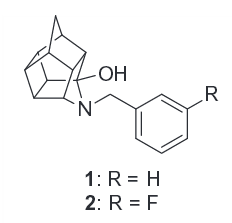
Banister_sigmaergic_cocaine_analog_1_%26_2.png

↑There is an interesting series of σ receptor ligands that are 8-aminopentacyclo trishomocubane analogs.

Sigma agonists limit cocaine's cardiotoxicity

↑The above study seems to indicate sigma agonism can be protective, namely for cocaine's toxicity.
 
Old thread but good insights:

In 1993, amantadine was found to bind to the sigma σ1 receptor with relatively high affinity (Ki = 20.25 μM). In 2004, it was discovered that amantadine and memantine bind to and act as agonists of the sigma σ1 receptor (Ki = 7.44 μM and 2.60 μM, respectively) and that activation of the σ1 receptor is potentially involved in the dopaminergic effects of amantadine at therapeutically relevant concentrations. σ1 receptor activation is one of amantadine's more potent actions. σ1 receptor agonists enhance tyrosine hydroxylase activity, modulate NMDA-stimulated dopamine release, increase dopamine release in the striatum in vivo, and decrease dopamine reuptake. As such, σ1 receptor activation may be involved in the antiparkinsonian and other central nervous system effects of amantadine.
 
Amantadine always caused me seizures.
Memantine was like completely different drug.
Amantadine has amphetamine-like (adrenergic) qualities whereas memantine is more ketamine-like. That could partly explain why it caused seizures.
 
Last edited:
Abstract: Many antidepressant drugs interact with σ receptors and accumulating evidence suggests that these proteins mediate antidepressant-like effects in animals and humans. σ Receptors are localized in brain regions affected in depression, further strengthening the hypothesis that they represent logical drug development targets. In this study, two novel σ receptor agonists (UMB23, UMB82) were evaluated for antidepressant-like activity in mice. First,
radioligand binding studies confirmed that the novel compounds had preferential affinity for σ receptors. Second, the forced swim test, a well established animal model for screening potential antidepressant drugs, showed that both compounds dose-dependently reduced immobility time. The σ receptor antagonist BD1047 attenuated the antidepressant-like effects of UMB23 and UMB82. Third, locomotor activity suggested that the effects of UMB23 and UMB82 in the forced swim test were not due to non-specific motor activating effects. Together, the data provide further evidence that σ receptor agonists represent a possible new class of antidepressant medication.

Wang J, Mack AL, Coop A, Matsumoto RR. Novel sigma (sigma) receptor agonists produce antidepressant-like effects in mice. Eur Neuropsychopharmacol. 2007 Nov;17(11):708-16. doi: 10.1016/j.euroneuro.2007.02.007. Epub 2007 Mar 21. PMID: 17376658; PMCID: PMC4041597.
 
Abstract: Many antidepressant drugs interact with σ receptors and accumulating evidence suggests that these proteins mediate antidepressant-like effects in animals and humans. σ Receptors are localized in brain regions affected in depression, further strengthening the hypothesis that they represent logical drug development targets. In this study, two novel σ receptor agonists (UMB23, UMB82) were evaluated for antidepressant-like activity in mice. First,
radioligand binding studies confirmed that the novel compounds had preferential affinity for σ receptors. Second, the forced swim test, a well established animal model for screening potential antidepressant drugs, showed that both compounds dose-dependently reduced immobility time. The σ receptor antagonist BD1047 attenuated the antidepressant-like effects of UMB23 and UMB82. Third, locomotor activity suggested that the effects of UMB23 and UMB82 in the forced swim test were not due to non-specific motor activating effects. Together, the data provide further evidence that σ receptor agonists represent a possible new class of antidepressant medication.

Wang J, Mack AL, Coop A, Matsumoto RR. Novel sigma (sigma) receptor agonists produce antidepressant-like effects in mice. Eur Neuropsychopharmacol. 2007 Nov;17(11):708-16. doi: 10.1016/j.euroneuro.2007.02.007. Epub 2007 Mar 21. PMID: 17376658; PMCID: PMC4041597.
In my opinion the forced swim test is complete BS as an indicator of antidepressive effects in humans.

That a rat tries not to drown longer on a compound than sober says nothing about it's effect on human consciousness.

And it's unethical.
 
In my opinion the forced swim test is complete BS as an indicator of antidepressive effects in humans.

That a rat tries not to drown longer on a compound than sober says nothing about it's effect on human consciousness.

And it's unethical.
Maybe it’s not testing for if the compound cures depression.

What if it’s testing the will to survive?

If an animal can be seen to resist the call to death? Isn’t that relevant? Isn’t that the main goal? Improving survivability against a life that feels like drowning?
 
Maybe it’s not testing for if the compound cures depression.

What if it’s testing the will to survive?

If an animal can be seen to resist the call to death? Isn’t that relevant? Isn’t that the main goal? Improving survivability against a life that feels like drowning?
Depression just isn't equivalent to being thrown into the middle of the ocean.
Fighting not to die from passivity is way different than fighting not to take one's life imo.

And even if it was, I'd even be skeptical whether the same compound that makes a rat swim longer does make a human swim longer.

We have no idea how much the rat swimming longer is due to cognition.
 
Top