• N&PD Moderators: Skorpio

Pharmacology The polypharmacology of psychedelics reveals multiple targets for potential therapeutics (2025)

This thread contains discussion about a Pharmacology-related topic

Allylbenzene

Bluelighter
Joined
Jul 25, 2025
Messages
987
fx1-lrg.jpg


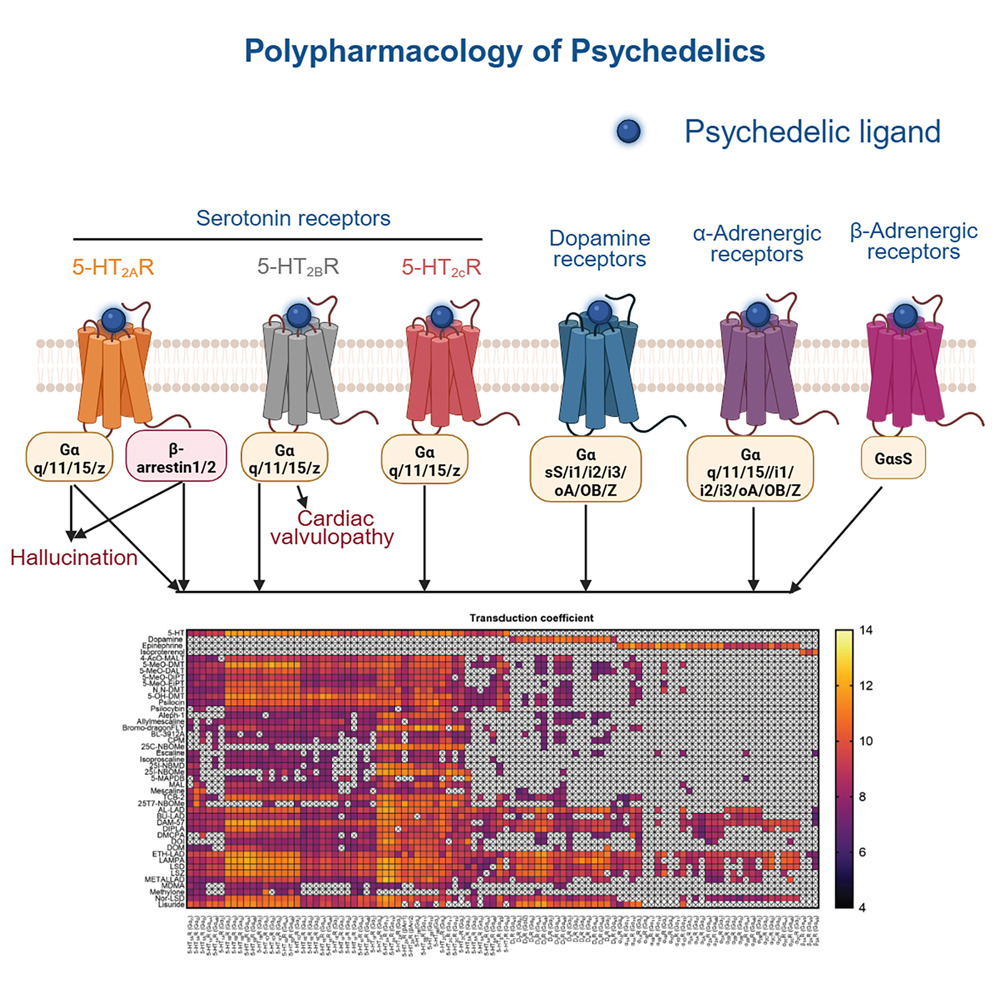
The classical psychedelics LSD, psilocybin, and mescaline exert their psychedelic effects via activation of the 5-HT2A serotonin receptor. Recent clinical studies have suggested that classical psychedelics may additionally have therapeutic potential for many neuropsychiatric conditions including depression, anxiety, migraine and cluster headaches, drug abuse, and post-traumatic stress disorder. In this study, we investigated the pharmacology of 41 classical psychedelics from the tryptamine, phenethylamine, and lysergamide chemical classes. We profiled these compounds against 318 human G-protein-coupled receptors (GPCRs) to elucidate their target profiles, and in the case of LSD, against more than 450 human kinases. We found that psychedelics have potent and efficacious actions at nearly every serotonin, dopamine, and adrenergic receptor. We quantified their activation for multiple transducers and found that psychedelics stimulate multiple 5-HT2AR transducers, each of which correlates with psychedelic drug-like actions in vivo. Our results suggest that multiple molecular targets likely contribute to the actions of psychedelics.

https://doi.org/10.1016/j.neuron.2025.06.012
 
Last edited:
Excerpt from the discussion section:

Due to renewed interest in the potential therapeutic applications of psychedelics, it is essential to delineate their molecular pharmacology to enable the development of safer and more effective compounds. This is important as prior studies have implicated 5-HT1A and 5-HT2C serotonin receptors, TAAR1-trace amine receptors, D1- and D2-dopamine receptors, σ1 sigma receptors and other unidentified receptors as being important for psychedelic drug actions in vivo.
Recent studies have suggested that psychedelics such as LSD directly interact with TrkB with high affinity, promoting BDNF-mediated neuroplasticity and antidepressant-like effects via allosteric potentiation of BDNF signaling in active synapses. To investigate this, we screened LSD across 450 human kinases, including TrkB, but found no significant interactions between LSD and any tested human kinases.
Further experiments in transfected cells revealed no effect of LSD or psilocin on BDNF-mediated activation of a TrkB reporter. We note that similar negative preliminary results, which have not yet been published in a peer-reviewed journal, were recently reported by Boltaev et al.
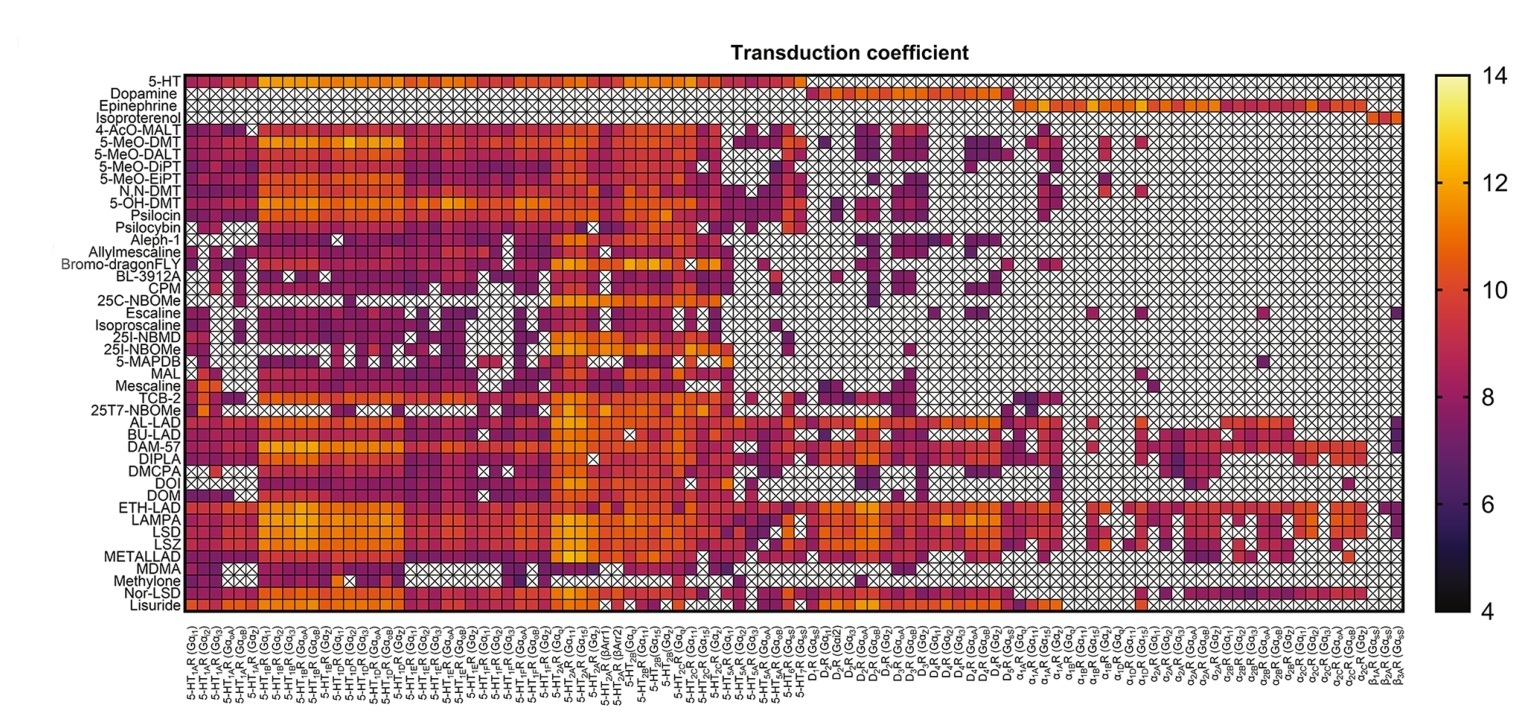
We found that psychedelic drugs predominately activate 5HT2A, 5-HT2B, and 5-HT2C, but that they are more efficacious and potent at 5-HT2A and 5-HT2B. Off-target activities are seen with lysergamides and tryptamines at dopamine and adrenergic receptors. All lysergamides activate dopamine D2, D3, and D4 receptors except there was no activity of Bu-LAD and METALLAD for D1, and D5 receptors. A few lysergamides also activated α-adrenergic receptors. The activation of dopamine and adrenergic receptors by lysergamides further highlights their potential for both therapeutic benefits and adverse side effects.

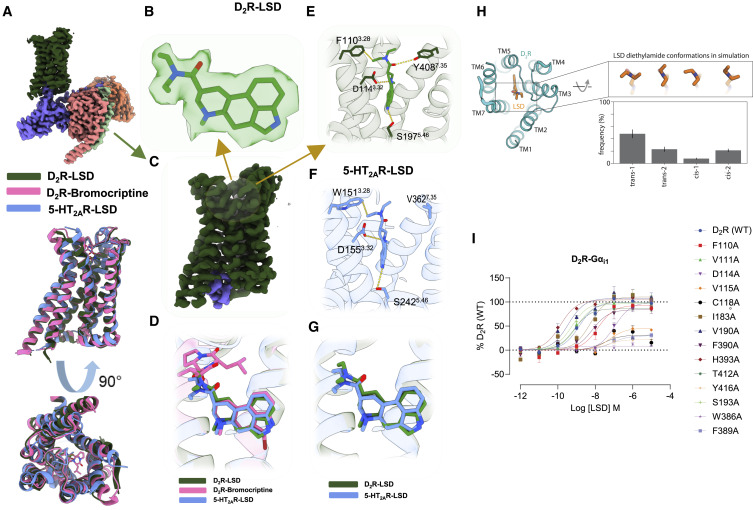
1-s2-0-S0896627325004702-gr5.jpg

Figure 5. Structural insights of LSD-D2R cryo-EM structure
(A) Sharpened cryo-EM map of D2R-LSD (2.3 A˚) color by chain.
(B) The model, and map of LSD.
(C) Sharpened map from the focused refinement carried out on the receptor alone.
(D) Models and interactions are shown based on the coloring schema with the D2R-LSD structure shown in green, the D2R-bromocriptine structure shown in pink,
and the 5-HT2AR-LSD structure shown in blue.
(E and F) Interactions between ligand and receptor are shown as yellow dotted lines.
(G) Overlap of D2R-LSD and 5-HT2AR-LSD. All images were visualized with ChimeraX.
(H) MD simulations reveal dominant conformation of LSD in orthosteric-binding pocket of D2R.
(I) Functional validation of binding pocket mutations was carried out using BRET2 D2R-Gαi1assay in the presence of LSD. Data are presented as mean ± SEM
from three biological replicates.

↑ Structure of the LSD-bound D2 dopamine receptor ↑

One of the striking features of our polypharmacology dataset is the confirmation that the dopamine receptor family has high affinity for most psychedelic lysergamides.
To explore the molecular determinants for the activation of lysergamides for the dopamine receptor family, we determined the active-state cryoelectron microscopy (cryo-EM) structure of the D2R bound with the prototypical lysergamide, LSD.
At a nominal resolution of 2.3 A˚, we unambiguously placed LSD within the orthosteric pocket and identified the interactions between the ligand and the receptor (Figure 5A).
To identify the orientation of the diethylamide moieties, we improved local map features by a focused refinement on thereceptor alone (Figure 5C), allowing us to model the diethylamide with further confidence.
We also turned to molecular dynamics (MD) simulations to validate the conformation of the diethylamide moiety of LSD bound to D2R.
In simulations of LSD bound to D2R, the most commonly adopted diethylamide conformation was a trans conformation (Figure 5H) matching that seen in crystal structures of LSD bound to 5-HT2A and 5-HT2B. Given the evidence based on the maps, previous studies, as well as simulations, we confidently modeled the diethylamide moiety of LSD in the trans conformation (Figure 5B).
To explore the various molecular determinants that allowed LSD to activate the D2R, we compared our new structure with the D2R-bromocriptine (PDB: 7JVR) and 5-HT2AR-LSD (PDB: 9AS3 and 9AS4) cryo-EM structures (Figure 5D).
Comparing our new D2R-LSD structure with the previously published bromocriptine, we noticed there was a significant overlap in the positioning of the lysergamide core (Figure 5D).
There was a slight shift in the ergoline rings in bromocriptine compared with LSD that was most likely due to the presence of the Br at the 2-position, slightly changing the orientation.
Additionally comparing D2R-LSD with the 5-HT2A-LSD structure, we found that there were conserved H-bonding interactions (Figure 5G).
Both the D2R and 5-HT2A H-bond to D3.32 (a conserved salt-bridge for all aminergic receptors) and S5.46 (Figure 5F) (all numbers are from the Ballesteros and Weinstein convention).
Moreover, at position 3.28, both receptors contained an aromatic residue—D2R was F1103.28, whereas 5-HT2A was W1513.28(Figures 5E and 5F).
Both residues made significant hydrophobic interactions with the diethylamide moiety of LSD; however, the interaction at W1513.28 in 5-HT2A was much closer compared with F1103.28 in D2R.
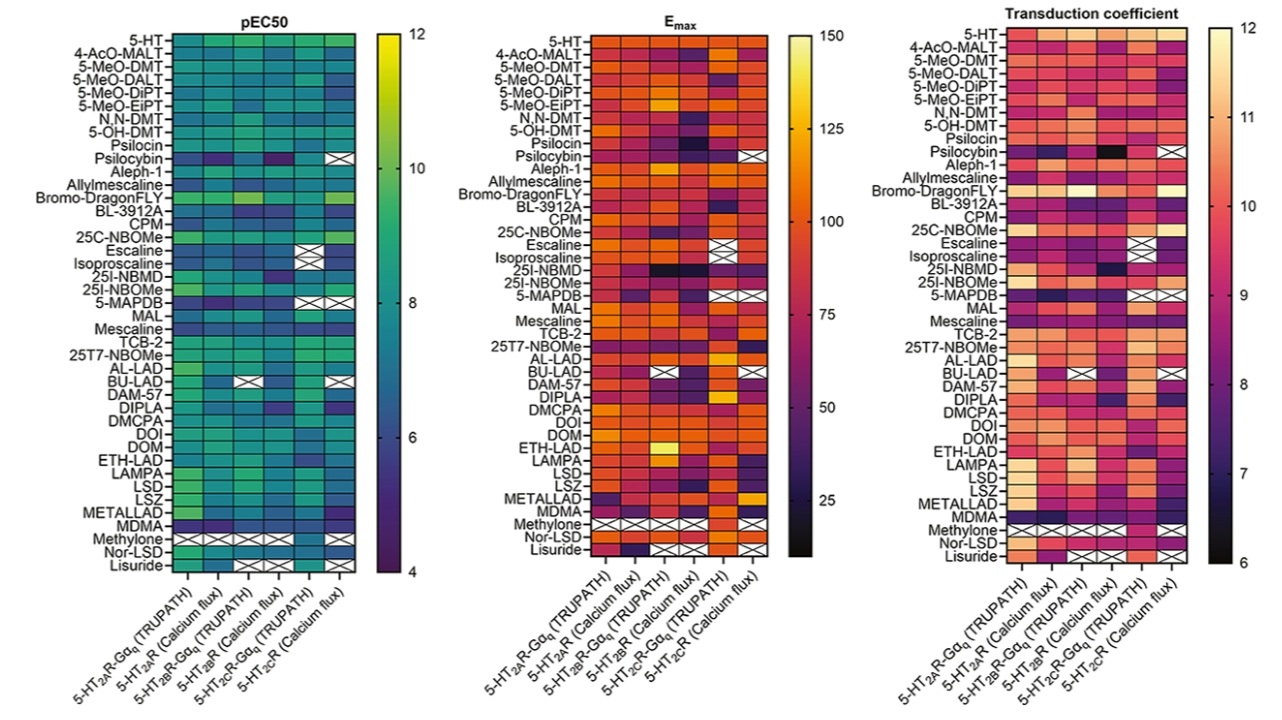
LSD was more potent (pEC50 = 9.43 ± 0.09) and efficacious (Emax= 96.51 ± 1.53) for the 5-HT2AR-Gαq pathway with a transduction coefficient (11.41 ± 0.04) compared with the D2R, which had apotency (pEC50 = 8.8 ± 0.15), efficacy (Emax= 76.78 ± 3.81), and transduction coefficient (10.68 ± 0.1) for the Gαi1pathway (Table S5).
The stronger hydrophobic interaction in 5-HT2AR due to W1513.28 compared with F1103.28 in D2R could explain why LSD was more potent and efficacious with a high transduction coefficient at 5-HT2AR.
We mutated some key residues around the orthosteric-binding pocket of the D2R and observed the functional activity of the receptor using a D2R-Gαi1 BRET assay (Figure 5I).
Cell surface ELISA assays were performed to determine their expression levels in the cell membrane (Figure S7).
Especially the D114A, F110A, V115A, W386A, and Y416A mutations in the D2R-binding pocket affected the activation of D2R by LSD (Figure 5I).

 
Last edited:
Screenshot-20260328-165516-PDF-Reader-Hi-Read.jpg

(A) Selected psychedelic compounds were screened using TRUPATH assay against serotonergic, dopaminergic, and adrenergic GPCRs for various G proteins depending on receptor-G-proteins coupling preferences. BRET1 assays were performed 5-HT2AR-β-Arr1 and β-Arr2 recruitment. Data were plotted in the form of heatmap for transduction coefficient. The y axis represents ligands, while the x axis depicts receptor-transducer pathways. Data are presented as mean ± SEM from three biological replicates. Blank square with an ‘‘X’’ sign indicates no response for the drug. The concentration-response curves and data tables associated with these heatmaps are reported in Mendeley Data S5–S27 and Table S5.

Screenshot-20260328-165348-PDF-Reader-Hi-Read.jpg
 
Last edited:
This is an older paper but still relevant:

Multiple receptors contribute to the behavioral effects of indoleamine hallucinogens (2011)

Serotonergic hallucinogens produce profound changes in perception, mood, and cognition. These drugs include phenylalkylamines such as mescaline and 2,5-dimethoxy-4-methylamphetamine (DOM), and indoleamines such as (+)-lysergic acid diethylamide (LSD) and psilocybin. Despite their differences in chemical structure, the two classes of hallucinogens produce remarkably similar subjective effects in humans, and induce cross-tolerance. The phenylalkylamine hallucinogens are selective 5-HT2 receptor agonists, whereas the indoleamines are relatively non-selective for serotonin receptors. There is extensive evidence, from both animal and human studies, that the characteristic effects of hallucinogens are mediated by interactions with the 5-HT2A receptor.
Nevertheless, there is also evidence that interactions with other receptor sites contribute to the psychopharmacological and behavioral effects of the indoleamine hallucinogens. This article reviews the evidence demonstrating that the effects of indoleamine hallucinogens in a variety of animal behavioral paradigms are mediated by both 5-HT2 and non-5-HT2 receptors.

https://doi.org/10.1016/j.neuropharm.2011.01.017
 
Top