



What Opioids Are
The term opiate is the word given to compounds isolated from the opium poppy. For example morphine, codeine and thebaine are all opiates. Heroin on the other hand is not present in the opium poppy so it is not an opiate. The correct term for opiate derivatives like heroin is semi synthetic opioid. There also exist fully synthetic opioids such as methadone and fentanyl which are not derived from any naturally occuring opiates. An opioid is any compound that fits into opioid receptors. There are 3 types of opioid receptors: μ (mu), δ (delta) and κ (kappa). Drugs like morphine, heroin and methadone are all opioids because they bind to opioid receptors. More specifically drugs like morphine bind to μ and δ opioid receptors. Surprisingly, salvinorin A (the active constituent of salvia divinorum) is also an opioid but it binds almost exclusively to κ opioid receptors. Often a slight change in structure can make a compound have a higher affinity for a particular type of opioid receptor. For example herkinorin, an analogue of salvinorin A has a much higher affinity for μ receptors and far lower affinity for κ receptors than salvinorin A. The result is that herkinorin has properties closer to that of morphine but also has some of the psychedelic properties characteristic of salvinorin A.
Salvinorin A

Herkinorin

as you can see, the only difference is herkinorin has an extra phenyl group attached to the acetyl group at the left hand side of the molecule. There are 3 families of opioids produced in the body: the endorphins, enkephalins and dynorphins. The word endorphin is the shortened word for "endogenous morphines" and bind primarily to μ opioid receptors.
Structure Activity Relationships.
Structure activity relationship (SAR) as the name suggests, is the relationships between the structure of the compound and its pharmacological properties. As you will see in the rest of this thread, a small change in the structure of a compound can result in a For now I'm going to use morphine as the reference compound and focus on the 3 and 6 position of morphine and its analogues.
First heres morphine:

as you can see it as -OH groups attached to the 3 and 6 positions. Attach a methyl group at the 3 position and you have codeine.
Codeine

Codeine isn't even active by itself, it must be converted into morphine by the liver but lets say it has a potency 10x less than morphine.
Attach a methyl group at the 6 position instead and you get heterocodeine:
Heterocodeine

According to wikipedia heterocodeine is 6 times more potent than morphine so that would make it 60 times more potent than codeine. Interesting

Now lets replace the methyl group with an acetyl group.
3-MAM
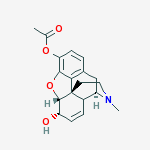
6-MAM

6-MAM is known to be more potent than heroin while 3-MAM is less potent than morphine. Similar to attaching methyl groups, attaching an acetyl group to the 6 position increases potency while attaching one to the 3 position lowers potency. This is why heroin having acetyl groups attached at both positions:
Heroin

is less potent than 6-MAM but more potent than morphine. This trend occurs with all sorts of substituents for example lets examine 2 of morphines major metabolites, M3G and M6G.
Morphine-3-Glucuronide

Morphine-6-Glucuronide

M3G is far less active than morphine while M6G is far more active than morphine.
Now lets see what carbonyl groups do. Oxidise the -OH at the 6 position of morphine and you get morphinone:
Morphinone

which is far weaker than morphine. Thats morphine-6-one, I can't find any info on morphine-3-one unfortunately. Can't find anything on morphine with both -OH groups oxidised either.
While codeine is methylmorphine, heres ethylmorphine:
Ethylmorphine

Ethylmorphines less potent than morphine but more potent than codeine. Thats 3-ethylmorphine, heres 6-ethymorphine:
6-ethylmorphine

Can't find any info on it though. Petty cuz I'm interested to see if it is more potent than heterocodeine or not.
Now lets examine what happens when we remove the double bond in the lower ring of morphines phenanthrene backbone. A hydrogenation of morphine yields dihydromorphine:
Dihydromorphine

Dihydromorphine is slightly more potent than morphine and a longer half-life. Morphine has a half-life of 2-3 hours whereas dihydromorphine has a half-life of 4 hours.
Similarly a hydrogenation of codeine yields dihydrocodeine:
Dihydrocodeine

Dihydrocodeine is approximately 1.5 greater in potency than codeine and has a half-life of 4 hours which is significantly longer than codeines half-life of 2.5-3 hours.
More interestingly is what happens when codeinone and morphinone undergo this reaction. The products of the hydrogenation of morphinone and codeinone are hydromorphone and hydrocodone respectively.
Hydromorphone

Hydrocodone

The potency of hydromorphone is exponentially greater than that of morphinone. Likewise the potency of hydrocodone is exponentially greater than that of codeinone. Hydromorphone is approximately 10 times the potency of morphine and 7 times the potency of dihydromorphine. Likewise hydrocodone has approximately 10 times the potency of codeine and 7 times the potency of dihydrocodeine.
Novel Opioids
The opioids discussed so far are all morphinans meaning they are derivatives of the compound morphinan:
Morphinan
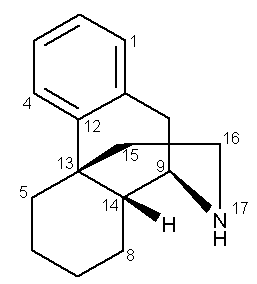
Morphinans are not the only compounds that bind to opioid receptors. Many non morphinan opioids have been discovered, some of which are thousands of times more potent than morphine. A well known example of a super potent, non morphinan opioid is fentanyl:
Fentanyl

which has a potency of approximately 2,000x that of morphine. Another novel super potent, non morphinan opioid is bromadol:
Bromadol

which has a potency of approximately 10,000x that of morphine. Bromadol is an analog of the weak opioid tramadol.
The term opiate is the word given to compounds isolated from the opium poppy. For example morphine, codeine and thebaine are all opiates. Heroin on the other hand is not present in the opium poppy so it is not an opiate. The correct term for opiate derivatives like heroin is semi synthetic opioid. There also exist fully synthetic opioids such as methadone and fentanyl which are not derived from any naturally occuring opiates. An opioid is any compound that fits into opioid receptors. There are 3 types of opioid receptors: μ (mu), δ (delta) and κ (kappa). Drugs like morphine, heroin and methadone are all opioids because they bind to opioid receptors. More specifically drugs like morphine bind to μ and δ opioid receptors. Surprisingly, salvinorin A (the active constituent of salvia divinorum) is also an opioid but it binds almost exclusively to κ opioid receptors. Often a slight change in structure can make a compound have a higher affinity for a particular type of opioid receptor. For example herkinorin, an analogue of salvinorin A has a much higher affinity for μ receptors and far lower affinity for κ receptors than salvinorin A. The result is that herkinorin has properties closer to that of morphine but also has some of the psychedelic properties characteristic of salvinorin A.
Salvinorin A
Herkinorin
as you can see, the only difference is herkinorin has an extra phenyl group attached to the acetyl group at the left hand side of the molecule. There are 3 families of opioids produced in the body: the endorphins, enkephalins and dynorphins. The word endorphin is the shortened word for "endogenous morphines" and bind primarily to μ opioid receptors.
Structure Activity Relationships.
Structure activity relationship (SAR) as the name suggests, is the relationships between the structure of the compound and its pharmacological properties. As you will see in the rest of this thread, a small change in the structure of a compound can result in a For now I'm going to use morphine as the reference compound and focus on the 3 and 6 position of morphine and its analogues.
First heres morphine:
as you can see it as -OH groups attached to the 3 and 6 positions. Attach a methyl group at the 3 position and you have codeine.
Codeine
Codeine isn't even active by itself, it must be converted into morphine by the liver but lets say it has a potency 10x less than morphine.
Attach a methyl group at the 6 position instead and you get heterocodeine:
Heterocodeine
According to wikipedia heterocodeine is 6 times more potent than morphine so that would make it 60 times more potent than codeine. Interesting
Now lets replace the methyl group with an acetyl group.
3-MAM
6-MAM
6-MAM is known to be more potent than heroin while 3-MAM is less potent than morphine. Similar to attaching methyl groups, attaching an acetyl group to the 6 position increases potency while attaching one to the 3 position lowers potency. This is why heroin having acetyl groups attached at both positions:
Heroin
is less potent than 6-MAM but more potent than morphine. This trend occurs with all sorts of substituents for example lets examine 2 of morphines major metabolites, M3G and M6G.
Morphine-3-Glucuronide
Morphine-6-Glucuronide
M3G is far less active than morphine while M6G is far more active than morphine.
Now lets see what carbonyl groups do. Oxidise the -OH at the 6 position of morphine and you get morphinone:
Morphinone
which is far weaker than morphine. Thats morphine-6-one, I can't find any info on morphine-3-one unfortunately. Can't find anything on morphine with both -OH groups oxidised either.
While codeine is methylmorphine, heres ethylmorphine:
Ethylmorphine
Ethylmorphines less potent than morphine but more potent than codeine. Thats 3-ethylmorphine, heres 6-ethymorphine:
6-ethylmorphine
Can't find any info on it though. Petty cuz I'm interested to see if it is more potent than heterocodeine or not.
Now lets examine what happens when we remove the double bond in the lower ring of morphines phenanthrene backbone. A hydrogenation of morphine yields dihydromorphine:
Dihydromorphine
Dihydromorphine is slightly more potent than morphine and a longer half-life. Morphine has a half-life of 2-3 hours whereas dihydromorphine has a half-life of 4 hours.
Similarly a hydrogenation of codeine yields dihydrocodeine:
Dihydrocodeine
Dihydrocodeine is approximately 1.5 greater in potency than codeine and has a half-life of 4 hours which is significantly longer than codeines half-life of 2.5-3 hours.
More interestingly is what happens when codeinone and morphinone undergo this reaction. The products of the hydrogenation of morphinone and codeinone are hydromorphone and hydrocodone respectively.
Hydromorphone
Hydrocodone
The potency of hydromorphone is exponentially greater than that of morphinone. Likewise the potency of hydrocodone is exponentially greater than that of codeinone. Hydromorphone is approximately 10 times the potency of morphine and 7 times the potency of dihydromorphine. Likewise hydrocodone has approximately 10 times the potency of codeine and 7 times the potency of dihydrocodeine.
Novel Opioids
The opioids discussed so far are all morphinans meaning they are derivatives of the compound morphinan:
Morphinan
Morphinans are not the only compounds that bind to opioid receptors. Many non morphinan opioids have been discovered, some of which are thousands of times more potent than morphine. A well known example of a super potent, non morphinan opioid is fentanyl:
Fentanyl
which has a potency of approximately 2,000x that of morphine. Another novel super potent, non morphinan opioid is bromadol:
Bromadol
which has a potency of approximately 10,000x that of morphine. Bromadol is an analog of the weak opioid tramadol.
Last edited:




