



Sean Penn directed a film about him. Numerous books have been dedicated to his memory. Article after article, in various magazines all over the country, have been written about him. Only 24 years old. Already a legendary figure. People either ridicule or call him a fool. Experienced hunters & alpinists claim he was ill prepared to survive alone in Alaska. Why do so many people think his story not worthy of all the attention.? Yet what's the fascination that Christopher McCandless aka Alexander Supertramp holds for so many others?. Such as myself.
I first read about this in the mid 90's. I can't speak for others but I can tell you what I find captivating about him: his death. I was disturbed to find out that this young man in the prime of his life so full of promise & conviction died in such desolation. Completely alone in an abandoned bus. He starved to death. I'll tell you his story in a brief synopsis.
Chris was born to a good middle class family. He was a star athlete in school. On the honour roll. Popular & extremely intelligent he chose a very unusual way of life apon graduation. His family gave him a trust fund of over 30,000 & all the oppourtunities to become successful. Instead he chose to completely drop out of regular society. Cut all ties with his family. Burn or give away his entire fortune. Change his name & became a vagabond. Traveling all over the US & canada to discover himself. That's not so unusual but chris was somewhat different in the sense that he wasn't afraid to live a solitary life. He dreamt of moving to Alaska. To live off the land, completely alone . To fend for himself, forage for his food, & brave the desolate, deep, wilds of cold & inhospitable wilderness

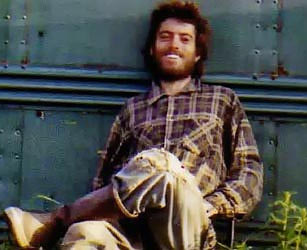
The Following excerpts are taken from Wikipidia
In April 1992, McCandless hitchhiked from Enderlin, North Dakota, to Fairbanks, Alaska. McCandless was last seen alive at the head of the Stampede Trail on April 28, 1992, by a local electrician named Jim Gallien. Gallien had given McCandless a ride from Fairbanks to the start of the rugged track just outside the small town of Healy. Gallien later said he had been seriously concerned about the safety of McCandless (who introduced himself as "Alex"), after noticing McCandless' light pack, minimal equipment, meager rations, and obvious lack of experience. Gallien said he'd had deep doubts about "Alex"'s ability to survive the harsh and unforgiving Alaskan bush.Gallien repeatedly tried to persuade McCandless to defer the trip, at one point offering to detour to Anchorage, and buy him suitable equipment and supplies. However, McCandless ignored Gallien's persistent warnings and refused his offers of assistance (though McCandless did accept a pair of Wellington boots, two sandwiches, and a packet of corn chips from Gallien). Gallien dropped McCandless off believing McCandless would head back towards the highway within a few days as hunger set in.
After hiking along the snow-covered Stampede Trail, McCandless came upon an abandoned bus (about 28 miles (45 km) west of Healy), alongside an overgrown section of the trail near Denali National Park, where he set up camp and attempted to live off the land. He had 4.5 kilograms (9.9 lb) of rice, a Remington semi-automatic rifle with 400 rounds of .22LR hollowpoint ammunition, a number of books, including one on local plant life, some personal effects, and a few items of camping equipment. Self-portrait photographs and journal entries indicate he foraged for edible plants and hunted game. McCandless hunted porcupines, squirrels, and birds, such as ptarmigans and Canada geese. On June 9, 1992, he stalked and shot a moose. However, the meat spoiled within days after McCandless failed to properly preserve it.
It has been speculated that McCandless may have been responsible for vandalizing several cabins in the area that were stocked with food, survival equipment, and emergency supplies. In response, Denali National Park Chief Ranger Ken Kehrer, has categorically stated that McCandless was not considered a viable suspect by the National Park Service.
McCandless' journal documents 113 days in the area. In July, after living in the bus for three months, he decided to head back to civilization, but the trail was blocked by the swollen Teklanika River; the watercourse by that stage was considerably higher and swifter than when he'd crossed in April. McCandless did not have a detailed topographical map of the region and was unaware of a hand-operated tramway that crossed the river eight-tenths of a mile away from where he had previously crossed. At this point, McCandless headed back to the bus and re-established his camp. He posted an S.O.S. note on the bus, which stated:
“ Attention Possible Visitors. S.O.S. I need your help. I am injured, near death, and too weak to hike out. I am all alone, this is no joke. In the name of God, please remain to save me. I am out collecting berries close by and shall return this evening. Thank you, Chris McCandless. August?"
DEATH
McCandless' final written journal entry, noted as "Day 107", simply read, "Beautiful Berries." The days 108 through 113 contained no words and were marked with only slashes.
On September 6, 1992, a hunter who was looking for shelter for the night came upon the converted bus McCandless had been staying in. Upon entering, he smelled what he thought was rotting food and discovered "a lump" in a sleeping bag. The hunter quickly radioed police, who arrived the following day. They found McCandless' decomposing body in the sleeping bag. He had died of starvation sometime in August.
LEGACY
The converted bus where McCandless lived and died has since become a well known destination for hikers. Known as "The Magic Bus", the 1946 International Harvester was abandoned by road workers in 1961 on the Stampede Trail where it remains today. A plaque in McCandless' memory is affixed to the interior.
McCandless' life became the subject of a number of articles, books, films and documentaries, which helped elevate his life to the status of modern myth. He became a romantic figure to some inspired by what they see as his free-spirited idealism, but to others a controversial misguided figure."The Magic Bus" has become a pilgrimage destination for trekkers who camp at the vehicle, some of whom have also gotten into difficulties due to the Teklanika River.
You know that's on my bucket list. But I don't call it that though....bucket list. You get what I mean; it's one of the places I wanna visit in my lifetime - along with the base of Mount Everest, Great Wall of China, The Amityville Horror House,Hong Kong, Niagra Falls,Aushwitz concentration camp in Poland, New York, Hollywood,South America, Palmyra Island,Highway Of Tears,Las Vegas,Paris,Annes secret annex in Holland,Rome, and where Joan of Arc was born or burnt at the stake.


I first read about this in the mid 90's. I can't speak for others but I can tell you what I find captivating about him: his death. I was disturbed to find out that this young man in the prime of his life so full of promise & conviction died in such desolation. Completely alone in an abandoned bus. He starved to death. I'll tell you his story in a brief synopsis.
Chris was born to a good middle class family. He was a star athlete in school. On the honour roll. Popular & extremely intelligent he chose a very unusual way of life apon graduation. His family gave him a trust fund of over 30,000 & all the oppourtunities to become successful. Instead he chose to completely drop out of regular society. Cut all ties with his family. Burn or give away his entire fortune. Change his name & became a vagabond. Traveling all over the US & canada to discover himself. That's not so unusual but chris was somewhat different in the sense that he wasn't afraid to live a solitary life. He dreamt of moving to Alaska. To live off the land, completely alone . To fend for himself, forage for his food, & brave the desolate, deep, wilds of cold & inhospitable wilderness
The Following excerpts are taken from Wikipidia
In April 1992, McCandless hitchhiked from Enderlin, North Dakota, to Fairbanks, Alaska. McCandless was last seen alive at the head of the Stampede Trail on April 28, 1992, by a local electrician named Jim Gallien. Gallien had given McCandless a ride from Fairbanks to the start of the rugged track just outside the small town of Healy. Gallien later said he had been seriously concerned about the safety of McCandless (who introduced himself as "Alex"), after noticing McCandless' light pack, minimal equipment, meager rations, and obvious lack of experience. Gallien said he'd had deep doubts about "Alex"'s ability to survive the harsh and unforgiving Alaskan bush.Gallien repeatedly tried to persuade McCandless to defer the trip, at one point offering to detour to Anchorage, and buy him suitable equipment and supplies. However, McCandless ignored Gallien's persistent warnings and refused his offers of assistance (though McCandless did accept a pair of Wellington boots, two sandwiches, and a packet of corn chips from Gallien). Gallien dropped McCandless off believing McCandless would head back towards the highway within a few days as hunger set in.
After hiking along the snow-covered Stampede Trail, McCandless came upon an abandoned bus (about 28 miles (45 km) west of Healy), alongside an overgrown section of the trail near Denali National Park, where he set up camp and attempted to live off the land. He had 4.5 kilograms (9.9 lb) of rice, a Remington semi-automatic rifle with 400 rounds of .22LR hollowpoint ammunition, a number of books, including one on local plant life, some personal effects, and a few items of camping equipment. Self-portrait photographs and journal entries indicate he foraged for edible plants and hunted game. McCandless hunted porcupines, squirrels, and birds, such as ptarmigans and Canada geese. On June 9, 1992, he stalked and shot a moose. However, the meat spoiled within days after McCandless failed to properly preserve it.
It has been speculated that McCandless may have been responsible for vandalizing several cabins in the area that were stocked with food, survival equipment, and emergency supplies. In response, Denali National Park Chief Ranger Ken Kehrer, has categorically stated that McCandless was not considered a viable suspect by the National Park Service.
McCandless' journal documents 113 days in the area. In July, after living in the bus for three months, he decided to head back to civilization, but the trail was blocked by the swollen Teklanika River; the watercourse by that stage was considerably higher and swifter than when he'd crossed in April. McCandless did not have a detailed topographical map of the region and was unaware of a hand-operated tramway that crossed the river eight-tenths of a mile away from where he had previously crossed. At this point, McCandless headed back to the bus and re-established his camp. He posted an S.O.S. note on the bus, which stated:
“ Attention Possible Visitors. S.O.S. I need your help. I am injured, near death, and too weak to hike out. I am all alone, this is no joke. In the name of God, please remain to save me. I am out collecting berries close by and shall return this evening. Thank you, Chris McCandless. August?"
DEATH
McCandless' final written journal entry, noted as "Day 107", simply read, "Beautiful Berries." The days 108 through 113 contained no words and were marked with only slashes.
On September 6, 1992, a hunter who was looking for shelter for the night came upon the converted bus McCandless had been staying in. Upon entering, he smelled what he thought was rotting food and discovered "a lump" in a sleeping bag. The hunter quickly radioed police, who arrived the following day. They found McCandless' decomposing body in the sleeping bag. He had died of starvation sometime in August.
LEGACY
The converted bus where McCandless lived and died has since become a well known destination for hikers. Known as "The Magic Bus", the 1946 International Harvester was abandoned by road workers in 1961 on the Stampede Trail where it remains today. A plaque in McCandless' memory is affixed to the interior.
McCandless' life became the subject of a number of articles, books, films and documentaries, which helped elevate his life to the status of modern myth. He became a romantic figure to some inspired by what they see as his free-spirited idealism, but to others a controversial misguided figure."The Magic Bus" has become a pilgrimage destination for trekkers who camp at the vehicle, some of whom have also gotten into difficulties due to the Teklanika River.
You know that's on my bucket list. But I don't call it that though....bucket list. You get what I mean; it's one of the places I wanna visit in my lifetime - along with the base of Mount Everest, Great Wall of China, The Amityville Horror House,Hong Kong, Niagra Falls,Aushwitz concentration camp in Poland, New York, Hollywood,South America, Palmyra Island,Highway Of Tears,Las Vegas,Paris,Annes secret annex in Holland,Rome, and where Joan of Arc was born or burnt at the stake.


