
sekio
Bluelight Crew
Do you guys think Phenetrazine is made from left over N-ethyl-buphedrone by the Chinese?
Nope.


N&PD Moderators: Skorpio
You are using an out of date browser. It may not display this or other websites correctly.
You should upgrade or use an alternative browser.
The Big and Bangin' Pseudo-Advanced Drug Chemistry, Pharmacology and More Thread, V.2
sekio
Bluelight Crew
Do you guys think Phenetrazine is made from left over N-ethyl-buphedrone by the Chinese?
Nope.


Sprout
Bluelight Crew
Wait, this isn't such a bad idea. Coffee has a pretty long half-life, 3-7 hours. If you drink coffee in the afternoon, you still have half of the caffeine in your body when you go to sleep, which can have an impact on the quality of your sleep.
I just remember I once looked at a bunch of methylxanthine analogs that had been made. Might be worth checking out again what is known about caffeines SAR (probably a lot)
IIRC, DMX had a greater potency and shorter duration than Caffeine (TMX) as well as being much more selective for receptor subtypes.
I have done a fair bit of reading, myself so look forward to any discussion. 
sekio
Bluelight Crew
There are three dimethylxanthines (paraxanthine, theobromine, theophylline), so you'll have to be more specific.
I never knew what's in those, my friend's mum who I hated with a passion was taking it when I was in 5th grade.
Plus there's always Middle Eastern captagon, which contain fenethylline, the methamphetamine plus caffeine in a single molecule adduct.
By the way fenethylline contains regular amphetamine, there is only one methyl group on amphetamine's side. It was also introduced in the USA if I am not mistaken. I wonder why that never became popular.
EDIT: omg lol
http://en.wikipedia.org/wiki/Amfecloral
http://en.wikipedia.org/wiki/Dexamyl
How the fuck did I not know these?!
Last edited:
...
Bluelighter
But so generally speaking, how would one alter a molecule to diminish its duration of action? Is there a functional group that tends to increase affinity for cytochromes or xanthine oxidases or something?

SONN
Bluelighter
okay so I'm going to sound like i'm in the wrong forum but usually you guys are pretty nice to me despite my lack of pharmacology knowledge lol
I recently went to a weird underground supermarket in chinatown where they had all these things that pretty much were completely novel to the western world, I decided to look up a few of the herbs in the tonic section because I wanted to make a new tea that would somehow make me feel better and I found Glehnia Root.
So according to eastern medicine if you boil glehnia root for a couple minutes in water then drink it, it's supposed to have an analgesic effect and help moisturize your lungs or something to help with coughs, Presumably because it contains the active ingredient "naphthisoxazole A" which has no wikipedia page. I decided to use my Uni powers and look up if anyone had done anything with naphthisoxazole A and I found the jstage article below saying that they made a bunch of derivatives of it in the seventies but I can't figure out much more than that.
either way this is Naphthisoxazole A
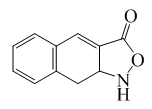
I'm assuming some other people on here will have access to Jstage so they can hopefully see the derivatives. I thought It was a pretty interesting chemical structure and it totally made my lungs feel better, so I was wondering what the geniuses of NAPD would think of it.
https://www.jstage.jst.go.jp/article/yakushi1947/95/7/95_7_815/_pdf
to a layman like me it looks like a mirrored MDMA just a tad, That pentagonal chain looks like a mirrored methylene-dioxy but with extra substitutions. I wonder what MDMA with that attachment mirrored instead of the methylene-dioxy would be like.
Last edited:
endotropic
Bluelight Crew
Well it's got an amphetamine buried in there if you squint hard enough, with the alpha methyl constrained in the ring system. I'm not sure if that's relevant to its activity but interesting at least.
sekio
Bluelight Crew
It looks like a DNA intercalator to me.
Indeed, reminds me a lot of Thalidomide (which is a DNA intercalator afaik, correct mer if I'm wrong).
It looks like a DNA intercalator to me.

nickfurry
Greenlighter
Are there any other reagents than Marquis, Mendelin et al, that could be used for testing chemicals, that are not based on concentrated sulfuric acid? The latter is hard to get, actually it is outright illegal to possess in some countries. The European Union will most likely slowly but eventually make most pure chemicals illegal or at least unavailable on the open market.

nAON
Bluelight Crew
Random question that doesn't quite warrant a thread - would SSRIs have an acute effect on the brain from preventing 5HT reuptake? Am aware that the clinical is from weeks of desensitization, but surely the increased concentration does something involving a direct interaction with the receptors? Why don't they get you high, for example?
endotropic
Bluelight Crew
They don't get you high like say MDMA because the increased serotonin concentrations cause increased activation of 5-HT autoreceptors. That process leads to reduced 5-HT neuron activation and reduced 5-HT release. The net effect of reduced 5-HT release combined with 5-HT reuptake blockade is that extracellular 5-HT levels hardly increase at all until the 5-HT autoreceptors desensitize. You can see evidence for those processes in microdialysis and e.phys studies in rodents, and clinical brain imaging studies.
So I guess the acute effect of SSRI's is the reduction in 5-HT neuronal excitability, plus any off target effects. I think its interesting that people with naturally high 5-HT autoreceptor levels tend to have worse response to SSRI's, which makes sense when you think about the effect that would have on their 5-HT levels during the first few weeks.

pharmakos
Bluelighter
from Time:
One dose of antidepressant is all it takes to change the brain, finds a small new study published in the journal Current Biology.
The study authors took brain scans of 22 healthy people who weren’t depressed and who had never before taken antidepressants. Some were randomized to take a dose of the most common kind of antidepressant, an SSRI (selective serotonin reuptake inhibitors).
After another brain scan three hours later, researchers saw a dramatic change: a widespread drop in connectivity throughout the brain, except where it was enhanced in two brain regions, the cerebellum and thalamus.
The results suggest that antidepressants may alter brain connections much faster than previously thought. “We were surprised,” says study author Julia Sacher, of the Max Planck Institute for Human Cognitive and Brain Sciences, in an email to TIME. “We were not expecting the SSRI to have such a prominent effect on such a short time-scale and the resulting signal to encompass the entire brain.”
Antidepressants are generally thought to take several weeks to kick in. “It is possible that these connectivity changes are the first step in remodeling the brain, as there is evidence from other experiments that such functional connectivity changes can reflect neuroplastic change,” Sacher says.
“However, much work remains before we understand how different antidepressants affect the brains of people with and without depression, not only after the first dose, but also over the longer term. The hope that we have for future studies is to uncover distinct differences in brain connectivity between depression patients who ultimately respond to an antidepressant and those who do not.”
http://time.com/3399344/antidepressant-changes-the-brain-study-finds/
nAON
Bluelight Crew
They don't get you high like say MDMA because the increased serotonin concentrations cause increased activation of 5-HT autoreceptors. That process leads to reduced 5-HT neuron activation and reduced 5-HT release. The net effect of reduced 5-HT release combined with 5-HT reuptake blockade is that extracellular 5-HT levels hardly increase at all until the 5-HT autoreceptors desensitize. You can see evidence for those processes in microdialysis and e.phys studies in rodents, and clinical brain imaging studies.
So I guess the acute effect of SSRI's is the reduction in 5-HT neuronal excitability, plus any off target effects. I think its interesting that people with naturally high 5-HT autoreceptor levels tend to have worse response to SSRI's, which makes sense when you think about the effect that would have on their 5-HT levels during the first few weeks.
Aha, so the 5HT release from MDMA would also cause 1A activation, but that itself wouldn't affect MDMA-induced 5HT release because it's via SERT-reversal which isn't being regulated by autoreceptors/neuronal excitation? Think I get it now 
And gonna give that paper a read now nightwatch, cheers.
endotropic
Bluelight Crew
^ yea you've got it nAON, releasers act independent of neuronal excitation.
InterestingFACT
Bluelighter
also note that while most people wouldn't characterize it as "getting high," some people do note initiation symptoms like color enhancement, mild euphoria on their first couple days on an ssri.
They don't get you high like say MDMA because the increased serotonin concentrations cause increased activation of 5-HT autoreceptors. That process leads to reduced 5-HT neuron activation and reduced 5-HT release. The net effect of reduced 5-HT release combined with 5-HT reuptake blockade is that extracellular 5-HT levels hardly increase at all until the 5-HT autoreceptors desensitize. You can see evidence for those processes in microdialysis and e.phys studies in rodents, and clinical brain imaging studies.
So I guess the acute effect of SSRI's is the reduction in 5-HT neuronal excitability, plus any off target effects. I think its interesting that people with naturally high 5-HT autoreceptor levels tend to have worse response to SSRI's, which makes sense when you think about the effect that would have on their 5-HT levels during the first few weeks.

Nagelfar
Bluelight Crew
What are forum members thoughts on this 2014 publishing (pdf file) claiming cocaine & methylphenidate differ from other MAT inhibitors by being "inverse agonists" at the transporter and facilitating release of monoamines thereby?
Essentially, there is an inward and outward facing conformation of DAT, cocaine/MPH binds to the outward facing conformation stabilizing it, and thus causing reverse transport via the inward/outward concentration gradient. The binding site is distinct from that of other reuptake inhibitors, being at TMs 9-11 on DAT whereas other bind to TMs 10-12 (with overlapping loci at 1 & 7).


