• H&R Moderators: streaM Freak

Sugar - The hidden drug?

mb-909

Bluelighter
Joined
Oct 23, 2014
Messages
182
Sugar is nearly everywhere, often hidden. I have been an sugar addict for like 8 years, mostly wheat flower products. After reading a lot about sugar and the consequences it has on your organs and your blood vessels I came to the conclusion to reduce my amount of carbs on a daily basis. Instead I am planning to eat more vegetables and other green stuff :(. I am certainly not doing it, because I am too fat... I am thin like a tree branch and fat dripps off me like in a Teflon pan, but I don't want to pay for my eating, which is a lot...

How bad is sugar really (especially your blood vessels)? I have been reading that it increases, in combination with protein, the plague in your blood vessels more than usual.
 
Sugar is nearly everywhere, often hidden. I have been an sugar addict for like 8 years, mostly wheat flower products. After reading a lot about sugar and the consequences it has on your organs and your blood vessels I came to the conclusion to reduce my amount of carbs on a daily basis. Instead I am planning to eat more vegetables and other green stuff :(. I am certainly not doing it, because I am too fat... I am thin like a tree branch and fat dripps off me like in a Teflon pan, but I don't want to pay for my eating, which is a lot...

How bad is sugar really (especially your blood vessels)? I have been reading that it increases, in combination with protein, the plague in your blood vessels more than usual.

You have plague in your blood vessels? That's seriously worrying. I'd go to hospital like right fucking now if you know this for sure. Also can you provide a justification for describing sugar as a "drug"? And how is it "hidden" exactly?
 
This doesn't quite fit in NSPD, unless there's some specific set of research you want to discuss. Let's give Healthy Living a try. . .
...
Well, frequent intake of large amounts of simply carbs tends to induce diabetes-type insulin disregulation and all the harm it can wreak. . .one should try to actually expend the calories one ingests to help; eg, one of the few healthy times to drink a soda is directly before or after significant cardio.

ebola
 
Sugar is nearly everywhere, often hidden. I have been an sugar addict for like 8 years, mostly wheat flower products. After reading a lot about sugar and the consequences it has on your organs and your blood vessels I came to the conclusion to reduce my amount of carbs on a daily basis. Instead I am planning to eat more vegetables and other green stuff :(. I am certainly not doing it, because I am too fat... I am thin like a tree branch and fat dripps off me like in a Teflon pan, but I don't want to pay for my eating, which is a lot...

How bad is sugar really (especially your blood vessels)? I have been reading that it increases, in combination with protein, the plague in your blood vessels more than usual.


IMO, The problem is not sugar, but what type of sugar you consume. And how much you eat. It's all about moderation.

Moderation in all things, especially moderation.”
 
Last edited:
IMO, The problem is not sugar, but what type of sugar you consume. And how much you eat. It's all about moderation.

Moderation in all things, especially moderation.”

I'd say that the quote you posted was a little inappropriate under the circumstances, no?
 
Even though I have eaten a lot of bad sugar (industry), I hope that I did enough sports too not have any sort of plague. I suppose it is highly unlikely that I already have done any significant damage ^^. But I want to change my lifestyle to lessen the risks.

There is not much scientific information about sugar or I can't find them:


"Public health scientists and a government committee working on nutritional advice receive funding from the very companies whose products are widely held to be responsible for the obesity crisis, an investigation by The BMJ reveals today.

Findings from the special report raise important questions about the potential for bias and conflict of interest among public health experts as the UK faces a growing obesity epidemic.

Recipients of research funding from sugar and other related industries include members of the Scientific Advisory Committee on Nutrition (SACN), which is currently updating official advice on carbohydrates consumption, and researchers working for the Medical Research Council's Human Nutrition Research unit (HNR).


HNR scientists have received research funding and funding in kinds from companies including Coca-Cola, Mars, Nestlé, Sainsbury's, the Institute of Brewing and Distilling, Weight Watchers International and others.


As a former HNR researcher, Susan Jebb, professor of diet and population health at the University of Oxford and chair of the government's Responsibility Deal Food Network, received support for her work from Coca-Cola, Sainsbury's, Cereal Partners and Rank Hovis McDougal, among others. Between 2008 and 2010, Coca-Cola donated £194,000 to one research study on which she was the principal investigator.


Listed as sole or co-principal investigator on 10 industry supported research projects between 2004 and 2015, Jebb attracted funding worth £1.37 million to the HNR unit. Some of the companies that supported her work at HNR, including Unilever and Coca-Cola, are now members of the Responsibility Deal, which Jebb chairs.
Jebb told The BMJ that all of her research was analysed and reported independently of industry, and added: "Everything I do, whether in my research or as chair of the responsibility deal, is to try to improve public health."


Similarly, research carried out by members of the SACN has been supported by companies including PepsiCo, Coca-Cola, Mars and Nestlé.
An analysis of the annual declarations of interest by SACN members shows that between 2001 and 2012 there was an average of 45 declarations each year involving companies from the food, drinks and pharmaceutical industries.


Of the 40 scientists affiliated with SACN between 2001 and 2012, only 13 have had no interests to declare.
David Stuckler, professor of political economy and sociology at Oxford University, says the engagement of companies such as Coca-Cola with the work of public health organisations "falls into the category of efforts to crowd out public regulation, to try to weaken public health by working with it."


The BMJ also reports evidence that the Responsibility Deal is not working. Not only do industry's pledges made under the deal not add up to the government's target of a 5% reduction in calorie consumption, but the UK's most comprehensive survey of shopping habits shows that between 2006 and 2014 the number of calories in the national weekly shop has increased by almost 12 %."

- http://www.sciencedaily.com/releases/2015/02/150211204055.htm


 
There's some middle ground here, as we're generally led to believe sugar is much more harmless than it is (you're not really learning/knowing that sugar=bad drug if you feed it to your children, which is common, I don't think you'd argue), but information is also a google search away.

Just how bad sugar is for you, but also how unnecessary (especially large quantities of processed sugar, duh), is becoming understood more and more.

Personally, I've tried to cut down/out sugar, but it's really fucking hard. I've cut out most of the carbs but processed sugar (candy) is the last.
 
Many protein and workout supplements are using alternative sweeteners, including all natural variants. The reason I mention this is because some are quite enjoyable, even when compared to the "real deal", sugar filled treats. But natural foods are usually better, with net positives, sugars or not.

Overall, yes there are tons of studies and articles on sugar's effects on the body... Areas to look into, in addition to insulin resistance and diabetes research, include advanced glycation end products (AGEs), effects of fructose on the liver (where it is metabolized), effects of sugar on hormones (also acne via hyperproliferation of dermal cells from IGF-1), and effects of fructose on wound healing. Some try to implicate sugar mediated disturbances with cancer growth, and the list goes on.
 
There's some middle ground here, as we're generally led to believe sugar is much more harmless than it is (you're not really learning/knowing that sugar=bad drug if you feed it to your children, which is common, I don't think you'd argue), but information is also a google search away.

Just how bad sugar is for you, but also how unnecessary (especially large quantities of processed sugar, duh), is becoming understood more and more.

Personally, I've tried to cut down/out sugar, but it's really fucking hard. I've cut out most of the carbs but processed sugar (candy) is the last.

This!
 
High sugar consumption correlates with psoriasis for me. I usually only consume about 40% or less of recommended amounts of carbs. ..

One thing I've noticed is that if I have any amount of carbs, I crave them.

For two years or so I survived off of about 11-20 grams of sugars a day in the form of hulled hemp seeds. My skin was excellent. My stomach never growled. Not to say I was healthy. I was <120 lbs and six feet. I doubt I was digesting much of it to be honest. When I went to the bathroom I'd often see undigested stuff at about 50% or so to take a quick guess. My absorption was probably 400 calories a day or something.

High protein can also be an issue because your liver turns protein into glucose. A big meal of meat I think may cause a spike similar to sugar... But I think it is probably better as it is your own body. I have no idea. I don't get the psoriasis eating 100 grams of protein a day. But any amount of refined sugar, or from too much dried fruit, and it comes.

I think candy should be banned. In its current form. I think 100 years into the future we might view bags of skittles the same way we view cigarettes, in ways. All this toxic shit. I can't believe it is aimed at children, and parents buy it as passifiers..

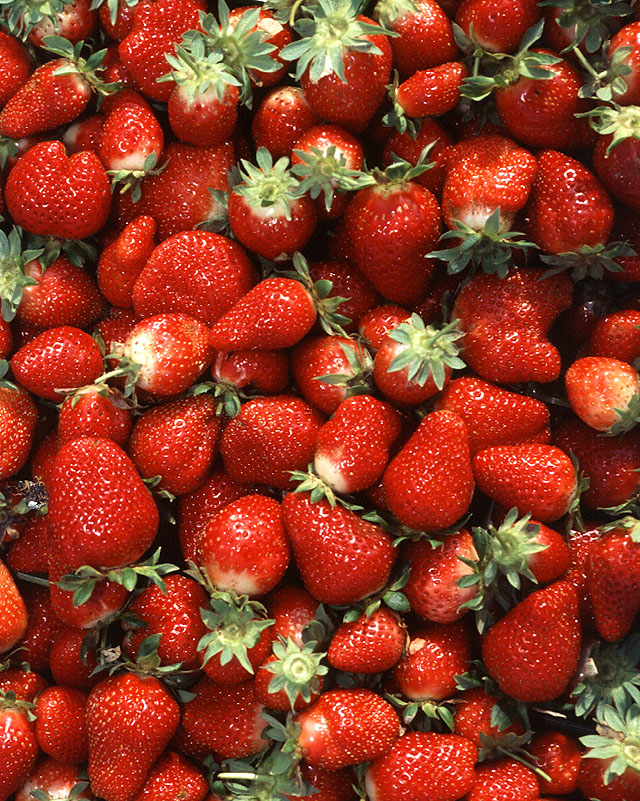
This is snack food. This is what children should crave. REAL food.

Chandler_strawberries.jpg


Avocado_main_0511.jpg


491013ba59220b0c.jpg


----

NOT this (Below)...

reeses+pieces.jpg


skittles_by_azr4el-d4idh84.jpg


home-product.png


soft-white-bread-rolls-18162407.jpg


Etc packaged processed bullshit bright colors yay. Make it against the law. Make it come in plain white packaging just like cigarettes in some countries. Fuck these fuckers.

I've heard it said that sugar is our first drug. I can see why it is said.

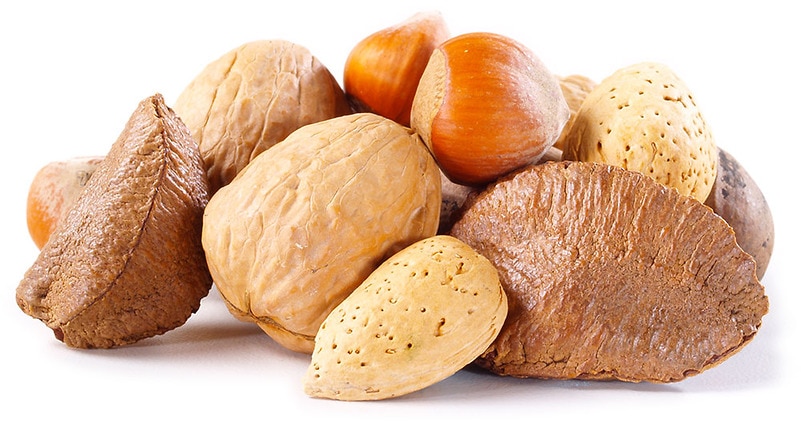
I'm not saying I'm against a treat. But we shouldn't be able to buy a box of trans fat GM refined sugar artificial color crap. And some strawberries, an avocado, and some sprouted nut butters are a better treat anyways.

Ranting. I just really hate how candy is aimed at children.
 
Last edited:
I have no doubt that sugar is very drug like. Some addictions are accepted in society, such as coffee/caffeine. It is advertised. Paraded. Used as a selling point- "not until I've had my coffee". Not being functional without coffee.

Just now I went into a nursing home and see what these nurses and nurses aids consume. Some of them bring 2 liters of Mountain Dew to work. Snack cakes. Cheapo bags of crisps of sorts. Fake shit. Carb rush.

People get into vicious cycles with this stuff. They don't need any of it.

The human condition is with a lot of "addiction", though. Food is an addiction. I think it is hard to be perfect, but balance is needed. An attempt.

I have food allergies/hypersensitivities... One of the symptoms when I become sensitized to food is that I crave it. I can't get enough. Sugar is this way for most everyone, though. It is fast fuel. It is preferred. But like certain adaptations we developed helped us to survive at points... Now with excess supply of these things (sugars) we find it hard to regulate and hurt ourselves.
 
Top