• Psychedelic Drugs Welcome Guest
    View threads about
    Posting RulesBluelight Rules
    PD's Best Threads Index
    Social ThreadSupport Bluelight
    Psychedelic Beginner's FAQ
  • PD Moderators: Esperighanto | JackARoe |

Ethnobotanicals SAN PEDRO

mr peabody

Bluelight Crew
Joined
Aug 31, 2016
Messages
5,912
Location
Frostbite Falls, MN
596dc8089d389643e03e6dbd4756a810.jpg


San Pedro, cactus of peace and vision

There is something special about making time in one's life for self-discovery, healing and transformation. We were drinking the consciousness altering liquid made from the San Pedro cactus, Huachuma, native to the Andes Mountains of South America, a powerful healing sacrament used in rituals and ceremonies for thousands of years. I recently returned from spending time away, working with this magical plant on sacred Aboriginal lands.

In the first two ceremonies, the cactus guided me through deep states of presence, meditation, and contemplation. They were incredibly peaceful, beautiful journeys. I could focus on and separate the various vibrations of sound, like the chime of a bell, into their own separate layers of auditory dimension, as they rippled through the airwaves. I felt a deep level of connection to nature through being amongst the trees, grass, birds, sky, clouds and mountains, not just observing myself in nature, but feeling that my energy was one with everything around me, and that nature could sense me as a separate being - part of an inter-connected web of related energy.

There were prolonged states of deeply calm and peaceful meditation, focusing solely on the inhalation and exhalation of breath. With my eyes closed, I saw green and yellow neon-like colors grow and bubble up. Hexagonal honeycomb patterns shifted and rearranged behind my closed eyelids while lattice tunnel-like spirals emanated in and out of vision.

I sensed the presence of other beings. I could see and feel these beings as aboriginal elders and their community watching over us. My experience was far beyond my capacity to articulate, and these altered sensory elements gave rise to fascinating philosophical and contemplative thoughts about consciousness and the nature of reality.

But the real gifts are how these sacred medicines seem to have the power of opening us up to want to live better lives. During my experience I pondered deeply about the meaning, purpose, fulfillment, and integrity, of my message to the world. I reflected on how these sacred healing plant teachers and shamanic medicines have helped me reclaim my life, allowing me to do some seriously transformative, sometimes confronting, incredibly challenging deep inner work.

In my last journey, San Pedro opened doors for me to a much deeper experience and understanding of what this medicine is capable of. It felt like living a lifetime in a single day. It was as though a force beyond myself called me over to drink another cup of medicine; as if the cactus itself knew that I was to be guided into a much deeper journey. This lasted for many hours, and I sensed I was receiving deep cleansing and healing at a cellular level, and that this deep healing extended beyond my own sense of self, and on some level, permeated those near me. A new path of healing opened up, or rather, I realized the depth of healing that still needs to take place.

Somewhere along way, I found I could look into my eyes and see the entirety of my past and future at once - myself as a little boy, my path up to my current self in the present moment, and myself in the distant future as a wise elder.

I received valuable insights on my journey, and while there will always be healing and recalibration to be done, I was shown that I am at a stage of life where it is necessary for me to be of higher service to others, to deepen my relationship with San Pedro, and to learn which avenues of higher service may in time be revealed to me, a message I received quite clearly.

I found integrating my experiences quite challenging, and feel that I would have progressed a lot quicker and smoother if I'd had the frameworks, knowledge, understanding and wisdom that I have now. This is why I feel called to help guide others through their own transitions, transformations and self-actualization.​

I am incredibly humbled by San Pedro, cactus of peace and vision.

https://www.medicinepath.net/blog/sacred-healing-medicine-sacred-aboriginal-lands

 
00490985ee10d4e99ab6ca4b64fb7293.jpg


Huachuma – Visionary cactus of the Peruvian Andes

By Sergey Baranov

Huachuma is the original name given to the various mescaline-containing columnar cacti native to the Andes known as San Pedro, and used traditionally in Peru for millennia for healing and divination.

The cactus thrives at around 10,000 feet above the sea level and flowers between October and March with beautiful flowers gifting the lucky observer with a gentle scent. Its flower opens for just one day and closing over the next two days. After this the flower gradually dries out and forms a cocoon with new life-seeking seeds. Then it is the turn of the grown cocoon to dry out while releasing the seeds to the will of the wind. Thus the new life is begun.

The most commonly used botanical names are Echinopsis Pachanoi (spineless) and Echinopsis Peruviana (spineful) but these names, of course, are only a shadow of the real essence of the plant, which is spiritual, not verbal. To realize this, it takes more than knowing the plant’s name. An experience is like a cloud which floats beyond the horizon of botanical study.

My introduction to this ancient mystery which begun in 2005, was nothing less than a life-changing event; a fact that has slowly revealed itself over time. Back then, I was a spiritual seeker, who intuitively knew that plant-medicine shamanism held the key to a kind of knowledge that could not be found in books. This type of knowledge was experiential, not intellectual. I was not satisfied with reading about the experience; I wanted the experience. Led by a burning desire and a spiritual thirst that up until then had resulted mainly in disappointment, I was fortunate to find people in Peru who had practiced shamanism for many decades, and were dedicated healers.

This new acquaintance and introduction to an ancient path became a new starting point in my life. My urge was calmed. My thirst was satisfied and spiritual hunger fed. A path of self-discovery ahead was now opened to me with a friendly and welcoming gesture. I kept coming back to work with the same people for three and a half years before I made the decision to move to Peru, which I did in April 2009, after feeling the call to serve the sacred medicine. This of course did not come without a price. I had to make a large payment for the pass. It wasn’t in terms of the money but in terms of the fear of death which was my unwelcome friend from an early childhood. My near-death experience in Mexico while working with Huichol Indians and the sacred Peyote is described in detail in my book. Shortly after that, I moved to Peru. Landing in the Sacred Valley in the Andes, felt like coming home. I knew I wanted to build my new life here around this sacred medicine.


0088f63b0addf35a666a54a249a2540a.jpg


Shamanism was something I have been drawn to since my early childhood. But living under the Soviet regime, this prospect did not look hopeful. Already as a kid I felt sharply the pain of separation from the sense of life being a miracle. And ‘growing up’ seemed to threaten this further. I didn’t want to grow up believing that life is a process of collecting stuff and saving for retirement. This prospect seemed rather too bleak.

Fearing death as a child, and seeking self-fulfillment from an early age were significant factors in the formation of my spiritual quest. This quest led me eventually to shamanism in Peru, where sacred medicinal plants were not only legal, but embedded in the culture, reaching back as far as the dawn of history.

“San Pedro” is the post-colonial name given to the psychoactive Andean cactus known under different names. ‘Huachuma’ is the old Qechua name, which means: ‘vision’ or ’that which makes one drunk’. It is a visionary cactus with an amazing potential for healing. Seeing the world through its “eyes”, is like being born again, but this time consciously.

With the invasion of the Spaniards in the early 16th century, native shamanic traditions of Peru faced the very real threat of extinction. The brutal intolerance of the Catholic Church would only allow for obedience and conversion, and certainly not ‘paganism,’ or ‘devil-worshipping’ practices, as they generally viewed them. How exactly some of these ancient traditions survived, nobody knows, but I have been entertaining the following thought as for potential possibility. There could have been a deal made. And this was simple – the natives could continue their use of their sacraments whilst worshiping Christian Saints. San Peter was an apostle who, according to the Christian theology, received the keys to Heaven from Jesus Christ. A visual representation of this biblical scenery can be found in the painting by Marco Zoppo from an early epoch of Renaissance (1460) which depicts the saint holding the Keys of Heaven.

Seeing the parallels between the heavenly experience of the San Pedro cactus and the apostolic story from the newly adopted faith, would naturally lead them to the choice of this name. Perhaps this allowance from the Church was made out of mercy or, as a favor seeking gesture in the eyes of God and the indigenous population.

In a similar way, the Qechua people during the Inca dynasty hid their mummies inside the wooden statues of Christian saints during the Corpus Christi feast – an annual liturgical solemnity and celebration of the body of Christ. Thus, while on the surface they worshiped the Christian saints, they were in fact, revering their own.

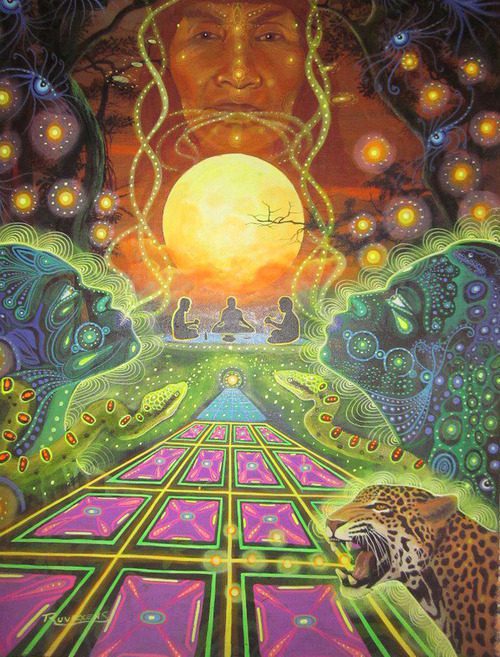
Another parallel can be drawn between the painting by Marco Zoppo entitled Saint Peter and an ancient carving which is found in the temple of Chavin de Huantar in Peru, an image of a deity, half man half jaguar, who holds the sacred cactus in his hand as the key to the state of consciousness it represents. Being three millennia apart, same symbolism is quite apparent.

In any case, and regardless of theories, the tradition has survived until today, albeit of course, in a form of syncretic religion. And although the cloak of Christian terminology was pulled over its lungs, it hasn’t been suffocated, and remains breathing as the mountains around you when you see them under the influence of this sacred medicine.

Coming to this with my own spiritual baggage, which mainly comprised of reading eastern philosophies and contemplating upon them using psychedelics, was a good thing. I had a context and a ‘’fertile ground’’ in which the seeds of new teaching from the mescaline-containing cactus could spread its roots.

But even though my love for wisdom and a search for answers for life-long questions were my early allies, I have not suspected how deep the ‘jaguar hole,’ actually goes. I can still remember the excitement I felt when I realized that plant-based shamanism was ‘the real deal’ – an authentic path that actually works and is open to those who are willing to step beyond the fear of the unknown while being unsatisfied with the verbal description of the higher states of consciousness as it has been described by others.

The world that I’ve seen through the light of the sacred cactus was beyond belief. Its self-evident truth did not require one. Thus the shamanic perspective which is described as animism in the academic studies has simply become my new outlook. In essence, this is what shamanism actually means. Although it is a very broad name given to diverse practices of healing, in fact, it is a way of living and interacting with the world. Not all of them include the use of psychoactive plants. In Siberia for example, the invocation of ancestral spirits for the purpose of healing is achieved without using plants. For myself, however, this aspect of shamanism was not of such great interest. I was after an altered state of consciousness in which as I hoped, I could perceive the world in a different way, learning and spiritually growing from it directly and experientially. It is hard to describe the feeling when after a long search a person finds a path that is actually fulfilling. And this is what the sacred cactus means to me; an oasis full of spring water in the middle of a desert, drinking from which, one realizes that this is not a mirage.

My intention is not to make this article about myself, although I must present it that way to make it personal. Instead, it is a brief introduction to an ancient mystery which has been accompanying humanity from time immemorial, echoing through millennia while reaching out to the new hearts and minds.

Free from ideology and dogma, the ancient path remains intact and clearly drawn on the map of consciousness. The daily miracle of Nature, which gets neglected every day in life, is recognized and worshipped with tears of gratitude. The healing energy of sacred cactus drunk like nectar with the beak of our souls. A light greater than the light of the day is finally seen with the inner eyes and loved for its purity and beauty. Belonging to the greater unity becomes a fact of life, not a wishful experience. The denying of the physical world, which is somewhat needed at the early stages of spiritual path, in order to understand the difference, turns into acceptance and living is now seen as the service to the greater cause.

Why bother? Why would we need this kind of experiences in our lives? Why would we pay for this with our fears we so cherish?

Well, simply put, knowing this reality brings happiness and joy of understanding. That’s really it. There are no more rewards I’m after. Waking up in the morning with a peaceful mind and gratitude for another day in my life is generous gift I am infinitely thankful for.

I think that each of us come to this world with this light, which then somehow vanishes under the sociocultural pressure we acquire during the later years. The loss of it causes fear and anxiety and eventually turns into depression, which is only a symptom of this separation from oneself. We feel alone and lonely. Separated from the source of life, when in fact, we are it, or at least, we are the leaves and flowers of the tree of life.

Reconnecting to our spiritual roots is “coming home”, not in a hyperspace or separate reality surrounded by other beings, but here and now, in our familiar, known space which becomes sacred the moment it is recognized as such.

https://wakeup-world.com/2017/07/17/huachuma-the-visionary-cactus-from-the-peruvian-andes/
 
The Ancient Wonders of the San Pedro Cactus

by Tyson Curtis | Flora Grubb Gardens | 9 Apr 2021

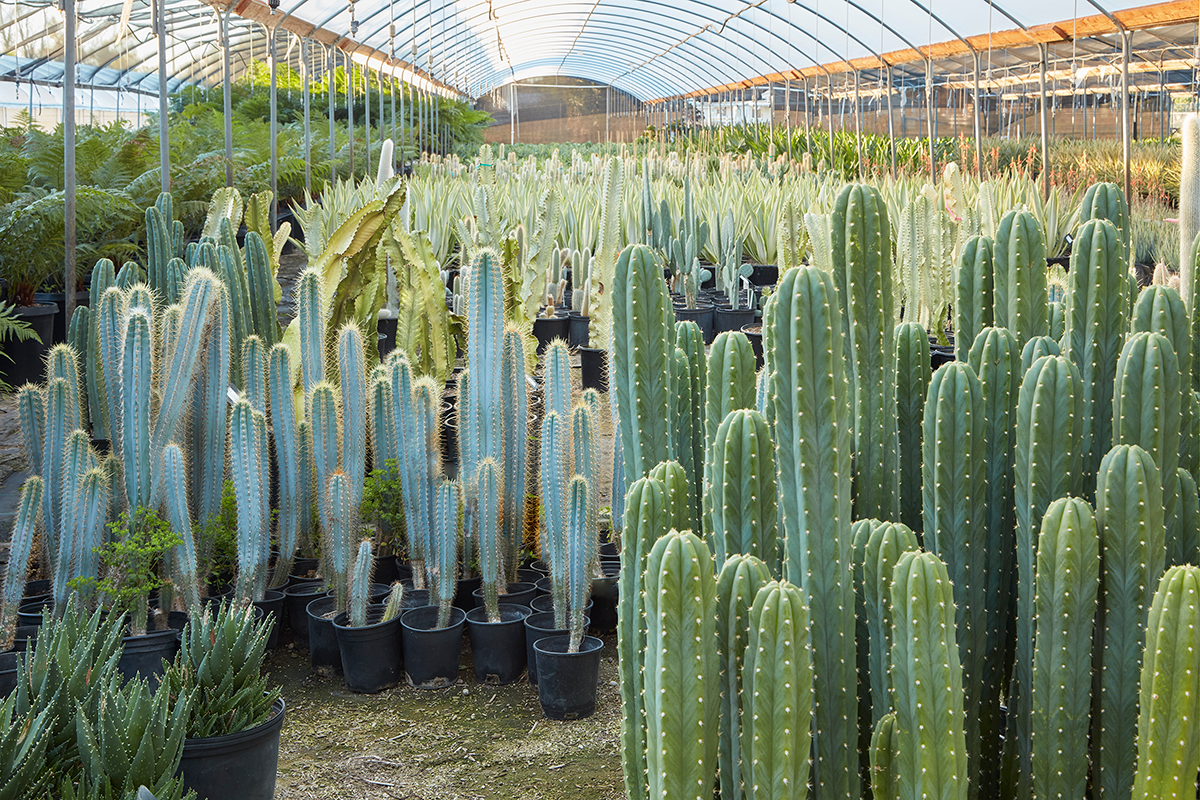
The popular cactus Echinopsis pachanoi (syn. Trichocereus pachanoi) is known by many names, most commonly ‘San Pedro.’ This cactus is fairly common, and no doubt you’ve seen it around—we often have it in stock here at Flora Grubb Gardens, our San Francisco nursery!—but if you dive deeper there’s so much to learn.

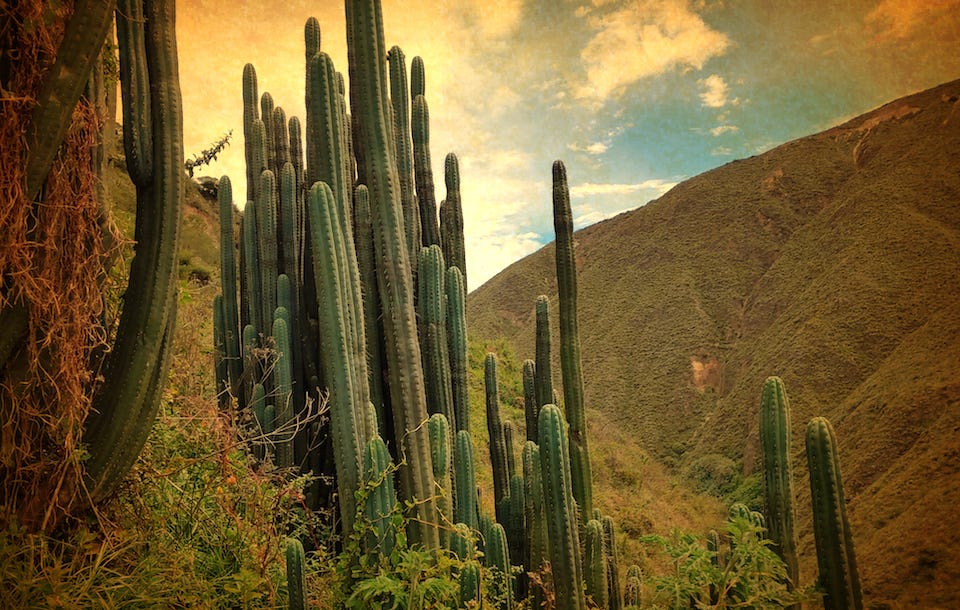
Echinopsis pachanoi grows in rocky, well-drained soil along the entire length of the Andes mountains, stretching from Argentina to Ecuador. A high altitude native (6000-9000 feet), this plant thrives in cold climates down to 15 degrees F.

Any cactus grower will tell you that a minimum temperature guideline usually means “when dry,” but not so with San Pedro! Most cactus get rainfall during their warm season, and so are likely to fail when exposed to a wet winter, even if they can tolerate much colder temps in habitat—but San Pedro, in its mountain habitat, receives ample rainfall while still enduring quite cold temperatures. This makes it one of the best candidates for a Mediterranean climate (like ours in the Bay Area). It just needs a bit of additional summer water to thrive.​

Flora+Grubb+Gardens+San+Pedro+cactus+and+other+euphorbia+and+succulents+for+landscape+design+in+San+Francisco.png


The history of San Pedro is intertwined with Andean culture and traditional medicine, with archaeological evidence showing healers using the plant for religious divination as far back as 3000 years ago.​

Flora+Grubb+Gardens+Ecihinopsis+pachanoi+cactus+in+the+wine+country+garden.png


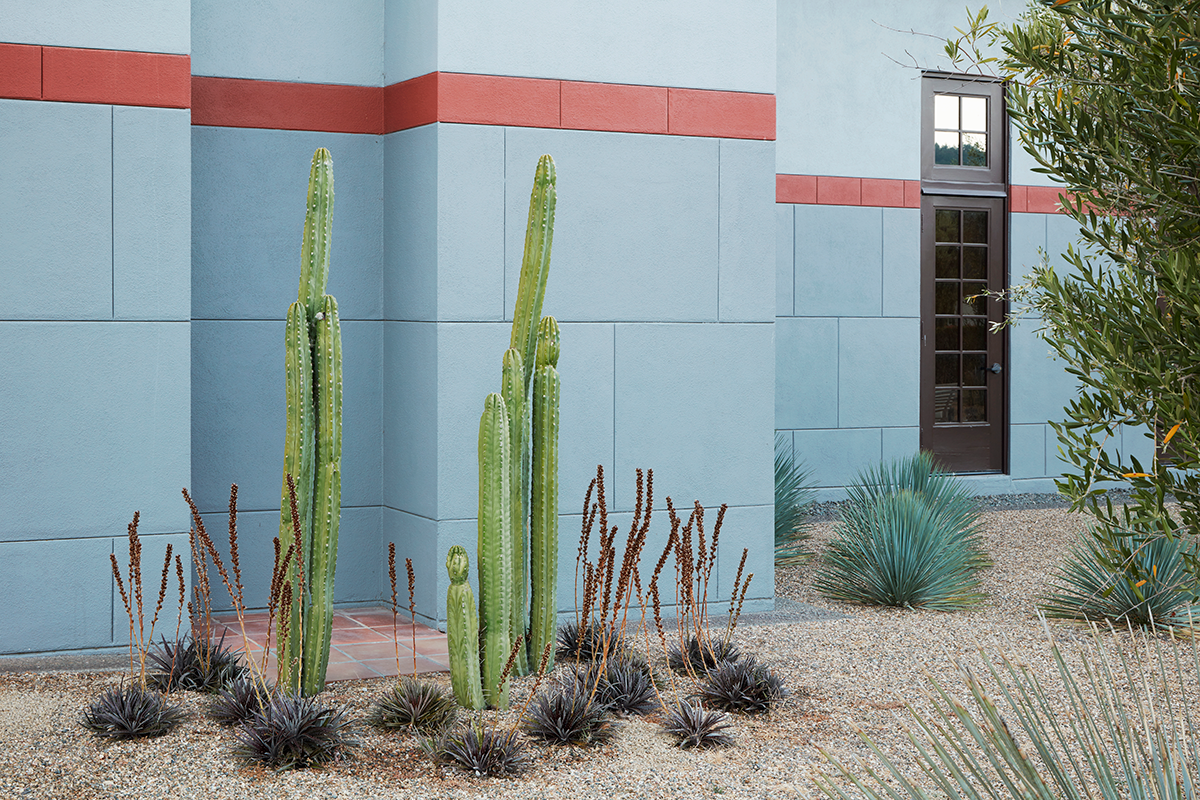
We love Echinopsis pachanoi for its ornamental uses in the garden. As a sturdy vertical design element it’s second to none, able to fit into tight spaces and growing 10-20 feet tall. A single stem will pup and branch, creating a staggered clump of fast-growing spires with a well-balanced form. Unlike other columnar cactus, San Pedro is relatively unspined, increasing its usefulness around patios and walkways, in pots and even indoors in a sunny spot.​

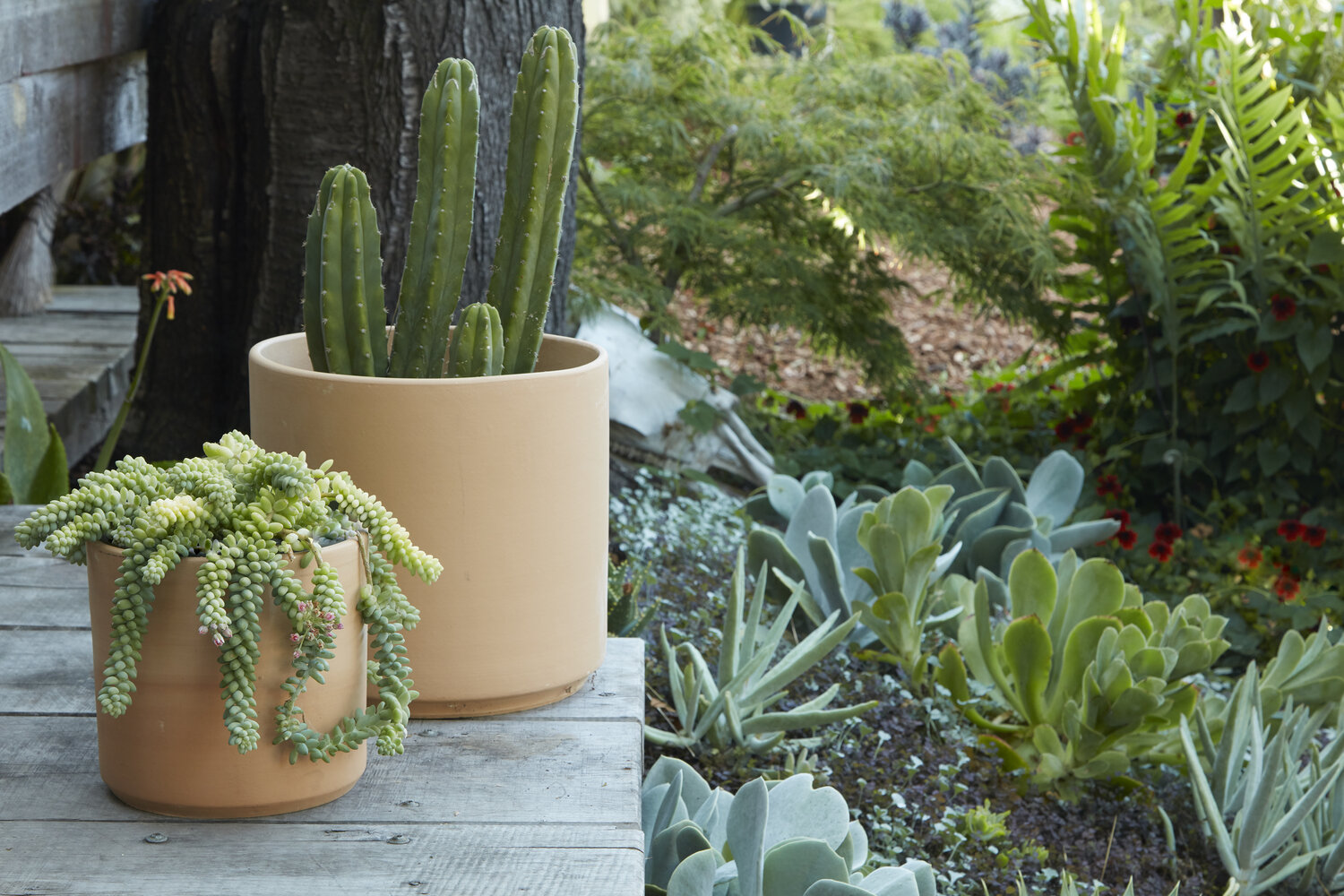
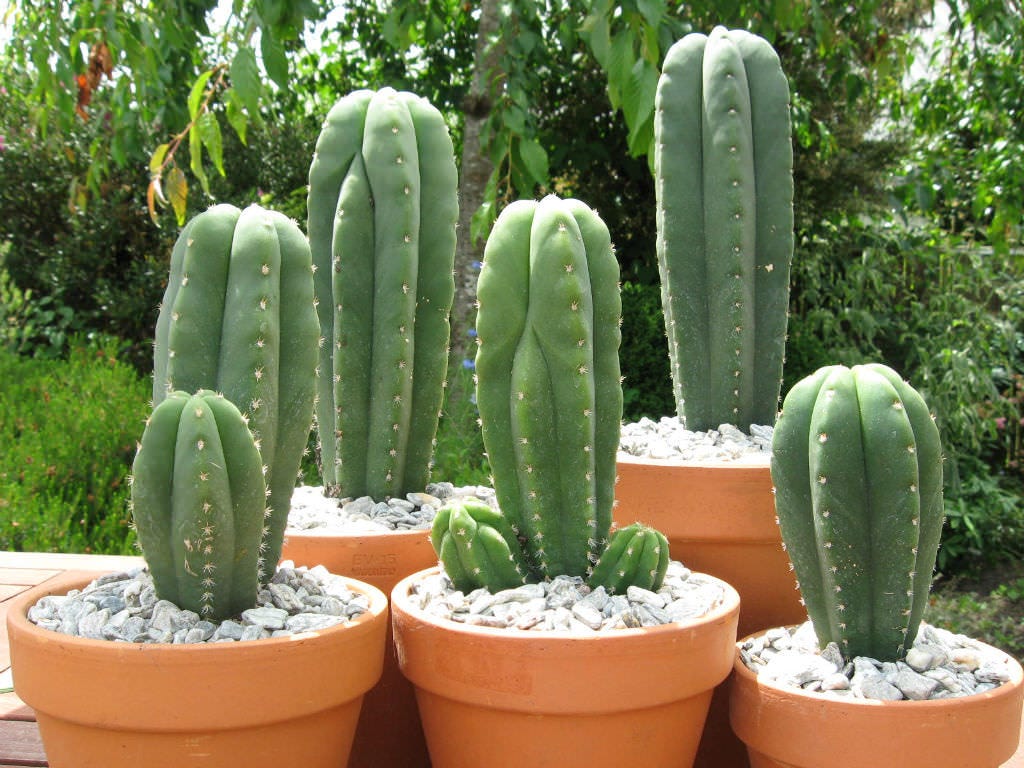
Flora+Grubb+Gardens+San+Pedro+cactus+and+other+succulents+in+terra+cotta+pots.jpg


Since these plants are native to a higher rainfall area, they will tolerate overwatering, with good drainage, making them easier to intermingle with other plantings, allowing designers to set softer plants against them for contrast. In fact these cactus prefer even watering, especially during the dryer months. About the only problem we encounter is yellowing, which happens when people relinquish water entirely, plant in heavy clay, or never fertilize. San Pedro appreciates fertilizer more than other cactus and will reward you with fast growth and vibrancy.​

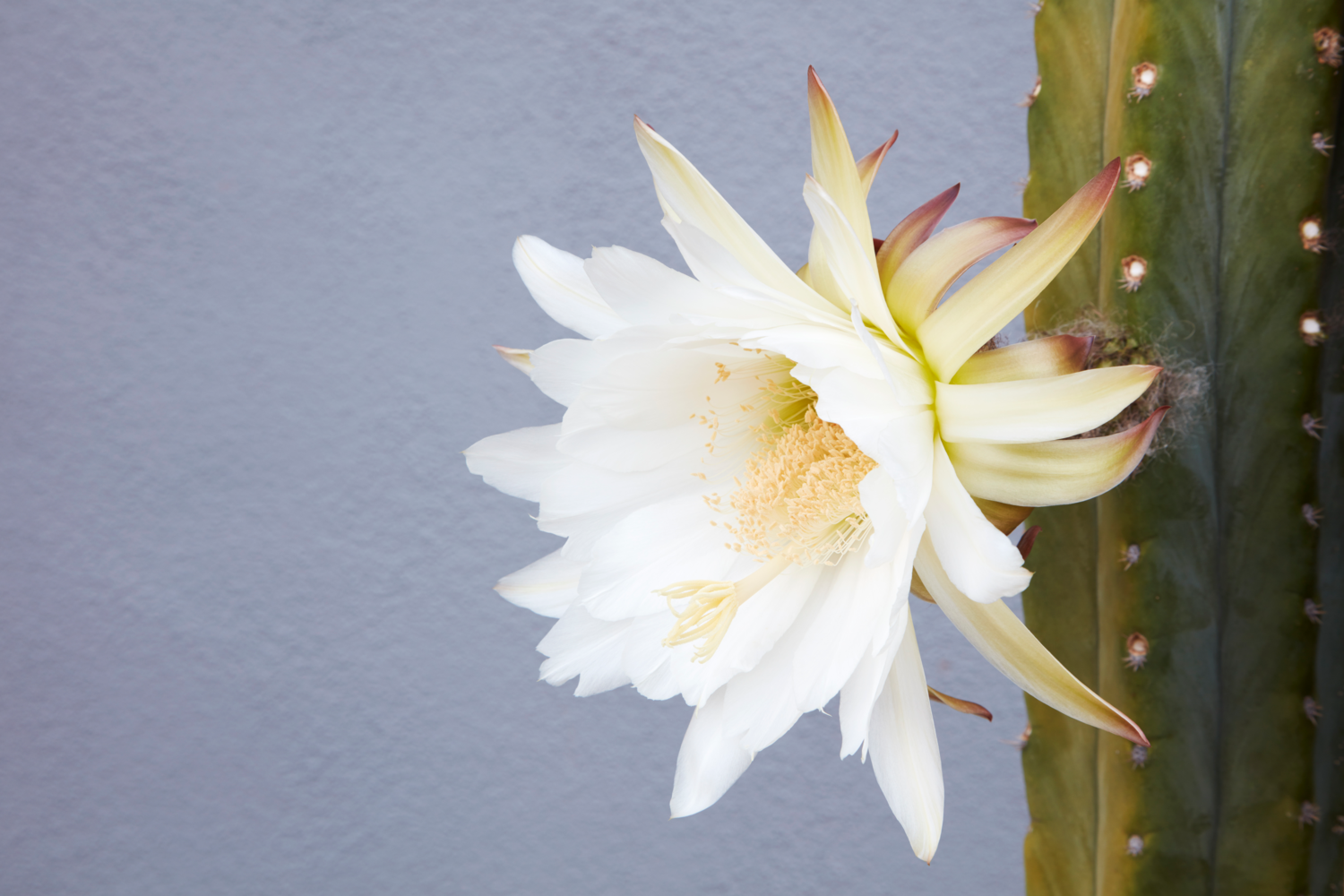
Flora+Grubb+Gardens+San+Pedro+cactus+huge+white+flower+for+San+Francisco+landscape+design.png


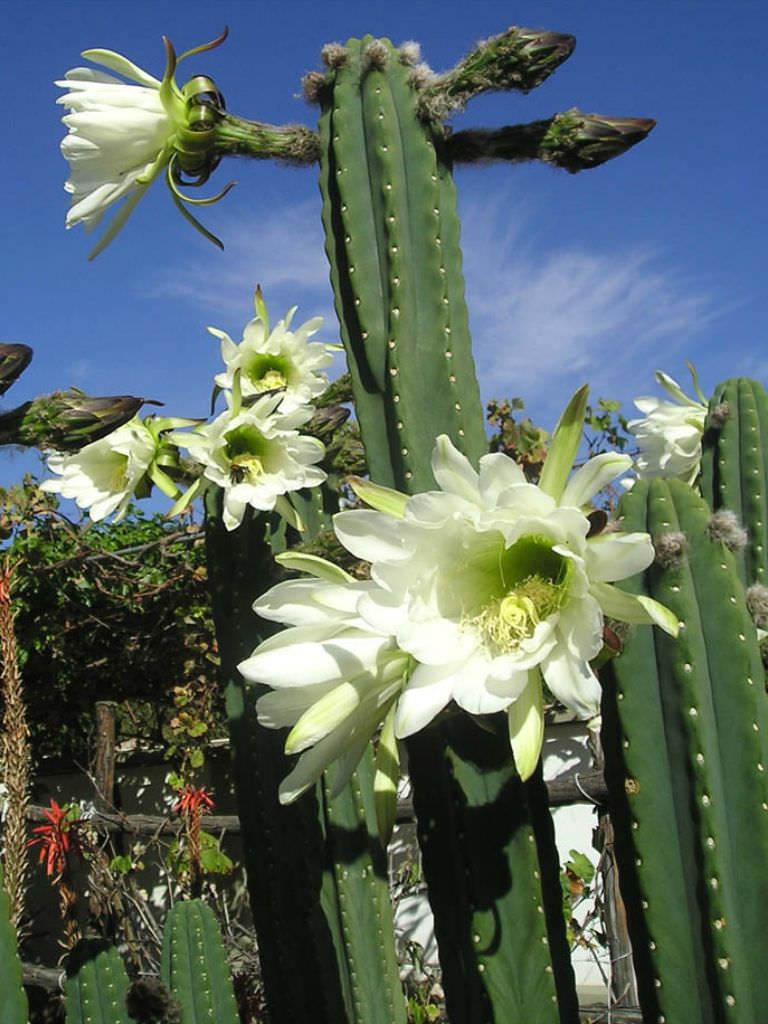
Maybe the most notable aspect of Echinopsis pachanoi are the huge white flowers, found in abundance on established specimens. These fragrant flowers are tubular and almost ten inches long and wide! The unusual size relates to the overly-large hummingbirds that pollinate them in the Andes, though they are also moth-pollinated. Since the pollinators are nocturnal, you’ll find that these huge white flowers open at night, making San Pedro an ideal candidate for a moon-viewing party in your new garden!​

Flora+Grubb+Gardens+Echinopsis+pachanoi+San+Pedro+cactus+grown+in+Southern+California+for+Bay+Area+landscaping.png

We grow this plant ourselves down at Grubb & Nadler Nurseries in the gorgeous Rainbow Valley, so we often have it in stock here at FGG. Come see us soon!

Visit us at Flora Grubb Gardens in San Francisco to see our wide selection of interesting cactus plants.

For more of this kind of inspiration, delivered to your inbox, join our mailing list.
 
Ruysen-Venancino.jpg


Mescaline as Therapy

by Dave Hodes | Green Market Report | 10 Feb 2022

The exploration of other types of psychedelics is common now, with MDMA, 5-MeO-DMT (toad venom), LSD all getting attention for different mental health treatment studies and different therapeutic interventions.

But mescaline, derived from either the San Pedro cactus (native to the Andean slopes of Ecuador and Peru), or the peyote cactus (found in the limestone soils of the Chihuahuan desert of southern Texas and northern Mexico) stands out as a different kind of psychedelic off the radar of the psychedelics industry—so far.

Though some research has examined the effects of mescaline in humans—for instance, Alexander Shulgin’s work in the later part of last century—clinical research investigating mescaline as a potential therapeutic aid has been lacking.

There are problems about working with mescaline. For example, to get the full effect of the San Pedro mescaline, it is estimated that someone would have to eat 750 grams of slimy, bitter plant material.

As derived from either plant, mescaline is physically difficult to take. Experiences and outcomes are harder to predict, and generally take too long from start to finish. But researchers know there is something significant here to discover and bring into the psychedelics industry.

Like many other psychedelics, mescaline has a long history of use. Indigenous people in North and South America used it for religious ceremonies dating back 5,700 years. That continues today.

According to “Mescaline: A Global History of the First Psychedelic,” by Mike Jay, a scientific and medical historian, mescaline was isolated from the peyote cactus by a German chemist, Arthur Heffter in 1896, and was the first naturally occurring psychedelic alkaloid to be isolated in a lab.

People who began using it then described bouts of nausea followed by long-lasting uncontrollable hallucinations. They reported experiencing racing heart and difficulties breathing. Depression. Insomnia. Delusions that turned into paranoia.

Mescaline, it seems, developed a bad rap.

Mescaline was eventually synthesized in 1919 by a chemist at the University of Vienna, Ernst Spath, and researchers thought it could help them understand schizophrenia. It didn’t.

Both the Nazis and Americans experimented with it during World War II as a sort of “truth serum.” That didn’t work either.

But there were people who challenged and added to the knowledge base of mescaline, famously Aldous Huxley who described his trip experiences in his 1954 book “Doors of Perception.”

Today, more than 100 years after mescaline was first synthesized, there finally appears to be movement on the question of whether it can be used as another psychedelic plant for mental health treatment.

Native Americans interviewed by Michael Pollan for his book, “This Is Your Mind on Plants,” told him that their peyote ceremonies had done more to heal the wounds of genocide, colonialism, and alcoholism than anything else they had tried.

Peyote is legal for Native Americans. Its use is constitutionally protected in the U.S. on the basis of religious freedom when used by the Native American Church. And it’s these ongoing experiences by native Americans that have become the basis for understanding the effects of mescaline, and a guide for more research.

In 1992, researchers studied the psychological, neuropsychological, and neurometabolic effects of mescaline in 12 normal men as a method of studying psychosis. They found that mescaline produced an acute psychotic state within 4 hours after drug intake.

But was that the best use of this plant medicine? Shouldn’t mescaline get a better chance of finding its place in the booming psychedelics industry as a wellness treatment? Maybe. But there are still a number of practical issues to resolve.

While peyote is considered endangered in some areas of Mexico, it can be freely grown in any greenhouse. But it is a difficult plant to cultivate, and can take a long time to grow in a greenhouse (peyote takes up to 25 years to grow in the wild).

The San Pedro cactus grows rapidly and is not an endangered plant. But not all San Pedro cacti have the same mescaline concentration, and two cacti grown from the same seed pod may have very different mescaline contents. To make estimating potency even more complicated, mescaline content can vary depending on when a plant was harvested or the conditions it was grown in.

Then there’s this: Peyote’s ongoing cultural significance to Native Americans played a role in recriminalizing it in Santa Cruz in 2021 after it was decriminalized two years earlier. Decrim advocates apologized to the Native American Church for their “lack of cultural sensitivity.”

In the meantime, there are a handful of companies taking a shot at mescaline development. Lophos Pharma, a Toronto-based bioscience company recently acquired by Greenridez 2.0 Acquisitions Corp., specializes in peyote research, cultivation, preservation, and drug development, and will be working on treatments using peyote for weight loss, drug addiction, anxiety and depression.

Other leading psychedelics development companies such as Compass Pathways, MindMed, Xphyto Therapeutics Corporation and Numinus are all exploring mescaline product development.

There have been other encouraging developments recently that mescaline may be catching on. For example, there was a slight uptick in clinical studies about mescaline in 2021.

Presumably, with new agri-technology for cultivation, and better research about how the plant grows—perhaps about how to grow peyote faster, or how to control the mescaline content of the San Pedro cacti—mescaline, the first psychedelic, may become tomorrow’s psychedelics superstar.​

But for now, it’s been relegated as a sort of look-see, back-burner problematic substance that needs much more overall research. So.. stay tuned in.

The post Mescaline As Therapy Is Getting Attention, Despite Stigma appeared first on Green Market Report.
 
1*-_4f0G1WsRvC7Sd52y-XMQ.jpeg


Macrodosing Mescaline*

by Jerry Toth

Not all San Pedro journeys are created equal. There are several key variables that influence the quality of the experience. Reaching critical mass with dosage can be the difference between disappointment and ecstatic connection with the fundamental nature of existence. Knowledge about different preparation methods and mescaline potency is useful. As always, the principle of “set and setting” applies. And there’s a few things you should definitely not do.

The suggestions contained in this article are based on seventeen years of personal experimentation in addition to conversations with hundreds of other people who have also experienced San Pedro (otherwise known as Huachuma).

I do not consider myself the foremost expert on this subject. I’m just one of many ongoing students of a sacred cactus that has the power to connect human beings with an immense source of wisdom. By the same token, I welcome feedback from anyone else who has experience with this particular plant. The goal, as I see it, is to collectively refine our understanding about something that is and always will be delightfully mysterious.

1*LwsSoEX80aogI_0dKNBgPw.jpeg


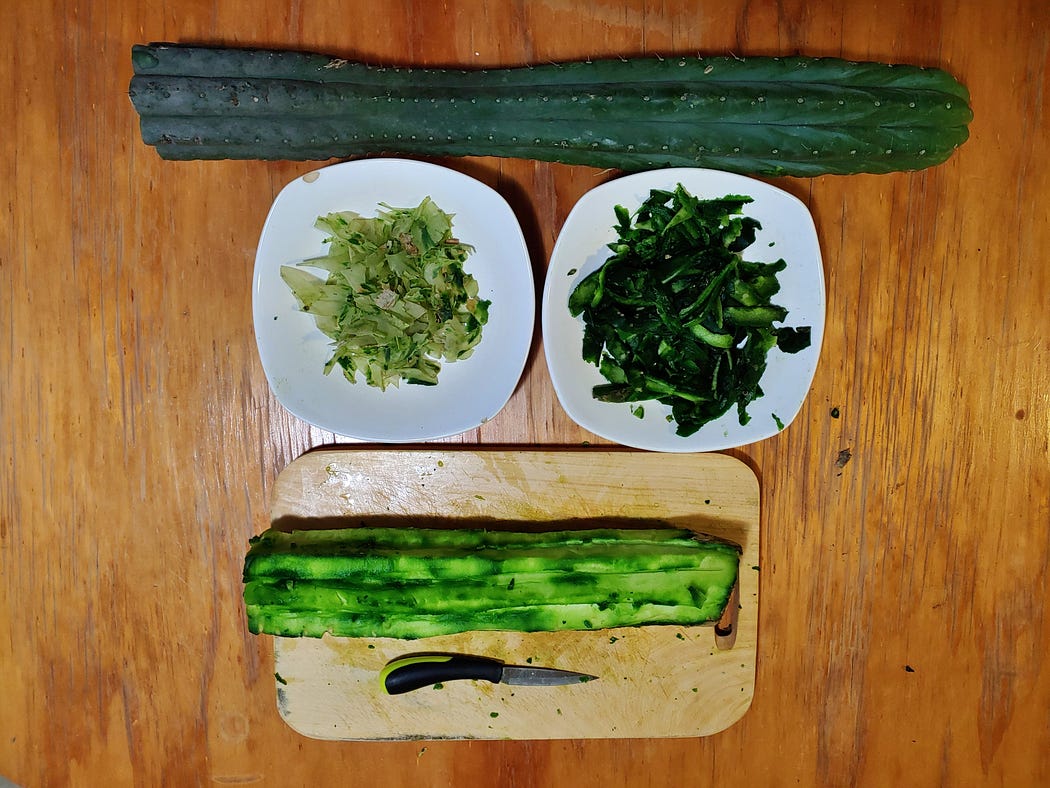
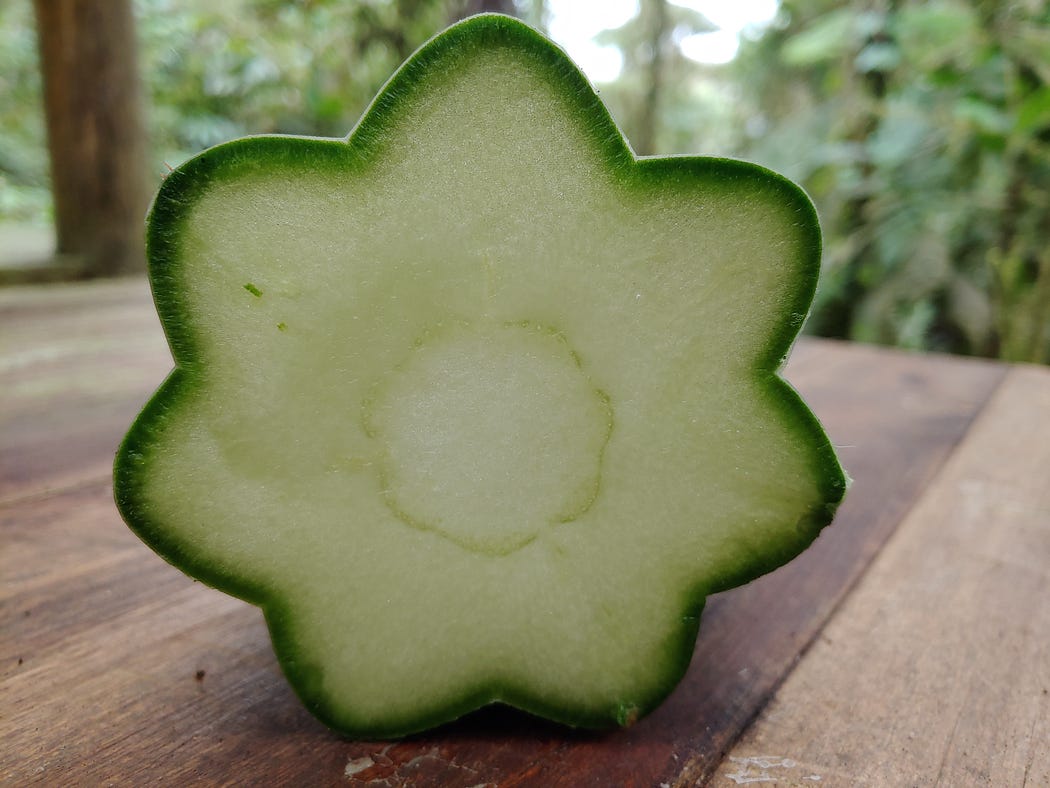
Whether you brew San Pedro tea or dehydrate/grind the flesh into powder, the first steps are always the same: remove the spines and outer skin (bowl on the left), extract the green flesh (bowl on the right), and disregard the white core (bottom). Only the green flesh is used for processing and consumption.

Not all San Pedro experiences are created equal

Extensive conversations with a broad sampling of other San Pedro explorers led me to a surprising realization. This process started in 2018 when I published an article called “DIY Mescaline: How to explore San Pedro without a guide.”

I eventually included my email address in the article and asked people to contact me if they’d like to see the final cut of a film we’re currently making about San Pedro in its native land. Many of the people who responded were kind enough to share with me their own personal San Pedro experiences, and we developed a back-and-forth dialogue.

What didn’t surprise me was that most people described their experience in glowing terms. What did surprise me is that a decent number of people described their experience as disappointing. I followed up with questions about set, setting, preparation method, and dosage. And I started to recognize an interesting pattern.

I entered into this discussion with the perspective of someone whose experiences with San Pedro were exclusively profound and transformative. One journey inspired the creation of a large-scale rainforest preserve, and I don’t even consider that journey to be my most formative. A disappointing Huachuma experience was hard for me to imagine, at first. But now it makes sense.​


1*SMOQklHx93yr7evH0gmfRQ.jpeg


The most common complaint

As Timothy Leary first explained about fifty years ago, the nature of any psychedelic experience is determined by set and setting. “Set” represents all of the variables that you personally bring to the experience — your mindset as well as your accumulated life experiences, your psychology, even your neurobiology. “Setting” represents the conditions in which the psychedelic experience takes place. To these two primary factors, I would also add two more: the quality of the substance (call it medicine, if you wish) and the dosage.

Of all four of these factors, set is the hardest for me to measure in others — my access inside the hearts and minds of other people is limited. The matter of setting is a bit more straightforward. I comment on this with greater detail in “DIY Mescaline.” The quality of the medicine depends on a range of variables, which I discuss below. All of the above factors can be managed with a bit of experience.

The factor that was most frequently at the root of sub-par San Pedro experiences was dosage. Namely, the dosage was too weak. By far the most common complaint was that the medicine simply didn’t have much of an effect. People felt like they missed out on the experience. And to a certain extent, they did.

The danger of under-dosing

Sometimes a light dose of San Pedro is advisable. There are some reputable San Pedro retreats in which people are given a moderate dose and then taken on a group hike to some beautiful place. In this case, the moderate dose is intentional: people still need to be able to walk. In other cases, the moderate dose was administered in a traditional sit-down ceremony. For some people in some circumstances, this is also the right approach. It allows people to dip their feet into the experience without going too deep.

For other people, however, the experience wasn’t strong enough. I am merely reporting what numerous people have told me. They consumed just enough San Pedro to feel a bit funny in the stomach and start to perceive things somewhat differently, but the door to Huachuma World did not fully open. They remained firmly planted in the so-called default world.

This is a lost opportunity. I do not mean to discount the practice of micro-dosing San Pedro, which is also something I’ve extensively experimented with. You can read about that in my article “Micro-Dosing Mescaline: Comparing San Pedro to LSD and Psilocybin.” It can certainly be a useful practice, but it still doesn’t compare to the profound lessons that can be deeply learned on a full dose of Huachuma. It is the difference between briefly kissing someone at a doorway versus spending a very long, languid morning making love in bed with the person that you’re in love with.​


1*R7-dL2SHHXXLUHLw5ecwTg.jpeg


The optimal micro-dose…useful, but a far cry from a proper macro-dose.

Crossing the threshold

After hearing several accounts of weak San Pedro experiences, I did a few experiments on myself. I tried everything from 1–3 grams of dry powder and half an arm of wet cactus, all the way to what I consider much more than a full dose: two arms of a thick, wild-harvested San Pedro from a particular mountain in southern Ecuador.

From those experiences I learned many things that have nothing to do with this article. The main thing I learned, which is relevant here, is the importance of crossing the threshold. In the realm of micro-dosing, there is something called the threshold of perceptibility, but that’s not what I’m talking about. I’m talking about the threshold one must cross to reach the full Huachuma experience. A moderate dose of San Pedro only opens the door ajar, such that you barely catch a glimpse of what’s inside. To actually pass through the door, the amount of San Pedro you need to consume must reach critical mass.

Once critical mass is reached, you’ll know it. It’s like opening your eyes after years of darkness. There is a simple litmus test to help determine whether or not you’ve crossed the threshold. If you feel physically pulled to the ground, lying on your back on the naked ground and staring upwards into the sky, and you are accompanied by the sense that nothing in this universe is misplaced, that everything is exactly as it should be…you made it.

This feeling I describe is not overly intense or uncomfortable. It is deep-penetrating and comprehensive, but at the same time gentle and loving. This, in my opinion and the opinion of many others who have also reached this state, is the special nature of the Huachuma experience at full strength.​

1*gPla50rARYSt6DoTWTlBrA.jpeg


Almost all of the mescaline is concentrated in the layer of green flesh, just beneath the waxy outer skin. That’s the only component of the cactus that should be consumed.

Different Preparation Methods

Before we can talk about dosage, we first need to talk about preparation methods. There are several ways to prepare San Pedro for consumption, some of which are less than ideal. The two best methods are:

1. Brewing Tea: Slice away the green flesh and put it into a pot of water, and then boil it down into a concentrated green liquid. This is the method I’ve been using since 2002, detailed in “DIY Mescaline.”

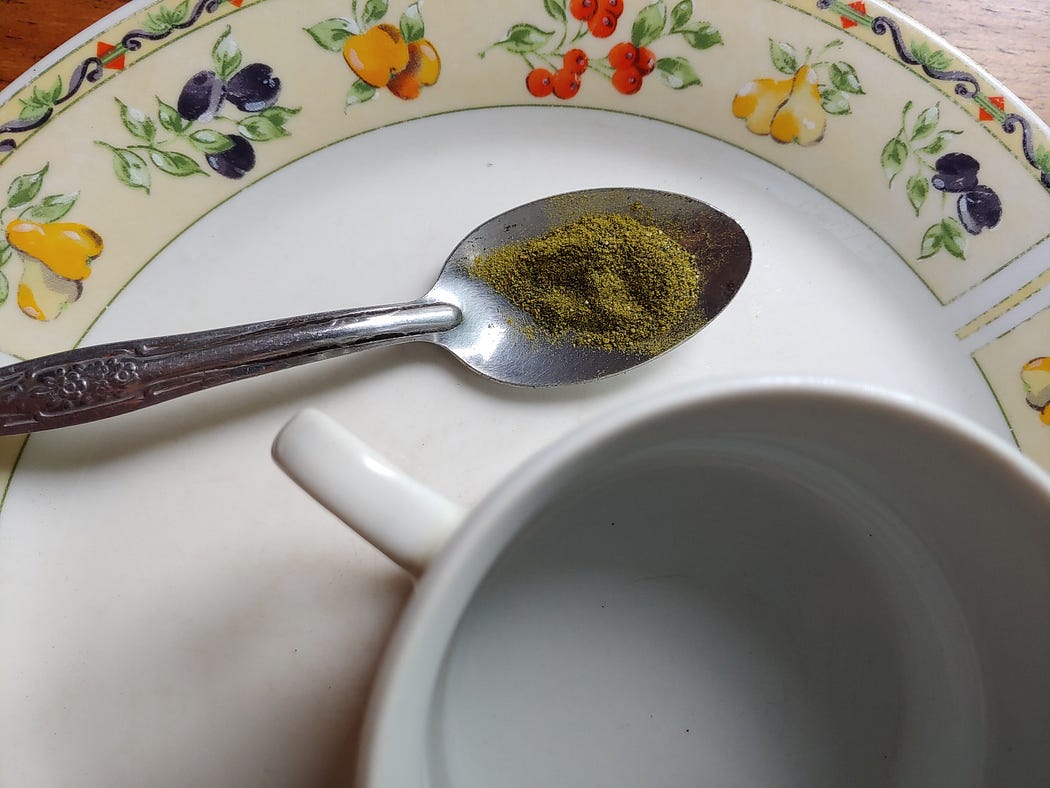
2. Drying/Grinding into Powder: Slice away the green flesh, cut it into pieces, and dry the pieces using a dehydrator, the sun, or an oven at the lowest heat setting. Once the pieces are dry, grind them into a fine green powder. This is a method I’ve recently been testing. In my experiments, a forearm’s-length of cactus (38cm long by 8cm diameter, weighing 1.38 kg when freshly harvested) yields about 20 grams of highly concentrated dried powder. See below for mescaline calculations.

In both cases, you’ll start with a fresh cutting of cactus. And in both cases you will want to remove the spines and the waxy outer skin. You should also exclude the white pulp that is underneath the green flesh. Several YouTube tutorials show people including the white pulp in their process, usually with a blender, but this is not advisable. The white pulp has a negligible amount of mescaline, and furthermore is the leading cause of nausea. Whichever method you use, the only part of the cactus that you should process is the green flesh.​


1*LqNvGy4OtWHvqVQx2MCodA.jpeg


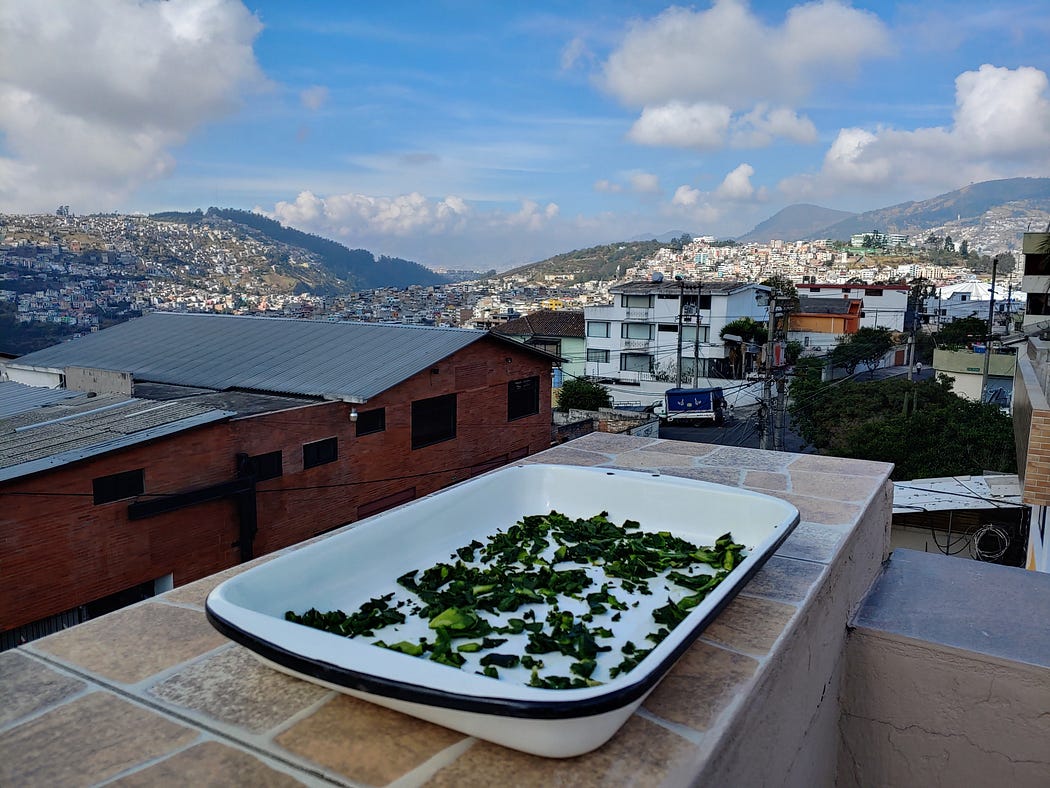
Sun-drying the flesh of an arms-length section of San Pedro on a rooftop in Quito. After fully drying and grinding the pieces, the final result was 20 grams of fine green powder.​

Length of cactus per dose

The right dosage required to reach the full Huachuma experience depends on many factors. It depends on where and how the cactus was grown, which variety or cultivar it is, and your own body weight and other physiological and psychological factors.

Nevertheless, there is a general rule of thumb that I’ve always abided by and it has never failed me. Here it is: use a piece of cactus that is roughly the same length and girth as your own forearm, as measured when your hand is balled up into a fist. Personally I consider this the minimum size for a normal dose, and I usually use a piece that is slightly larger than my forearm. But for the sake of this article, I will refer to a forearm-sized piece as a “normal dose.” All things equal, this is the dosage required to cross the threshold. If the dehydration method is used, this generally equates to about 15–20 grams of dry powder, depending on the size of your forearm.

This, however, assumes that the cactus you’re using is suitably potent. Mescaline potency varies from cactus to cactus. Interesting enough, San Pedro is influenced by terroir just as much — if not more so — than wine and cacao.


1*Cm9Ng-v1xTstTw2u6mxvVg.jpeg


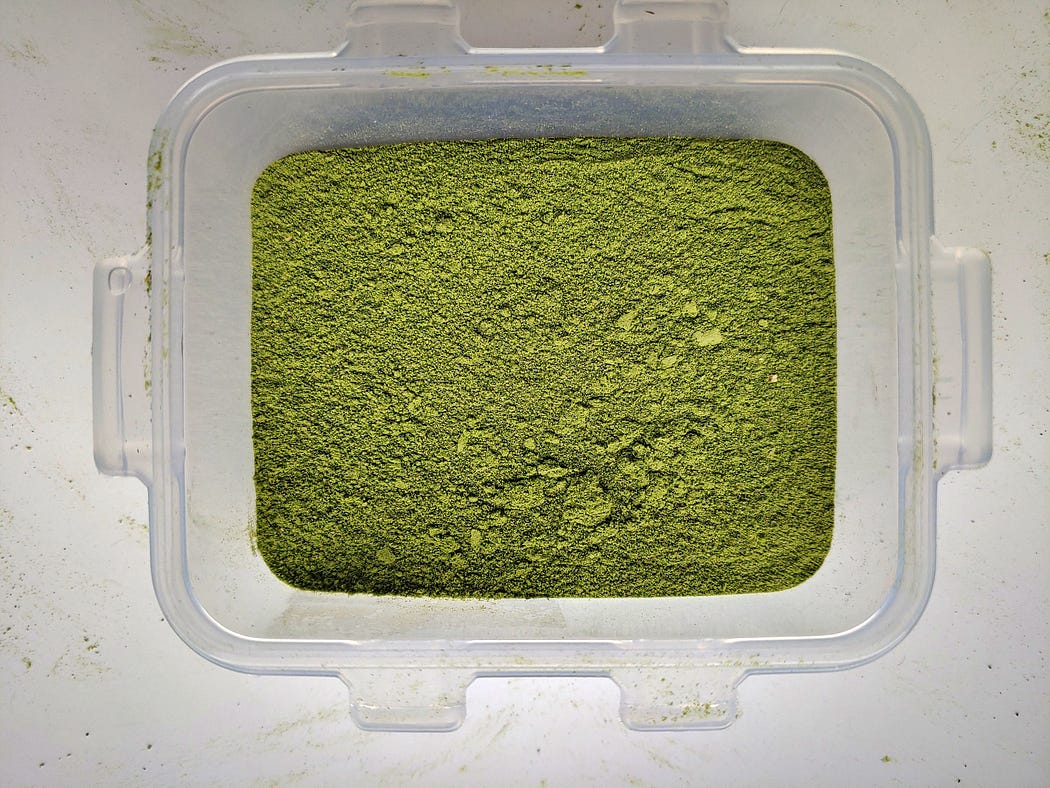
20 grams of fine green San Pedro powder — the yield from one 15 inch (38 cm) length of cactus, roughly 6.5 cm in diameter and originally weighting 1.38 kg when freshly harvested.​

Mescaline potency

San Pedro is inherently more predictable than Ayahuasca because it only involves one plant. Ayahuasca, on the other hand, involves at least two psychoactive plants, if not three or four — all of which produce different kinds of effects. Thus, San Pedro is a lot harder to screw up and requires less experience to prepare.

Nevertheless, mescaline potency can vary. Erowid has a useful mescaline potency FAQ that illustrates the variability between species of cacti (San Pedro, Peruvian Torch, and Peyote) and between individuals within each species. The “average” potency of San Pedro is generally regarded as 1% mescaline per dry weight. However, some San Pedro cuttings have measured as little as 0.1% mescaline, and the most potent cuttings measured as much as 2.3% mescaline.

Short of testing the mescaline content in a laboratory — which is not an option for most of us — the most reliable way to test the strength of a particular cactus is to start by consuming a piece that is 1/2 or 2/3 the length of your forearm. After two and a half hours, if not sooner, you’ll have a good idea of what you’re dealing with.

Once you’re familiar with the potency of a particular cactus, it’s preferable to consume most of your entire dose at the beginning, and then top it off within the first few hours — if necessary. The whole experience can last 12–16 hours during normal circumstances, which is already quite long. So you don’t want to unduly prolong the ingestion process.

Can physical cues be used to gauge the potency of a given cactus? Different sources give different answers to this question. Some San Pedro experts suggest that potency may be enhanced when the plant is subject to environmental stress caused by adverse temperature, sun, water, soil, or pest conditions.

All of this said, a low dose of San Pedro is not the end of the world. If you don’t cross the threshold during a particular journey, it’s okay — enjoy it for what it is. But you’ll probably want to consume a larger dose the next time. Now you know.​


1*qPPsvh_4noXmHv9-fUyCPQ.jpeg


On the subject of “set”

It’s natural to feel some fear or trepidation before a psychedelic experience, but if your fear is intense, it’s probably a signal that you’re not ready for this journey. And that’s okay. Timing is important.

In any event, a plant like San Pedro should never be used as a tool of escape. Rather, it is best consumed in the spirit of discovery. That said, San Pedro can be tremendously useful when working through post-traumatic stress disorder. I’m speaking from first-hand experience. It can also be extremely useful for those who are working through depression, addiction, and fear of death.

If you suffer from psychosis, however, you should probably not ingest San Pedro or any other psychedelic substance. There are plenty of other methods that can be used to learn more about self and the universe.​

On the subject of “setting”

My personal preference is to consume San Pedro alone or with one or two other people. I have spoken with several people who feel similarly. There are also plenty of people who prefer to consume San Pedro in a group setting, often guided by a shaman or guide. Both of the above formats can work wonderfully; it’s a question of personal preference and temperament.

If you do wish to work with a guide, do your research and choose wisely. I would suggest meeting the guide before you commit to anything, so that you can consult your intuition. Different guides have different energies, and what may resonate with some people may not resonate with you. Be especially weary of charlatans and sexual predators. Here’s a good article about that.

The same principle applies to the actual setting. You do not want to go on a San Pedro journey in a place that doesn’t feel good. And for the love of all things holy, please do not consume San Pedro in a city. San Pedro and cities do not mix well. It is absolutely imperative that you are surrounded by the natural world.​
 
Top